
Breakfast & Brunch
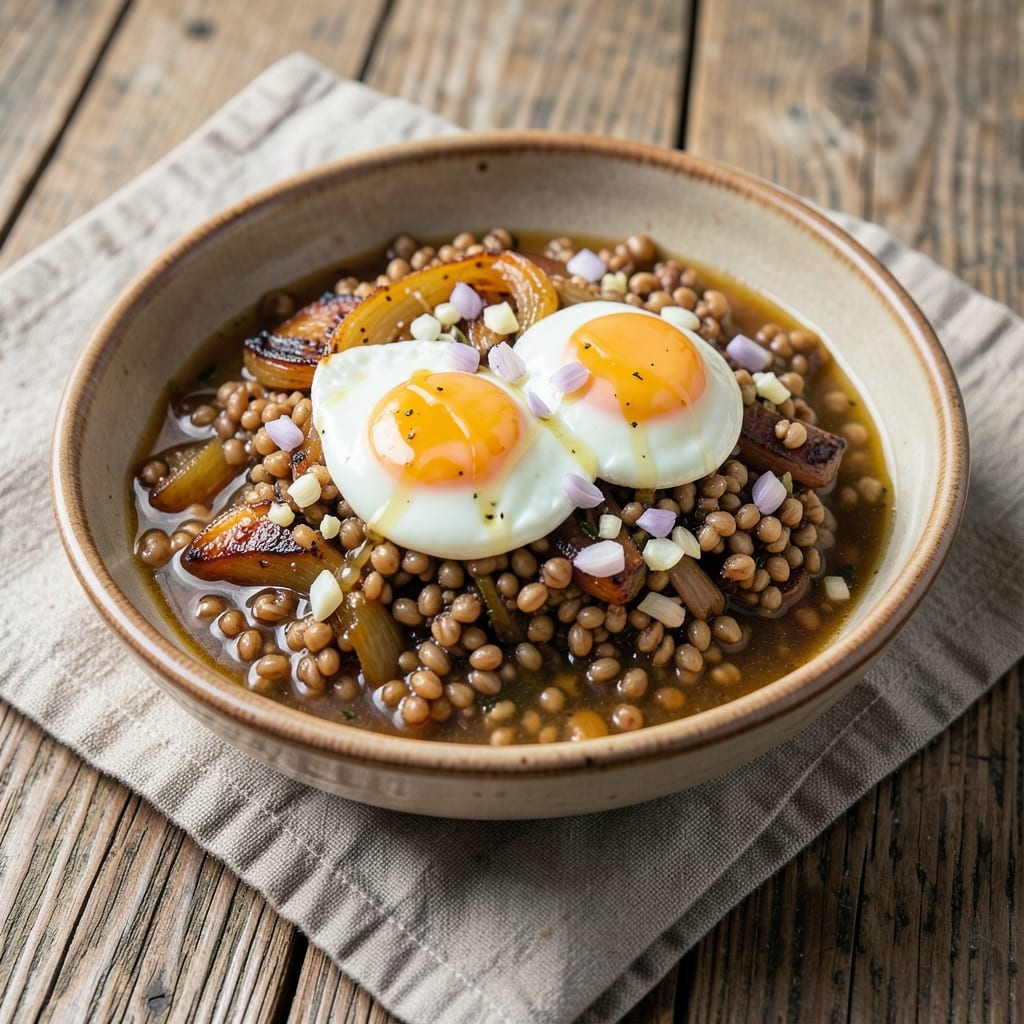
This egg barley recipe transforms humble grains into a hearty porridge with rich, toasted barley and silky eggs—perfect for a satisfying breakfast or comforting dinner. The secret lies in slow-cooking barley until tender while developing deep, nutty flavors, then finishing with poached eggs that add luxurious creaminess. I developed this version after years of experimenting with traditional barley puddings, balancing chewy texture with velvety egg centers for a dish that feels both rustic and refined.
The beauty of this recipe is its versatility—it works equally well as a standalone meal or paired with fresh herbs, toasted nuts, or crispy bacon. Unlike quick oatmeal, this dish requires patience: barley simmers for 40 minutes until plump and flavorful, while the eggs cook gently to maintain their perfect yolk. The result is a dish that feels indulgent yet nourishing, with each bite offering a satisfying contrast of textures and temperatures.
What sets this apart is the toasted grain depth achieved by blooming spices in butter before adding liquid—a technique inspired by risotto but adapted for barley’s longer cooking time. The eggs, poached in the same broth, absorb subtle savory notes while keeping their signature runny centers. This is comfort food elevated: simple ingredients transformed into something restaurant-worthy through careful technique.
Perfect for meal prep or a special weekend breakfast, this recipe doubles well and tastes even better the next day. The barley’s ability to absorb flavors makes it endlessly adaptable—try adding mushrooms, smoked salmon, or a sprinkle of feta for modern twists. Let’s get cooking—your taste buds will thank you for the upgrade from basic cereal to this hearty porridge.
Ingredients for egg barley
These simple yet transformative ingredients create a deeply satisfying porridge with restaurant-quality depth.
| Ingredient | Amount | Notes |
|---|---|---|
| Pearl Barley 🌾 | 1 cup | Uncooked, rinsed thoroughly |
| Unsalted Butter 🧈 | 3 tbsp | Cold, cut into small cubes |
| Yellow Onion 🧅 | 1 whole | Finely diced, about 1 cup |
| Garlic Cloves 🧄 | 3 cloves | Minced, about 1 tbsp |
| Vegetable Broth 💧 | 4 cups | Low-sodium preferred |
| Large Eggs 🥚 | 4 whole | Fresh, room temperature |
| White Wine 🍷 | ½ cup | Dry, like Sauvignon Blanc |
| Bay Leaves 🍃 | 2 whole | Dried, removed before serving |
| Ground Black Pepper 🌶️ | ½ tsp | Freshly cracked preferred |
| Salt 🧂 | 1 ½ tsp | Kosher or sea salt |
| Fresh Thyme 🌿 | 2 sprigs | Leaves only, about 1 tbsp |
| White Wine Vinegar 🍋 | 1 tbsp | For poaching liquid |
| Heavy Cream 🥛 | ¼ cup | Optional, for richness |
| Fresh Parsley 🌿 | ¼ cup | Chopped, for garnish |
The barley is the heart of this dish—pearl barley toasts beautifully and holds its shape. Grab Bob's Red Mill or any pearl barley from the bulk section at Whole Foods or your local grocery store. Look for packages labeled 'pearl' or 'pot' barley, not quick-cooking varieties. The butter is non-negotiable here: European-style unsalted butter like Plugrá or Land O'Lakes adds richness that margarine can't match. For the wine, any dry white will work—Sauvignon Blanc or Pinot Grigio are my go-tos, but whatever's open in your fridge does the trick.
No white wine? Extra vegetable broth works in a pinch, though the acidity helps balance the barley's earthiness. Fresh thyme is ideal, but dried thyme at one-third the amount gets you close. The bay leaves add subtle depth—don't skip them, but remember to remove them before serving. For the eggs, room temperature eggs poach better, so take them out 30 minutes before cooking. If you're feeling fancy, add a splash of heavy cream to the poaching liquid for extra silkiness in the yolk. The parsley is just for garnish, so grab whatever fresh herbs you have—basil or chives work too.
This porridge tastes even better the next day—make extra and store in the fridge for up to 4 days. Reheat gently on the stove with a splash of broth or water. For meal prep, portion into containers with the eggs cooked separately and added fresh. The barley keeps well for 5 days refrigerated or 3 months frozen. Pro tip: Toast the barley in the butter until golden before adding liquid—this builds serious flavor. Trust me, it's worth the extra minute.
Why You'll Love This Recipe
- One-Pot Magic: I swear by this recipe when I’m too tired to wash dishes. Pearl barley cooks right in the same pot as the eggs and veggies—no extra pans, no stress. Just toss everything in, simmer, and walk away.
- Umami Bomb: That slow-cooked barley soaks up the garlic and onion like a sponge, then the eggs finish with a rich, custardy bite. The broth deepens the flavor over time, so the longer it sits, the better it gets—honestly, it’s the kind of dish that tastes even more delicious the next day.
- Meal Prep MVP: Between us, this is my secret weapon for busy weeks. Cook a big batch on Sunday, and you’ve got hearty breakfasts, lunches, or even a side dish for dinner all week. The barley holds up perfectly, and the eggs stay creamy when reheated—just add a splash of broth if it’s dry.
- Budget-Friendly Feast: Pearl barley is a steal, and eggs stretch it into a filling meal for next to nothing. I’ve fed a crowd of six for under $10 with this—no fancy ingredients, just good, honest flavor. Plus, leftovers taste just as good cold in a sandwich the next day.
Step-by-step instructions for savory egg barley porridge
Here's how to transform simple ingredients into a rich, toasted barley porridge with silky egg custard.
Toast the Barley for Nuttiness
In a large, heavy-bottomed pot, melt the 3 tablespoons unsalted butter over medium heat. Add the 1 cup pearl barley and stir constantly for 5-7 minutes until the grains turn a deep golden brown and release a toasty aroma. This step develops the nutty flavor that sets this dish apart from regular barley porridge.
Watch the barley closely—it should be evenly toasted but not burned. If you see any dark spots, remove the pot from heat immediately. Once properly toasted, add the finely diced yellow onion and cook for another 3-4 minutes until softened and translucent. This pre-cooking step ensures your porridge has depth of flavor without needing additional seasoning later.
Build the Flavor Base
Add the 3 minced garlic cloves and cook for 30 seconds until fragrant—don't let it brown or it'll become bitter. Pour in the 0.5 cup white wine and let it simmer for 2 minutes until mostly evaporated. This deglazes the pot and adds brightness to the dish.
Stir in the 4 cups vegetable broth, 1.5 teaspoons salt, 0.5 teaspoon ground black pepper, 2 sprigs fresh thyme, 2 bay leaves, and 1 tablespoon white wine vinegar. Bring to a gentle boil, then reduce heat to low, cover, and let it simmer for 45 minutes or until the barley is tender and the liquid has reduced by about half. The porridge should be thick but still creamy—like a savory oatmeal.
Create the Egg Custard Layer
While the barley cooks, prepare the egg mixture in a separate bowl. Crack the 4 large eggs into a medium bowl and whisk vigorously for 1 minute until the yolks and whites are fully combined. Slowly whisk in the 0.25 cup heavy cream (if using) until smooth and slightly thickened. This step ensures the eggs cook evenly into a silky custard rather than curdling.
When the barley is tender, remove the pot from heat and let it sit uncovered for 5 minutes to thicken slightly. Then, slowly pour the egg mixture into the pot while stirring constantly. The residual heat will gently cook the eggs into the porridge, creating that signature creamy texture. Return to low heat and cook for 3-4 minutes more, stirring gently, until the mixture reaches 160°F and thickens to a pudding-like consistency.
Finish and Serve
Remove the bay leaves and thyme sprigs from the porridge. Transfer to serving bowls and let it rest for 5 minutes—this allows the custard to set slightly and makes for easier serving. Garnish each portion with 0.25 cup chopped fresh parsley for a pop of color and freshness.
Serve immediately while warm, with extra black pepper if desired. The contrast between the toasted barley's nuttiness and the silky egg custard creates a satisfying, restaurant-quality dish. The wine and vinegar brighten the flavors, while the herbs add an aromatic finish that elevates this humble porridge to something truly special.
Pro Tips For Making Egg Barley
- TOAST THE BARLEY FIRST: I learned this the hard way—skipping the quick toast in butter turns your barley into mush. Cook it in a dry pot over medium heat for 3-4 minutes until it smells nutty and the edges turn translucent. This locks in texture and prevents that sad, gluey consistency.
- SWEAT ONIONS LOW AND SLOW: High heat makes onions bitter, and bitter onions ruin the delicate balance of this dish. Use medium-low and let them cook for 10-12 minutes until they’re deep golden and nearly caramelized. Add a splash of broth if they stick—this isn’t the time to rush.
- DON’T SKIP THE GARLIC MASH: After mincing garlic, press it into a paste with the flat of your knife or a spoon. This ensures even distribution and prevents clumps that burn or taste raw. A little extra effort here means no weird garlic hits in every bite.
- STIR IN EGGS AT THE END: Adding eggs too early turns them rubbery. Once the barley’s tender and the broth’s reduced, take the pot off heat, stir in the beaten eggs, then let them cook just until set—about 2 minutes. The residual heat does the work without scrambling them.
Make-ahead tips for this recipe
Barley Prep Ahead
Cook the barley mixture one full day in advance—it tastes even better after flavors meld overnight. Store in an airtight container in the fridge for up to 4 days. The barley absorbs extra flavors, making each bite richer. I like to reheat portions in a small saucepan with 2 tablespoons broth to restore creaminess. 💫
Egg Prep Strategy
Poach the eggs separately and store them in the fridge for up to 2 days. Keep them in their poaching liquid to maintain texture. When ready to serve, gently warm the barley in a pot, then top with fresh eggs. This keeps the custard silky while letting you prep components separately. A fine-mesh strainer makes draining poached eggs effortless.
Freezer-Friendly Method
For longer storage, freeze the cooked barley mixture (without eggs) in quart-sized freezer bags for up to 3 months. Thaw overnight in the fridge, then reheat gently on the stove. Save the eggs for fresh serving—they don't freeze well. I add a splash of heavy cream when reheating to restore moisture lost during freezing. ❄️
Portion Control Tips
Divide the porridge into 4 individual containers before storing. This makes reheating precise portions easy. Add a small compartment for garnishes like parsley or black pepper. I use glass meal prep containers with snap lids—they're microwave-safe and keep flavors fresh longer. Label with dates to track freshness.
Egg Barley Breakfast Hack
Make a double batch on Sunday and store half for breakfast. Reheat portions in the microwave for 90 seconds on 50% power, then top with a fresh poached egg. The toasted barley adds satisfying substance to morning meals. I keep a stash of pre-toasted barley in the freezer for quick assembly—just add hot broth and eggs. 💡
Garnish Prep
Chop all garnishes (parsley, thyme, or chives) ahead and store in a small airtight container in the fridge for up to 5 days. Toasted nuts like pecans or walnuts can be prepped separately and stored for 2 weeks. Keep these components in separate containers to maintain freshness. A sprinkle of flaky sea salt right before serving adds a final bright note. 🌿
Nutrition facts
Frequently asked questions
Can I use quick-cooking barley instead of pearl barley?
No, this recipe requires pearl barley for its chewy texture and nutty flavor when toasted. Quick-cooking barley absorbs liquid too fast and loses that satisfying bite. If you're short on time, consider using farro instead—it cooks in 20-25 minutes while maintaining a hearty texture.
What if I don't have white wine?
Use extra vegetable broth (about 2 tablespoons) or apple cider vinegar (1 teaspoon) to mimic the acidity. The wine adds brightness, but these substitutes prevent the barley from tasting flat. For deeper flavor, add a pinch of dried mustard powder to the broth.
How do I fix grainy eggs in the porridge?
Overcooking or adding eggs too quickly causes graininess. Always whisk eggs thoroughly with cream first, then temper them by slowly pouring into the warm barley (never hot). If it happens, stir in 1 tablespoon cold butter and 1 tablespoon heavy cream—the fat emulsifies the mixture. For next time, cook the porridge to 160°F before adding eggs.
Can I make this vegetarian?
Yes! Skip the butter and use olive oil instead. Replace the eggs with silken tofu (1 cup) blended with 2 tablespoons nutritional yeast for a creamy texture. Add 1 teaspoon turmeric to the broth for color. The dish will still be rich and hearty—just plant-based.
Why did my barley turn mushy?
Mushy barley usually means overcooking or using too much liquid. Pearl barley needs 40-45 minutes at a gentle simmer, not a rolling boil. For this recipe, the broth should reduce by about half—if it doesn't, your pot isn't heavy enough to maintain even heat. Next time, check the barley at 35 minutes and taste-test.