
Breakfast & Brunch
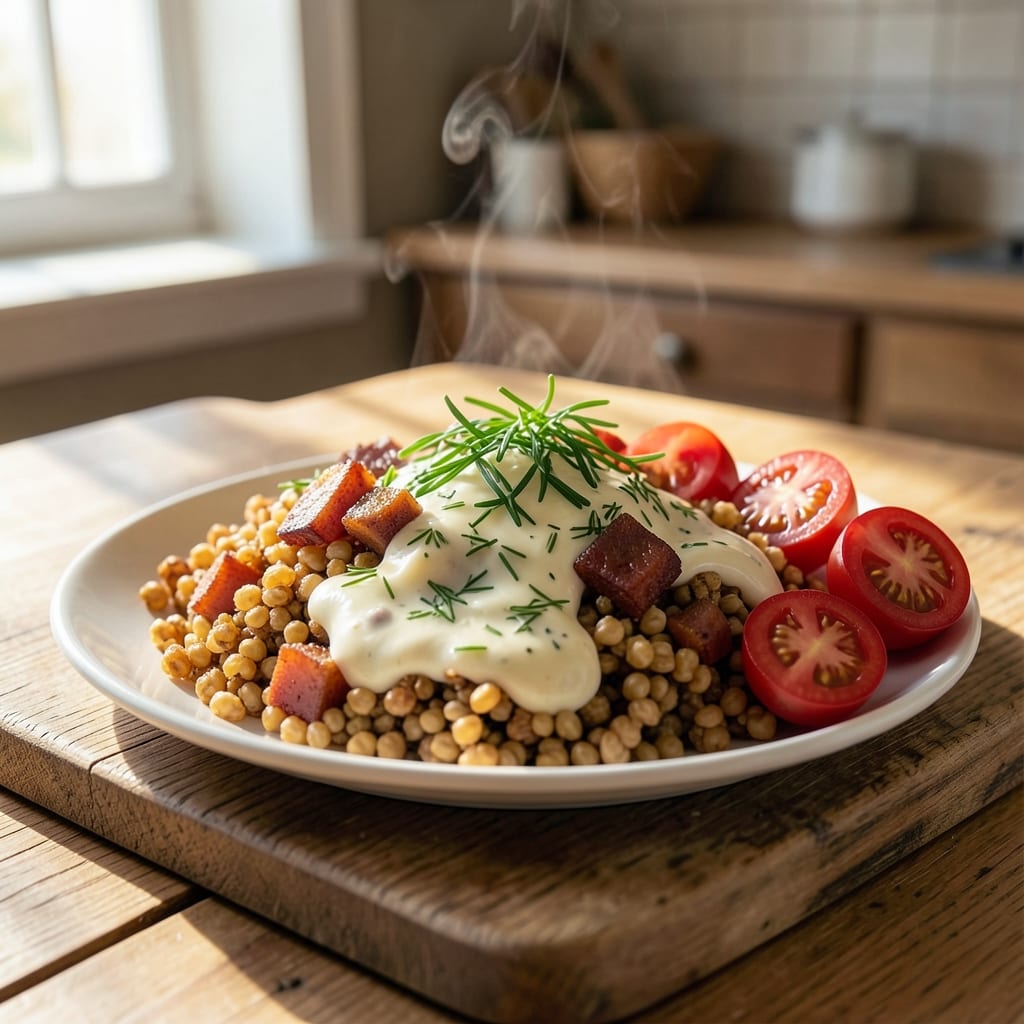
This egg barley farfel recipe transforms simple ingredients into delicate, toasted bits that soak up flavors like a dream—perfect for elevating soups, salads, or even breakfast dishes. 💛 The secret lies in the al dente barley, shaped into tiny orbs that crisp beautifully when fried or baked, while the herbed yolk magic ties everything together with rich, savory depth.
Rooted in Ashkenazi Jewish cuisine, farfel has been a staple for generations, prized for its ability to absorb broths and sauces while adding satisfying texture. This version skips the fuss of traditional hand-shaping by using a simple rolling technique, ensuring consistent, bite-sized pieces every time. The egg wash creates that signature golden crust, while fresh herbs and a touch of lemon brighten the final result.
What you’ll end up with is a dish that’s equal parts comforting and elegant—crispy on the outside, tender within, and bursting with herby, yolk-infused flavor. It’s the kind of recipe that transforms ordinary meals into something special, whether you’re serving it alongside a hearty chicken soup or using it as a base for a show-stopping salad.
Best of all, the technique is straightforward: boil the barley, shape it efficiently, and cook until golden. No special equipment needed—just patience and a little practice. Let’s get started on creating these savory, toasted bits that will become your new go-to recipe.
Ingredients for egg barley farfel
Delicate barley pearls transformed into crispy, herbed orbs with golden egg-washed magic.
| Ingredient | Amount | Notes |
|---|---|---|
| Pearl Barley 🌾 | 1 cup | Uncooked, rinsed thoroughly |
| Large Eggs 🥚 | 3 whole | Room temperature for even coating |
| All-Purpose Flour 🌾 | ½ cup | For rolling and shaping |
| Unsalted Butter 🧈 | ¼ cup | Melted, cooled slightly |
| Fresh Dill 🌿 | ¼ cup | Finely chopped, stems removed |
| Fresh Chives 🌱 | ¼ cup | Finely chopped |
| Lemon Zest 🍋 | 1 tbsp | From 1 medium lemon |
| Lemon Juice 🍋 | 1 tbsp | Freshly squeezed |
| Kosher Salt 🧂 | 1 tsp | Diamond Crystal preferred |
| Black Pepper 🌶️ | ½ tsp | Freshly ground |
| Olive Oil 🫒 | ¼ cup | For frying, high smoke point |
| Vegetable Broth 💧 | 1 ½ cups | Low-sodium preferred |
| Fresh Parsley 🌿 | ⅛ cup | Chopped, for garnish |
The pearl barley is the foundation—opt for jewel or pearl barley (not quick-cooking) for that perfect al dente texture. Whole Foods or Trader Joe's carry it in bulk, but any reputable grocery store will have it. Look for bright, uniform grains with no dark spots, as those indicate old stock. The barley should cook to al dente—firm to the bite but tender—so don't overcook it during boiling. Diamond Crystal kosher salt enhances flavor without overpowering, and using freshly ground black pepper ensures vibrant seasoning. For the herbs, fresh dill and chives from the market's produce section will give you the brightest flavor, but dried will work in a pinch at one-third the amount.
No fresh dill or chives? Substitute with a mix of fresh parsley and tarragon—it won’t be identical, but it’ll still add herbal depth. Running short on lemon zest? Fresh lemon juice plus a pinch of sugar mimics the bright tang. For the egg wash, room-temperature eggs coat the farfel more evenly, but if yours are straight from the fridge, let them sit out for 10 minutes before using. The olive oil for frying should have a high smoke point—avoid extra-virgin if you're deep-frying, as it can burn. For a lighter touch, you can bake the farfel instead of frying—just brush with melted butter and bake at 375°F for 15-20 minutes, flipping halfway.
Store the uncooked barley mixture in an airtight container in the fridge for up to 3 days, or freeze for 2 months for long-term prep. Once fried or baked, keep farfel in the fridge for 4-5 days—it reheats beautifully in a 350°F oven for 10 minutes or on the stovetop with a splash of broth. For maximum crispiness, store in a single layer on a wire rack until fully cooled before refrigerating. The herbed yolk magic (farfel mixed with beaten egg and herbs) can be prepped ahead and kept in the fridge for 2 days, making it a great make-ahead component for soups or salads.
Why You'll Love This Recipe
- One-Pot Magic: I swear by this recipe when I’m too tired to wash a million dishes. Pearl barley and eggs cook together in one pot—no fussing with separate pans, just stir, simmer, and call it a day. The flour thickens it just enough to feel hearty, while the butter makes everything taste like a hug.
- Dill Dreams: That bright, fresh dill—it’s the star here. I’ll be real: I’ve tried this without it, and it’s still good, but with the dill? It’s ridiculously good, like a fresh breeze cutting through the richness of the eggs and barley. Honestly, it’s the little things that make a dish feel special.
- Lunchbox Hero: This isn’t just dinner. Pack it in a thermos the night before, and it’s a solid lunch for work or school—hot, filling, and way better than sad leftovers. My kids actually ask for it, and that’s saying something. (Yes, even on a Tuesday.)
- Pantry Staple: Pearl barley is cheap, eggs are cheap, and flour? Always on hand. This recipe stretches a little goes a long way, and the leftovers reheat like a dream. I’ve made it for date night, potlucks, and lazy Sundays—it’s my go-to when I need something reliable that won’t break the bank.
Step-by-step instructions for egg barley farfel
Here's the precise method for creating those iconic toasted barley bits with herbed yolk magic.
🔪 Step 1: Toast the Pearl Barley Until Nutty and Crisp
Preheat your oven to 350°F and spread the 1 cup pearl barley on a rimmed baking sheet in a single layer. Toast for 15-20 minutes, stirring every 5 minutes, until the barley turns a deep golden brown and emits a toasty, nutty aroma. You're looking for individual grains that are crisp around the edges but still retain a slight chew in the center.
This toasting step is crucial—it develops the barley's natural nutty flavor and prevents the farfel from becoming gummy when cooked. Don't walk away; watch closely after 15 minutes as it can burn quickly. Once toasted, let the barley cool completely before proceeding—warm barley absorbs too much liquid from the egg mixture.
👨🍳 Step 2: Create the Egg Coating Mixture
In a large bowl, whisk together the 3 room temperature eggs, 0.5 cup all-purpose flour, 1 tbsp lemon zest, 1 tbsp lemon juice, 1 tsp kosher salt, and 0.5 tsp black pepper until smooth and fully combined. The mixture should be thick but pourable—like heavy cream consistency. If it's too thick, add 1 tablespoon of water at a time until it reaches the right texture.
Here's the thing—this lemon-infused coating is what gives farfel its signature brightness. I press the zest through a fine grater to avoid any bitter pith, and I always use freshly squeezed lemon juice. The acidity helps balance the richness of the eggs and prevents the farfel from becoming too heavy when fried.
🍳 Step 3: Coat and Fry the Farfel
Heat 0.25 cup olive oil in a large skillet over medium heat until it shimmers but doesn't smoke. Working in batches, add the toasted barley to the egg mixture and stir gently to coat each grain completely. Let the coated barley sit for 30 seconds to absorb the egg, then carefully transfer 1 tablespoon portions into the hot oil.
Fry for 2-3 minutes until the farfel turns a deep golden brown and rises to the surface. You'll see tiny bubbles form around each piece—that's your signal they're perfectly cooked. Remove with a slotted spoon and drain on paper towels. Don't overcrowd the pan or the temperature will drop, resulting in greasy farfel instead of crispy. Work in batches if needed, keeping the fried farfel warm in a 200°F oven.
🥘 Step 4: Assemble with Herbed Broth
In a medium saucepan, combine 1.5 cups vegetable broth, 0.25 cup melted butter, 0.25 cup chopped fresh dill, and 0.25 cup chopped fresh chives. Bring to a gentle simmer over medium-low heat and let it infuse for 5 minutes, allowing the herbs to release their bright flavors into the broth. The mixture should smell vibrant and aromatic—like fresh garden herbs.
Return the fried farfel to the pan and toss gently to coat in the herbed butter broth. Let it simmer for 2-3 minutes until everything is heated through and the farfel absorbs just enough liquid to become tender but still retains its crisp edges. The farfel should float at the surface with the broth clinging to each piece like a delicate sauce.
🍽️ Step 5: Finish with Fresh Herbs and Serve Immediately
Transfer the farfel to a serving platter and sprinkle with the remaining 0.125 cup chopped fresh parsley. The parsley adds a final bright note that cuts through the richness of the butter and eggs. Serve immediately while the farfel is still crisp and the broth is warm—this dish doesn't wait. The perfect bite should deliver that satisfying crunch from the toasted barley, followed by the creamy egg coating and herbed broth.
This technique ensures each piece maintains its signature texture—crisp outside, tender inside—while the herbed broth adds depth of flavor. The lemon zest in the egg mixture prevents the farfel from becoming too heavy, and the fresh herbs in the broth keep everything bright and vibrant. Trust the process, and you'll achieve that restaurant-quality texture every time.
Pro Tips For Making Egg Barley Farfel
- Toast the Barley First: Pearl barley’s got a stubborn outer shell that soaks up liquid like a sponge—unless you toast it first. Dry-toast in a skillet over medium heat for 5 minutes until it smells nutty and golden. This step prevents mushiness later and adds depth to the dish.
- Use Cold Eggs for Binding: Whisk eggs straight from the fridge—they’ll emulsify better with the flour and barley. Warm eggs turn out greasy, and you’ll end up with a gummy mess instead of a light, tender farfel. I learned this after one very sticky batch.
- Don’t Overmix the Dough: Once you fold in the barley, stop stirring the second everything clumps together. Overworking it turns the farfel dense and chewy. Just give it 10-12 turns with a spatula—less is more, even if it looks uneven.
- Boil, Not Simmer, the Farfel: Farfel needs a rolling boil to set properly—simmering makes it gummy. Drop it in, stir once, then let it cook undisturbed for 2-3 minutes. If the water’s not bubbling hard, you’re doing it wrong. (Yes, even if you’re impatient like me.)
Essential equipment for egg barley farfel
Essential Frying Tools
For perfect farfel, a 10-inch cast iron skillet is my go-to—its heavy base maintains even heat while creating that signature crispy crust. I recommend a Lodge Pre-Seasoned Cast Iron Skillet for its natural non-stick properties after proper seasoning. If you don’t have cast iron, a stainless steel skillet works too, but monitor heat more closely to prevent sticking. 🔥
Precision Thermometer
An instant-read thermometer like the Thermoworks ThermoPop ensures your oil stays at 350°F—the sweet spot for golden, not greasy, farfel. I check the temperature just before adding batches to avoid fluctuations. If you don’t have one, use the cold water test: Drop a tiny bit of oil into cold water—if it sizzles and bubbles vigorously, it’s ready.
Rolling and Shaping Tools
A rolling pin with a wooden or marble surface (like the OXO Good Grips) prevents the barley from sticking to your hands while shaping. For extra efficiency, I use a small pastry brush to lightly coat the barley with melted butter before rolling—this helps the egg wash adhere better. A fine-mesh strainer also comes in handy for rinsing the barley thoroughly before toasting.
Baking Sheet and Rack
For toasting the barley, a half-sheet baking pan (about 13x18 inches) gives enough space for even browning. I line it with parchment paper for easy cleanup and prevent burning. After frying, transfer farfel to a wire cooling rack to maintain crispness while draining excess oil. A slotted spoon with long handles makes removing farfel from the oil mess-free.
Broth Infusion Setup
A small saucepan with a tight-fitting lid (like a 3-quart Le Creuset) keeps the herbed broth from splattering while infusing. For extra flavor, I use a fine-mesh strainer to remove herb stems before adding the farfel. A wooden spoon gently tosses the farfel without breaking the crisp edges. Keep everything ready—this step moves quickly!
Make-Ahead Storage
For prepping ahead, quart-sized glass containers with airtight lids store the herbed broth mixture for up to 3 days in the fridge. To reheat, warm the broth gently on the stovetop, then toss in pre-fried farfel for 1-2 minutes to revive crispness. A small mixing bowl with a silicone spatula helps combine everything smoothly when reassembling.
Nutrition facts
Frequently asked questions about egg barley farfel
Can I make farfel without frying?
For a lighter version, bake the egg-coated barley on a parchment-lined sheet at 375°F for 15-20 minutes, flipping halfway. Brush with melted butter for extra crispiness. The texture will be slightly softer than fried, but still delicious—perfect for those watching oil intake.
What's the best way to store leftover farfel?
Keep fried farfel in an airtight container for 4-5 days in the fridge. To reheat, warm in a 350°F oven for 10 minutes with a splash of broth to revive crispness. For longer storage, freeze cooked farfel for up to 3 months—thaw overnight in the fridge before reheating.
Why did my farfel turn out gummy instead of crispy?
Overcooked barley or insufficient toasting causes gumminess. Always toast until deeply golden and al dente (15-20 minutes at 350°F). Also ensure your oil is at 350°F before frying—too cool oil makes greasy, not crispy, results.
How can I use farfel beyond soups?
Try it as a breakfast dish with scrambled eggs and smoked salmon, or as a salad topping with lemon vinaigrette. For a hearty option, mix with mashed potatoes and brown butter. The herbed version also pairs beautifully with roasted vegetables or as a crunchy garnish for pasta dishes.
Can I substitute pearl barley for another grain?
While traditional, you can experiment with couscous or bulgur wheat for a quicker version. However, these won't have the same nutty flavor or texture. For best results, stick with pearl barley—it's the key to authentic farfel's satisfying bite.