
Breakfast & Brunch
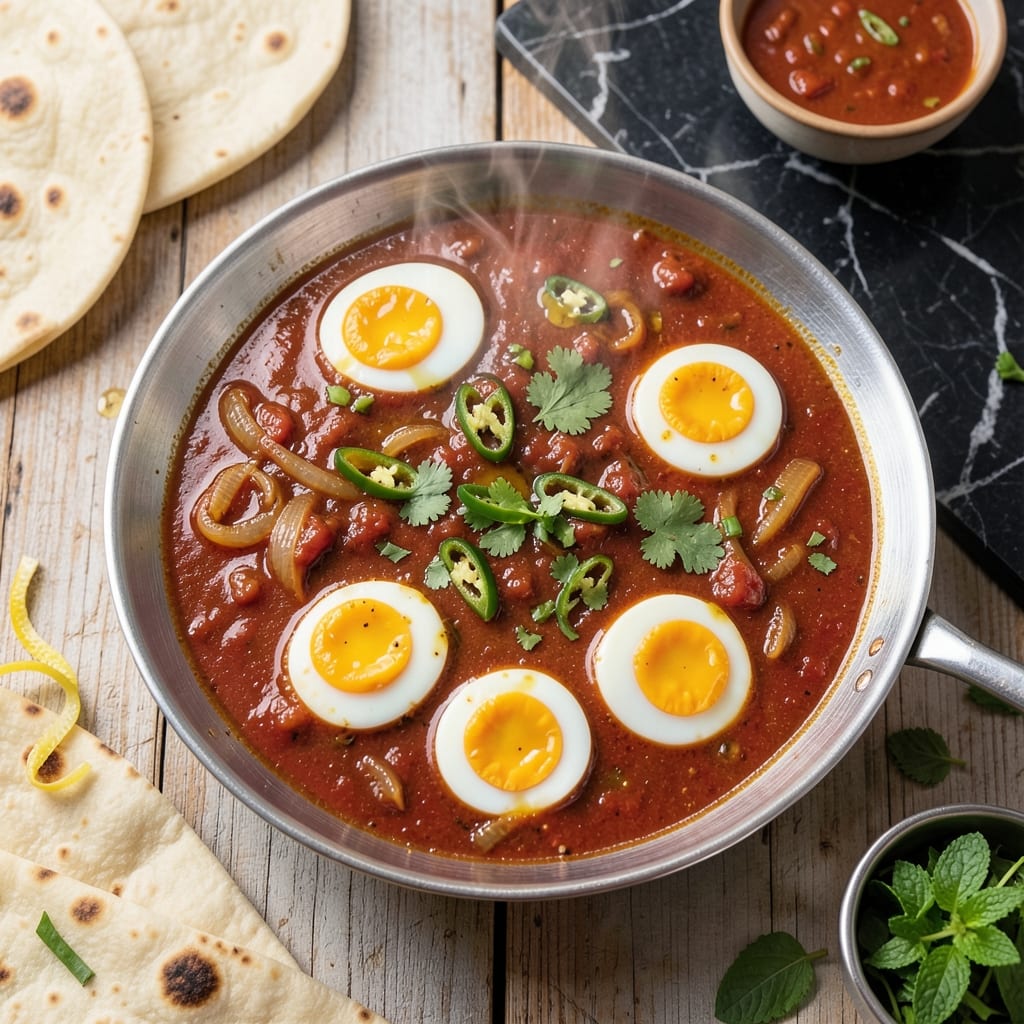
This dhaba egg curry recipe brings the bold flavors of North India’s roadside eateries straight to your kitchen. The secret lies in slow-cooked tomatoes and aromatic spices that transform simple eggs into a creamy, tangy masterpiece—perfect for breakfast or a hearty lunch. I’ve perfected this version after years of testing, ensuring every bite delivers that signature dhaba taste.
The magic happens in the gravy—a rich, spiced tomato base that simmers until it develops deep, caramelized flavors. Hard-boiled eggs are gently folded in at the end, soaking up the aromatic sauce without breaking. This isn’t your average egg curry; it’s a restaurant-quality dish that’s surprisingly simple to make at home.
What sets this apart is the balance of spices: cumin, coriander, and garam masala create warmth, while a touch of tamarind adds that signature tang. The eggs stay silky and intact, absorbing just enough flavor to make every bite irresistible. Serve it with warm roti or steamed basmati rice for the full dhaba experience.
Ready in about 30 minutes, this recipe is ideal for weeknight dinners or weekend brunches. The slow-cooked gravy means flavors deepen over time, making leftovers taste even better the next day. Let’s get cooking!
Ingredients for dhaba egg curry
Bold spices, silky eggs, and a tangy tomato base—this dhaba curry delivers restaurant-quality flavor at home.
| Ingredient | Amount | Notes |
|---|---|---|
| Large Eggs 🥚 | 8 whole | Hard-boiled, peeled, halved lengthwise |
| Extra-Virgin Olive Oil 🫒 | ½ cup | For sautéing and tempering |
| Medium Red Onions 🧅 | 2 whole | Finely chopped, about 1.5 cups |
| Fresh Tomatoes 🍅 | 1 ½ lb | Ripe, chopped into 0.75-inch pieces |
| Fresh Ginger 🧄 | 1 ½ tbsp | Grated, about 1-inch piece |
| Garlic Cloves 🧄 | 6 cloves | Minced, about 1.5 tsp |
| Garam Masala 🌶️ | 1 tbsp | Ground, not pre-mixed |
| Ground Cumin 🌿 | 1 tsp | Toasted for deeper flavor |
| Ground Coriander 🌿 | 1 tsp | Freshly ground preferred |
| Tamarind Paste 🍋 | 2 tbsp | Or 1 tbsp lemon juice |
| Heavy Cream 🥛 | ½ cup | Full-fat for richness |
| Salt 🧂 | 1 ½ tsp | Diamond Crystal preferred |
| Fresh Cilantro 🌿 | ¼ cup | Chopped, for garnish |
| Red Chili Powder 🌶️ | ½ tsp | Adjust to taste |
| Turmeric Powder 🌿 | ¼ tsp | For color and warmth |
The tomatoes are the heart of this dish. Ripe but firm ones from the grocery store's produce section work best—avoid the mushy ones. I always grab the heirloom variety when they're in season, but regular Roma tomatoes are perfect for weeknight cooking. Fresh ginger and garlic? Penzeys sells pre-peeled garlic cloves, which saves time, but I still prefer to peel my own for that extra freshness. The tamarind paste can be tricky to find—Indian grocery stores usually have it, or you can substitute lemon juice if needed.
No garam masala? Mix equal parts cumin, coriander, cinnamon, and cardamom—it's not the same, but it works in a pinch. Fresh cilantro is ideal, but dried works at half the amount if you're in a bind. The heavy cream adds richness, but coconut milk works beautifully too for a dairy-free version. For the eggs, I always hard-boil a batch ahead of time—peel them just before adding to the curry so they stay intact. The gravy should simmer until it's thick enough to coat the back of a spoon, but still silky smooth.
This curry tastes even better the next day as the flavors meld together. Store leftovers in an airtight container in the fridge for up to 4 days. I like to portion it into containers with some roti on the side—makes for quick lunches all week. Freeze portions for up to 3 months by spreading the curry on a tray first, then transferring to a bag once frozen. That way, you can grab just what you need without thawing the whole batch.
Why You'll Love This Recipe
- One-Pot Magic: I swear by this recipe when I’m too tired to wash a million dishes. The eggs poach right in the onion-tomato base—no extra pans, no fuss—just golden yolks slipping into warm, spiced tomato sauce.
- Ginger-Garlic Kick: That fresh ginger and olive oil sizzle? It’s the secret weapon. The onions caramelize into sweet depth while the ginger adds a zing that makes every bite feel like a little flavor explosion—no heavy cream, no shortcuts.
- Lunchbox Hero: Between us, this is my go-to for meal prep. The eggs hold up perfectly for days (yes, really), and I pack it with roti or naan for a lunch that tastes restaurant-fresh even after three days in the fridge.
- Budget Breakfast: Honestly, this recipe costs me pennies but feels like a treat. Eggs are cheap, tomatoes are versatile, and a splash of olive oil turns basic ingredients into something that makes my kids ask for seconds—without breaking the bank.
Step-by-step instructions for dhaba egg curry
Here's how to make this rich, spiced tomato gravy with silky eggs that's perfect with steamed rice.
Hard-Boil and Prepare the Eggs
Place the 8 whole large eggs in a saucepan and cover them with cold water by about 1 inch. Bring to a rolling boil over high heat, then reduce to medium-high heat and cook for exactly 9 minutes. Immediately transfer the eggs to an ice bath to stop cooking and make peeling easier.
Once cooled, peel the eggs and halve them lengthwise. Set aside the egg whites and yolks separately. The yolks will cook gently in the curry, creating that signature silky texture, while the whites can be used for garnish or added back at the end if you prefer more substance in each bite.
Build the Spiced Tomato Base
Heat 0.25 cup of the extra-virgin olive oil in a heavy-bottomed pot over medium heat. Add the 2 whole medium red onions and cook for 5-6 minutes until they turn a deep golden brown. Remove the onions with a slotted spoon and set aside—you'll add them back later.
In the same pot, add the remaining 0.25 cup olive oil and heat over medium heat. Add the 1.5 tbsp freshly grated ginger and 6 cloves minced garlic. Sauté for 1-2 minutes until fragrant but not browned. This aromatic base is the flavor foundation of your curry.
Develop the Spice Profile
Add the 1.5 lb fresh tomatoes (chopped), 1 tsp ground cumin, 1 tsp ground coriander, 0.5 tsp red chili powder, and 0.25 tsp turmeric powder to the pot. Cook for 10-12 minutes on medium heat until the tomatoes break down into a thick, glossy sauce.
Stir in the 2 tbsp tamarind paste and 1 tbsp garam masala, then add the reserved 2 whole medium red onions. Cook for another 5 minutes until the flavors meld together. The tamarind adds that signature tangy depth that balances the richness of the eggs and cream.
Create the Silky Egg Gravy
Reduce the heat to low and gently stir in the 8 egg yolks, one at a time, letting each one cook slightly before adding the next. This slow incorporation prevents scrambling and creates that luxurious, velvety texture. Cook for 3-4 minutes, stirring constantly, until the yolks thicken but don't curdle.
Add the 0.5 cup heavy cream and 1.5 tsp salt, then simmer for another 2-3 minutes until the curry reaches your desired consistency. If it's too thick, add 2-3 tablespoons of water to achieve a smooth, spoonable gravy. The cream adds richness while keeping the dish balanced.
Finish and Serve
Gently fold in the egg whites (if using) and stir in the 0.25 cup chopped fresh cilantro. Taste and adjust seasoning—you might need a pinch more salt or chili powder to suit your preference. The cilantro adds freshness that cuts through the richness of the cream and eggs.
Serve the dhaba egg curry hot with steamed basmati rice. The contrast between the soft, spiced rice and the rich, creamy curry makes every bite satisfying. For extra presentation, garnish with additional cilantro or a drizzle of olive oil before serving.
Pro Tips For Making Dhaba Egg Curry
- CRISP THE ONIONS FIRST: Don’t rush this step—cook the sliced onions in olive oil on medium-low heat until they’re deep golden and almost caramelized (about 10-12 minutes). I used to burn them or give up halfway, but this builds the flavor base for the curry. The longer they cook, the richer the sauce.
- SOFTEN GINGER PROPERLY: Grate the ginger fine and cook it with the onions for 2-3 minutes until it loses its raw bite. Skipping this makes the curry taste sharp and medicinal. (Yes, even if you’re impatient like me.)
- BOIL EGGS UNTIL JUST DONE: Use large eggs boiled for exactly 6 minutes (yolk still slightly runny) for that classic dhaba texture. Overcooked eggs turn rubbery, and undercooked ones are a health risk. Set a timer—no guessing.
- SAVE TIME WITH TOMATO PUREE: Instead of chopping fresh tomatoes, use ½ cup tomato puree mixed with a pinch of sugar and salt. It cuts prep time by half and keeps the sauce from getting watery. (Your future self will thank you.)
Common mistakes when making perfect results
Overcooking the Eggs
One of the biggest mistakes is letting the eggs scramble in the curry. The yolks should cook gently to create that signature silky texture, not become rubbery or grainy. I’ve seen people add all the yolks at once, which can cause curdling. Instead, add them one at a time over low heat, stirring constantly for 3-4 minutes. If the curry starts to look scrambled, immediately reduce the heat and add a splash of heavy cream to rescue it. 💡
Skipping the Tomato Reduction
The rich, caramelized tomato base is the soul of this curry. Rushing this step by cooking the tomatoes too quickly results in a watery, bland gravy. Let the tomatoes simmer for at least 10-12 minutes until they break down into a thick, glossy sauce. I’ve used Roma tomatoes for their meaty texture, but if yours are too watery, strain out the excess liquid. This step is non-negotiable for that authentic dhaba flavor. 🍅
Ignoring the Tamarind Tang
Many recipes skip tamarind paste, which is a game-changer for the tangy depth in dhaba egg curry. Without it, the dish can taste flat or overly sweet. Use 2 tbsp tamarind paste (or 1 tbsp lemon juice as a substitute) and let it cook with the tomatoes for 5 minutes to fully integrate. If you’re new to tamarind, start with 1 tbsp and adjust to taste—it’s easier to add more than to fix an overly sour curry. 🌶️
Using Pre-Mixed Garam Masala
Store-bought garam masala blends often lack the depth of freshly ground spices. While it’s convenient, pre-mixed garam masala can taste dull compared to a homemade blend of cumin, coriander, cinnamon, and cardamom. If you’re using a pre-mixed version, add an extra ¼ tsp of ground cumin or coriander to compensate. For the best results, toast your whole spices lightly before grinding them—this enhances their aroma and flavor dramatically. 🌿
Adding Cream Too Early
Introducing the heavy cream too soon can cause the curry to separate or curdle, especially if the heat isn’t controlled. Always add the cream in the final 2-3 minutes of cooking, after the yolks have thickened. If the curry starts to look too rich or greasy, balance it with a pinch of salt or a squeeze of lemon juice. The cream should blend seamlessly, adding richness without overpowering the spices. 🥛
Neglecting the Onion Tempering
Many recipes call for onions to be cooked until soft, but dhaba-style curries rely on deep, caramelized onions for complexity. Cook the onions for 5-6 minutes until they turn a deep golden brown—this adds a sweet, almost jammy depth to the gravy. Skipping this step means missing out on that signature dhaba flavor. Set the onions aside and add them back later to infuse the curry with their rich caramelized essence. 🧅
Nutrition facts
Frequently asked questions
Can I make this dhaba egg curry without tamarind?
Yes! Use 1 tablespoon lemon juice or ½ teaspoon vinegar instead of tamarind paste for that essential tang. The acidity helps balance the richness of the eggs and cream. For a deeper flavor, try ½ teaspoon amchur (dry mango powder)—it mimics tamarind's complexity perfectly.
How do I prevent the eggs from scrambling in the curry?
Add the egg yolks one at a time over low heat, stirring constantly for just 3-4 minutes. If the curry starts to look grainy, immediately reduce heat and add 1 tablespoon heavy cream to rescue it. Keep the heat gentle—this keeps the eggs silky rather than rubbery.
What's the best way to reheat leftover dhaba egg curry?
Reheat gently on low heat with 1-2 tablespoons water to prevent drying out. For best results, cover the pan and cook for 3-4 minutes until warmed through. Avoid microwaving—it can make the eggs rubbery. If the curry thickens too much, stir in a splash of warm milk or cream.
Can I substitute cream with something else?
For a lighter version, use ½ cup coconut milk (full-fat for best texture). For extra richness, try ¼ cup plain yogurt mixed with ¼ cup milk. Both options add creaminess while keeping the dish balanced. The yogurt version adds a subtle tang that pairs beautifully with the eggs.
How spicy should this dhaba egg curry be?
The recipe includes ½ teaspoon red chili powder for a mild heat level—adjust to your taste! For more spice, add ¼ teaspoon cayenne pepper or a pinch of Kashmiri chili powder. For heat lovers, stir in 1-2 green chilies** (finely chopped) during the tomato cooking stage. Always taste before serving!