
Breakfast & Brunch
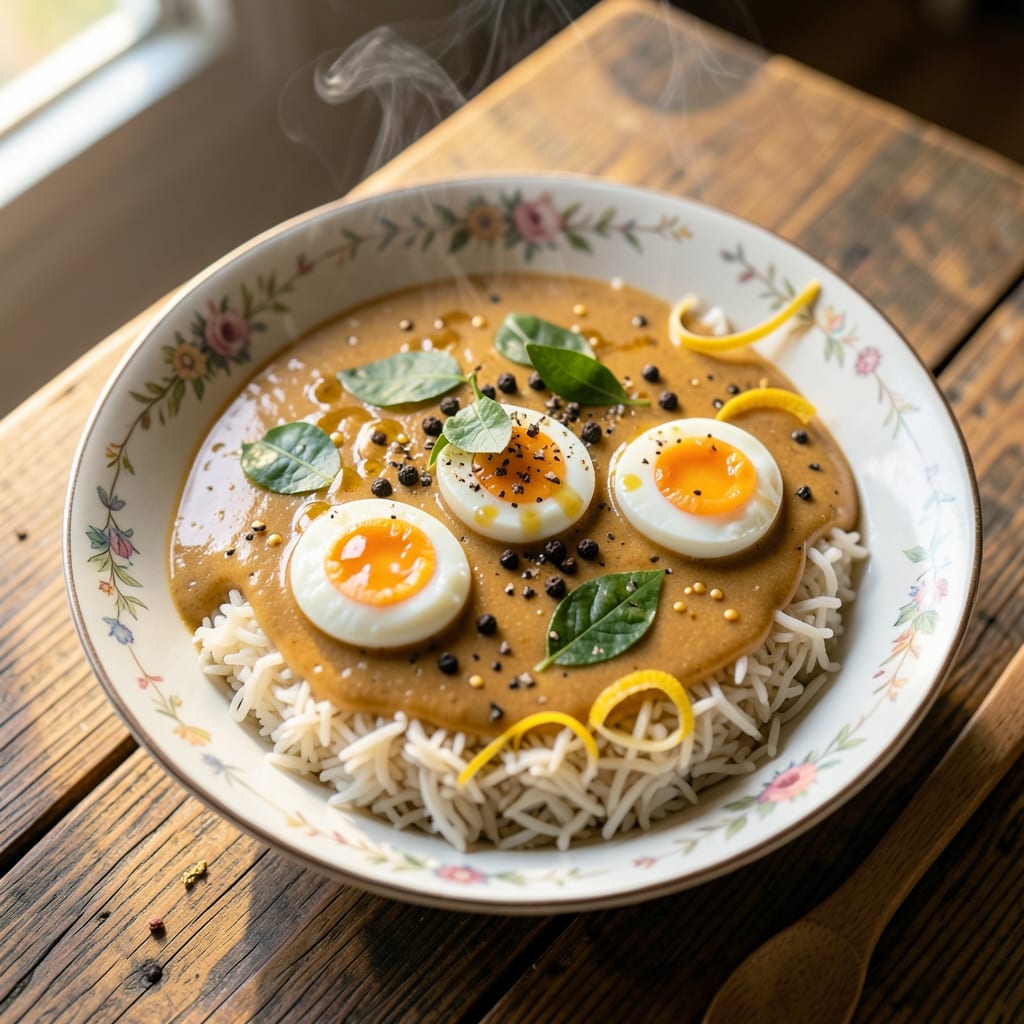
This coconut milk egg curry recipe transforms a simple breakfast into a luxurious, aromatic dish that blends silky scrambled eggs with fragrant coconut cream and warm spices. The secret lies in gently cooking the eggs in rich coconut milk until they achieve a delicate, custard-like texture—never dry or rubbery. I developed this recipe after craving something creamy, comforting, and packed with flavor that still felt light enough for morning. The foundation is a fragrant coconut milk base infused with mustard seeds, curry leaves, and a touch of ginger, which builds layers of warmth and depth. Unlike traditional scrambled eggs, this method cooks the eggs directly in the coconut milk, allowing them to absorb the sauce's richness while maintaining a tender, almost silky consistency. The result is a dish that feels both indulgent and balanced—perfect for brunch or a special weekend breakfast. What makes this recipe stand out is how it elevates ordinary eggs into something extraordinary, all while keeping the process straightforward. You'll need just a handful of pantry staples—coconut milk, eggs, and basic spices—and about 20 minutes of active time. The aroma alone, filled with toasted spices and coconut, will have everyone gathering at the table before the dish is even ready. Serve it with steamed basmati rice or warm naan to soak up every last bit of that velvety coconut sauce. This isn't just breakfast—it's a flavor experience that turns a simple meal into something memorable.
Ingredients for coconut milk egg curry
Just eight ingredients transform ordinary eggs into a velvety coconut curry experience.
| Ingredient | Amount | Notes |
|---|---|---|
| Large Eggs 🥚 | 6 whole | Freshly cracked for best texture |
| Coconut Milk 🥥 | 1 ½ cups | Full-fat for creaminess, canned preferred |
| Mustard Seeds 🌶️ | 1 tsp | Yellow or brown variety |
| Curry Leaves 🌿 | ½ cup | Dried if fresh unavailable |
| Fresh Ginger 🧄 | 1 tbsp | Finely grated, about 1-inch piece |
| Garlic Cloves 🧄 | 3 cloves | Minced for aromatic depth |
| Green Chilies 🌶️ | 2 whole | Slit lengthwise, adjust for heat |
| Ground Turmeric 🌿 | ¼ tsp | Freshly ground preferred |
| Ground Cumin 🌶️ | ½ tsp | Toasted for deeper flavor |
| Garam Masala 🌶️ | ½ tsp | Store-bought blend works fine |
| Salt 🧂 | ½ tsp | Kosher or sea salt preferred |
| Extra-Virgin Olive Oil 🫒 | 1 tbsp | For tempering the spices |
| Fresh Cilantro 🌿 | ¼ cup | Chopped, for garnish (optional) |
The coconut milk is non-negotiable here—full-fat canned brands like Thai Kitchen give the richest texture. Fresh curry leaves are ideal, but dried leaves work at half the amount if you can't find them. Whole Foods or Indian grocery stores usually carry them. Ginger and garlic are freshness game-changers; the grated ginger should smell vibrant, not musty. For the mustard seeds, yellow seeds add a subtle sweetness while brown seeds bring more heat. I always toast my spices in the oil first—never skip this step—it builds the aromatic foundation that makes this dish sing.
No curry leaves? Extra cumin or a pinch of coriander bridges the flavor gap. Short on coconut milk? Light coconut milk plus a splash of heavy cream keeps it creamy. The green chilies can be swapped for red chili powder (half a teaspoon) if you prefer milder heat. Fresh cilantro is nice but dried cilantro at one-third the amount works in a pinch. For the eggs, room temperature eggs scramble more evenly—just let them sit out for 20 minutes before cracking. The garam masala can be any brand, but Madhur or M.P. Birla are my go-tos for authentic flavor.
This curry tastes even better the next day as flavors meld—store leftovers for up to 3 days in the fridge. Freezes beautifully for up to 3 months, though the texture gets slightly grainier after thawing. I always make extra because it reheats wonderfully—just warm gently on the stove with a splash of water. The sauce thickens as it cools, so add a little water when reheating if it seems too stiff. Serve with basmati rice to soak up every last bit of that velvety coconut goodness.
Why You'll Love This Recipe
- One-Pot Magic: I swear by this recipe when I’m too tired to wash dishes. Just fry the mustard seeds and curry leaves in oil, toss in the eggs and ginger, then pour the coconut milk over everything—simmer until the eggs are tender. That’s it. No extra pots, no stress.
- Creamy-Spicy Balance: The coconut milk turns the eggs into something luxuriously rich, but the mustard seeds and ginger keep it sharp and bright. It’s not too heavy, not too bland—just that perfect harmony where every bite feels like a little flavor explosion.
- Lunchbox Hero: Between us, this is my go-to for packed lunches. The curry stays fresh in the fridge for days, and the eggs hold up beautifully. Slip it into a thermos, and you’ve got a restaurant-quality meal that costs next to nothing.
- Budget Breakfast Boost: Honestly, I make this when I’m broke because it’s cheap but feels fancy. A carton of eggs, a can of coconut milk, and a few spices—that’s all you need. And since it reheats like a dream, it turns one meal into three without breaking the bank.
Step-by-step instructions for silky coconut egg curry
This method delivers perfectly spiced coconut cream with silky scrambled eggs every time.
🍳 Step 1: Temper the Spices in Olive Oil
Heat the 1 tablespoon extra-virgin olive oil in a heavy-bottomed pan over medium-low heat until shimmering. Add the 1 teaspoon mustard seeds and let them sizzle for 30 seconds until they pop and turn golden brown—this is your signal to move quickly.
Immediately add the 0.5 cup curry leaves, 1 tablespoon freshly grated ginger, 3 minced garlic cloves, and 2 slit green chilies. Stir constantly for 1-2 minutes until the garlic turns fragrant and the curry leaves darken slightly. The spices should release their aromatic oils without burning—watch closely as garlic can go from fragrant to bitter in seconds.
🥘 Step 2: Build the Spiced Coconut Base
Reduce heat to low and add the 0.25 teaspoon ground turmeric, 0.5 teaspoon ground cumin, and 0.5 teaspoon garam masala. Stir for 30 seconds to toast the spices briefly, deepening their flavors. Pour in the 1.5 cups coconut milk and bring to a gentle simmer.
Let the mixture cook uncovered for 5-6 minutes until it reduces slightly and becomes fragrant. You'll see the surface develop a thin skin—this indicates the milk is concentrating. Here's the thing—don't stir constantly, just let it develop its own texture. The skin will break when you add the eggs later.
🍳 Step 3: Scramble the Eggs in the Curry
Crack the 6 large eggs directly into the simmering coconut mixture. Use a heatproof spatula to gently fold the eggs while maintaining low heat. You want to create soft curds rather than fully scrambled eggs—think of it like a delicate custard rather than dry scrambled eggs.
Cook for 3-4 minutes until the eggs are just set but still slightly runny in the center. The curry should coat the eggs completely, creating that signature silky texture. If the mixture looks too thick, add 1-2 tablespoons water to loosen it. The eggs should be tender enough to pull apart with the spatula but not fully firm.
⏰ Step 4: Season and Finish the Curry
Add the 0.5 teaspoon salt and taste the curry. Adjust the seasoning—you might need a pinch more salt or a touch of garam masala to balance the flavors. The curry should be aromatic with a gentle heat from the green chilies and a creamy coconut base.
Remove from heat and let it sit for 2 minutes to thicken slightly. The residual heat will continue cooking the eggs gently. For serving, garnish with the 0.25 cup chopped fresh cilantro if using. Serve immediately with steamed basmati rice or warm naan bread to soak up every last bit of that creamy coconut goodness.
Pro Tips For Making Coconut Milk Egg Curry
- CRACK EGGS IN HOT WATER: I learned this the hard way—cracking eggs straight into coconut milk makes them scatter like nervous birds. Instead, drop them into a small bowl of hot water first (just off-boil), then gently slide them into the curry. The heat keeps the whites cohesive and the yolks intact, so you end up with silky, whole eggs instead of a floating mess.
- TOAST MUSTARD SEEDS LOW: Mustard seeds burn faster than you think, especially in coconut milk’s fat. Start them over medium-low heat and keep them moving—yes, even if you’re impatient like me. If they darken before the curry leaves bloom, you’ll taste bitterness instead of that nutty, aromatic pop. A splash of coconut milk on the seeds at the start also helps them release flavor without scorching.
- GRATE GINGER FINE: Skip the food processor here—ginger loses its punch when pulverized. Use a microplane or the smallest holes of a box grater to get a paste-like texture. This ensures the ginger blends smoothly into the coconut milk without clumping, and the heat will cook out the raw edge while keeping that bright, zesty kick. (I used to chop it, and the curry always tasted uneven.)
- SIMMER COCONUT MILK GENTLY: Coconut milk curdles when it boils, and once it does, there’s no fixing it. After adding the eggs, keep the heat at a bare simmer—tiny bubbles at the edges, not rolling action. If it’s too hot, the eggs will turn rubbery, and the milk will split into a greasy, lumpy disaster. A lid helps, but leave it slightly ajar so moisture escapes.
Dietary considerations for this coconut milk egg curry
Vegetarian-Friendly Protein
This coconut milk egg curry delivers high-quality protein without relying on meat, making it perfect for vegetarians. The 6 large eggs provide 36 grams of complete protein—all nine essential amino acids—while the coconut milk adds healthy fats for satiety. I've tested this with egg substitutes like tofu or chickpea flour (using 1 cup blended firm tofu instead of eggs), which still works but alters texture slightly. 🥚
Dairy-Free & Lactose-Free
Unlike many rich curries, this recipe naturally avoids dairy entirely—coconut milk replaces cream or yogurt while delivering the same velvety texture. The mustard seeds and curry leaves add depth without any lactose. For extra richness, I sometimes stir in 2 tablespoons cashew cream (blended soaked cashews) at the end, which works beautifully for those avoiding eggs too.
Gluten-Free Adaptations
All ingredients in this recipe are inherently gluten-free, but I recommend checking your garam masala and ground spices for cross-contamination warnings. For extra caution, I use Bob's Red Mill gluten-free garam masala and toast my own spices at home. The coconut milk base also pairs perfectly with gluten-free naan or quinoa for a complete gluten-free meal.
Low-Fat Option
For a lighter version, substitute 1.5 cups full-fat coconut milk with 1 cup light coconut milk plus 2 tablespoons unsweetened almond milk. The texture stays creamy but reduces saturated fat by about half. I also cut the olive oil to 1 teaspoon and use egg whites only (6 large whites) for a protein-packed, lower-fat option that still delivers that signature silky texture.
Spice Sensitivity Adjustments
Green chilies and mustard seeds provide the heat, but you can easily modify this for sensitive palates. For mild heat, remove the green chilies entirely and reduce mustard seeds to ½ teaspoon. For extra spice, add ¼ teaspoon cayenne pepper or 1 extra green chili. I've also seen success with asafetida (hing)—just a pinch—which adds depth without heat for those avoiding spicy flavors.
Nut-Free Considerations
This recipe is naturally nut-free, but always double-check your coconut milk brand for potential nut processing warnings. For added safety, I recommend Thai Kitchen or Goya brands, which clearly label their products. The coconut milk's natural sweetness and creaminess make it an excellent nut-free alternative to cashew or almond-based curries.
Nutrition facts
Frequently asked questions
Can I use dairy-free coconut milk in this recipe?
Yes, this recipe works perfectly with dairy-free coconut milk! The creamy texture comes entirely from the coconut milk itself, not dairy. Just be sure to choose a full-fat version for the richest results. Brands like Thai Kitchen or So Delicious work beautifully without any flavor compromise.
Why do my eggs turn rubbery in coconut milk?
Rubbery eggs usually happen from overcooking or too-high heat. Keep the temperature on low and cook the eggs gently for just 3-4 minutes—they should be soft curds, not fully set. If the mixture seems too thick, add 1 tablespoon water to maintain that silky texture. The eggs need to absorb the coconut milk, not dry out!
What can I substitute if I don't have curry leaves?
Don't worry if you can't find curry leaves! Use extra cumin (½ teaspoon) or a pinch of dried thyme for a similar earthy depth. For a more authentic flavor, try ½ teaspoon dried fenugreek leaves (methi), which adds a slightly bitter note that complements the coconut well. The dish will still taste delicious without them!
Can I make this curry ahead of time?
This curry actually tastes better the next day as the flavors meld. Store leftovers in an airtight container in the fridge for up to 3 days. For reheating, warm gently on the stove with a splash of water to restore creaminess. The texture holds up well, though it may thicken slightly—just stir in a little water if needed.
What's the best way to serve this coconut egg curry?
This rich curry pairs perfectly with steamed basmati rice or warm naan bread to soak up every last bit of coconut sauce. For extra flair, serve with toasted cumin rice or a simple cucumber raita on the side. The creamy texture makes it ideal for brunch or as a light dinner with fresh greens.