
Breakfast & Brunch
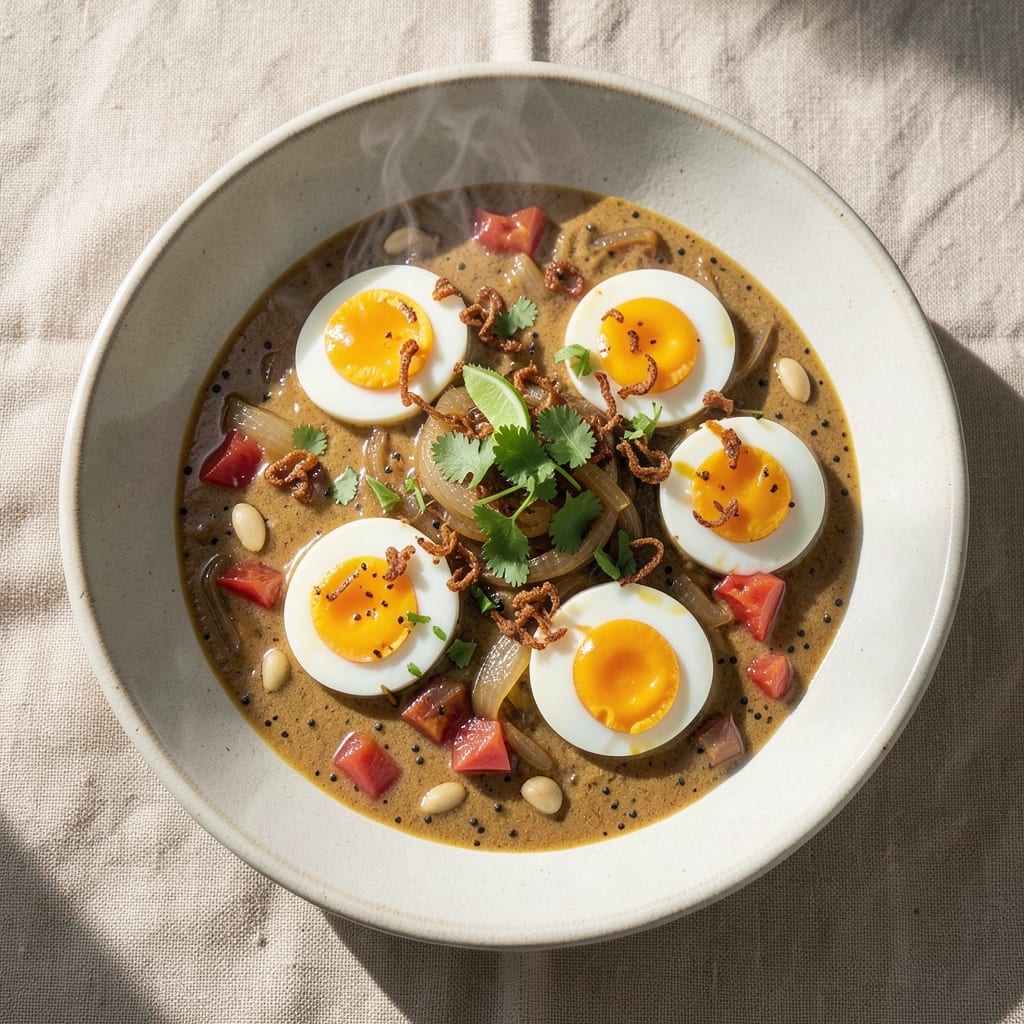
This delicious egg curry recipe transforms simple eggs into a rich, velvety masterpiece that’ll have you reaching for seconds. 💛 The secret lies in a fragrant blend of spices and coconut cream that creates a sauce so smooth, it’ll make you forget you’re eating eggs for breakfast. I’ve perfected this version to deliver restaurant-quality flavor in just 30 minutes—no shortcuts, just bold, comforting taste that’s perfect for lazy weekends or quick weeknight dinners.
What makes this curry special is the balance of textures and flavors: tender eggs (scrambled or hard-boiled, your choice) nestled in a spiced coconut gravy that’s creamy yet tangy, with just the right kick of heat. The aromatics—garlic, ginger, and onions—sautéed until golden form the foundation, while warm spices like cumin, coriander, and turmeric infuse every bite with depth. It’s the kind of dish that feels indulgent but comes together effortlessly.
By the time you’re done, you’ll have a steaming bowl of golden curry with eggs that soak up the rich, fragrant sauce perfectly. The sauce clings to every spoonful, offering a harmonious blend of creamy coconut, smoky spices, and the subtle richness of eggs. Serve it over steamed basmati rice or with warm naan for the full experience—each bite is a little taste of comfort that’s impossible to resist.
This recipe is incredibly versatile too. Swap in chickpeas for extra protein, adjust the spice level to your liking, or even make it ahead and reheat it for an even deeper flavor. Whether you’re feeding a crowd or treating yourself to a cozy solo meal, this egg curry delivers big on flavor without the fuss. Let’s get cooking!
Ingredients for delicious egg curry
Simple ingredients that turn into a velvety, spiced egg curry in 30 minutes.
| Ingredient | Amount | Notes |
|---|---|---|
| Large Eggs 🥚 | 8 whole | Scrambled or hard-boiled preferred |
| Coconut Cream 🥥 | 1 cup | Full-fat for best texture |
| Yellow Onion 🧅 | 1 whole | Medium size, finely chopped |
| Fresh Ginger 🌿 | 1 tbsp | Grated, freshly peeled |
| Garlic Cloves 🧄 | 4 cloves | Minced, fresh preferred |
| Ground Cumin 🌶️ | 1 tsp | Freshly toasted for aroma |
| Ground Coriander 🌿 | 1 tsp | Freshly ground preferred |
| Turmeric Powder 🧂 | ½ tsp | Bright yellow for color |
| Ground Cayenne Pepper 🔥 | ¼ tsp | Adjust for heat preference |
| Extra-Virgin Olive Oil 🫒 | 2 tbsp | For sautéing aromatics |
| Vegetable Broth 💧 | ½ cup | Low-sodium preferred |
| Lemon Juice 🍋 | 1 tbsp | Freshly squeezed |
| Fresh Cilantro 🌿 | ¼ cup | Chopped, for garnish |
| Basmati Rice 🍚 | 1 cup | Uncooked, for serving |
The coconut cream is non-negotiable here—full-fat canned coconut milk works best, but if you only have light, use it and add an extra tablespoon of cream at the end. Trader Joe's has the best-priced cans, or grab a Thai brand for extra richness. Fresh ginger and garlic? Always buy extra—you’ll want these for other dishes. The onions should be sweet, not bitter, so grab a yellow or white one. For the eggs, grab whatever’s on sale—scrambled or hard-boiled both work perfectly.
No fresh ginger? Powdered ginger at half the amount gets you close, but it’s not the same. Cayenne too spicy? Swap for smoked paprika—it’ll give you that smoky depth without the heat. Running low on cilantro? Fresh parsley works in a pinch, though it’s not traditional. The vegetable broth can be homemade or store-bought—just make sure it’s low-sodium. And if you’re out of basmati rice, jasmine rice is a great substitute—just cook it a little longer.
This curry tastes even better the next day—make extra and reheat. Store in an airtight container in the fridge for 4-5 days, or freeze portions for up to 3 months. I always double the sauce and freeze half—perfect for lazy mornings. The rice keeps well too, but cook it fresh for the best texture. Garnish with extra cilantro right before serving—it brightens up the dish instantly.
Why You'll Love This Recipe
- One-Pot Magic: I swear by this—just fry the onions, toss in garlic and ginger, crack in those eggs, then blanket it all with coconut cream. No extra pans, no fuss, and the eggs soak up every bit of that rich, spiced sauce like a dream.
- Creamy Crisp Perfection: That crispy egg edge against the velvety coconut cream? It’s the kind of contrast that makes you pause mid-bite. The ginger and garlic add a slow-building warmth that lingers, so you’ll want seconds before you even finish your first spoonful.
- Leftover Goldmine: This curry actually improves the next day. The eggs soften just enough to melt into the sauce, and the flavors deepen—perfect for quick lunches or reheating over rice. Honestly, I make double portions just for this reason.
- Budget-Friendly Luxury: Eggs and coconut cream stretch into a meal that feels indulgent without breaking the bank. A single onion and a handful of garlic transform basic ingredients into something restaurant-worthy, and you’ll still have change left for naan.
Step-by-step instructions for delicious egg curry
Here's how to make this velvety coconut egg curry with rich spices and tender eggs.
🍳 Step 1: Sauté Aromatics Until Fragrant
Heat the 2 tablespoons extra-virgin olive oil in a large skillet over medium heat. Add the 1 whole yellow onion, 1 tablespoon fresh ginger, and 4 cloves garlic cloves all at once. Stir constantly for 4-5 minutes until the onions turn golden brown and the garlic becomes fragrant—this builds the flavor base.
Here's the thing—don't rush this step. You'll know it's ready when the onions caramelize slightly and release their sweetness. If the onions start to brown too quickly, reduce the heat slightly to prevent burning. This aromatic foundation is what makes the curry taste so complex and inviting.
👨🍳 Step 2: Toast Spices and Add Coconut Cream
Add the 1 teaspoon ground cumin, 1 teaspoon ground coriander, 0.5 teaspoon turmeric powder, and 0.25 teaspoon ground cayenne pepper to the skillet. Stir for 30 seconds until the spices are fragrant and toasted—this activates their flavors. Immediately pour in the 1 cup coconut cream and stir well to combine.
Let the mixture simmer gently for 2-3 minutes until it starts to thicken slightly. The coconut cream should coat the back of a spoon but still be pourable. This is where the curry starts to come together—don't walk away. Stir occasionally to prevent the spices from settling at the bottom and burning.
🍳 Step 3: Prepare the Eggs and Simmer
In a separate bowl, whisk the 8 whole large eggs with 1 tablespoon lemon juice until well combined. This helps prevent the eggs from curdling in the hot curry. Pour the egg mixture into the skillet with the coconut cream mixture and stir gently but constantly for 3-4 minutes over low heat.
You'll see the eggs start to thicken and form soft curds. The curry should look creamy and velvety rather than scrambled. If it starts to stick to the pan, add 1-2 tablespoons vegetable broth to loosen it. The eggs should be just set but still moist—this ensures they stay tender and creamy rather than dry.
🥘 Step 4: Finish and Garnish
Pour in the 0.5 cup vegetable broth and stir well. Let the curry simmer gently for 3-4 minutes until it reaches your desired consistency—it should coat the back of a spoon but still be spoonable. Taste and adjust seasoning with more salt if needed (though the spices should already be well-balanced).
Remove the skillet from heat and stir in the 0.25 cup fresh cilantro. Let the curry sit for 2-3 minutes to thicken slightly. Serve immediately over 1 cup cooked basmati rice—the warm rice soaks up the creamy curry beautifully. Garnish with additional cilantro if desired, and enjoy while warm.
Pro Tips For Making Delicious Egg Curry
- Crack Eggs Cold: I learned this the hard way—warm eggs slide into curry unevenly and break into messy chunks. Pop them straight from the fridge into simmering coconut cream, and they’ll hold their shape like perfect little soft-boiled eggs. The heat does the work for you, and the yolks stay gloriously runny.
- Sweat Onions Low: High heat caramelizes onions too fast, and you’ll end up with bitter bits instead of sweet, jammy base. Keep your pan on medium-low, stir every 30 seconds, and resist the urge to rush. After 8-10 minutes, they’ll be golden without burning—trust the process, even if it feels slow.
- Grate Ginger Fine: Pre-packaged ginger paste is convenient, but fresh ginger makes all the difference. Use a microplane or the smallest holes on a box grater—you want it almost liquid-like. Too many chunks? It’ll sit like rubber in your curry. (Yes, even if you’re impatient like me.)
- Simmer Coconut Cream Gently: Coconut cream splits into a greasy mess if you boil it hard. Once you add it to the onions and spices, reduce heat to a bare simmer—just enough to see tiny bubbles at the edges. This keeps the cream rich and velvety, not curdled. (Your future self will thank you.)
Essential equipment for great delicious egg curry
Skillet Essentials
Start with a heavy-bottomed stainless steel skillet like the All-Clad D5—it distributes heat evenly and prevents burning. I’ve found that a 10-inch or 12-inch size works best for this recipe, giving enough room for the eggs to cook gently without crowding. If you don’t have stainless steel, a well-seasoned cast iron skillet (like Lodge) will work just as well, but preheat it longer to avoid temperature fluctuations. 🔥
Spice Toasting Tools
A small metal spoon (like a spork or mini ladle) is perfect for stirring and toasting spices without burning them. Avoid plastic utensils—they can melt under high heat. For extra precision, I like using a mortar and pestle to grind whole spices (like coriander seeds) fresh before adding them to the pan. If you’re short on time, pre-ground spices from Penzeys or Burlap & Barrel work fine, but toasting them still boosts flavor. ✨
Measuring & Prep Gear
Grab a microplane for the ginger and garlic—it’s faster than a grater and gives you fine, even shreds. A fine-mesh strainer comes in handy if you prefer smooth coconut cream (strain out any lumps before adding). For measuring, a digital kitchen scale ensures precision with spices, but I often eyeball the 1 teaspoon cumin and ½ teaspoon turmeric since small variations won’t ruin the dish. 💡
Optional Upgrades
If you love coconut cream, invest in a high-quality can opener—like the OXO Good Grips—to open cans cleanly without splashing. For garnishes, a pair of sharp kitchen shears makes chopping cilantro effortless. And if you’re making this often, a small immersion blender helps smooth out the sauce if it gets too thick. Trust me, these small tools make a big difference in the final result. 🌿
Budget-Friendly Swaps
No fancy tools? No problem. A wooden spoon works for stirring, and a cheap grater or even a knife will do for ginger and garlic. For measuring spices, use the tip of a knife for ¼ teaspoon cayenne or the rim of a teaspoon for ½ teaspoon turmeric. A non-stick skillet can replace stainless steel, but monitor the heat closely to avoid sticking. The key is patience—this curry forgives minor shortcuts. 💛
Nutrition facts
Frequently asked questions
Can I use scrambled eggs instead of whole eggs in this curry?
Scrambled eggs work beautifully for texture and flavor. For best results, cook them just until set (soft curds) before adding to the curry. This ensures they stay creamy rather than dry. If using pre-cooked scrambled eggs, warm them gently in the coconut cream mixture to blend flavors perfectly.
How can I make this egg curry less spicy?
Simply reduce or omit the cayenne pepper entirely. For a milder kick, swap it with ½ teaspoon smoked paprika instead. You can also add a pinch of sugar (about ¼ teaspoon) to balance any remaining heat. Taste as you go—adjust gradually to avoid overpowering the dish.
What’s the best way to reheat leftover egg curry?
Reheat gently on low heat in a skillet with a splash of water or coconut cream to prevent drying. For microwave reheating, cover with a damp paper towel and heat in 30-second bursts
Can I make this curry without coconut cream?
Yes! Substitute with ½ cup heavy cream + ½ cup water for a similar texture. For extra richness, add 1 tablespoon butter when toasting spices. The flavor will be slightly different but still delicious. If you prefer dairy-free, use ½ cup cashew cream (blended soaked cashews + water) instead.
Why did my egg curry turn out too thick?
This usually happens if the coconut cream wasn’t stirred enough or simmered too long. To fix it, whisk in 1-2 tablespoons warm vegetable broth or water while heating. For prevention, keep stirring constantly and reduce heat to low-medium** after adding eggs. The curry should coat a spoon but still be spoonable.