
Breakfast & Brunch
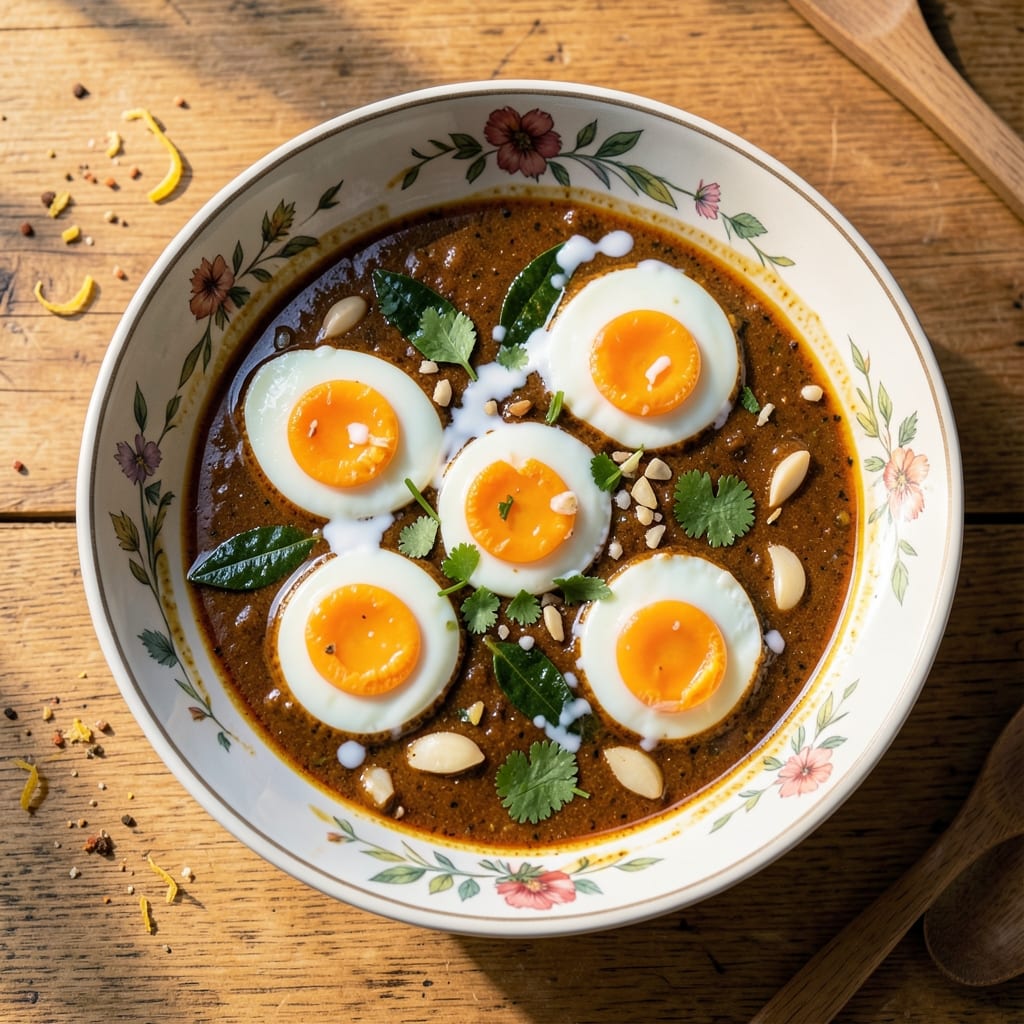
This broken egg curry recipe transforms simple eggs into a rich, aromatic dish that tastes like a hug in every bite. The secret lies in gently tempering whole eggs in a spiced coconut gravy, where they soften into velvety curds without breaking—until they do, creating a luxurious, broken-yolk texture that blends seamlessly into the sauce. What starts as a humble breakfast staple becomes a restaurant-worthy meal with just a few key techniques and patient simmering.
The foundation is a fragrant coconut base infused with warm spices like cumin, coriander, and turmeric, balanced by the bright tang of mustard seeds and curry leaves. The eggs cook low and slow, absorbing the flavors while maintaining their natural richness, resulting in a dish that’s creamy yet light, spicy yet comforting. This method ensures no egg bits remain—just a silky, golden curry that coats every spoonful.
Serve it with steamed basmati rice or warm roti to soak up every last drop of that fragrant coconut gravy. The broken eggs create a luxurious mouthfeel, while the spices deliver a satisfying warmth that lingers. Perfect for breakfast, brunch, or even a quick weeknight dinner, this curry proves comfort food doesn’t have to be complicated—just well-executed.
For those avoiding eggs, the same technique works with paneer or tofu, maintaining the dish’s signature creamy texture. The recipe scales effortlessly, making it ideal for feeding a crowd or meal prepping. Let’s bring this one-pan wonder to life—where every bite feels like a celebration.
Ingredients for broken egg curry
Spiced coconut milk, velvety eggs, and aromatic herbs transform this humble curry into a luxurious comfort dish.
| Ingredient | Amount | Notes |
|---|---|---|
| Large Eggs 🥚 | 8 whole | Room temperature preferred |
| Coconut Milk 🥥 | 1 can | Full-fat, 13.5 oz can |
| Fresh Cilantro 🌿 | ½ cup | Chopped, stems removed |
| Fresh Curry Leaves 🌿 | ¼ cup | Or 1 tbsp dried substitute |
| Fresh Ginger 🧄 | 2 tbsp | Finely grated, peeled |
| Garlic Cloves 🧄 | 6 cloves | Minced, peeled |
| Ground Cumin 🌿 | 1 tsp | Freshly toasted preferred |
| Ground Coriander 🌿 | 1 tsp | Freshly ground preferred |
| Turmeric Powder 🌶️ | ½ tsp | Bright yellow, fresh |
| Mustard Seeds 🌶️ | 1 tsp | Yellow or brown |
| Green Chili Peppers 🌶️ | 2 whole | Slit lengthwise, seeds removed |
| Onion 🧅 | 1 medium | Finely chopped |
| Tomato Paste 🍅 | 2 tbsp | Smooth, no sugar added |
| Salt 🧂 | 1 tsp | Kosher or sea salt |
| Black Pepper 🌶️ | ½ tsp | Freshly ground preferred |
| Olive Oil 🫒 | 2 tbsp | Extra-virgin for richness |
| Lemon Juice 🍋 | 1 tbsp | Freshly squeezed |
The coconut milk is the heart of this dish—full-fat for the richest texture. Thai Kitchen or Goya cans work perfectly, but avoid the light versions. Fresh curry leaves are ideal, but if you can't find them, dried curry powder at half the amount will do. Ginger and garlic should be freshly grated and minced—pre-minced jars lose flavor fast. For the cilantro, I always grab a big bunch and use half fresh, half for garnish. Trader Joe's has the freshest, brightest herbs if you're near one.
No curry leaves? Dried curry powder works, but it lacks that distinctive aroma. Mustard seeds are non-negotiable—they add a wonderful crunch and depth. If you're sensitive to heat, remove the seeds from the green chilies before slitting them. The tomato paste can be swapped for 1/4 cup puréed tomato if you prefer. For a creamier texture, stir in 1/4 cup coconut cream at the end. The eggs should be at room temperature for even cooking—take them out 30 minutes before starting.
This curry tastes even better the next day as the flavors meld. Store leftovers in an airtight container for up to 4 days in the fridge. Freezes beautifully for 3 months—the eggs hold up well when reheated gently. I always make a double batch because it disappears fast. Garnish with extra cilantro and a squeeze of lemon before serving—trust me on the fresh lemon.
Why You'll Love This Recipe
- One-Pot Magic: I swear by this for lazy nights—just crack those eggs into a simmering pot with coconut milk, curry leaves, and ginger, then let it do the work. No pans to wash, no fuss, and honestly? The rich aroma alone makes me forget I’m cooking.
- Ginger-Coconut Bliss: That fresh ginger and coconut milk combo? It’s like a hug in a bowl. The eggs soak up the fragrant, slightly spicy-sweet sauce, while the curry leaves add a bright, herbal punch that lingers. My husband always asks for seconds—proof it’s crave-worthy.
- Meal Prep MVP: Make a big batch on Sunday, and you’ve got lunch or dinner covered all week. The curry thickens beautifully when reheated, and the eggs stay tender. I pack it in jars with rice—my kids devour it cold or hot, no complaints.
- Budget-Friendly Luxury: Eggs and coconut milk stretch this dish into a full meal without breaking the bank. Fresh cilantro and curry leaves feel fancy, but a few stems go a long way. Between us? This is my go-to when I want restaurant-quality flavor for half the price.
Step-by-step instructions for broken egg curry
This one-pan method delivers rich, aromatic curry with tender eggs in under 30 minutes.
Prepare the Spiced Base
Heat the 2 tablespoons olive oil in a large skillet over medium heat. Add the 1 teaspoon mustard seeds and let them sizzle for 30 seconds until they begin to pop. This is your signal to add the 1 medium onion, finely chopped, and cook for 5 minutes until softened and translucent.
Stir in the 2 tablespoons fresh ginger and 6 cloves garlic cloves, minced, cooking for another 2 minutes until fragrant. The aroma should fill your kitchen—this is where the foundation of your curry's flavor develops. Add the 2 tablespoons tomato paste, 1 teaspoon ground cumin, 1 teaspoon ground coriander, 0.5 teaspoon turmeric powder, 1 teaspoon salt, and 0.5 teaspoon black pepper. Cook for 1 minute to toast the spices and deepen their flavors.
Build the Coconut Herb Layer
Pour in the 1 can coconut milk and stir well to combine with the spiced base. Add the 2 whole green chili peppers, slit lengthwise, and the 0.25 cup fresh curry leaves. Bring the mixture to a gentle simmer over medium-low heat, then reduce heat to maintain a slow bubble. Let it cook for 5 minutes to allow the coconut milk to infuse with the spices.
Here's the thing—don't rush this step. The coconut milk should reduce slightly, becoming thicker and more flavorful. You'll see the curry leaves float to the surface and the chilies soften slightly. This is when the curry starts to develop its signature richness and depth of flavor.
Cook the Eggs to Perfect Tenderness
Crack the 8 whole large eggs directly into the simmering curry. Gently stir the eggs with a wooden spoon, distributing them evenly throughout the coconut mixture. The eggs will begin to curdle almost immediately—this is normal and creates that signature broken egg texture we're after.
Let the curry simmer gently for 8-10 minutes, stirring occasionally. You're looking for the eggs to become tender but still slightly runny in the center. The curry should coat the eggs completely, creating a luxurious sauce that clings to each piece. If the sauce becomes too thick, add 2-3 tablespoons water to maintain the right consistency.
Finish with Fresh Herbs and Brightness
Remove the skillet from heat and stir in the 0.5 cup fresh cilantro and 1 tablespoon lemon juice. The lemon juice will brighten the flavors and cut through the richness of the coconut milk. Taste and adjust seasoning if needed—you might want to add a pinch more salt or a dash of black pepper to balance the flavors.
Let the curry rest for 2-3 minutes off the heat. This allows the flavors to meld together completely. The eggs should be perfectly tender with just a hint of runniness in the center, and the curry should have a velvety texture that coats each bite. Serve immediately with steamed basmati rice or crusty naan bread for a complete meal.
Pro Tips For Making Broken Egg Curry
- Crack Eggs Cold: I learned this the hard way—warm eggs slide into the pan like greased lightning, but they’ll turn to scrambled mess before the curry even gets going. Pop them straight from the fridge into the hot oil, and they’ll hold their shape long enough to sear properly. (Yes, even if you’re impatient like me.)
- Toast Curry Leaves First: Skip this, and your curry smells like a missed opportunity. Dry-toast the curry leaves in oil for 10 seconds until they darken—just before they start to pop. That’s when they release their full aroma. Dump them in later, and you’re just flavoring with perfume.
- Blend Ginger Roughly: My grandmother swore by this, and she was right: grate the ginger coarsely (no food processor here), then crush it with the flat of your knife in the pan. Fine ginger turns to mush and disappears—you want chunks that dissolve into the curry, not vanish like they never existed.
- Simmer Coconut Milk Low: High heat turns coconut milk into a sad, separated puddle. Once you add it, drop the heat to a bare simmer—just enough to see tiny bubbles at the edges. Let it cook for 5 minutes before adding the eggs, or you’ll end up with a watery, flavorless soup. (Your future self will thank you.)
Regional styles of broken egg curry
Andhra-Style Egg Curry
In Andhra Pradesh, this curry takes center stage as a breakfast staple, where eggs are gently simmered in a tangy, spiced gravy. The key difference? A generous dose of red chili powder (about 1 tsp) and tamarind pulp (1 tbsp) for that signature sour kick. I like to add 1 tsp fenugreek seeds when tempering the oil—they add a subtle bitterness that balances the richness. Serve it with steamed rice and a side of mango pickle for a true Andhra experience. 🌶️
South Indian Coconut Curry
This version replaces coconut milk with a tomato-onion base but keeps the broken egg technique. Add 1 tsp asafoetida (hing) when tempering the mustard seeds for depth, and finish with 1 tbsp coconut flakes for texture. The dish is lighter but still creamy, perfect with appam or dosa for breakfast. I often use 1 tsp curry powder instead of individual spices for convenience. 🥥
Kerala-Style Spiced Egg Curry
Kerala’s take leans heavily on kerala curry leaves (if available) and black pepper for heat. The eggs are cooked in a coconut milk and yogurt blend (mix ½ cup yogurt with the coconut milk) for extra creaminess. Add 1 tsp grated coconut at the end for a fragrant finish. This version pairs beautifully with parotta or steamed rice. The yogurt adds a tangy contrast that’s hard to resist. 🌿
Goan Egg Curry
Goan cuisine brings vinegar (about 1 tbsp) to the party, creating a bright, tangy curry. The eggs are simmered in a coconut milk and tomato sauce with 1 tsp fennel seeds for warmth. Garnish with fresh coriander and a squeeze of lime. This version is lighter but packs a punch—ideal for a quick lunch with Goan bread or steamed rice. The vinegar cuts through the richness beautifully. 🍋
Tamil Nadu Broken Egg Curry
Tamil Nadu’s version is all about mustard seeds and curry leaves, with a touch of sugar (½ tsp) to balance the heat. The eggs are cooked in a coconut milk and tomato gravy with 1 tsp sesame seeds tempered at the end. Serve with idli or dosa for a complete meal. The sugar might sound unusual, but it rounds out the spices perfectly. 🌿
Modern Fusion Twist
For a contemporary take, swap coconut milk for cashew cream (blend ½ cup soaked cashews with ½ cup water) and add 1 tsp smoked paprika for depth. Finish with fresh mint and a drizzle of chili oil. This version works as a weeknight dinner with crusty bread or over quinoa. The smoky element elevates the dish to restaurant-quality. 🔥
Nutrition facts
Frequently asked questions
Why do you add whole eggs instead of breaking them first?
Adding whole eggs creates a luxurious broken-yolk texture as they gently curdle in the warm coconut gravy. This method ensures even cooking and a velvety sauce that coats every bite. Breaking them first would make the curry too watery and uneven in texture.
Can I use a different milk instead of coconut milk?
Yes! For a lighter version, try cashew cream (blend soaked cashews with water) or half-and-half. For extra richness, swap in heavy cream. However, coconut milk provides that signature depth and creaminess that makes this curry special.
What if my eggs turn rubbery or overcook?
This happens if the heat is too high or the curry simmers too long. Keep the heat at medium-low and stir gently. Remove the pan from heat when eggs are still slightly runny in the center—they’ll finish cooking from residual heat. If overcooked, stir in 1-2 tablespoons coconut milk to restore creaminess.
How can I make this curry less spicy?
Reduce the green chilies to 1 whole or remove seeds entirely. Skip the mustard seeds or use white mustard seeds (milder). For extra mildness, add 1 tsp sugar at the end to balance heat. Always taste as you go!
Can I prep this curry ahead of time?
Make it 1 day ahead and refrigerate. The flavors deepen overnight, and the eggs hold up well. Reheat gently on low heat with 1-2 tablespoons water or coconut milk to prevent drying. For best texture, serve warm.