
Main Courses
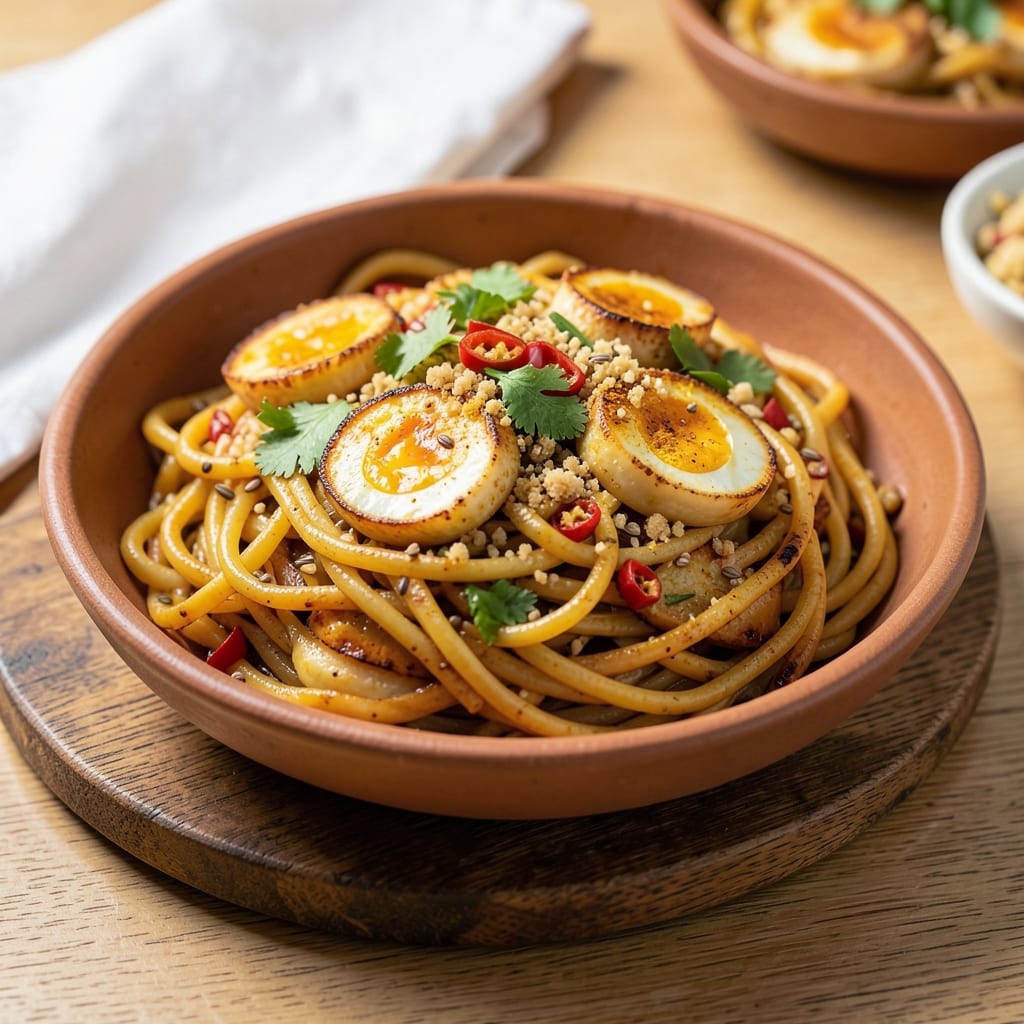
This Bengali egg pasta recipe transforms simple ingredients into a fragrant, spiced dish that feels like a hug from your grandmother's kitchen. 💛 The secret lies in blending turmeric, mustard oil, and poppy seeds—a perfect marriage of Bengali flavors with Italian comfort. I developed this recipe after realizing how much my family missed the warmth of traditional Bengali meals when craving pasta nights.
What makes this dish special is its simplicity: just one pan, 30 minutes, and a handful of ingredients that deliver restaurant-quality results. The egg pasta absorbs the aromatic spice blend while staying tender, and the mustard oil adds that signature depth that's hard to replicate. This recipe bridges two cuisines beautifully, proving you don't need to choose between tradition and convenience.
By the time you're done, you'll have a golden, fragrant dish with perfectly cooked egg pasta coated in a rich, spiced sauce. The turmeric gives it that signature color, while the poppy seeds add a delightful crunch. It's the kind of meal that tastes even better the next day—ideal for meal prep or a cozy weeknight dinner when you crave something comforting yet exciting.
The best part? This recipe adapts effortlessly to your preferences. Add fried onions for extra crunch, serve with a side of raita for cooling contrast, or sprinkle fresh coriander for brightness. Every bite delivers that perfect balance of spices and textures, making it a dish you'll want to return to again and again.
Ingredients for bengali egg pasta
Golden egg pasta meets aromatic Bengali spices in this one-pan wonder—just 14 ingredients for maximum flavor.
| Ingredient | Amount | Notes |
|---|---|---|
| Eggs 🥚 | 4 large | Room temperature for even cooking |
| All-Purpose Flour 🌾 | 2 cups | High-protein preferred for chewiness |
| Semolina Flour 🌾 | ½ cup | For authentic texture |
| Mustard Oil 🫒 | ¼ cup | Lightly toasted for aroma |
| Turmeric Powder 🌿 | 1 tbsp | Freshly ground preferred |
| Ground Cumin 🌿 | ½ tsp | Toasted for deeper flavor |
| Yellow Onion 🧅 | 1 medium | Finely chopped for sauce base |
| Garlic Cloves 🧄 | 4 cloves | Minced for aromatic depth |
| Poppy Seeds 🌰 | 2 tbsp | Toasted for nutty crunch |
| Salt 🧂 | 1 tsp | Diamond Crystal preferred |
| Black Pepper 🌶️ | ¼ tsp | Freshly cracked for heat |
| Fresh Coriander 🌿 | ¼ cup | Chopped for fresh brightness |
| Unsalted Butter 🧈 | 2 tbsp | For richness in pasta |
| Heavy Cream 🥛 | ¼ cup | For velvety texture |
Mustard oil is the heart of this dish—look for pure, unrefined oil at Indian grocery stores like Patel Brothers or Apna Bazaar. The turmeric should be vibrant yellow, not dull; Everest brand is a safe bet if you can't find fresh. Poppy seeds are worth toasting in the mustard oil until fragrant (about 30 seconds)—that nutty aroma transforms the dish. For the onions, yellow or red work best; Vidalia will make it sweeter but isn't traditional. Fresh coriander is ideal, but dried works at half the amount if you're in a pinch.
No mustard oil? Toasted sesame oil at half the amount works surprisingly well, though it lacks that signature Bengali depth. Substituting semolina? Extra all-purpose flour keeps it workable, but texture will be slightly different. The butter can be swapped for vegan butter if needed, though it won't brown as beautifully. For a quicker version, pre-chop your onions and garlic while the pasta cooks—saves precious minutes. Want more heat? Add a pinch of cayenne with the black pepper.
This dish reheats beautifully—add a splash of water or milk to prevent drying. Keeps 4-5 days in the fridge, though it's best within 2 days for peak texture. Freezes for 3 months, but the pasta may get slightly gummy after thawing. I always make a double batch: one for dinner, one for pasta salad the next day. For leftovers, store in an airtight container with parchment between layers to prevent sticking.
Why You'll Love This Recipe
- Pantry Staples Only: I swear by this recipe because it uses what I already have—no fancy ingredients, just eggs, flour, and that one bottle of mustard oil gathering dust. Honestly, the semolina gives it a texture that’s way better than store-bought noodles, and the turmeric? Tiny but mighty for that golden hue.
- Mustard Oil Magic: That first hit of mustard oil when you fry it—chef’s kiss—it’s the star. The nutty, slightly pungent aroma sticks to every strand, and the flavor? It’s like a warm hug for your taste buds. (Yes, even on a Tuesday night when you’re craving something bold.)
- Leftover Reinvention: This pasta reheats like a dream and tastes just as good cold, packed in lunchboxes or tossed with veggies for a quick dinner. Between us, I’ve turned day-old portions into stir-fries, curries, and even a makeshift frittata—no waste, all flavor.
- Kid-Approved Crunch: The semolina flour mix makes it sturdy enough for little hands to grip, and the egg holds it together without getting mushy. My daughter picks out the pieces with the most golden-brown spots first—proof it’s not just delicious, but fun to eat.
Step-by-step instructions for Bengali egg pasta
Here's where the magic happens—simple ingredients transform into a fragrant, golden pasta that's pure comfort in every bite.
👨🍳 Step 1: Create the Perfect Dough with Eggs and Flours
In a large mixing bowl, combine the 4 large eggs at room temperature with 2 cups all-purpose flour and 0.5 cup semolina flour. The semolina adds that signature toothsome texture we love in Bengali pasta. Use a fork to break up any flour clumps before mixing.
Gradually incorporate 0.25 cup mustard oil (lightly toasted for aroma) and 1 tbsp turmeric powder into the mixture. The turmeric gives that beautiful golden hue and subtle earthy warmth. Knead everything together with your hands until you form a smooth, elastic dough that doesn't stick to your fingers.
Here's the thing—this dough needs to rest. Wrap it tightly in plastic wrap and let it rest for 30 minutes at room temperature. This relaxation period develops gluten properly, ensuring your pasta holds its shape beautifully when cooked.
🥘 Step 2: Build the Flavorful Onion-Garlic Base
While the dough rests, heat 2 tbsp unsalted butter in a large skillet over medium-low heat. Add the finely chopped 1 medium yellow onion and cook slowly for 8-10 minutes until the onions turn a deep golden brown—this is where all the sweetness caramelizes.
Add the 4 minced garlic cloves and 0.5 tsp toasted ground cumin, stirring constantly for 1 minute until fragrant. The cumin should sing with warmth, and the garlic should melt into the onions without burning. This aromatic base is the soul of our pasta.
Remove the skillet from heat and set aside—we'll return to it once our pasta is ready. This timing is crucial because we want that onion-garlic mixture to be at peak flavor when combined with the cooked pasta.
🔥 Step 3: Roll and Cook the Pasta to Al Dente Perfection
Divide the rested dough into 4 equal portions. Working with one piece at a time, roll it out on a floured surface to about ⅛-inch thickness using a rolling pin. Cut into ¼-inch wide strips—this is where your knife skills matter most for even cooking.
Bring a large pot of well-salted water to a rolling boil. Cook the pasta in batches for 2-3 minutes until it's al dente—you'll know it's perfect when it floats to the surface and has a slight bite to it. Drain immediately and toss with the onion-garlic mixture in the skillet.
Don't drain all the pasta water—reserve ½ cup to help create a silky sauce later. The starchy water is our secret weapon for binding everything together beautifully.
🍳 Step 4: Finish with Creamy Richness and Poppy Crunch
Return the skillet to low heat and stir in the 0.25 cup heavy cream. Let it warm through for 1-2 minutes until it just begins to thicken slightly. The cream should coat the back of a spoon but remain velvety—not thick enough to curdle.
Season generously with 1 tsp salt and 0.25 tsp freshly cracked black pepper. Now for the finishing touches—gently fold in the 2 tbsp toasted poppy seeds and 0.25 cup chopped fresh coriander. The poppy seeds add that delightful nutty crunch, while the coriander brings bright freshness to balance the richness.
Taste and adjust seasoning if needed—this is your moment to perfect the balance between the earthy spices, creamy richness, and fresh herbs. Serve immediately while still piping hot, garnished with extra coriander if you're feeling fancy.
Pro Tips For Making Bengali Egg Pasta
- Mix by Hand: I know, I know—kneading pasta by hand feels like work after years of food processors. But for Bengali egg pasta, the semolina’s grit needs that rough treatment. Work the dough for 8-10 minutes until it’s smooth and springs back when poked—no elastic, bouncy dough here, just firm and slightly sticky. (Yes, even if your arms protest.)
- Sift the Semolina: That semolina’s texture is everything—clumpy semolina means gummy pasta. Sift it twice through a fine-mesh sieve before mixing, then whisk it into the flour first. I learned this the hard way when my first batch turned out like chewy rubber. Also, don’t skimp: the 1:1 ratio with all-purpose flour is non-negotiable for that signature crunch.
- Rest the Dough: Wrap the dough in plastic and let it sit for at least 30 minutes—no, not 10, not 20. The gluten relaxes, and rolling it out becomes a breeze. I used to skip this and ended up with uneven sheets that split like brittle paper. (Your future self will curse you if you don’t.)
- Use Cold Mustard Oil: Heat mustard oil straight from the fridge—room temperature oil burns fast and turns bitter. Warm it just until it shimmers (about 2 minutes on low), then add turmeric and let it bloom for 30 seconds. Trust me, the flavor difference is night and day. (And yes, even if you’re impatient like me.)
Serving suggestions for bengali egg pasta
Creamy Raita Pairing
This dish sings with the cooling contrast of mint-cucumber raita. Mix 1 cup plain yogurt with ½ cup finely diced cucumber, 2 tbsp fresh mint, ½ tsp cumin powder, and a pinch of salt. The yogurt's tang cuts through the richness while the cucumber adds refreshing crunch. I like to serve it in a small bowl on the side so everyone can scoop it up with each bite. 💛
Crispy Fried Onions
For that extra crunch, try fried onions on top. Thinly slice 1 large yellow onion and fry in 2 tbsp mustard oil over medium heat for 5-6 minutes until golden brown. Sprinkle them generously over the finished pasta just before serving—they add a sweet, caramelized contrast that elevates every forkful. Store-bought fried onions work in a pinch, but homemade tastes infinitely better.
Warm Flatbreads
Serve with homemade phulka or store-bought naan for dipping. Brush warm flatbreads with a little more mustard oil and sprinkle with toasted cumin seeds for an aromatic touch. The soft, pillowy texture pairs perfectly with the chewy egg pasta. If you're short on time, even a simple garlic toast works beautifully—just rub a cut baguette with a garlic clove and toast until crispy.
Spicy Pickle Side
A small side of mango pickle or green chili pickle adds a tangy kick that balances the dish's creaminess. Look for mango achar at Indian grocery stores like Apna Bazaar or make your own with 1 cup diced mangoes, 1 tbsp mustard seeds, 1 tsp turmeric, and 1 tsp red chili powder. A single spoonful per serving is all you need to wake up your palate. ✨
Herb Garnish Options
Fresh herbs transform the dish at the last minute. Try cilantro for brightness, thinly sliced green onions for freshness, or toasted sesame seeds for nutty depth. I often mix all three for a vibrant finish. For extra flair, add a few fried shallots—they add a delicate crunch that disappears with the first bite. The key is to garnish just before serving so the herbs stay fresh and fragrant.
Beverage Pairings
Cool down with masala chai or a refreshing mango lassi—both complement the dish's warm spices beautifully. For something lighter, try sparkling lime soda with a pinch of salt. Avoid heavy wines; instead, opt for a crisp Sauvignon Blanc if you're serving this at a dinner party. The acidity cuts through the richness while letting the spices shine. 🍹
Nutrition facts
Frequently asked questions
Can I make this pasta without mustard oil?
Yes! While mustard oil gives that signature Bengali flavor, you can substitute it with toasted sesame oil at half the amount (about 2 tablespoons) for a similar nutty aroma. For a milder option, use olive oil, but the dish will taste more neutral. The key is to toast the oil lightly before adding it to the dough to enhance its flavor.
How do I know when the pasta dough is ready?
The dough is ready when it's smooth, elastic, and doesn't stick to your fingers. If it feels too dry, add 1 teaspoon water at a time until it's pliable. If it's too sticky, knead in 1 tablespoon extra flour. The 30-minute rest is crucial—it helps develop the gluten for perfect texture. You'll know it's rested properly when it springs back slightly when pressed.
What if I don't have semolina flour?
Don't worry! You can substitute all-purpose flour in a 1:1 ratio, though the texture will be slightly less chewy. For a closer match, mix half all-purpose flour with half cornmeal—the cornmeal adds a slight toothsome quality similar to semolina. The dish will still taste delicious, just with a slightly different mouthfeel.
Can I make this pasta ahead of time?
Cook the pasta as directed, then store it in an airtight container in the fridge for up to 3 days. Reheat gently with a splash of water or milk to prevent drying. For best results, reheat in a skillet over low heat until warmed through. The flavors actually improve after resting, making it perfect for meal prep.
Why does my pasta turn out gummy?
Gummy pasta usually means it was overcooked or didn't rest enough. Always cook it for just 2-3 minutes in boiling water until al dente—it should have a slight bite. Also, ensure your dough rested for the full 30 minutes before rolling. If using store-bought flour, check its protein content—high-protein flour (like bread flour) can make pasta chewier. For a quick fix, toss cooked pasta with 1 teaspoon lemon juice to tighten the strands.