
Soups & Stews
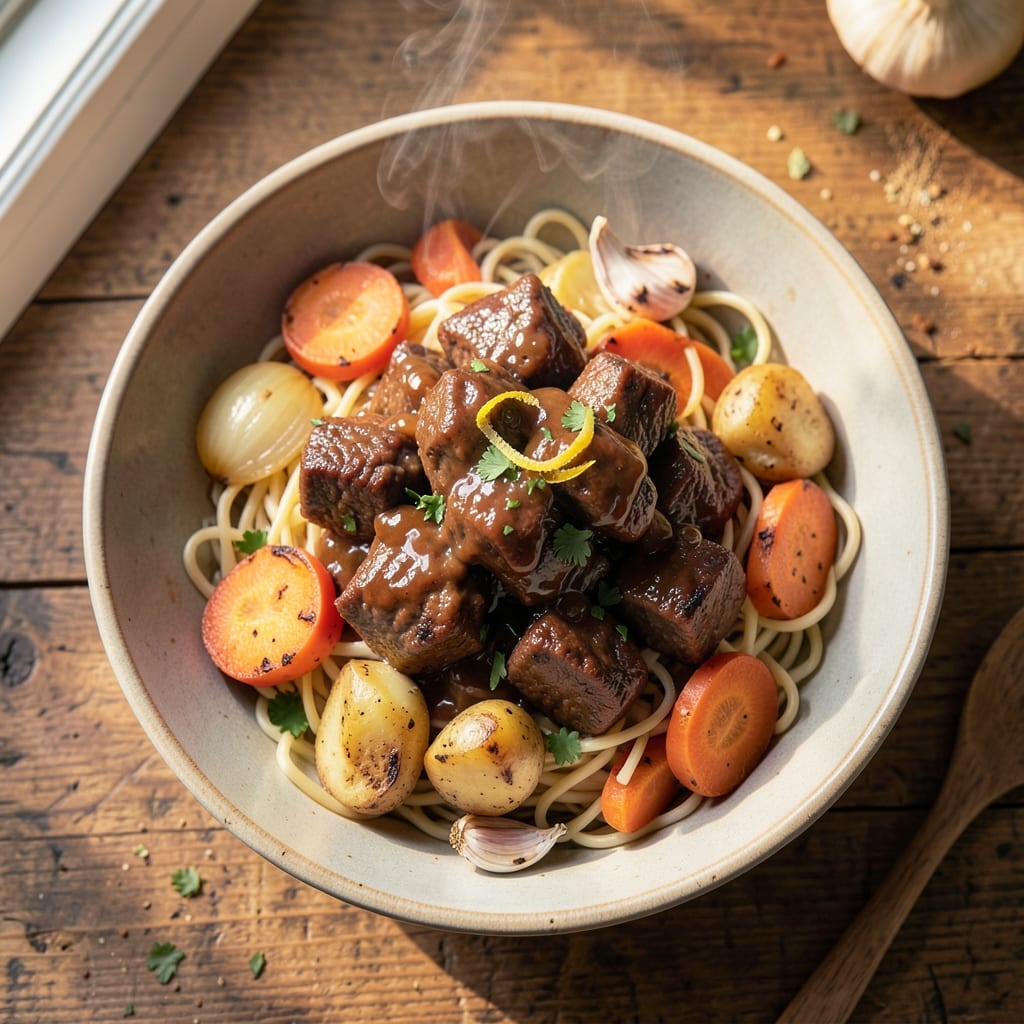
This beef stew meat with egg noodles recipe delivers the ultimate one-pot comfort meal—tender beef, hearty vegetables, and silky noodles all simmered together until rich and flavorful. The secret lies in slow-cooking tough cuts until they melt in your mouth while building deep, savory layers through proper browning and aromatic spices. I developed this recipe during a particularly chilly winter when I needed a meal that felt like a warm hug in a bowl.
The beauty of this dish is its simplicity: one pot means minimal cleanup, and the egg noodles absorb the flavorful broth as they cook, creating a cohesive meal where every bite is satisfying. We start with a rich beef base—chuck roast or stew meat—browned to perfection before simmering with carrots, onions, and potatoes until fork-tender. The egg noodles cook directly in the stew, soaking up all that delicious broth and transforming into tender, silky strands that hold up beautifully.
What you'll end up with is a steaming bowl of hearty goodness—tender beef that falls apart at the touch of a fork, vegetables that are perfectly cooked but still hold their shape, and noodles that are neither mushy nor crunchy. The aroma alone will have everyone gathering around the table, and the first bite delivers that perfect balance of savory, slightly sweet, and umami-rich flavors. This is the kind of meal that tastes even better the next day when the flavors have had time to meld.
Serve with crusty bread for soaking up every last drop of that rich stew broth, or garnish with fresh parsley for a pop of color. The leftovers reheat beautifully, making this an ideal recipe for meal prep or feeding a crowd. Let's get cooking—this stew is about to become your new favorite weeknight dinner.
Ingredients for beef stew meat with egg noodles
One-pot comfort with beef that melts in your mouth and noodles that soak up every flavorful drop.
| Ingredient | Amount | Notes |
|---|---|---|
| Beef Stew Meat 🥩 | 1 ½ lb | Chuck roast or stew meat preferred |
| Egg Noodles 🍝 | 8 oz | Medium or wide egg noodles |
| Carrots 🥕 | 4 medium | Peeled and cut into chunks |
| Russet Potatoes 🥔 | 2 medium | Peeled and cut into chunks |
| Yellow Onion 🧅 | 1 whole | Chopped into wedges |
| Garlic Cloves 🧄 | 4 cloves | Minced for depth of flavor |
| Beef Broth 💧 | 4 cups | Low-sodium preferred |
| Tomato Paste 🍅 | 2 tbsp | For rich, savory depth |
| Red Wine 🍷 | ½ cup | Dry red like Cabernet |
| Worcestershire Sauce 🌶️ | 1 tbsp | For umami punch |
| All-Purpose Flour 🌾 | 1 tbsp | For thickening broth |
| Bay Leaves 🌿 | 2 whole | For aromatic depth |
| Salt 🧂 | 1 ½ tsp | Kosher or sea salt |
| Black Pepper 🌶️ | ½ tsp | Freshly ground preferred |
| Fresh Parsley 🌿 | ¼ cup | Chopped for garnish |
The beef is everything here—chuck roast or stew meat is non-negotiable for that melt-in-your-mouth texture. Costco or Walmart usually have pre-cut stew meat, but if you're buying a whole roast, ask the butcher to cube it for you. Look for good marbling—it's what breaks down into rich flavor during cooking. The egg noodles? Barilla or De Cecco are my go-tos, but any medium egg noodles will work. Fresh parsley is just for garnish, but dried works in a pinch if you're in a rush—just use half the amount.
No red wine? Beef broth with a splash of balsamic vinegar works perfectly. Short on tomato paste? Crushed tomatoes at half the amount gives you similar richness. The Worcestershire sauce adds that deep umami flavor—don't skip it. For the vegetables, baby carrots and pre-cut potatoes save time, but whole veggies roast more evenly. If you're making this ahead, freeze the broth separately so the noodles don't get mushy when reheating. The bay leaves? Remove them before serving—they're not meant to be eaten, just to infuse flavor.
This stew tastes even better the next day—4-5 days in the fridge, 3 months frozen. I always make extra because it reheats beautifully. Store the broth separately if you're keeping it more than a day, then just add fresh noodles when reheating. For a crowd, double the recipe—it's perfect for feeding guests. The noodles will get softer when reheated, but that's part of the charm. Serve with crusty bread for soaking up every last drop of that rich, savory broth.
Why You'll Love This Recipe
- I’ll be real: this feeds six for under $20. The stew meat is cheap but still packs serious flavor, and russet potatoes stretch farther than you’d think. It’s the kind of dish where everyone’s happy—kids, adults, picky eaters—because it’s hearty but not fussy. My secret weapon for potlucks or lazy Sundays.
- One-Pot Magic: I swear by this recipe when I’m too tired to wash extra dishes. Just sear the beef, dump in the veggies and broth, and let it simmer—no fancy techniques, no stress. The egg noodles cook right in the pot, soaking up all that rich beef flavor like a sponge.
- Deep, Savory Crunch: Here’s what sold me—the potatoes get fork-tender while the carrots stay just firm enough to bite into. That contrast with the tender beef and chewy egg noodles? It’s the kind of balance that makes you close your eyes and sigh. (Yes, even on a Tuesday night.)
- Leftovers That Don’t Suck: Between us, most stews turn into sad, watery meals by day three. Not this one. The flavors actually deepened—the beef gets more melt-in-your-mouth, and the noodles hold up like they’re fresh. I freeze portions too; reheating them with a splash of water keeps everything perfect.
Step-by-step instructions for beef stew with egg noodles
This hearty one-pot dinner comes together with minimal cleanup and maximum flavor.
🍳 Step 1: Sear the Beef Stew Meat
Pat the 1.5 lb beef stew meat dry with paper towels—this ensures a better sear. Heat a large Dutch oven over medium-high heat and add just enough oil to coat the bottom lightly. Working in batches if needed, add the beef and sear for 3-4 minutes per side until deeply browned. This step builds rich flavor through the Maillard reaction.
Real talk: Don't crowd the pan or the meat will steam instead of brown. You want those pieces to develop a nice crust. Remove the seared beef and set it aside—you'll add it back later. The browned bits left in the pot will form the base of your stew's flavor.
🍳 Step 2: Build the Flavor Base
In the same Dutch oven, add the chopped yellow onion and cook for 3-4 minutes until softened. Stir in the 4 cloves minced garlic and cook for 30 seconds until fragrant—don't let it burn. Add the 2 tbsp tomato paste and cook for 1 minute, stirring constantly to prevent sticking.
Here's where it gets good: Pour in the 0.5 cup red wine and scrape up all those browned bits from the bottom of the pot. Let it simmer for 2-3 minutes until reduced by half. This deglazing step captures all that meaty flavor you worked so hard to create.
🥘 Step 3: Simmer the Vegetables and Broth
Add the 4 cups beef broth, 1 tbsp Worcestershire sauce, 1 tbsp all-purpose flour, 1.5 tsp salt, 0.5 tsp black pepper, and 2 whole bay leaves. Stir well to combine, then add the 4 medium carrots and 2 medium russet potatoes (cut into chunks). Bring to a gentle boil, then reduce heat to low and let it simmer for 15 minutes to soften the vegetables.
Now return the seared beef to the pot. The liquid should just cover the meat—if it looks too shallow, add a splash of water. Partially cover the pot and simmer for 1 hour on low heat. You want the beef to become fork-tender and the vegetables to be easily pierced with a fork.
⏰ Step 4: Cook the Egg Noodles
While the stew simmers, prepare the 8 oz egg noodles according to package instructions. The key here is to cook them 1 minute less than directed—they'll finish cooking in the stew's hot liquid. Drain and set aside, reserving 1 cup pasta water just in case.
This is the moment that matters: When the beef is tender and the vegetables are cooked through, add the noodles directly to the stew pot. Stir gently and let everything simmer together for 5-7 minutes until the noodles are al dente and fully coated in the rich stew sauce.
🍽️ Step 5: Finish and Serve
Remove the 2 whole bay leaves and discard them. Taste and adjust seasoning if needed—you might want to add a pinch more salt or a crack of pepper. The stew should be rich, savory, and perfectly balanced.
Ladle the beef stew with egg noodles into bowls and garnish with 0.25 cup chopped fresh parsley. Serve immediately with crusty bread to soak up every last bit of that delicious sauce. The noodles will absorb the flavorful broth while staying silky, making each bite a perfect combination of tender beef, hearty vegetables, and comforting egg noodles.
Pro Tips For Making Beef Stew Meat With Egg Noodles
- SEAR THE BEEF FIRST: I learned this the hard way—skipping the sear means bland, gray beef that won’t hold up. Pat the chunks very dry, then hit them in a screaming-hot pot with 1 tablespoon of oil until they’re deep brown all over (about 3-4 minutes). That crust locks in flavor and keeps them tender when they simmer.
- CUT POTATOES UNIFORM: Big chunks stay tough; tiny pieces turn to mush. Aim for 1.5-inch cubes—big enough to stay intact but small enough to cook through in the same time as the carrots. Russets break easily, so handle them like they’re fragile glass.
- ADD NOODLES LAST: Dumping them in too early turns them to glue. Instead, cook the beef, veggies, and broth until the potatoes are fork-tender (about 45-60 minutes), then add the noodles for just 5-7 minutes. They’ll soak up the broth perfectly without falling apart.
- SALT THE BROTH LATE: I was skeptical until I tried it—salting early dilutes the flavor as the broth reduces. Wait until the stew’s simmered for at least 30 minutes, then taste and adjust. A pinch of salt at the end makes a real difference, especially if you’re using low-sodium broth.
Troubleshooting perfect results
Meat Too Tough
If your beef isn't tender after simmering, it likely didn't cook long enough or the cut wasn't right. Chuck roast or stew meat should become fork-tender after 1.5-2 hours of simmering on low heat. If using a tougher cut, extend cooking time to 2.5 hours—the secret is patience. Also, check your internal temperature: beef should reach 203°F for perfect tenderness. 🥩
Broth Too Thin
A watery stew usually means the broth wasn't reduced enough or the noodles absorbed too much liquid. For a richer base, simmer the broth uncovered for 10-15 minutes before adding noodles. If it's still thin, mix 1 tbsp cornstarch with 2 tbsp cold water, stir into the stew, and simmer for 2-3 minutes until thickened. Avoid overcooking the noodles—they'll soak up excess liquid.
Noodles Mushy
Overcooked noodles happen when they sit too long in the hot broth. Cook them 1 minute less than package instructions and add them to the stew just 5-7 minutes before serving. If reheating leftovers, remove the noodles, warm the broth separately, then toss the noodles back in for 2 minutes to revive their texture. Fresh egg noodles hold up better than dried—Barilla or De Cecco are my top picks for this recipe.
Vegetables Overcooked
Potatoes and carrots turning to mush? They likely cooked too long in the broth. Add them to the pot 15 minutes before the beef is done, or cook them separately and add them in the final 10 minutes. For extra insurance, parboil them for 5 minutes before adding to the stew. Baby carrots and diced potatoes hold their shape better than whole pieces.
Flat Flavor
If your stew tastes bland, it probably missed key flavor layers. Always sear the beef well to develop the Maillard reaction. Deglaze with red wine (or beef broth + balsamic) to capture browned bits. Boost umami with Worcestershire sauce and tomato paste. A pinch of smoked paprika or thyme adds depth. Taste as you go—seasoning builds gradually in stews.
Sauce Too Salty
Over-salted stews happen when you don't account for broth salt content. Use low-sodium beef broth and add salt gradually. If it's too salty, stir in 1 tbsp lemon juice or 1 potato (starch helps balance salt). For mild broths, add a splash of fish sauce or soy sauce** for umami without extra salt. Always taste before adding noodles—they'll dilute the flavor.
Nutrition facts
Frequently asked questions
Can I use a different cut of beef instead of stew meat?
While chuck roast or stew meat is ideal for this recipe, you can use brisket or short ribs if that's what you have. Just note that brisket needs 3-4 hours of simmering to become tender, while short ribs will be ready in 2 hours but have more connective tissue. Avoid lean cuts like sirloin—they'll dry out rather than melt in your mouth.
How do I make this recipe gluten-free?
Replace the egg noodles with gluten-free pasta (like brown rice or chickpea noodles) and use tamari instead of Worcestershire sauce. The rest of the recipe stays the same! For extra flavor, add 1 tsp gluten-free soy sauce to the broth. Always check labels—some broths contain hidden gluten.
Can I prepare this stew ahead of time?
This stew tastes even better the next day. Cook the entire stew (without noodles) and store it in an airtight container in the fridge for 4-5 days or freeze for 3 months. When ready to serve, reheat the broth and beef, then cook fresh noodles separately and add them to each bowl. This keeps the noodles al dente.
What if I don't have red wine?
No problem! Substitute with 1 cup beef broth + 1 tbsp balsamic vinegar for the same depth of flavor. Or use 1 cup apple cider for a slightly sweet twist. The key is to deglaze the pan with something acidic to lift those browned meat bits from the bottom. Don't skip this step—it's where the magic happens!
Should I add the noodles to the stew or serve them separately?
Cooking the noodles directly in the stew is the traditional method here—they absorb all that rich flavor while staying silky. However, if you prefer firmer noodles, cook them separately and serve them on top. Just be prepared for less flavorful bites! The recipe calls for 1 minute less cooking time than package instructions to prevent mushiness.