
Desserts
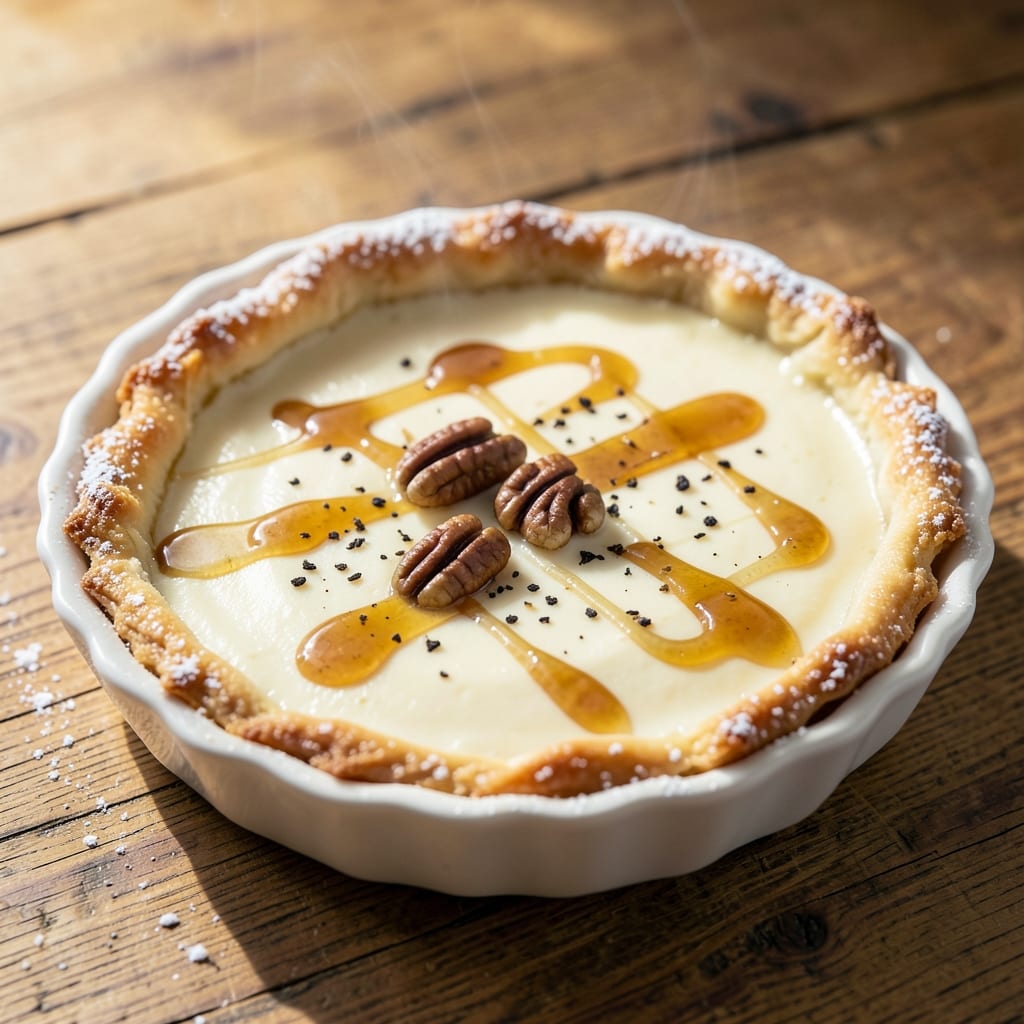
This baked egg custard pie delivers the perfect balance of flaky pastry and silky yolk centers that transform into golden rivers when sliced. 🌟 The secret lies in a simple yet precise custard mixture—rich eggs, warm milk, and a touch of vanilla—that creates that signature creamy texture without curdling. I developed this recipe after years of experimenting with custard-based desserts, and it never fails to impress.
What sets this recipe apart is the homemade crust, which adds a delicate, buttery layer that contrasts beautifully with the custard's richness. The pie bakes until the edges are golden and the center just barely jiggles, ensuring that perfect set without dryness. While it's traditionally served as a sweet dessert, you can easily adapt the filling for savory variations using herbs and cheese.
The result is a pie that looks elegant enough for special occasions but comes together with straightforward techniques. Each slice reveals those luscious yolk rivers, creating a showstopping presentation that tastes even better than it looks. The aroma alone—warm vanilla and buttery pastry—will have everyone gathering around the table.
Whether you're serving it at a holiday brunch or as a decadent after-dinner treat, this custard pie delivers restaurant-quality results at home. Let's get started on creating your own perfect slice of custard heaven.
Ingredients for baked egg custard pie
Six golden eggs, velvety custard, and buttery layers—this is your custard pie dream team.
| Ingredient | Amount | Notes |
|---|---|---|
| Large Eggs 🥚 | 6 whole | Room temperature for even baking |
| Whole Milk 🥛 | 1 ½ cups | Warmed to 80°F for smooth custard |
| Granulated Sugar 🍚 | ¾ cup | Fine grain preferred for even dissolving |
| Pure Vanilla Extract 🌿 | 1 tbsp | High-quality Madagascar bourbon preferred |
| All-Purpose Flour 🌾 | ¼ cup | Sifted for smooth custard texture |
| Unsalted Butter 🧈 | ½ cup | Cold, cubed for flaky crust |
| All-Purpose Flour 🌾 | 1 ½ cups | Plus 1 tsp salt for crust |
| Ice Water 💧 | ½ cup | For dough handling |
| Pinch of Salt 🧂 | 1 tsp | Diamond Crystal preferred |
| Ground Nutmeg 🌶️ | ¼ tsp | Freshly grated for best flavor |
| Pie Weights or Dried Beans 🥣 | 1 cup | For pre-baking crust |
The eggs are the star, so use large, fresh ones—room temperature makes all the difference. For the milk, warm it to 80°F (just warm to the touch) to prevent curdling. Whole milk gives the richest texture, but 2% works in a pinch. Vanilla extract should be pure Madagascar bourbon—it's worth the splurge for that deep, complex flavor. The crust? European-style butter (like Plugrá) makes it flakier, but any good-quality unsalted butter works. For the crust flour, King Arthur or Gold Medal brands are my go-to—they handle cold butter best.
No vanilla extract? Vanilla bean paste works beautifully—just use 1.5 tsp. Short on eggs? Dairy-free custard mix can replace half, but texture will differ. For the crust, shortcut pie crust from the store is fine—just add an extra tbsp of cold butter for flakiness. The nutmeg can be skipped if you don't have it, but the warmth it adds is absolutely essential. For pre-baking the crust, pie weights are ideal, but dried beans or even ceramic pie weights work perfectly. Just make sure they're clean and dry.
This custard pie keeps beautifully—3-4 days in the fridge for maximum freshness, but the flavor actually improves after 24 hours as the custard sets further. For serving, let it sit at room temperature for 10-15 minutes before slicing—those golden rivers will flow like magic. To reheat slices, warm in a 350°F oven for 5-7 minutes—the crust gets crispy again, and the custard stays silky. Freeze leftovers for up to 2 months—thaw overnight in the fridge before serving.
Why You'll Love This Recipe
- No Whisk Required: I swear by this—just crack eggs, stir milk, and fold in flour. No food processor, no fancy techniques, just a fork and a bowl. The custard comes together smoother than I expected, and honestly, the vanilla extract does most of the flavor work for you.
- Silky Creamy Magic: That perfect balance of sugar and vanilla? It’s like a hug in dessert form. The eggs thicken into a cloud, while the milk keeps it luscious—no grainy texture here. My kids ask for seconds, and I don’t even have to bribe them.
- Weeknight Dessert Ready: Make it for breakfast, brunch, or a lazy Sunday treat—no one judges. Leftovers? Even better. I’ve reheated slices in the microwave for days, and they still taste like fresh-baked custard. (Yes, even on a Tuesday night.)
- Pantry Staple Power: Five ingredients, zero specialty items. You’re probably already looking at these while reading this. Budget-friendly, foolproof, and no last-minute grocery runs needed. My go-to when I’m too tired to bake anything fancy.
Step-by-step instructions for baked egg custard pie
Here's how to create that dreamy custard with rivers of golden yolk—crisp crust, silky filling, every slice perfect.
👨🍳 Step 1: Make the Flaky Crust
Cut the 0.5 cup unsalted butter into ¼-inch cubes and place in the freezer for 10 minutes to firm up. In a large bowl, whisk together the 1.5 cups all-purpose flour and 1 tsp pinch of salt. Add the chilled butter cubes and use your fingers or a pastry cutter to work the butter into the flour until the mixture resembles coarse crumbs with some pea-sized butter pieces remaining.
Add the 0.5 cup ice water gradually, 1 tablespoon at a time, mixing gently with a fork until the dough just comes together. Be careful not to overmix—just until the dough holds when pressed. Turn the dough onto a lightly floured surface and knead it 5-6 times just to combine. Wrap in plastic and refrigerate for at least 1 hour (or up to 24 hours).
🥘 Step 2: Pre-Bake the Crust
Preheat your oven to 375°F. On a lightly floured surface, roll out the chilled dough to a 12-inch circle, about ⅛-inch thick. Transfer it to a 9-inch pie dish and trim the edges, leaving a ½-inch overhang. Fold the overhang under itself to create a neat edge. Prick the bottom of the crust all over with a fork.
Line the crust with parchment paper and fill it completely with the 1 cup pie weights or dried beans. Bake for 15 minutes until the edges are just beginning to turn golden. Remove the weights and parchment, then bake for another 5 minutes until the crust is lightly golden all over. The bottom should be set but not browned.
🍳 Step 3: Whisk the Custard Mixture
While the crust bakes, warm the 1.5 cups whole milk in a saucepan over medium heat until it reaches 80°F—just warm to the touch. In a separate bowl, whisk together the 6 whole large eggs, 0.75 cup granulated sugar, 1 tbsp pure vanilla extract, 0.25 cup all-purpose flour, and 0.25 tsp ground nutmeg until smooth and fully combined.
Temper the eggs by slowly pouring the warm milk into the egg mixture while whisking constantly. This prevents scrambling. Once fully combined, strain the mixture through a fine-mesh sieve into a clean bowl to remove any lumps. The custard should be smooth, pale yellow, and slightly thicker than milk.
⏰ Step 4: Bake the Custard
Pour the custard mixture into the pre-baked crust, filling it completely. Place the pie on a baking sheet to catch any potential spills. Bake at 350°F for 45-50 minutes until the custard is just set—it should still have a slight wobble in the center but no longer be completely liquid. The edges should be golden, and the top should be smooth.
Here's the thing—don't overbake. You want that silky texture, not a firm custard. If the top starts to brown too quickly, tent it loosely with aluminum foil. The custard will continue thickening as it cools, so it's better to pull it out slightly underdone.
🍽️ Step 5: Rest and Serve
Remove the pie from the oven and let it cool completely at room temperature for at least 2 hours—this allows the custard to set properly and prevents cracking when sliced. For the ultimate presentation, chill the pie in the refrigerator for 4-6 hours before serving.
When ready to serve, run a sharp knife around the edge to separate the custard from the crust. Slice into wedges and serve warm or at room temperature. The perfect slice should have a crisp, flaky crust surrounding a silky custard with golden yolk rivers that melt into every bite. Garnish with a sprinkle of ground nutmeg if desired.
Pro Tips For Making Baked Egg Custard Pie
- Whisk Eggs First: Beat the eggs until no streaks remain before adding milk or sugar—this ensures a silky texture. I used to skip this, and the custard always felt grainy, no matter how long I baked it.
- Temper the Milk: Warm the milk to 160°F (71°C) before mixing it into the eggs—cold milk causes curdling. I learned this the hard way after throwing out three batches of scrambled custard.
- Skip the Overmixing: Stir the flour into the egg-milk mixture just until combined—lumps are fine, but overworking it makes the pie dense. My grandmother swore by this, and she was right: the result is lighter every time.
- Bake Low and Slow: Use a 325°F (160°C) oven and bake for 45–55 minutes—rushing it leads to a rubbery center. Sounds weird, but it works: the custard sets perfectly without drying out.
Serving suggestions for this baked egg custard pie
Classic Dessert Pairings
Serve this custard pie with a scoop of vanilla bean ice cream—the cold creaminess contrasts perfectly with the warm custard. I love using Häagen-Dazs Vanilla French Silk for its ultra-smooth texture. Alternatively, a dollop of whipped cream and a sprinkle of toasted hazelnuts adds crunch and richness. 🥥
Coffee & Tea Companions
Pair with a strong espresso or dark roast coffee to cut through the custard's richness. For tea lovers, a chamomile or Earl Grey enhances the vanilla notes. I often serve it with a small cup of hot chocolate for a cozy, indulgent experience. The warmth of the drink complements the custard's silky texture beautifully.
Seasonal Fruit Toppings
In summer, top slices with fresh berries like raspberries or blackberries—their tartness balances the sweet custard. For fall, try caramelized apples or pears with a drizzle of honey. In winter, poached pears or orange segments add a festive touch. Just add fruit right before serving to keep it fresh.
Savory Contrast Options
For a unique twist, serve with smoked salmon and cucumber slices—the salty fish and cool veggies contrast the custard's sweetness. Another great pairing is crispy prosciutto and fig jam, which adds a sophisticated, umami depth. This works especially well for brunch or light dinner servings.
Wine & Liquor Pairings
A sweet Moscato or Riesling enhances the custard's vanilla and caramel notes beautifully. For a boozy twist, drizzle slices with Kahlúa or Baileys before serving. I also love pairing it with a demi-sec Champagne—the bubbles cleanse the palate between bites. For coffee lovers, a strong Irish coffee with a splash of bourbon ties everything together.
Presentation Tips
For an elegant touch, dust slices with powdered sugar or ground nutmeg right before serving. Serve on a slate board or wooden platter for a rustic look. If making ahead, store slices in airtight containers with parchment between layers to keep them fresh. Warm slices in the oven for 5 minutes at 350°F to restore that perfect texture before serving. 💫
Nutrition facts
Frequently asked questions
Why does my custard look grainy or lumpy?
Graininess usually happens when eggs aren't fully whisked or when the custard isn't strained properly. Always whisk eggs and sugar until completely smooth, then strain through a fine-mesh sieve to remove any potential lumps. Tempering the eggs with warm milk too quickly can also cause this—pour milk slowly while whisking constantly.
Can I make this custard pie without a pre-baked crust?
Yes, but the crust may become soggy. For best results, always pre-bake your crust with pie weights or dried beans for 15-20 minutes at 375°F before adding custard. This creates a barrier that prevents the filling from making the crust soggy. If you're short on time, use a store-bought crust and brush it with egg wash before baking.
How do I fix a custard that's too runny after baking?
If your custard is undercooked, return it to the oven at 325°F for 10-15 minutes, covered with foil, until it thickens slightly. For a runny custard that's already cooled, chill it completely, then reheat gently in a water bath at 170°F for 5-10 minutes while stirring constantly. The key is patience—don't overbake initially, as custard thickens as it cools.
Can I substitute cornstarch for the flour in the custard?
Yes, but use only 1 tablespoon cornstarch instead of ¼ cup flour—cornstarch thickens more aggressively. Whisk it into the warm milk before tempering the eggs to prevent clumping. Keep in mind this will make the custard slightly more gelatinous. For a lighter texture, stick with the flour, which adds body without heaviness.
What's the best way to reheat leftovers?
For individual slices, warm in a 350°F oven for 5-7 minutes on a baking sheet until the crust is crisp and the custard is just warm. To reheat the whole pie, cover with foil and bake at 325°F for 15-20 minutes. Avoid microwaving—it makes the crust soggy and the custard rubbery. For a quick fix, place slices in a skillet over low heat for 2-3 minutes per side.