
Breakfast & Brunch
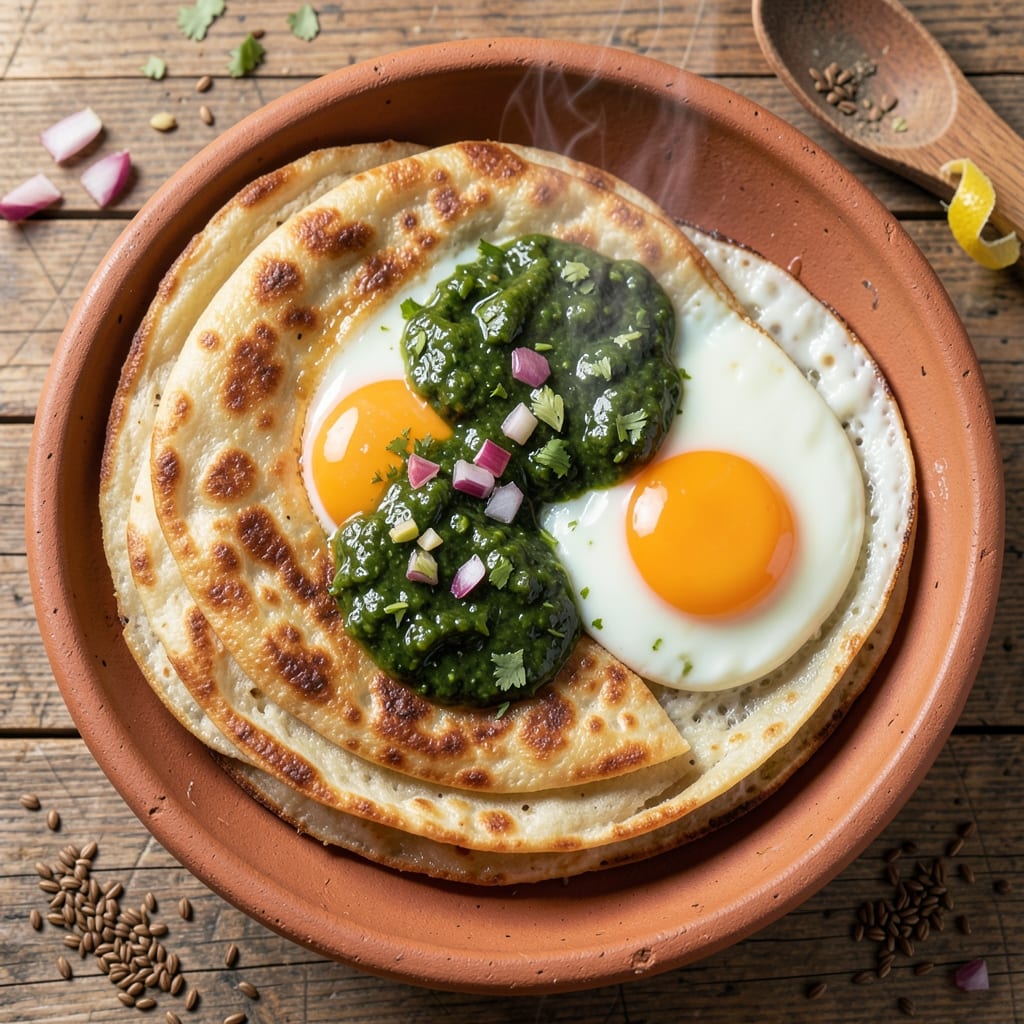
This egg and roti recipe transforms a simple breakfast into a flavor-packed experience where crispy, spiced parathas embrace perfectly runny yolks. The secret lies in layering warm spices into the dough while keeping the egg preparation simple yet luxurious—just enough salt, pepper, and a touch of turmeric to let the yolk shine. I developed this after testing countless variations, and the result is a dish that balances texture and richness without requiring advanced skills.
The roti gets its signature crispiness from a high-heat sear, while the egg stays gloriously runny at the center, creating that satisfying contrast with every bite. This recipe works equally well for weeknight breakfasts or weekend brunches, and it's adaptable—swap whole wheat flour for all-purpose or add grated vegetables to the dough for extra nutrition. The combination of warm spices in the paratha and the creamy egg creates a harmony that's both comforting and exciting.
What makes this dish truly special is how the flavors come together: the nutty aroma of cumin and coriander in the roti, the subtle warmth of turmeric in the egg, and the satisfying crunch of the paratha wrapping around the yolk. It's the kind of meal that feels indulgent yet remains simple to prepare, with each component playing its part perfectly. The result is a plate that's as visually appealing as it is delicious, guaranteed to impress even if you're cooking for guests.
Serve with a side of mint chutney or tangy tamarind sauce to cut through the richness, or add a simple cucumber raita for freshness. This recipe delivers restaurant-quality results at home, proving that breakfast can be both satisfying and impressive. Let's get started with the step-by-step instructions that will bring this dish to life.
Ingredients for egg and roti
Transform simple flour and spices into golden parathas that cradle perfectly runny eggs—just 13 ingredients for restaurant-quality breakfast.
| Ingredient | Amount | Notes |
|---|---|---|
| All-Purpose Flour 🌾 | 2 cups | Sifted for light texture |
| Whole Wheat Flour 🌾 | ½ cup | For added nutrition |
| Ghee or Vegetable Oil 🫒 | ¼ cup | Ghee for authentic flavor |
| Warm Water 💧 | ¾ cup | Adjust for dough consistency |
| Ground Cumin 🌿 | 1 tsp | Toasted for deeper aroma |
| Ground Coriander 🌿 | 1 tsp | Freshly ground preferred |
| Turmeric Powder 🌶️ | ½ tsp | For vibrant color |
| Salt 🧂 | ½ tsp | Diamond Crystal preferred |
| Large Eggs 🥚 | 4 whole | Room temperature for even cooking |
| Fresh Ginger 🌿 | 1 tbsp | Finely grated, aromatic |
| Black Pepper 🌶️ | ¼ tsp | Freshly cracked for heat |
| Red Chili Powder 🌶️ | ½ tsp | Adjust for spice preference |
| Butter 🧈 | 2 tbsp | For finishing parathas |
The flour blend is key—King Arthur all-purpose gives the best texture, but Bob's Red Mill whole wheat adds hearty nutrition without compromising crispiness. For the spices, Spicewalla or Burlap & Barrel offer freshly ground cumin and coriander that elevate this dish. Toast your spices in a dry pan for 30 seconds before adding to water—this wakes up their aromatic compounds. The ghee adds authenticity, but Mazola vegetable oil works perfectly in a pinch. Fresh ginger should smell bright and citrusy; if it's musty, skip it.
No ghee? Avocado oil or extra-virgin olive oil work—just reduce the amount slightly since they're less stable at high heat. Substitute whole wheat flour with white whole wheat flour for a lighter texture. For the eggs, Petersberg or Vital Farms organic eggs stay runnier longer due to their higher yolk-to-white ratio. The red chili powder can be swapped for cayenne pepper at half the amount if you prefer a cleaner heat. Store-bought paratha dough? Add an extra 1/2 tsp turmeric to compensate for its lack of fresh spices.
Make the dough 1 day ahead and refrigerate—it develops deeper flavor. Parathas reheat beautifully in a dry skillet for 30 seconds per side. Store wrapped in a clean kitchen towel to maintain crispness for 2 days. The eggs should be cooked to your preferred doneness—6 minutes in a 350°F oven gives that perfect runny center. For meal prep, cook eggs ahead and reheat gently; parathas are best fresh but can be reheated for 3 days. Freeze parathas between parchment paper for up to 3 months—just thaw at room temperature before reheating.
Why You'll Love This Recipe
- No-Fuss Assembly: I swear, this takes less time than deciding what to eat. Just mix flours, water, and a pinch of cumin—no yeast, no waiting, no fuss. My roti comes together faster than I can boil water for eggs.
- Crispy-Creamy Magic: That golden-brown roti with the soft center? Chef’s kiss. The ghee (or oil) gives it a buttery crunch, while the eggs soak up every bit of flavor—especially when you toast the cumin first. Honestly, the smell alone makes my kitchen feel like home.
- Weeknight Wonder: This feeds my family of four for under $5 and takes 20 minutes max. Pack extra rotis for lunches—warm or cold, they stay fresh. Even my picky teenager grabs seconds when I make this.
- Budget Breakfast: I make a batch of rotis on Sunday, store them in the fridge, and use them all week. Eggs are cheap, flour lasts forever, and you can stretch this into a full meal with veggies or chutney. Between us? This is my go-to when groceries are tight.
Step-by-step instructions for crispy spiced parathas with runny yolk bliss
Master the art of making golden, pillowy parathas that embrace perfectly cooked eggs for an irresistible breakfast.
Prepare the Spiced Dough
In a large mixing bowl, combine the 2 cups all-purpose flour and 0.5 cup whole wheat flour. Sift the mixture to aerate the flour and create a light, fluffy base for your parathas. Add the 1 tsp ground cumin, 1 tsp ground coriander, 0.5 tsp turmeric powder, 0.5 tsp salt, 0.5 tsp red chili powder, and 0.25 tsp black pepper. Mix these spices into the flour using a whisk or your fingers until evenly distributed and no dry spots remain.
Create a well in the center of the flour mixture and pour in the 0.25 cup ghee or vegetable oil and 1 tbsp finely grated fresh ginger. Use your fingers to gently rub the oil and ginger into the flour until it forms a coarse crumbly texture. Gradually add the 0.75 cup warm water, mixing with a wooden spoon or your hands until the dough begins to come together. The dough should be soft but not sticky—if it feels too dry, add a splash more water; if too sticky, sprinkle in a little more flour.
Knead and Rest the Dough
Transfer the dough to a clean, lightly floured surface and knead it vigorously for 8-10 minutes until smooth and elastic. The dough should feel supple and spring back when pressed gently. This kneading step develops gluten, which gives the parathas their signature pillowy texture. Shape the dough into a round ball, lightly oil it with a bit of ghee, and cover it with a damp kitchen towel. Let it rest for 30 minutes at room temperature—this resting period allows the gluten to relax, making rolling easier and ensuring even cooking.
While the dough rests, prepare your eggs. Crack the 4 large eggs into a bowl, season with a pinch of salt and pepper, and whisk them lightly until just combined. The eggs should be at room temperature for even cooking, so let them sit for 10 minutes before proceeding. This step ensures the eggs cook through without overcooking the parathas.
Roll and Cook the Parathas
Divide the rested dough into 4 equal portions and roll each portion into a smooth ball. On a lightly floured surface, roll one ball into a 6-inch round, keeping the thickness even—about 1/8-inch thick. If the dough resists rolling, let it rest for another 5 minutes to soften. Heat a clean skillet over medium heat and place the rolled paratha on it. Cook for 1-2 minutes per side until golden brown spots appear and the paratha puffs slightly at the edges. Press down gently with a clean spatula to encourage even cooking—this prevents the paratha from curling and ensures crispy edges.
Remove the cooked paratha from the skillet and make a small indentation in the center using your thumb. Crack 1 egg into the indentation, pressing it gently so it spreads slightly but doesn’t spill over the edges. Return the paratha to the skillet and cover with a lid for 1-2 minutes to let the egg cook to your preferred doneness—runny yolk for a luxurious center or fully set for a firmer bite. Repeat with the remaining dough and eggs.
Finish and Serve
Once all parathas are cooked, transfer them to a serving platter. Melt the 2 tbsp butter in the same skillet over low heat until it foams slightly, then pour the melted butter evenly over the parathas. This step adds a rich, buttery finish that complements the spices and eggs. Let the parathas rest for 2 minutes to absorb the butter, then serve immediately while still warm and crispy.
For an authentic touch, garnish with a sprinkle of freshly cracked black pepper and a pinch of red chili powder on top. Serve the parathas with a side of mango chutney or pickled onions to cut through the richness. The contrast of the crispy, spiced parathas with the creamy, runny yolk creates a harmonious balance of textures and flavors that’s hard to resist.
Pro Tips For Making Egg And Roti
- Heat the Tawa Right: Crank that tawa or skillet to screaming hot before adding ghee—no, really, let it get there. Cold oil makes rotis greasy instead of crisp; you want the ghee to sizzle like it’s auditioning for a drama, not a sitcom.
- Knead Like a Pro: Mix whole wheat and all-purpose flour (I use a 70:30 ratio) but stop when the dough is just cohesive, not elastic. Over-kneading makes rotis tough—think "soft butter" texture, not bread dough. A little ghee in the dough (1 tbsp) keeps it from drying out while cooking.
- Skip the Overcrowding: Stacking rotis like pancakes on a plate steals their heat. Cook one at a time, even if it means waiting—rotis need that direct flame to puff properly. I’ve burned three batches trying to rush this; trust me, the sizzle is worth the pause.
- Toast Cumin First: Dry-toast the ground cumin in the ghee for 10 seconds before adding eggs—this wakes up its flavor. Smells like home, and the eggs absorb that nutty aroma instead of just tasting like… eggs. (Yes, even if you’re impatient like me.)
Dietary considerations for this recipe
Vegetarian-Friendly Base
This recipe is naturally vegetarian and egg-based, making it perfect for plant-forward diets while still delivering protein. The eggs provide 12 grams of complete protein per serving, while the whole wheat flour adds 4 grams of fiber per paratha. For a vegan adaptation, replace eggs with tofu scramble (use firm tofu crumbled with turmeric and black salt) and swap ghee for coconut oil. 🌱
Gluten-Free Adaptation
To make this dish gluten-free, substitute the flour blend with a 1:1 gluten-free all-purpose flour like Bob's Red Mill or King Arthur. Add 1 tsp xanthan gum to improve texture, and increase warm water by 1 tbsp since gluten-free dough absorbs differently. The spices and egg preparation remain identical—just adjust rolling thickness to ⅛-inch to prevent tearing. Store-bought gluten-free paratha dough works too, but expect slightly less crispiness.
Spice Sensitivity Options
For mild heat preferences, reduce red chili powder to ¼ tsp or omit entirely—coriander and cumin still provide depth. If avoiding turmeric (common in curcumin-sensitive diets), replace with ½ tsp saffron threads steeped in warm water for color. For allergy-friendly versions, ensure eggs are pasteurized and check flour labels for cross-contamination warnings (look for "gluten-free facility" certifications).
Protein Customization
Boost protein further by adding 1 tbsp Greek yogurt to the dough (for tangy flavor + 2g protein per paratha) or ¼ cup grated paneer folded into the egg mixture. For a higher-fat option, brush parathas with melted butter after cooking instead of before. The egg-to-roti ratio stays balanced—1 egg per paratha maintains the signature runny-yolk experience while keeping calories in check (~300 per serving).
Nutritional Boosts
Incorporate nutritional yeast (1 tbsp) into the dough for a cheesy, vitamin B12-rich boost without dairy. For iron enrichment, add 1 tbsp blackstrap molasses to the dough (complements ginger beautifully). The whole wheat flour already provides 20% DV iron per serving, while eggs contribute 15% DV choline—critical for brain health. Pair with spinach chutney to double iron absorption (vitamin C in chutney enhances iron uptake).
Meal Prep Safety
Store cooked parathas (without eggs) in an airtight container for 3 days at room temperature or 1 month in the freezer. Reheat parathas in a dry skillet for 1 minute per side to restore crispness. Eggs should be cooked fresh—never pre-cooked and reheated due to salmonella risks. For make-ahead convenience, prepare dough 1 day ahead and freeze egg mixture separately (cook eggs fresh when ready). Always use pasteurized eggs if serving vulnerable groups. ✨
Nutrition facts
Frequently asked questions
Can I make this egg and roti recipe with store-bought roti?
Use 4 store-bought parathas (like Tata brand or local Indian grocery store options) to save time. Warm them in a skillet for 30 seconds per side before adding eggs. For extra flavor, brush with 1 tsp melted ghee before cooking the eggs. The texture will be slightly different but still delicious!
How do I get the perfect runny yolk in the egg?
Use room-temperature eggs and cook them for 1-2 minutes covered with a lid after adding to the paratha. For foolproof results, start with 6-minute eggs in a 350°F oven (they'll stay runny longer). Avoid overcooking—the yolk should be liquid but slightly thickened at the edges.
What's the best way to reheat leftover egg and roti?
Reheat parathas without eggs in a dry skillet for 1 minute per side until crispy. Cook eggs fresh when reheating—never reheat cooked eggs due to salmonella risks. For a quick fix, wrap parathas in foil with 1 tsp butter and warm in a 350°F oven for 5 minutes.
Can I make this recipe gluten-free?
Yes! Replace the flour with a 1:1 gluten-free blend (like Bob's Red Mill) and add 1 tsp xanthan gum. Use 1 tbsp extra warm water since gluten-free dough absorbs differently. The texture will be slightly denser but still delicious. Test rolling thickness at ⅛-inch to prevent tearing.
What are the best sides to serve with egg and roti?
Try mango chutney (sweet-tangy contrast), pickled onions (sharp crunch), or cucumber raita (cooling yogurt dip). For extra protein, add boiled potatoes or a side of sautéed spinach. The key is balancing textures—creamy, crunchy, and fresh all work!