
Breakfast & Brunch
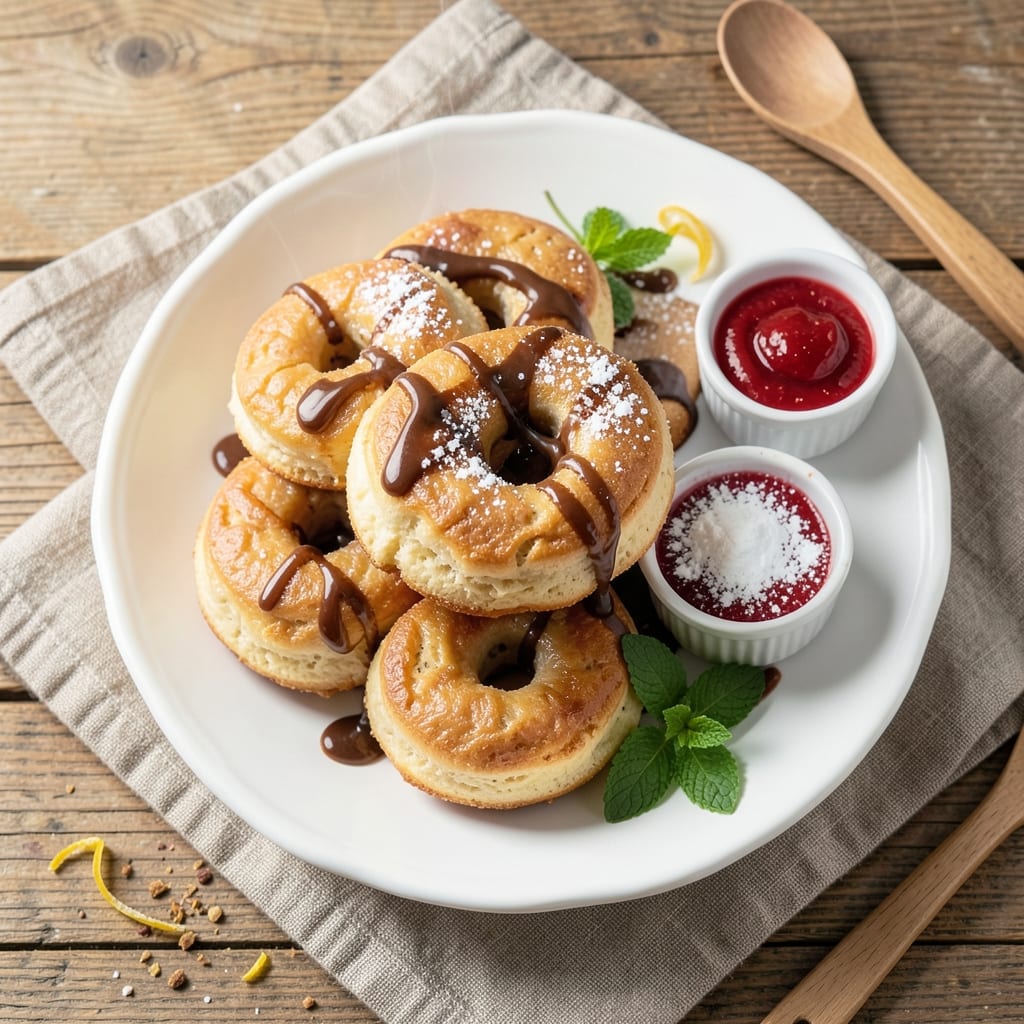
This donut recipe without egg and yeast delivers fluffy, cake-like bites that prove plant-based baking doesn't require compromise. The secret lies in aquafaba—a magical chickpea brine that mimics egg whites while baking powder handles the leavening. I developed this recipe after years of perfecting vegan donuts that actually taste homemade, not processed.
The magic happens through a simple chemical reaction: baking powder creates lift while vinegar adds subtle tang that balances sweetness. These donuts achieve that signature light, airy texture without yeast or eggs, making them perfect for brunch or dessert cravings. The recipe uses basic pantry staples but delivers restaurant-quality results.
What you'll end up with are golden, crispy-edged donuts with a tender interior—ideal for glazing, dusting with powdered sugar, or dipping in chocolate. The aquafaba creates a stable structure while keeping them moist, and they bake up perfectly every time. No special equipment needed beyond a mixing bowl and baking sheet.
Whether you're vegan, avoiding eggs for dietary reasons, or simply want to try aquafaba magic, this recipe delivers foolproof results. The donuts stay fresh for days when stored properly, making them perfect for meal prep or sharing with friends. Ready to transform your baking game?
Ingredients for donut recipe without egg and yeast
Twelve ingredients transform ordinary pantry staples into restaurant-quality donuts without yeast or eggs.
| Ingredient | Amount | Notes |
|---|---|---|
| All-Purpose Flour 🌾 | 2 ½ cups | Spray with flour to prevent sticking |
| Aquafaba 🌱 | ½ cup | Chickpea brine, unsweetened |
| White Vinegar 🍶 | 1 tbsp | Distilled for best results |
| Granulated Sugar 🍚 | ½ cup | Superfine preferred for smooth texture |
| Baking Powder 🧂 | 2 tsp | Aluminum-free for stability |
| Salt 🧂 | ½ tsp | Fine sea salt preferred |
| Vanilla Extract 🌸 | 1 tsp | Pure vanilla for authentic flavor |
| Vegetable Oil 🫒 | ½ cup | Light or canola preferred |
| Non-Dairy Milk 🥛 | ¼ cup | Almond or oat milk works best |
| Powdered Sugar 🍚 | 1 cup | For glazing, sifted |
| Cinnamon 🌿 | ½ tsp | Ground for even distribution |
| Lemon Zest 🍋 | 1 tsp | Freshly grated for brightness |
Aquafaba is the star here—opt for chickpea brine from canned organic chickpeas (like Great Northern or Banza) for the best results. The vinegar adds subtle tang, so distilled white vinegar prevents overpowering flavors. For flour, King Arthur All-Purpose or Bob's Red Mill yield consistent results. If you can't find superfine sugar, pulse regular granulated sugar in a food processor until ultra-fine. The baking powder must be fresh; if older than six months, test it by mixing with water—it should fizz immediately. Whole Foods or Trader Joe's carry reliable brands for all these staples.
No aquafaba? Unsweetened applesauce or flax eggs (1 tbsp ground flaxseed + 3 tbsp water) work in a pinch, though texture may vary slightly. Substitute maple syrup for sugar at a 1:1 ratio if you prefer natural sweeteners. For the milk, soy or coconut milk provide creaminess, while oat milk adds subtle sweetness. The lemon zest can be omitted if unavailable, but the brightness balances the richness. If you lack powdered sugar for glazing, melted white chocolate or agave nectar create delicious alternatives. Store-bought aquafaba (like Sir Kensington's) is convenient but less flavorful than homemade.
Mix the dry ingredients first, then fold in aquafaba gently to maintain airiness. Chill the dough for at least 30 minutes before frying for cleaner edges. Freshly fried donuts stay crispy for 2 hours at room temperature if stored in an airtight container. For longer storage, freeze unglazed donuts for up to 3 months—reheat in a 350°F oven for 10 minutes to restore crispness. Glazed donuts keep 3 days refrigerated or 1 month frozen. Portion glazing into small containers to prevent drying.
Why You'll Love This Recipe
- Pantry Magic: I swear by this—no eggs, no yeast, just flour, aquafaba, and a splash of vinegar. The secret’s in the aquafaba (that chickpea brine), which mimics eggs perfectly without the fuss.
- Crispy-Centered Joy: That first bite? Crunchy outside, pillowy inside—thanks to the baking powder and sugar combo. Honestly, it’s the closest I’ve gotten to classic donuts without the heavy lifting.
- Breakfast or Snack: Perfect for lazy mornings or a 3 PM sugar crash. Toss them in cinnamon sugar, drizzle with chocolate, or just eat plain. They’re that adaptable.
- Zero-Waste Winner: Uses pantry staples, costs pennies, and keeps for days. I’ve had them reheated for breakfast, packed in lunches, and even frozen for emergencies. Versatile and budget-friendly? Yes, please.
Step-by-step instructions for eggless, yeast-free donuts
This aquafaba-based method delivers light, fluffy donuts without traditional leaveners.
Whisk Aquafaba to Stiff Peaks
In a large mixing bowl, combine the 0.5 cup Aquafaba and 1 tbsp White Vinegar. Using an electric mixer on high speed, beat for 4-5 minutes until the mixture forms stiff, glossy peaks that hold their shape when the whisk is lifted. You'll notice the volume nearly triple as air incorporates—this is your leavening agent replacing eggs.
Here's the thing—don't rush this step. The aquafaba needs to develop proper structure to create those signature donut holes. If it doesn't hold peaks after 5 minutes, add another ½ teaspoon of vinegar and beat for another minute. The mixture should resemble whipped egg whites in texture and appearance.
Combine Wet and Dry Ingredients
In a separate bowl, sift together the 2.5 cups All-Purpose Flour, 2 tsp Baking Powder, 0.5 tsp Salt, 0.5 cup Granulated Sugar, 1 tsp Vanilla Extract, 0.5 tsp Cinnamon, and 1 tsp Lemon Zest. This dry mixture should be completely homogeneous with no visible flour pockets.
With the mixer on low speed, gradually add the dry ingredients to the whipped aquafaba. Mix just until combined—30-45 seconds maximum—to avoid deflating the air you've incorporated. Then add the 0.5 cup Vegetable Oil and 0.25 cup Non-Dairy Milk, mixing on low until a smooth, thick batter forms that holds its shape when dropped from a spoon.
Chill the Batter for Optimal Texture
Transfer the batter to a bowl, cover tightly with plastic wrap, and refrigerate for at least 30 minutes (up to 24 hours). This chilling step is crucial—it allows the flour to fully hydrate and the aquafaba to set properly, preventing the donuts from spreading too much during frying.
When you're ready to fry, the batter should be noticeably thicker and more cohesive. If you press your finger gently into the chilled batter, it should hold the indentation without spreading outward. This indicates proper resting and optimal frying characteristics.
Fry Donuts in Small Batches
Heat 2-3 inches of vegetable oil in a deep fryer or heavy pot to 350°F. Use a deep-fry thermometer to monitor the temperature—it should remain stable at this heat. Working in batches of 4-5 donuts, carefully spoon the chilled batter into a piping bag fitted with a ½-inch round tip and pipe 1½-inch diameter circles onto parchment paper.
Fry the donuts for 1 minute 30 seconds until they're golden brown on the bottom. Using a slotted spoon, carefully flip them and fry for another 1 minute 30 seconds until they're golden on all sides. The donuts should float when ready—this is your visual cue they're properly cooked through. Remove with a slotted spoon and drain on a wire rack lined with paper towels.
Glaze and Serve Immediately
While still warm, whisk together the 1 cup Powdered Sugar with 2-3 tablespoons of non-dairy milk (from the ingredients) until smooth. For extra flavor, add ½ teaspoon of vanilla extract and ¼ teaspoon of lemon zest. Dip the warm donuts halfway into the glaze, allowing any excess to drip off.
Place the glazed donuts on a wire rack and let them set for 5 minutes before serving. The glaze will firm up slightly but remain glossy and delicious. These donuts are best enjoyed fresh—they'll maintain their light texture for about 2 hours at room temperature before becoming slightly denser.
Pro Tips For Making Donut Recipe Without Egg And Yeast
- WHISK AQUAFABA FIRST: I learned this the hard way—skipping the initial whisk of aquafaba before mixing in vinegar means you’ll end up with a dough that’s clumpy and uneven. Beat it for 2-3 minutes until it’s frothy and holds stiff peaks; that’s when it’ll properly activate the baking powder later.
- MEASURE FLOUR BY SPOONING: That kitchen scale might be tempting, but for this recipe, scooping flour directly from the bag packs in too much air, making your donuts dense. Instead, spoon it into your measuring cup and level it off—this keeps the texture light and airy, just like you want.
- DON’T OVERMIX THE DOUGH: I was skeptical until I tried it: once the flour hits the aquafaba-vinegar mix, stop stirring after the first few turns. Overworking it develops gluten, and your donuts will turn out tough instead of tender. Just combine until just combined—no more.
- FREEZE SHAPED DONUTS: Here’s the shortcut that saves me from soggy bottoms: shape your donuts, place them on a tray, and freeze for 15 minutes before frying. The cold dough sears faster and more evenly, and you’ll get a crispier exterior without burning the inside. (Yes, even if you’re impatient like me.)
Serving suggestions for leftovers
Glaze Variations
Start with the classic powdered sugar glaze from the recipe, but don’t stop there! For a chocolate twist, melt ½ cup vegan dark chocolate chips with 2 tbsp coconut oil and 1 tbsp almond milk, then drizzle over cooled donuts. A citrus glaze combines ½ cup powdered sugar with 2 tbsp lemon juice and 1 tsp lemon zest for a zesty kick. For a spiced option, add ½ tsp cinnamon and ¼ tsp cardamom to the powdered sugar glaze. 🌟
Toppings & Garnishes
Fresh berry compote takes these donuts to the next level. Simmer 1 cup mixed berries with 1 tbsp maple syrup and 1 tsp cornstarch until thickened, then drizzle over glazed donuts. A sprinkle of crushed pistachios or toasted coconut flakes adds crunch. For a nostalgic touch, dust with powdered sugar or roll in crushed rainbow sprinkles. Don’t forget cinnamon sugar—just mix ½ cup powdered sugar with 1 tsp cinnamon for a simple but crowd-pleasing finish. ✨
Pairing Ideas
Serve these donuts with a warm cup of chai tea or espresso for a brunch favorite. For a dessert spread, pair with vanilla bean ice cream or dulce de leche for dipping. A sparkling rosé or iced matcha latte complements the sweetness perfectly. If you’re hosting a gathering, offer whipped coconut cream on the side for an extra indulgent touch. 🍷
Make-Ahead Serving
Fry donuts ahead of time and store them in an airtight container at room temperature for up to 2 days. Reheat in a 350°F oven for 5 minutes to restore crispiness before glazing. For a freezer-friendly option, freeze unglazed donuts for up to 3 months, then reheat before serving. Glaze just before eating to keep it glossy. This makes them perfect for holiday parties or weekend brunches—just pull them out and serve! ⏰
Kid-Friendly Presentation
Turn serving into a fun activity! Set up a DIY donut bar with small bowls of toppings like sprinkles, chocolate chips, and crushed cookies. Use mini donut holes for bite-sized treats, or cut larger donuts into fun shapes with cookie cutters. Serve on a colorful platter with edible flowers or mint leaves for a festive touch. Kids will love assembling their own creations! 🎉
Pro Serving Tips
Use a slotted serving spoon to keep donuts warm while preventing soggy bottoms. Arrange them on a wire rack instead of a plate to maintain crispiness longer. For a restaurant-style presentation, stack glazed donuts on a wooden board with fresh fruit. If serving outdoors, keep them in a cooling rack under a shade tent to prevent melting. A small fan nearby helps glaze set faster for outdoor events. 💡
Nutrition facts
Frequently asked questions
Can I make these donuts without aquafaba?
Yes! If you don't have aquafaba, use ½ cup unsweetened applesauce or make flax eggs (1 tbsp ground flaxseed + 3 tbsp water) as substitutes. However, the texture may be slightly denser since aquafaba provides the best lift and stability. The vinegar remains essential for the chemical reaction that creates airiness.
Why do my donuts turn out dense instead of fluffy?
Dense donuts usually result from overmixing the batter or skipping the chilling step. Mix just until combined (30-45 seconds) to avoid deflating the air in the aquafaba. Always chill the batter for at least 30 minutes—this lets the flour hydrate properly and prevents excessive spreading during frying. Also, ensure your baking powder is fresh!
Can I bake these donuts instead of frying?
For baked donuts, pipe the batter onto a parchment-lined baking sheet and bake at 375°F for 12-15 minutes until golden. They’ll be cake-like rather than fried, but still delicious. Brush with melted coconut oil before baking for extra crispiness. Baking is a great option if you want a healthier version or want to avoid oil splatter.
How do I store leftover donuts to keep them fresh?
Store unglazed donuts in an airtight container at room temperature for up to 2 days. Reheat in a 350°F oven for 5 minutes to restore crispiness. For longer storage, freeze unglazed donuts for up to 3 months. Glazed donuts keep 3 days refrigerated—glaze just before serving to maintain freshness. Avoid stacking them directly to prevent sogginess.
What’s the best way to make these donuts gluten-free?
Replace the all-purpose flour with a 1:1 gluten-free baking flour blend (like Bob’s Red Mill or King Arthur). Add ½ tsp xanthan gum to help bind the batter. You may need to adjust the liquid slightly—start with 0.25 cup extra non-dairy milk if the batter seems too thick. Test one donut first, as gluten-free batters can behave differently during frying.