
Main Courses
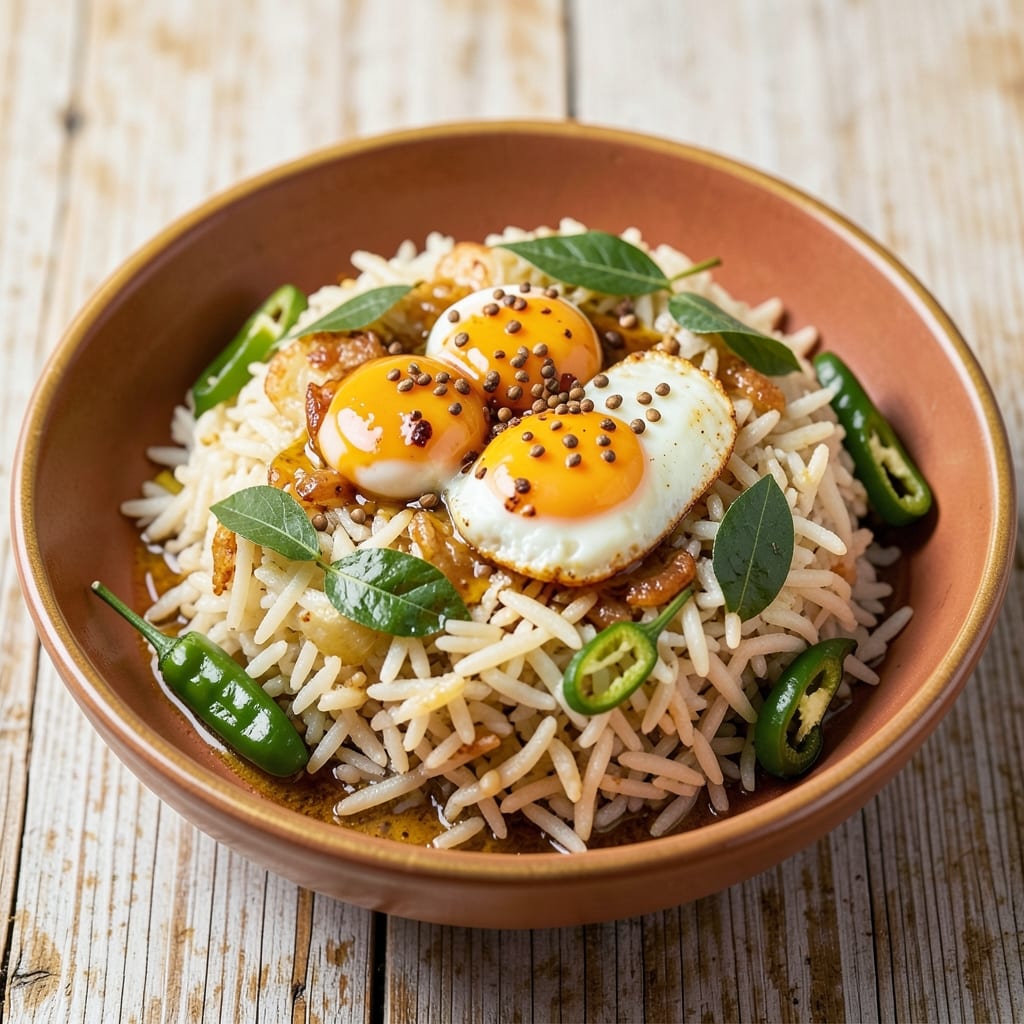
This Dharwad Egg Rice recipe brings the heart of Karnataka to your kitchen with its fragrant blend of spices and perfectly cooked eggs. 🌟 A beloved South Indian staple, this dish transforms simple rice and eggs into a flavorful, comforting meal that's as satisfying as it is aromatic. The secret lies in the tempering—where mustard seeds, curry leaves, and green chilies sizzle to life, infusing every grain with their signature warmth.
What makes this recipe special is its balance of textures and flavors: tender rice, soft-boiled eggs, and a rich, spiced gravy that ties everything together. The dish is traditionally vegetarian but packed with protein, making it a complete meal in one bowl. I've perfected the technique to ensure the eggs stay perfectly cooked—firm yet creamy—while the rice absorbs the aromatic tempering without turning mushy.
The result is a dish that's both hearty and delicate, with each bite offering a symphony of spices and textures. The mustard seeds add a subtle crunch, the curry leaves bring an earthy depth, and the green chilies deliver a gentle kick. This is the kind of meal that feels like a hug on a plate—ideal for a cozy family dinner or a special occasion.
Ready in about 45 minutes, this recipe delivers restaurant-quality comfort without the fuss. The key is patience—letting the spices bloom in hot oil and allowing the rice to cook just right. Once you try it, you'll understand why Dharwad Egg Rice holds a special place in Karnataka's culinary tradition. Let's get started!
Ingredients for dharwad egg rice
Simple rice, eggs, and spices transform into Karnataka's most comforting dish.
| Ingredient | Amount | Notes |
|---|---|---|
| Long-Grain Basmati Rice 🍚 | 1 ½ cups | Uncooked, rinsed thoroughly |
| Large Eggs 🥚 | 4 whole | Fresh, room temperature |
| Vegetable Oil 🫒 | ½ cup | For tempering, neutral flavor |
| Mustard Seeds 🌿 | 1 tbsp | Whole, light brown preferred |
| Curry Leaves 🌿 | ¼ cup | Fresh, tightly packed |
| Green Chilies 🌶️ | 2 whole | Slit lengthwise, adjust heat |
| Dried Red Chilies 🌶️ | 2 whole | Split, for garnish |
| Asafoetida Powder 🌿 | ¼ tsp | Essential for authentic flavor |
| Turmeric Powder 🧂 | ¼ tsp | Freshly ground preferred |
| Tomatoes 🍅 | 2 medium | Ripe, chopped for gravy |
| Salt 🧂 | 1 ½ tsp | Adjust to taste |
| Cumin Seeds 🌿 | ½ tsp | Toasted for aroma |
| Ghee 🧈 | 2 tbsp | For final richness |
| Fresh Coriander Leaves 🌿 | ¼ cup | Chopped, for garnish |
The curry leaves are non-negotiable here—look for fresh, vibrant bundles at Indian grocery stores like Patel Brothers or H Mart. Their earthy aroma is the soul of this dish. Mustard seeds should be light brown, not black, for that signature crunch. Whole spices from bulk bins at Penzeys or Spicewalla deliver the best flavor. For tomatoes, San Marzano if you want to splurge, but regular beefsteak works too—just ensure they're ripe and juicy. The green chilies can be adjusted to your heat preference, but Kashmiri chilies from Trader Joe's add color without too much heat.
No curry leaves? Substitute with 1 tsp dried curry powder, but it won't be the same. Fresh coriander leaves missing? Dried cilantro at half the amount works in a pinch, though texture suffers. For the tomatoes, 1 tbsp tomato paste can replace one medium tomato if you're in a hurry. The ghee is optional but worth the extra cost—it adds a luxurious finish. If you can't find asafoetida, skip it entirely rather than using garlic powder as a substitute. The dish will still be delicious, just slightly different.
Rice keeps best in an airtight container for 3 days—cook extra for leftovers. The eggs should be used within 2 days for optimal texture. Store spices in dark, cool places to preserve their potency. For meal prep, assemble the dish fresh but keep components separate until ready to serve. The tempering can be made ahead and reheated gently—just add a splash of water to prevent burning. This dish tastes even better the next day as flavors meld together.
Why You'll Love This Recipe
- Five-Ingredient Magic: I swear by this—just rice, eggs, oil, mustard seeds, and curry leaves. That’s it. No chopping veggies, no fancy spices cluttering my pantry. Honestly, I keep the ingredients in my fridge freezer just for this.
- Crispy-Creamy Perfection: The eggs fry until the edges are golden and the yolks stay runny—like biting into a little sunrise. Meanwhile, the rice soaks up the tempering of mustard seeds and curry leaves, giving every bite that warm, aromatic punch.
- Lunchbox Champion: Between us, this is my go-to for packed lunches. The eggs stay intact (no soggy yolks here), and the rice holds its shape. My kids actually eat it cold—no complaints, just seconds.
- Budget Breakfast for Dinner: I make a big batch on Sundays, and it feeds us all week. The eggs stretch the rice flavor further, and the mustard-curry base feels fancy without costing a thing. (Yes, even on a Tuesday night.)
Step-by-step instructions for Dharwad egg rice
Master this Karnataka classic with perfectly tempered spices and tender eggs.
🍳 Step 1: Cook the Rice to Perfect Al Dente
Rinse the 1.5 cups long-grain basmati rice thoroughly under cold water until the water runs clear. This removes excess starch and prevents gummy rice. In a pot, combine the rinsed rice with 3 cups water and 1.5 teaspoons salt. Bring to a rolling boil over high heat, then reduce to low heat, cover, and simmer for 12-15 minutes.
I like to check doneness by gently shaking the pot—if the rice doesn't jiggle but stays in place, it's ready. Remove from heat and let it sit covered for 5 minutes. Fluff with a fork before serving. The rice should be firm yet tender, with a slight bite—this is key for Dharwad-style rice.
🔥 Step 2: Temper the Spices for Maximum Flavor
Heat 0.5 cup vegetable oil in a heavy-bottomed pan over medium heat. Add the 0.5 teaspoons toasted cumin seeds and let them sizzle for 30 seconds until fragrant. Then add the 1 tablespoon mustard seeds—they'll pop and dance before settling. Immediately add the 0.25 cup curry leaves and 2 slit green chilies. Stir constantly for 1 minute until the curry leaves turn dark green and the chilies soften slightly.
Here's where the magic happens: Add the 2 split dried red chilies and 0.25 teaspoon asafoetida powder. The asafoetida will make the spices sing with an umami depth. Cook for another 30 seconds until the oil turns golden and aromatic. This tempering step is the soul of Dharwad egg rice—don't skip it.
🍳 Step 3: Prepare the Egg and Tomato Gravy
In the same pan (no need to clean it—the spices are your friends), add 2 tablespoons ghee and swirl to coat the base. Pour in the 2 chopped tomatoes and cook for 3-4 minutes until they soften and release their juices. Add the 0.25 teaspoon turmeric powder and stir for 1 minute until the raw flavor disappears.
Now for the eggs: Crack the 4 large eggs directly into the pan. Gently stir them with a spatula, letting them cook slowly. After 2-3 minutes, when the eggs are just starting to set but still slightly runny, pour in ½ cup hot water from the rice pot. Stir gently until the eggs are fully cooked but still creamy—not scrambled. Season with an extra pinch of salt if needed.
🥘 Step 4: Combine and Garnish for Authentic Flavor
Transfer the cooked rice to a large serving bowl. Top with the egg-tomato mixture and gently fold everything together. The eggs should coat the rice evenly, creating a creamy yet distinct texture. For the final touch, drizzle over any remaining ghee from the pan and sprinkle with 0.25 cup chopped fresh coriander leaves.
This is where Dharwad egg rice becomes truly special—the balance of spicy tempering, creamy eggs, and fragrant rice. Serve immediately while the eggs are still warm and the spices are at their peak aroma. The dish should have layers of flavor in every bite: the crispy mustard seeds, the umami asafoetida, the fresh coriander, and the rich eggs.
Pro Tips For Making Dharwad Egg Rice
- CRACK EGGS COLD: Dharwad egg rice relies on runny yolks, so resist the urge to separate eggs at room temp—pop them straight from the fridge. The chill keeps the whites firm while the yolks stay loose enough to blend into the rice without breaking. I learned this the hard way when my first batch turned into scrambled eggs disguised as a curry.
- FRIED RICE FIRST: Cook the rice until it’s just tender—about 70% done—then spread it on a tray to cool. Cold rice fries better and won’t turn mushy when you reheat it later. Skip this, and you’ll end up with a gluey mess instead of the signature crispy texture. (Yes, even if you’re impatient like me.)
- SALT THE WATER LESS: Use half the salt you normally would for rice—Dharwad egg rice gets its punch from the tempering (mustard seeds, curry leaves) and fried eggs, not the water. Over-salting here means you’ll have to compensate later, and nothing kills the balance like a bitter, one-note dish.
- TEMPER ON LOW: The mustard seeds and curry leaves need heat to pop, but cranking it too high burns them before they release their aroma. Start on medium-low, let the seeds sizzle gently for 30 seconds, then add curry leaves—this keeps their flavor intact. I was skeptical until I tried it; now I can’t go back.
Essential equipment for dharwad egg rice
Heavy-Bottomed Pan
A heavy-bottomed stainless steel pan (like the All-Clad D5 or Calphalon Classic) is essential for even heat distribution during tempering. This prevents hot spots that can burn your mustard seeds or curry leaves. I use my 10-inch All-Clad for this recipe—it handles the high heat needed for the tempering spices without warping. A lighter pan would cause uneven cooking, leading to bitter flavors. 🔥
Fine-Mesh Strainer
Rinsing 1.5 cups basmati rice thoroughly requires a fine-mesh strainer (I prefer the OXO Good Grips) to remove excess starch. This step is critical—starchy rice turns mushy, ruining the dish's texture. Rinse until the water runs clear, then drain well before cooking. A colander works, but a fine strainer removes more starch efficiently.
Wooden Spoon
A wooden spoon (like the OXO Good Grips or Maplewood) is ideal for stirring the tempering spices and egg mixture. Wood won’t scratch your pan and won’t conduct heat like metal, preventing scorching. Use it to gently fold the eggs into the rice at the end—its flexibility helps distribute the mixture evenly without breaking the eggs.
Spice Grinder
For freshly ground turmeric powder, a small spice grinder (like the Spice & Tea or KitchenAid) ensures maximum flavor. Freshly ground spices release their essential oils more effectively than pre-ground powders. I grind my turmeric just before cooking—it makes a noticeable difference in aroma and taste. Store whole spices in airtight containers to preserve their potency. 🌿
Measuring Spoons
Precision is key for spices like asafoetida and turmeric—use stainless steel measuring spoons (like the OXO Good Grips) for accuracy. A ¼ teaspoon of asafoetida is enough to add depth, but too much can overpower the dish. Similarly, ½ teaspoon cumin seeds should be toasted to perfection—any more can make the tempering bitter. Invest in a set with clear markings for easy measurement.
Serving Bowl
A wide, shallow serving bowl (like a ceramic or glass dish) lets you layer the rice and egg mixture beautifully. I use a 12-inch oval bowl for presentation—it holds the dish while keeping the eggs and rice visible. Avoid deep bowls, which can trap steam and make the rice soggy. Garnish with fresh coriander leaves right before serving for a pop of color and freshness. ✨
Nutrition facts
Frequently asked questions
Why is Dharwad egg rice different from regular egg fried rice?
The key difference lies in the tempering technique and egg preparation. Dharwad-style uses a spice tempering with mustard seeds, curry leaves, and asafoetida that infuses every grain of rice, while regular egg fried rice often skips this step. The eggs are also cooked gently in a tomato-ghee gravy rather than scrambled, creating a creamy texture that coats the rice. This dish balances spice, creaminess, and texture in a way traditional fried rice doesn't.
Can I make Dharwad egg rice without eggs?
Yes, you can create a vegetarian version by replacing eggs with tofu or paneer. Cube 1 cup firm tofu or 1 cup crumbled paneer and cook them in the tomato-ghee mixture until golden. The dish will have a similar texture and absorb the spices beautifully. Just reduce the cooking time slightly since tofu/paneer cooks faster than eggs. The tempering and rice preparation remain exactly the same.
What's the secret to perfectly cooked eggs in this recipe?
The secret is cooking the eggs low and slow in the tomato-ghee mixture until they're just set but still slightly runny, then adding ½ cup hot water to finish cooking them gently. This creates a creamy, custard-like texture that coats the rice perfectly. Overcooking will make them dry, while undercooking leaves them too soft. The 2-3 minute cooking time before adding water is critical—don't rush it!
How do I adjust the heat level for picky eaters?
Reduce the heat by removing the green chilies entirely and using mild dried red chilies instead. For extra mildness, add ½ teaspoon sugar to the tempering spices to balance any residual heat. The asafoetida and curry leaves provide depth without heat, so you won't lose the dish's authentic flavor—just its spiciness. Always taste the tempering before adding it to the rice to adjust seasoning.
Can I make this dish ahead of time?
Yes, but with some adjustments. Cook the rice and prepare the egg mixture separately, then refrigerate them in airtight containers for up to 2 days. When ready to serve, gently reheat the egg mixture (add a splash of water to prevent drying) and mix it with the rice. The flavors actually improve overnight as the spices infuse further. For best texture, serve within 4 hours of reheating—this ensures the eggs stay creamy rather than dry.