
Breakfast & Brunch
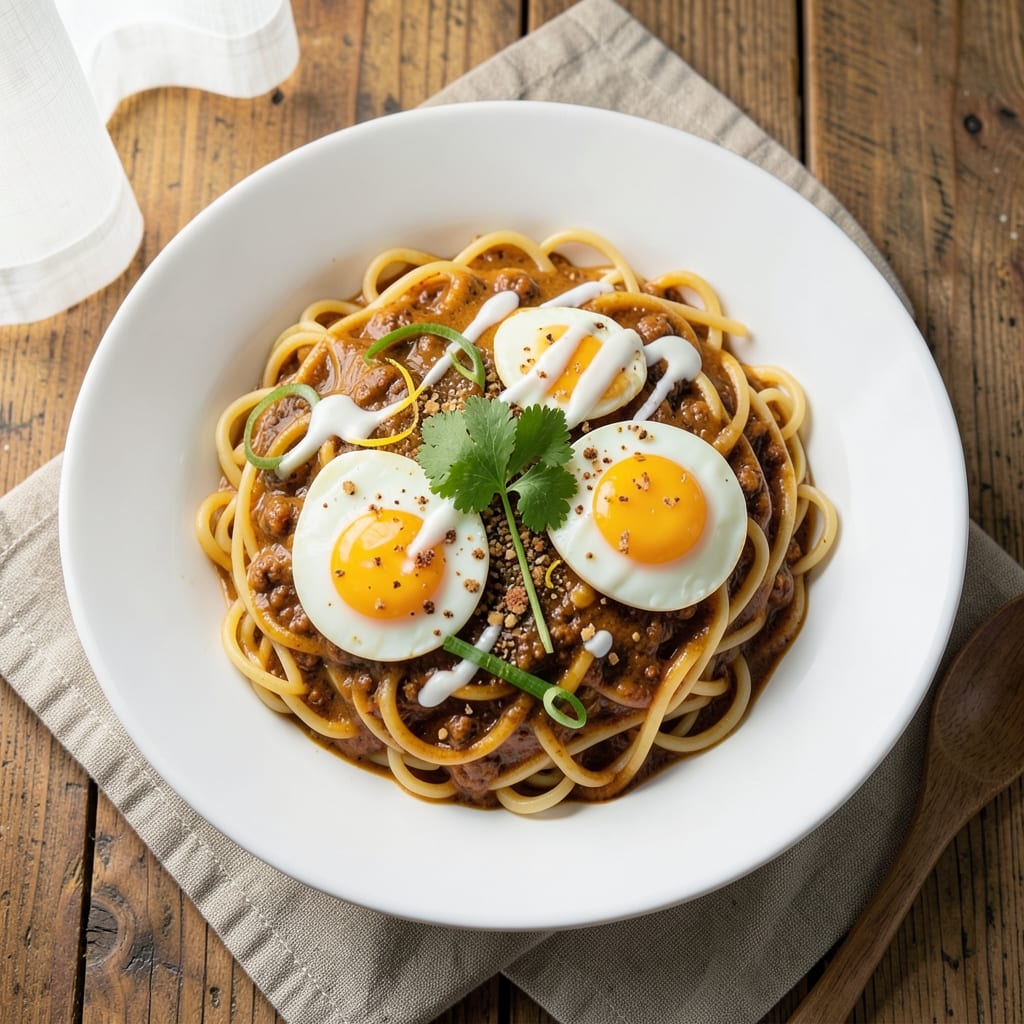
This curry egg noodles recipe transforms a simple breakfast into a fragrant, golden dish that smells like sunshine and spices. 🌟 The secret lies in balancing coconut milk’s creaminess with turmeric’s earthy warmth and a quick stir-fry that locks in flavor without overcooking. I developed this version after craving something hearty yet fast—no slow simmering, just bold layers in 20 minutes or less. The magic starts with a simple curry paste (store-bought or homemade) simmered in coconut milk until fragrant, then tossed with chewy egg noodles and silky scrambled eggs. The result? A dish where every bite delivers tender noodles, creamy eggs, and a sauce that’s aromatic without being heavy. It’s the kind of meal that feels special but comes together effortlessly. What makes this recipe stand out is its versatility—adjust the spice level with chili flakes or swap in shrimp for extra protein. The noodles absorb the rich, golden sauce perfectly, while the eggs add a satisfying texture contrast. Serve with fresh cilantro or lime wedges for brightness, and you’ve got a breakfast that’s as impressive as it is quick. Perfect for weekdays when you need something nourishing but don’t have time to fuss, this dish proves comfort food doesn’t require hours in the kitchen. Let’s get cooking!
Ingredients for curry egg noodles
Pantry staples meet fresh aromatics for this fragrant, golden breakfast dish.
| Ingredient | Amount | Notes |
|---|---|---|
| Egg Noodles 🍜 | 8 oz | Fresh or dried, chewy variety |
| Large Eggs 🥚 | 4 whole | Fresh, room temperature |
| Curry Paste 🌶️ | 2 tbsp | Red or yellow, store-bought or homemade |
| Full-Fat Coconut Milk 🥥 | ½ cup | Canned, well-shaken |
| Turmeric Powder 🌿 | ½ tsp | Bright yellow, fresh ground preferred |
| Garlic Cloves 🧄 | 2 cloves | Fresh, minced |
| Fresh Ginger 🌿 | 1 tbsp | Grated, or 1 tsp ground ginger |
| Vegetable Oil 🫒 | 1 tbsp | Neutral flavor, high smoke point |
| Fresh Cilantro 🌿 | ¼ cup | Chopped, for garnish |
| Lime Wedges 🍋 | 2 whole | Fresh, for serving |
| Salt 🧂 | ½ tsp | Kosher or sea salt |
| Black Pepper 🌶️ | ¼ tsp | Freshly ground |
| Chili Flakes 🔥 | ¼ tsp | Optional, adjust to taste |
| Green Onions 🧅 | 2 whole | Sliced, for garnish |
The curry paste is where the magic happens—Maesri or Thai Kitchen brands are my go-tos, but any red or yellow paste works. Grab the full-fat coconut milk (the creamy part) for that rich, velvety texture. Fresh ginger and garlic? Your local Asian market usually has the best quality, but the grocery store works too. Look for ginger that’s firm and smells fresh—no wrinkly bits. The turmeric should be bright yellow, not dull. If you’re using dried noodles, soak them in warm water for 5 minutes before cooking to soften them up.
No curry paste? Mix 1 tbsp each of turmeric, cumin, coriander, and ginger powder with a pinch of salt. Swap coconut milk for light coconut milk or even full-fat Greek yogurt**>—just know the texture will change slightly. Fresh cilantro not available? Dried cilantro or parsley at half the amount will do. The eggs are the star here, so room temperature eggs scramble better. If you’re short on time, microwave the eggs for 30 seconds before scrambling. The chili flakes are totally optional—add them if you want heat, skip them if you prefer mild.
Store leftover sauce in a jar for up to 5 days—it’s perfect for quick lunches or topping rice. The noodles reheat best with a splash of water to loosen them up. Eggs? Eat fresh or freeze cooked portions for up to 3 months. I always double the sauce because it’s great on toast or with scrambled eggs later in the week. Keep the lime wedges separate until serving—they brighten everything up.
Why You'll Love This Recipe
- One-Pot Magic: I swear by this recipe when I’m too tired to wash dishes. Just toss the egg noodles, curry paste, and coconut milk into one pot—no extra pans, no fuss. The turmeric stains everything gold, but honestly? That’s the only cleanup I care about.
- Creamy Without Trying: The full-fat coconut milk makes this dish ridiculously rich without needing heavy cream. That first bite—where the egg noodles soak up the curry and coconut? It’s like a hug in a bowl. (Yes, even on a Tuesday night.)
- Leftover Goldmine: This recipe doubles as my lazy lunch savior. Make a big batch, and you’ve got a week’s worth of microwave-friendly meals. The flavors actually improve the next day—trust me, I’ve tested it.
- Budget-Friendly Luxury: Egg noodles and eggs are cheap, but this tastes like something from a fancy Thai spot. Between us, I’ve spent $10 on ingredients for six servings. That’s a win I’ll take every time.
Step-by-step instructions for curry egg noodles
Here's how to whip up this fragrant coconut turmeric breakfast in record time.
🍳 Step 1: Cook the Egg Noodles Al Dente
Bring a pot of water to a rolling boil and add the 8 oz egg noodles. Cook according to package instructions until 1 minute before they're fully done—you want them al dente so they don't turn mushy in the sauce. I like to reserve ½ cup of pasta water before draining, just in case the sauce gets too thick later.
Drain the noodles and set them aside. The key here is to keep them warm while you make the sauce, so I like to transfer them to a warm bowl and give them a quick toss with a splash of the reserved pasta water to keep them moist. Don't rinse them—the starch helps the sauce cling beautifully.
🍳 Step 2: Sauté Aromatics Until Fragrant
Heat the 1 tbsp vegetable oil in a large skillet over medium heat. Add the 2 cloves minced garlic and 1 tbsp grated fresh ginger, and sauté for 1-2 minutes until they're golden and fragrant—this is where all the flavor magic happens. Be careful not to let them burn; they cook fast and turn bitter in seconds.
Next, stir in the 2 tbsp curry paste and cook for another 30 seconds until it's fully incorporated and the mixture smells deeply aromatic. The curry paste will darken slightly as it warms up, releasing its complex flavors. This step builds the flavor foundation, so don't rush it.
🥘 Step 3: Create the Creamy Coconut Sauce
Pour in the ½ cup full-fat coconut milk and stir to combine with the aromatics. Add the ½ tsp turmeric powder, ½ tsp salt, ¼ tsp black pepper, and ¼ tsp chili flakes, then bring the mixture to a gentle simmer over medium-low heat. Let it cook for 3-4 minutes until it starts to thicken slightly—you want it creamy but not too heavy.
Here's the thing—if the sauce looks too thick, add 1-2 tablespoons of the reserved pasta water to loosen it to your desired consistency. The sauce should coat the back of a spoon but still be pourable. Taste and adjust seasoning if needed; you can always add more salt or chili flakes to taste.
🍳 Step 4: Combine Noodles and Eggs
Push the sauce to one side of the skillet and crack the 4 whole large eggs into the empty space. Let them sit undisturbed for 10-15 seconds until they start to set slightly at the edges. Then, using a spatula, gently scramble the eggs while pouring the sauce over them to coat everything evenly.
Add the cooked egg noodles to the skillet and toss everything together until the eggs are fully cooked and the noodles are well-coated in the sauce. This usually takes about 1-2 minutes—you want the eggs just set but still creamy. If the mixture seems dry, add another splash of pasta water to keep it silky.
🍽️ Step 5: Garnish and Serve Immediately
Remove the skillet from heat and stir in the ¼ cup chopped fresh cilantro. The bright, fresh flavor cuts through the richness of the coconut and eggs beautifully. Divide the curry egg noodles among 4 plates, and garnish each serving with sliced green onions and a lime wedge on the side.
Serve this dish right away while it's hot and the eggs are still creamy. The lime wedges are there for a reason—squeeze a little over each serving to brighten the flavors and add a tangy contrast to the rich, spiced noodles. Enjoy your fragrant, coconut-infused breakfast in under 20 minutes!
Pro Tips For Making Curry Egg Noodles
- Cook curry paste first: I learned this the hard way—skipping this step makes your curry taste like it’s playing second fiddle to the coconut milk. Bloom the paste in a dry pan for 1-2 minutes before adding coconut milk. This wakes up the spices and prevents a flat, one-dimensional flavor.
- Boil noodles al dente: Egg noodles go from perfect to mushy fast. Pull them out when they’re still slightly firm—you’ll finish cooking them in the curry sauce. Overcooked noodles turn into a gluey mess, and nobody wants that.
- Use room-temperature eggs: Cold eggs drop to the bottom of the pan and steam instead of sizzle. Crack them into a bowl first, let them sit for 10 minutes, then slide them in gently. This guarantees a silky yolk and firm whites every time.
- Stir in coconut milk slowly: Dumping it all at once makes the sauce separate like oil and water. Instead, whisk in about a quarter cup at a time while stirring constantly. The heat will emulsify it smoothly—no curdling, no sad curry.
Storing and reheating your leftovers
Refrigerator Storage
Store leftover curry egg noodles in an airtight container for up to 3 days—the sauce actually deepens in flavor overnight. Let it cool completely before refrigerating to prevent condensation. I like using glass containers with tight-sealing lids to maintain freshness. When reheating, add 1-2 tablespoons of water to prevent drying out. 🥥
Freezer-Friendly Sauce
Save the creamy coconut curry sauce separately for up to 3 months—it’s perfect for quick lunches or rice bowls. Freeze it in ice cube trays for portion control, then transfer to a ziplock bag. Thaw overnight in the fridge before using. The sauce thickens when frozen, so add a splash of water when reheating. 🥶
Reviving Noodles
If your noodles seem dry after reheating, toss them with 1 teaspoon of coconut milk or a splash of water while warm. Microwave for 30 seconds to restore moisture. For best texture, reheat in short bursts (30-second intervals) rather than all at once. I find this keeps the noodles tender and prevents a gummy texture. ⏱️
Egg Handling Tips
The eggs are the trickiest part to reheat—never microwave them as they’ll turn rubbery. Instead, reheat the entire dish in a skillet over low heat for 2-3 minutes, stirring gently. If the eggs look dry, add a splash of water or coconut milk to restore creaminess. Fresh eggs reheat best, so plan to eat leftovers within 2 days. 🍳
Garnish Refreshers
Fresh garnishes like cilantro and lime lose their vibrancy when stored, so add them right before serving. For extra brightness, squeeze lime juice directly over the dish—it cuts through the richness beautifully. If you must store garnishes, keep them in a separate sealed container with a paper towel to absorb moisture. 🍋
Meal Prep Shortcuts
Prep the curry sauce and noodles separately for easy assembly later. Store cooked noodles in one container and sauce in another. When ready to eat, simply reheat the sauce, toss with noodles, and scramble fresh eggs in the same pan. This cuts 5 minutes off your morning routine—perfect for busy weekdays! ⏰
Nutrition facts
Frequently asked questions
Can I make this curry noodle dish with regular noodles instead of egg noodles?
While egg noodles add a rich, chewy texture, you can use rice noodles, udon, or even spaghetti for a different twist. For best results, choose noodles that hold up well in sauces—avoid delicate varieties like angel hair. Just cook them 1 minute less than package instructions to prevent mushiness when tossed with the sauce.
How do I adjust the spice level if I don't like heat?
Skip the chili flakes entirely and reduce the curry paste to 1 tbsp for a milder flavor. For extra warmth without heat, add a pinch of ground cumin or cinnamon instead. Always taste the sauce before adding the eggs—you can adjust seasoning at any point, but you can't take it out once the eggs are cooked!
What's the best way to make this dish vegetarian?
Swap the eggs for tofu or chickpeas—both work beautifully! For tofu, press and cube firm tofu, then pan-fry until golden before adding to the sauce. Chickpeas add great texture and absorb the curry flavors perfectly. You can also add mushrooms or bell peppers for extra veggie goodness.
Why did my sauce get too thick when cooking?
This happens when the coconut milk reduces too much or you didn't reserve enough pasta water. To fix it, add 1-2 tablespoons of water or reserved pasta water while stirring. The starch in the noodles helps thicken the sauce naturally, but coconut milk can separate if cooked too long—keep heat at medium-low and stir frequently.
Can I make this for dinner instead of breakfast?
Yes! This dish works perfectly for dinner too—just add protein like shrimp, chicken, or extra tofu for a heartier meal. For a Thai-inspired twist, serve with steamed bok choy or a side salad. The creamy coconut sauce pairs wonderfully with grilled meats or even as a topping for rice bowls.