
Breakfast & Brunch
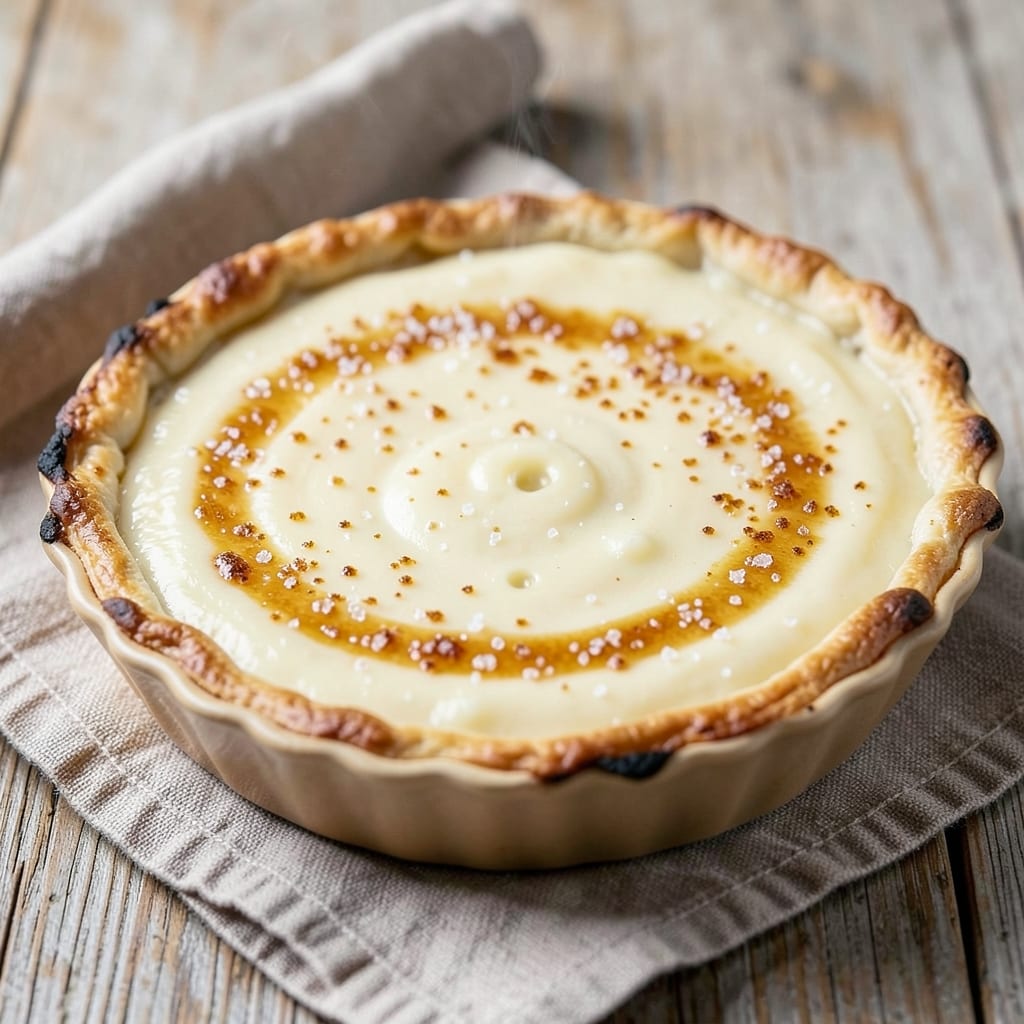
This creamy egg tart recipe delivers the perfect balance of buttery, flaky crust and silky, custard-filled centers that melt in your mouth. 💛 The secret lies in a precise shortcrust pastry that bakes to a golden finish while encasing a rich, vanilla-infused custard that stays smooth and velvety. I've perfected this technique over years of baking, ensuring every bite is a harmonious blend of textures and flavors.
The foundation starts with a simple yet foolproof crust made from cold butter, flour, and a touch of sugar—key for that signature crispness. The custard, meanwhile, relies on a smooth egg-milk mixture enriched with vanilla or pandan for depth, then baked just until set but still jiggly at the center. This recipe is designed to impress without requiring advanced skills, making it perfect for both beginners and seasoned bakers.
What you’ll achieve is a restaurant-quality egg tart with a perfectly golden crust and a creamy custard that’s neither too runny nor dry. The contrast between the crispy edges and the soft, custardy filling is what makes these tarts irresistible. Whether you're serving them for breakfast, brunch, or dessert, they’re guaranteed to disappear quickly.
For added versatility, you can easily adapt this recipe for savory variations (like adding cheese or herbs) or dietary preferences (such as egg-free alternatives). The instructions will guide you through every step, ensuring your egg tarts turn out flawless every time.
Ingredients for creamy egg tart
Buttery crust meets velvety custard—these 12 ingredients deliver restaurant-quality egg tarts every time.
| Ingredient | Amount | Notes |
|---|---|---|
| Unsalted Butter 🧈 | 1 cup | Cold, cubed for flakiness |
| All-Purpose Flour 🌾 | 2 ½ cups | Sifted, plus extra for dusting |
| Granulated Sugar 🍚 | ¼ cup | Fine grain preferred |
| Large Eggs 🥚 | 4 whole | Room temperature for smooth custard |
| Whole Milk 🥛 | 1 ½ cups | Full-fat for creaminess |
| Pure Vanilla Extract 🌿 | 1 tbsp | High-quality for depth |
| Cornstarch 🌾 | 2 tbsp | For silky custard texture |
| Diamond Crystal Kosher Salt 🧂 | ½ tsp | Fine grain for even dissolving |
| Ground Black Pepper 🌶️ | ¼ tsp | Freshly cracked for subtle warmth |
| Pandan Extract (optional) 🌿 | ½ tsp | For authentic Southeast Asian flavor |
| Vegetable Oil 🫒 | 1 tbsp | For greasing tart molds |
| Powdered Sugar (optional) 🍚 | ¼ cup | For dusting finished tarts |
The butter is non-negotiable here—European-style unsalted butter (like Plugrá) gives the flakiest crust, but Land O'Lakes works in a pinch. Keep it cold when mixing to prevent melting. For flour, King Arthur or Bob's Red Mill are my go-tos—they're finely milled and consistent. The sugar? Fine grain dissolves better, but regular granulated sugar will work if that's what you've got. If you're using pandan extract, Gourmet Garden is reliable, though vanilla alone gives a classic flavor. Pro tip: measure your milk in a liquid measuring cup to avoid spills—this custard is sensitive to exact amounts.
No vanilla extract? Vanilla bean paste adds specks for visual appeal, or a sugar packet of vanilla sugar works in a bind. For a savory twist, swap the vanilla for 1 tsp lemon zest and add 1/4 tsp nutmeg to the custard. The cornstarch is crucial—it's what gives those tarts that signature silky texture. If you're out, arrowroot powder at the same amount works too. For the crust, if you don't have tart molds, greased ramekins or muffin tins will do. Just remember to bake them at 375°F for 20-25 minutes instead of 350°F. And if you're dusting with powdered sugar, sift it to avoid clumps.
Butter and flour can be prepped ahead—just keep them chilled until ready to use. The custard mixture stays fresh in the fridge for 2 days, but bake it within 4 hours of mixing for best results. Baked tarts keep well at room temperature for 3 days in an airtight container, though they're best enjoyed fresh. For freezing, let them cool completely, then wrap individually in plastic wrap and store for up to 3 months. Reheat in a 350°F oven for 10 minutes to restore that custardy perfection—no microwave necessary, trust me.
Why You'll Love This Recipe
- Five-Ingredient Magic: I swear by this recipe—just butter, flour, sugar, eggs, and milk. That’s it. No fancy substitutions, no hunting for obscure pantry items. The simplicity means I never skip it, even when I’m too tired to think.
- Golden Crust, Silky Fill: The buttery crust flakes apart at the edges while the custard stays velvety smooth inside. That contrast? Pure satisfaction. It’s the kind of texture that makes you pause mid-bite—honestly, I’ve caught myself doing it twice while baking.
- Weeknight Hero: These tarts reheat in seconds—microwave or oven, no judgment. I make a batch on Sundays, and by Wednesday, they’re my go-to for breakfast or a snack. (Yes, even on a Tuesday night when I’ve had zero sleep.)
- Budget Breakthrough: Eggs and milk stretch far here, and the dough uses basic flour and butter. My grocery bill stays sane, but my taste buds don’t notice. Between us, this is how I feed a crowd without stressing over cost.
Step-by-step instructions for creamy egg tarts
Here's how to craft that signature buttery crust and velvety custard filling—every layer matters.
👨🍳 Step 1: Make the Perfect Puff Pastry Crust
In a food processor, pulse the 1 cup unsalted butter (cold and cubed) with the 2.5 cups all-purpose flour and 0.5 teaspoon diamond crystal kosher salt until the mixture resembles coarse crumbs with pea-sized butter pieces. This texture is crucial—it ensures flaky layers when baked.
Transfer the dough to a lightly floured surface and gently press it into a ¼-inch thick rectangle. Wrap tightly in plastic wrap and refrigerate for at least 30 minutes. Cold dough prevents spreading and helps maintain crisp layers. While it chills, preheat your oven to 375°F—this high temperature creates that signature golden crust.
🍳 Step 2: Prepare the Silky Custard Filling
In a medium saucepan, whisk together the 4 whole large eggs, 1.5 cups whole milk, 0.25 cup granulated sugar, 1 tablespoon pure vanilla extract, 2 tablespoons cornstarch, 0.25 teaspoon ground black pepper, and 0.5 teaspoon pandan extract (if using). The pepper adds subtle depth that balances the sweetness—don't skip it!
Cook over medium-low heat, stirring constantly with a silicone spatula, until the mixture thickens to a pudding-like consistency that coats the back of a spoon (about 8-10 minutes). This should happen without boiling—if it gets too hot, the eggs will curdle. Immediately transfer to a bowl, press plastic wrap directly onto the surface to prevent a skin from forming, and let cool to room temperature.
🥘 Step 3: Assemble and Bake the Tarts
Roll out the chilled dough to ⅛-inch thickness and cut into circles slightly larger than your tart molds. Gently press each into a greased 1.5-inch tart mold (use the 1 tablespoon vegetable oil for this). The dough should fit snugly but not tear—if it resists, let it warm slightly at room temperature for 5 minutes.
Fill each tart shell ¾ full with the cooled custard mixture. The custard should mound slightly above the crust edge—this ensures a generous bite. Bake on the middle rack for 18-22 minutes until the crust is deep golden brown and the custard is just set (the center should still jiggle slightly).
⏰ Step 4: Finish with Optional Powdered Sugar
Remove the tarts from the oven and let cool in the molds for 5 minutes before carefully transferring to a wire rack. This brief rest prevents the custard from sliding out. If using, dust the tops with 0.25 cup powdered sugar through a fine-mesh sieve for that signature dusting of sweetness.
Serve warm for the ultimate experience—the contrast of crisp crust and creamy custard is what makes these tarts legendary. Store leftovers in an airtight container in the refrigerator for up to 3 days, but they're best enjoyed fresh from the oven!
Pro Tips For Making Creamy Egg Tart
- Preheat Pan Properly: Get your tart pan screaming hot—at least 375°F (190°C)—before adding the crust. I learned this the hard way when my first batch of egg tarts stuck like glue because the pan was lukewarm. A hot pan guarantees a crisp base and prevents soggy bottoms.
- Whisk Eggs Like Mad: Beat those eggs until the yolks and whites are completely smooth—no streaks, no lumps. I used to rush this, and the filling would curdle or separate in the oven. A proper whisk (or immersion blender) ensures a silky, uniform custard every time.
- Skip the Overmixing: Once you add the milk to the egg mixture, stir just until combined—no need to overwork it. I’ve ruined batches by turning the custard into glue, and the texture suffers. Gentle folds keep it light and creamy.
- Bake Until Set, Not Brown: Pull the tarts out when the edges are golden but the center still jiggles slightly—it’ll firm up as it cools. Overbaking turns the custard dry and rubbery, and I’ve had to start over more times than I’d admit. A toothpick test works, but trust your eyes too.
Flavor customization for these flavors
Sweet Vanilla Twist
For a classic flavor profile, stick with 1 tablespoon pure vanilla extract and skip the pandan. I recommend Nielsen-Massey Madagascar Bourbon Vanilla—its deep caramel notes elevate the custard beautifully. If you prefer a more subtle vanilla flavor, reduce to ½ tablespoon and add ½ teaspoon almond extract for a nutty undertone. 💛
Tropical Pandan Infusion
For an authentic Southeast Asian touch, use ½ teaspoon pandan extract alongside the vanilla. The extract’s grassy, floral aroma pairs perfectly with the custard’s richness. If you can’t find pandan extract, try ½ teaspoon coconut extract for a milder tropical vibe. For extra authenticity, add ½ teaspoon toasted coconut flakes to the crust before baking.
Citrus Zest Brightness
Add 1 teaspoon lemon zest or orange zest to the custard for a refreshing twist. The acidity cuts through the sweetness, balancing the richness. Pair it with ½ teaspoon lemon extract for a brighter, more vibrant flavor. If using zest, strain the mixture to avoid gritty texture—trust me, it makes a difference!
Spiced Warmth
Infuse the custard with ½ teaspoon ground cinnamon or ¼ teaspoon cardamom powder for a cozy, aromatic flavor. For a deeper warmth, add ¼ teaspoon freshly grated nutmeg alongside the vanilla. These spices work especially well with a sugar cookie crust instead of the classic shortcrust—just swap the flour for 1 cup all-purpose flour and ½ cup granulated sugar.
Savory Cheese Variations
Transform these tarts into a savory delight by omitting the sugar from the custard and adding ½ cup shredded Gruyère cheese or Parmesan cheese. Stir in 1 teaspoon Dijon mustard and ½ teaspoon smoked paprika for depth. For a herby twist, add 2 tablespoons chopped chives or fresh dill to the crust dough before pressing into molds. 🌶️
Nutty Crunch Add-Ins
For texture contrast, fold 2 tablespoons chopped toasted pecans or walnuts into the cooled custard before baking. For a sweeter crunch, sprinkle crushed pistachios or hazelnuts on top of the custard before baking. If you love caramelized flavors, add 2 tablespoons caramelized onion jam to the custard—it’s a game-changer for depth and richness!
Nutrition facts
Frequently asked questions
Why does my egg tart custard turn rubbery?
Overcooking is the most common cause. The custard should be just set when done—it should jiggle slightly in the center like Jell-O. If it's rubbery, it was baked too long or at too high a temperature. Pull them out when the crust is golden but the custard still has a slight wobble. For extra insurance, bake at 350°F instead of 375°F and check at 18 minutes.
Can I make these egg tarts without a tart pan?
Use greased ramekins or muffin tins instead. Line them with parchment circles for easy removal. For a rustic look, try mini cast-iron skillets or even buttered phyllo cups. Just reduce baking time by 2-3 minutes—smaller pans cook faster. The custard will still be creamy, just in a different shape!
How do I prevent the crust from getting soggy?
Bake the crusts 5-7 minutes before adding custard—this creates a "barrier" that prevents moisture from seeping in. Another trick: chill the assembled tarts in the fridge for 15 minutes before baking. This helps the custard set faster. For extra insurance, brush the baked crusts with a light egg wash before adding filling.
What's the best way to reheat egg tarts?
Never microwave! The custard turns grainy. Instead, warm in a 350°F oven for 8-10 minutes on a baking sheet. For a crispy crust, broil for 1-2 minutes at the end. If you're short on time, use the air fryer at 320°F for 5 minutes—it keeps the custard perfectly smooth while reheating the crust.
Can I make these egg tarts gluten-free?
Yes, but with adjustments. Replace the all-purpose flour with a 1:1 gluten-free baking flour blend (like Bob's Red Mill 1-to-1). For the crust, add 1/4 cup cornstarch to help bind it. The custard stays the same, but you may need to bake the tarts 2-3 minutes longer since gluten-free crusts brown faster. Test one tart first!