
Breakfast & Brunch
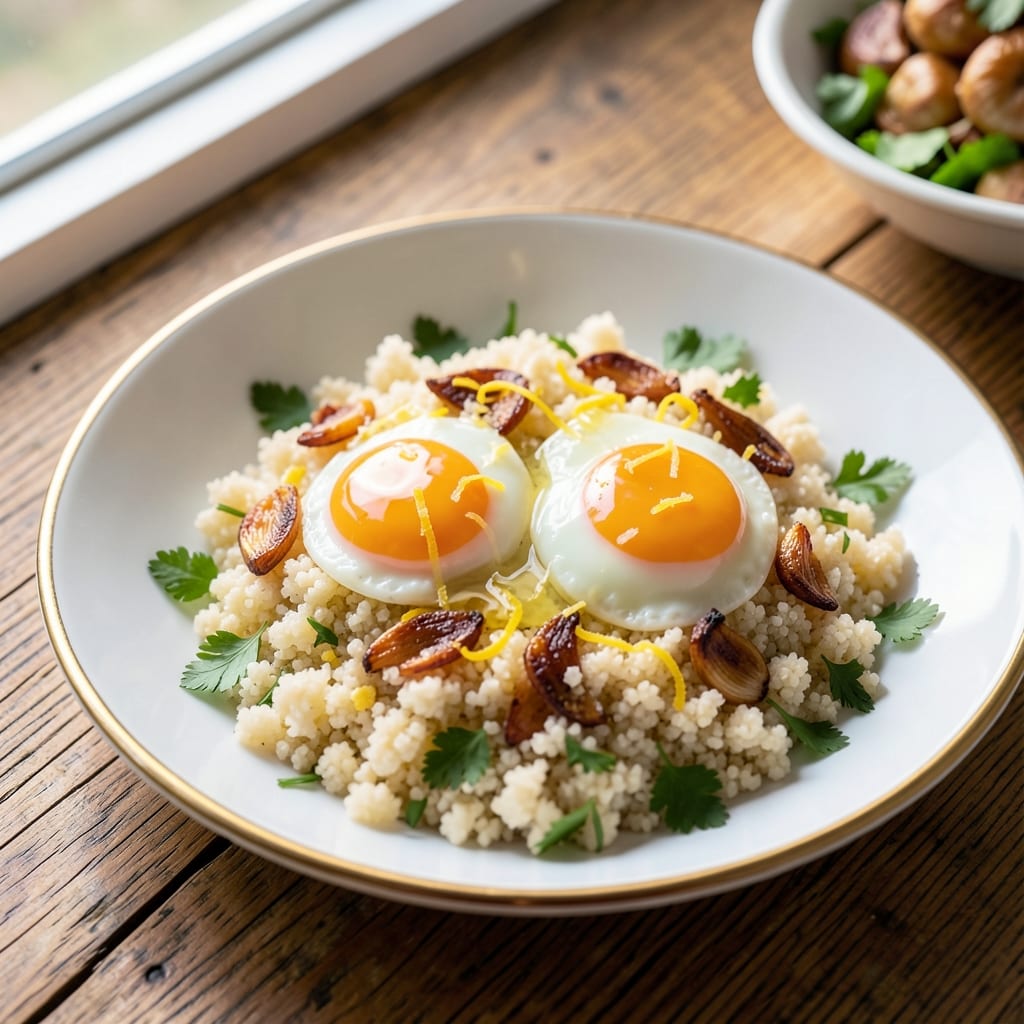
This couscous and egg recipe transforms a simple breakfast into a luxurious, restaurant-worthy meal with just a few key techniques. The secret lies in perfectly fluffy couscous and runny yolks that create a velvety, creamy texture—no special equipment required. I developed this dish after realizing how often we overlook couscous as a breakfast staple, and the results speak for themselves: tender grains, rich eggs, and a balance of textures that make every bite satisfying.
The beauty of this recipe is its simplicity—just three core components come together to create something extraordinary. Toasted couscous absorbs flavor while maintaining its signature lightness, while softly poached eggs provide that luxurious, runny yolk at the center. A touch of garlic, lemon zest, and fresh herbs ties everything together, adding brightness without overpowering the natural taste of the ingredients.
What makes this dish truly special is how it elevates an everyday meal into something memorable. The couscous stays fluffy and separate, never mushy, while the eggs cook just enough to set the whites but keep the yolks molten. This balance ensures every forkful delivers both texture and richness, making it perfect for brunch, a light lunch, or even a sophisticated dinner when paired with a simple salad or roasted vegetables.
Ready in just 20 minutes, this recipe proves that luxurious breakfasts don’t require complicated techniques or expensive ingredients. Whether you're serving a crowd or treating yourself to a special morning, this combination of couscous and eggs delivers restaurant-quality results with minimal effort. Let’s get started!
Ingredients for couscous and egg
Twelve ingredients transform ordinary couscous and eggs into a refined breakfast masterpiece.
| Ingredient | Amount | Notes |
|---|---|---|
| Instant Couscous 🌾 | 1 cup | Fine grain preferred for texture |
| Large Eggs 🥚 | 4 whole | Room temperature for even cooking |
| Unsalted Butter 🧈 | 2 tbsp | Cold, cubed for toasting |
| Garlic Cloves 🧄 | 2 cloves | Finely minced for aromatic base |
| Lemon Zest 🍋 | 1 tsp | Freshly grated for brightness |
| Fresh Parsley 🌿 | ¼ cup | Chopped, for vibrant garnish |
| Extra-Virgin Olive Oil 🫒 | 2 tbsp | Light variety for delicate flavor |
| Diamond Crystal Kosher Salt 🧂 | ½ tsp | For seasoning, not iodized |
| White Wine Vinegar 🍶 | 1 tbsp | For poaching liquid acidity |
| Water 💧 | 1 ½ cups | Room temperature for couscous |
| Heavy Cream 🥛 | ¼ cup | Optional for extra richness |
| Black Pepper 🌶️ | ¼ tsp | Freshly cracked for heat |
The couscous quality determines the entire dish. Whole Foods or specialty Middle Eastern markets carry the finest grain varieties, but even standard grocery store instant couscous works if you use fine grain and toast it properly. Avoid pre-cooked couscous—it loses the signature fluffiness. For the eggs, pasture-raised eggs from local farms develop richer yolks, but standard large eggs from the supermarket suffice for consistent results. The butter should be high-fat content (82% or higher) to achieve proper toasting without burning. If you're unsure about the couscous grain size, Bob's Red Mill offers a reliable fine grain option that's perfect for this application.
No fresh parsley? Dried parsley at one-third the amount works in a pinch, though it lacks the vibrant color and freshness. Substituting white wine vinegar? Apple cider vinegar maintains acidity but adds subtle sweetness. For the eggs, if you prefer firmer yolks, reduce poaching time by 15-20 seconds. The heavy cream is optional but recommended for that luxurious texture—full-fat coconut milk provides a dairy-free alternative without compromising richness. When mincing garlic, press rather than chop to avoid releasing bitter juices that can overpower the delicate dish. The olive oil should be light in flavor to complement rather than dominate the dish's subtle flavors.
Store uncooked couscous in an airtight container in a cool, dark place for up to 12 months. Once toasted, couscous can be refrigerated for 3 days before it loses its fluffiness. Poached eggs should be consumed immediately after cooking for optimal texture, but you can prepare them up to 2 hours ahead and keep warm in a water bath at 140°F. The lemon zest and fresh parsley should be added just before serving to preserve their bright flavors. For meal prep, cook the couscous base ahead and store separately from the eggs, which should be prepared fresh to maintain their delicate texture.
Why You'll Love This Recipe
- Five-Minute Magic: I swear by this when I’m starving but can’t be bothered to measure anything—just pour boiling water over couscous, crack eggs into a pan, and let the butter do the rest. That’s it. No stress, no fuss.
- Bright & Buttery: The lemon zest cuts through the richness of the butter like a citrusy hug, while the garlic adds that warm, savory punch. The eggs? Perfectly runny yolks soak into the fluffy couscous—absolute comfort in a bowl.
- Lunchbox Hero: Pack it cold or reheat it—this holds up way better than you’d think. Toss in some chopped parsley or a sprinkle of feta for extra flair, and suddenly you’ve got a meal that works for brunch, a picnic, or a lazy afternoon.
- Budget Breakfast: Three eggs, a handful of couscous, and a clove of garlic? That’s all it takes to feed two people for under five bucks. Honestly, it’s the kind of dish that makes me feel like I’m winning at life without even trying.
Step-by-step instructions for fluffy couscous with runny yolk luxury
Master this delicate balance of textures—light couscous and velvety eggs—with precision timing and technique.
Prepare the Poaching Liquid for Perfect Couscous
In a medium saucepan, combine the 1.5 cups water, 1 tbsp white wine vinegar, 0.5 tsp diamond crystal kosher salt, and 1 tsp lemon zest. Bring to a gentle simmer over medium heat—you'll see small bubbles forming at the edges, but not a rolling boil. The vinegar prevents the couscous from becoming gummy, while the lemon zest adds subtle brightness that complements the eggs.
While the liquid heats, finely mince the 2 cloves garlic cloves and set aside. The acidity in the vinegar also helps tenderize the garlic, so it infuses flavor without becoming bitter. Keep this poaching liquid at a gentle simmer—if it boils vigorously, the couscous will turn mushy instead of fluffy.
Toast the Garlic and Cook the Couscous to Fluffiness
In a separate small skillet, melt 2 tbsp unsalted butter over low heat. Add the minced garlic and cook for 1-2 minutes until fragrant but not browned—just golden around the edges. Remove from heat immediately to preserve its delicate flavor. Pour this garlic butter over the 1 cup instant couscous in a heatproof bowl.
Working quickly, pour the simmering poaching liquid over the couscous and butter mixture. Stir gently once, then cover the bowl tightly with plastic wrap. Let it sit for exactly 5 minutes—this steam bath transforms the couscous into light, separate grains. The key here is patience; don't peek or stir, or you'll release steam and disrupt the texture.
Poach the Eggs to Runny Yolk Perfection
Bring a separate pot of water to a gentle simmer (small bubbles breaking the surface) and prepare an ice bath. Crack each of the 4 whole large eggs into a small ramekin or shallow bowl. The eggs should be at room temperature for even cooking—this prevents uneven doneness where the yolk might stay runny while the whites overcook.
Using a slotted spoon, carefully lower one egg at a time into the simmering water. Poach for 3-4 minutes until the whites are set but the yolks remain completely liquid. Transfer each egg to the ice bath for 30 seconds to stop further cooking. This precise timing ensures the yolks stay gloriously runny while the whites hold their shape.
Assemble with Creamy Garnish and Fresh Herbs
Fluff the couscous gently with a fork, then divide it evenly among 4 serving plates. The grains should be light and separate—if they're still clumping, let the couscous sit covered for another 2 minutes to finish steaming. Arrange the poached eggs on top, letting the runny yolks peek through the delicate whites.
Drizzle with the 0.25 cup heavy cream (if using) and sprinkle with 0.25 cup chopped fresh parsley and a final pinch of 0.25 tsp black pepper. The cream adds a luxurious finish, while the parsley provides a fresh contrast to the richness. Serve immediately—this dish is best enjoyed while the yolks are still fluid and the couscous is warm.
Plate with Precision for Visual Elegance
Use a small spoon to gently press down on the couscous around each egg, creating a slight well that catches any escaping yolk. This technique keeps the presentation clean while ensuring every bite delivers that luxurious runny center. The contrast of the bright parsley against the creamy yolks and fluffy couscous makes this dish as visually stunning as it is delicious.
For an extra touch, drizzle a few drops of extra-virgin olive oil around the plate—its delicate flavor complements the dish without overpowering. The final result should be a harmonious balance of textures: tender couscous, silky egg whites, and velvety yolks that glide across your tongue.
Pro Tips For Making Couscous And Egg
- TOAST THE COUSCOUS FIRST: Skip the boiling water if you’re in a rush—just toast the dry couscous in a dry pan over medium heat for 2-3 minutes until it smells nutty. Then add your broth (or water) and let it steam. It’ll taste deeper and avoid that sad, gluey texture when you over-soak it later.
- USE COLD BUTTER FOR EGGS: Take the unsalted butter straight from the fridge and cut it into small cubes before cooking. Cold butter melts slower, giving you time to crisp the eggs properly without burning the garlic. Trust me, your eggs won’t turn into a greasy mess.
- MINCE GARLIC FINE (OR SKIP IT): If you’re not a fan of garlic chunks staring back at you, pulse the cloves in a food processor for 5 seconds—just until they’re tiny, not a paste. Or, if you’re lazy like me, use garlic powder (½ teaspoon) and add it to the couscous while it’s cooking. Works just as well.
- LEMON ZEST LAST MINUTE: Zest the lemon right before serving—it loses its bright flavor if you add it too early. Sprinkle it over the finished dish right after the eggs are done, and the acidity will cut through the richness of the butter and make everything pop. No need to overthink it.
Serving suggestions for this recipe
Brunch Plating
Serve this dish on a white ceramic platter with gold-rimmed plates to highlight the bright parsley and creamy yolks. Arrange the couscous in a loose mound around the plate, then place the poached egg slightly off-center—this creates visual interest while keeping the runny yolk accessible. Add a small lemon wedge on the side for guests to squeeze over their eggs, enhancing the citrus brightness. 🍋
Side Pairings
For a complete brunch spread, pair with roasted cherry tomatoes—tossed with 2 tbsp olive oil, ½ tsp dried oregano, and a pinch of salt, then roasted at 400°F for 12 minutes. Their sweet-tart flavor contrasts beautifully with the rich eggs. Alternatively, serve with crispy prosciutto for a salty crunch that cuts through the creaminess. I love adding avocado slices drizzled with chili flakes for extra texture.
Warm Bread
Warm crusty baguette slices brushed with garlic-infused olive oil make the perfect companion. Toast them in a skillet over medium heat for 2 minutes per side until golden and crisp. The bread soaks up any stray yolk or cream, creating a satisfying bite. For extra flair, sprinkle with flaky sea salt and serve alongside the couscous and eggs. 🥖
Beverage Pairings
Sip on a sparkling rosé—its crisp acidity cleanses the palate between bites of creamy eggs. For coffee lovers, a strong espresso with a splash of heavy cream mirrors the dish’s richness. Herbal teas like mint or chamomile provide a lighter contrast, while a bloody mary with a celery stick adds a savory kick for brunch guests who prefer something heartier.
Make-Ahead Garnishes
Prep garnishes ahead to save time: Chop the parsley and store it in an airtight container with a damp paper towel in the fridge for up to 2 days. Toast the garlic butter in advance and refrigerate it—reheat gently before drizzling over the couscous. Keep the lemon zest in a small jar in the freezer for up to 3 months to preserve its brightness. Fresh herbs and citrus are the secret to keeping this dish vibrant even when served later. ✨
Nutrition facts
Frequently asked questions
Can I use regular couscous instead of instant?
Regular couscous requires a longer cooking time—about 10-12 minutes in boiling water—and won't achieve the same fluffy texture as instant. For this recipe, stick with instant couscous to ensure light, separate grains. If you're short on time, you can also use pre-cooked couscous, but it won't be as fluffy or flavorful.
How do I fix overcooked eggs with firm yolks?
If your eggs turn out too firm, don't worry! You can still salvage them by reheating gently. Place the eggs in a small saucepan with 1 inch of water and warm on low heat for 1-2 minutes. This will soften the whites slightly while keeping the yolks intact. For extra richness, drizzle with melted butter or a splash of cream.
What's the best way to store leftovers?
Store the couscous and eggs separately. Keep the couscous in an airtight container in the fridge for up to 3 days, but reheat it gently—microwaving can make it rubbery. Reheat eggs in a steamer for 1-2 minutes to maintain their texture. For best results, enjoy this dish fresh, as the eggs lose their luxurious runny quality when reheated.
Can I make this vegetarian or vegan?
This recipe is already vegetarian! For a vegan version, replace the eggs with silken tofu (marinated in soy sauce and lemon) or chickpea flour omelets. Use plant-based butter and heavy cream, and ensure your couscous is certified vegan. The texture will differ, but it can still be delicious with the right adjustments.
Why did my couscous turn out mushy?
Mushy couscous usually happens from overstirring or using too much liquid. For perfect fluffiness, stir only once after adding the hot liquid, then cover and let it steam undisturbed for exactly 5 minutes. Also, make sure your poaching liquid is at a gentle simmer, not a rolling boil. If it's too hot, the couscous will absorb too much water.