
Breakfast & Brunch
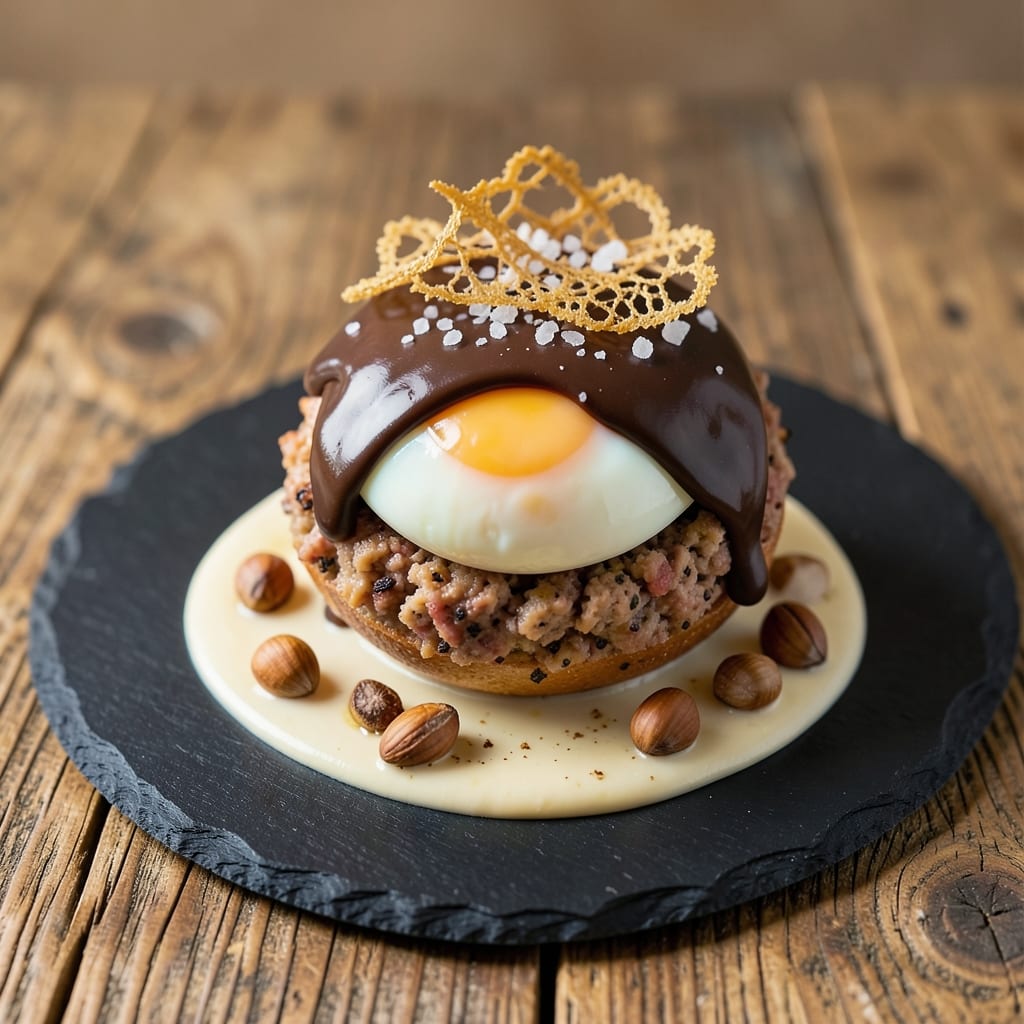
This chocolate scotch egg recipe transforms a classic breakfast staple into a decadent dessert-worthy bite—where rich dark chocolate meets crispy, savory perfection. 💛 The secret lies in a perfectly balanced ganache coating that stays glossy yet sturdy, encasing a tender sausage-chicken center and hard-boiled egg. I developed this recipe after years of experimenting with fusion flavors, and it’s now a showstopper at brunch gatherings.
The process starts with hard-boiled eggs and a flavorful sausage-chicken mixture, wrapped in a thin layer of dough before being coated in melted dark chocolate and breadcrumbs. The key to achieving that crispy exterior lies in a precise baking technique—golden and crackly without burning. This isn’t just a snack; it’s a culinary experience that bridges breakfast and dessert seamlessly.
What you’ll end up with is a dish that’s rich, indulgent, and surprisingly easy to master. The chocolate coating adds a luxurious touch, while the savory filling keeps it balanced—ideal for impressing guests or treating yourself. Serve with a dollop of whipped cream or a sprinkle of flaky sea salt to elevate the flavors even further.
Perfect for holidays, parties, or a special weekend brunch, these chocolate scotch eggs are sure to become a favorite. The recipe scales easily, so you can make a batch ahead and enjoy them at room temperature. Let’s get started on creating this unforgettable fusion!
Ingredients for chocolate scotch egg
Six eggs, rich chocolate, and a crispy crust—this fusion recipe delivers decadence with every bite.
| Ingredient | Amount | Notes |
|---|---|---|
| Large Eggs 🥚 | 6 whole | Freshly boiled, peeled, room temperature |
| Chicken Sausage 🍗 | 1 ½ lb | Mild Italian or chicken apple preferred |
| Ground Chicken 🍗 | 1 lb | 93% lean for best texture |
| All-Purpose Flour 🌾 | 3 cups | Plus 1 tbsp for dusting |
| Whole Milk 🥛 | ½ cup | Full-fat for best dough texture |
| Unsalted Butter 🧈 | ½ cup | Cold, cubed for dough |
| Dark Chocolate Chips 🍫 | 12 oz | 70% cocoa or higher |
| Heavy Cream 🥛 | ½ cup | For ganache, full-fat preferred |
| Panko Breadcrumbs 🍞 | 1 ½ cups | Fine, for crispy coating |
| Granulated Sugar 🍚 | 1 tbsp | For dough sweetness |
| Diamond Crystal Kosher Salt 🧂 | 1 ½ tsp | For dough and seasoning |
| Freshly Ground Black Pepper 🌶️ | ½ tsp | Freshly cracked for best flavor |
| Dried Thyme 🌿 | 1 tsp | Or 1 tbsp fresh thyme |
| Vegetable Oil 🫒 | 2 tbsp | For frying dough |
The chocolate is where the magic happens. Ghirardelli 72% dark chocolate melts perfectly for ganache, but any 70%+ cocoa will work—just check the cocoa percentage. For the sausage, Johnsonville chicken sausage or Applegate organic brands are my go-tos; they stay flavorful without overpowering. Ground chicken should be 93% lean or higher—anything fatter risks greasiness in the filling. The dough needs to be light and pliable, so don’t overmix it. If your kitchen runs warm, chill the dough for 30 minutes before wrapping.
No panko? Toasted breadcrumbs from stale baguette work perfectly—just pulse them in a food processor for finer texture. Substituting dark chocolate? Valrhona or Lindt 64% cocoa adds depth but requires slightly more heavy cream in the ganache. Running short on time? Pre-cook the sausage-chicken mixture and chill it before wrapping—just let it cool completely to avoid soggy dough. The eggs must be room temperature when wrapping; cold eggs crack under pressure. For extra richness, add 1 oz white chocolate to the ganache, but reduce heavy cream by 1 tbsp to balance.
Store wrapped eggs in an airtight container between layers of parchment paper—3 days max in the fridge. For longer storage, freeze uncoated eggs for up to 2 months (thaw overnight in the fridge). The chocolate coating softens at room temperature, so serve these as soon as possible after baking. Pro tip: Line your baking sheet with parchment paper to prevent sticking, and brush the eggs with a tiny bit of oil before adding breadcrumbs for that extra-crisp finish. Leftovers? Reheat at 300°F for 10 minutes to restore crispiness.
Why You'll Love This Recipe
- No-Fuss Assembly: I swear by this recipe because it’s basically build-as-you-go—no fancy techniques. You wrap the sausage and ground chicken around the eggs, dip them in the milk-and-flour batter, and fry. That’s it. No rolling pins, no stress, just hands-on simplicity that still feels impressive.
- Rich, Unexpected Twist: Between us, the chocolate in the batter isn’t just for looks—it adds this deep, slightly sweet contrast that cuts through the savory sausage. The crispy exterior? Even better with that hint of cocoa. Honestly, it’s the kind of flavor combo that makes you want to eat it straight from the pan.
- Picnic or Potluck Hero: These eggs travel like champs—no soggy bread or messy salads here. Pack a few in a cooler for a beach day, or bring them to a BBQ where everyone’s too busy grilling to cook. They’re hearty enough to stand alone but fancy enough to feel special. (Yes, even on a Tuesday night.)
- Budget Meal Stretch: I make a dozen at once, and they last in the fridge for days. The eggs and sausage are cheap staples, and the batter uses pantry basics. Double batch, freeze half, and you’ve got a $2 lunch for weeks. My college-student nephew calls them “the poor man’s gourmet snack”—and he’s not wrong.
Step-by-step instructions for chocolate scotch eggs
Here's how to fuse rich ganache and crispy crusts into decadent bites that'll impress anyone.
👨🍳 Step 1: Prepare the Chocolate Ganache Filling
In a medium heatproof bowl, combine the 12 oz dark chocolate chips and 0.5 cup heavy cream. Place this bowl over a pot of simmering water (double boiler method), ensuring the bottom doesn't touch the water. Stir gently until the chocolate melts completely and the mixture becomes smooth and glossy—this should take about 3-4 minutes.
Remove from heat and let cool slightly to 100°F (about 5 minutes). This temperature ensures the ganache sets properly inside the eggs without melting the sausage filling. Stir in 1 tbsp granulated sugar and 0.5 tsp freshly ground black pepper for depth of flavor. The ganache should be thick enough to hold its shape when piped but still flow smoothly.
🍳 Step 2: Create the Sausage-Chicken Filling
In a large skillet over medium heat, combine 1.5 lb chicken sausage and 1 lb ground chicken. Cook until the sausage is fully browned and the chicken reaches 165°F (about 8-10 minutes). Drain any excess fat but leave about 1 tablespoon in the pan for flavor.
Transfer the cooked mixture to a bowl and stir in 1 tsp dried thyme and 1.5 tsp diamond crystal kosher salt. Let cool completely to room temperature—this prevents the filling from steaming the eggs during assembly. The mixture should be firm enough to hold its shape when packed into the boiled eggs.
🥘 Step 3: Assemble the Scotch Eggs
Working with 6 whole large eggs (peeled and at room temperature), carefully make a small hole at the top of each egg using a skewer. Gently remove about 1 teaspoon of the yolk from each egg and set aside. This creates space for the ganache layer.
Using a piping bag or spoon, fill each egg with about 1 tablespoon of the cooled ganache mixture. Then, pack each egg with 1-2 tablespoons of the sausage-chicken filling, pressing firmly to eliminate air gaps. The filling should be snug but not bursting the egg shell.
🍳 Step 4: Create the Crispy Coating
In a mixing bowl, combine 3 cups all-purpose flour, 1.5 cups panko breadcrumbs, 0.5 tsp freshly ground black pepper, and 1.5 tsp diamond crystal kosher salt. In another bowl, whisk together 0.5 cup whole milk and 6 egg yolks (reserved from the eggs).
Dip each assembled egg into the milk-egg mixture, letting excess drip off, then roll thoroughly in the flour-panko mixture. Press the coating firmly onto the eggs to ensure an even, ¼-inch thick crust. Place coated eggs on a parchment-lined tray and refrigerate for 30 minutes to firm up the coating.
🔥 Step 5: Fry to Golden Perfection
Heat 2 tbsp vegetable oil in a deep skillet over medium heat until it reaches 350°F. Fry the Scotch eggs in batches, turning occasionally, for 3-4 minutes per side until they achieve a deep golden brown color. The coating should be crispy and the internal temperature of the filling should reach 160°F.
Drain on a wire rack and serve immediately while the coating is still crisp. For extra decadence, dust with powdered sugar or serve with a side of chocolate sauce. Each bite should deliver a perfect balance of crispy exterior, rich ganache, and savory sausage filling.
Pro Tips For Making Chocolate Scotch Egg
- CHILL THE EGGS FIRST: Pop those eggs into ice water for 10 minutes before wrapping them—cold eggs hold their shape better when you roll them in sausage and breading. I learned this the hard way when my first batch split open like overripe fruit.
- WRAP TIGHT, SEAL FAST: Press the sausage mixture around the egg firmly and twist the ends to seal—no gaps, no air pockets. After burning through three batches with leaks, I finally realized this isn’t just about looks; it’s what keeps the filling from oozing out when fried.
- USE COLD MILK FOR BREADING: Chill your milk before dipping—room-temperature milk makes the flour turn to glue. I was skeptical until I tried it; the coating stays crispy instead of soggy, and the eggs fry up golden, not greasy.
- FRY IN BATCHES, LOW AND SLOW: Don’t crowd the pan—give each scotch egg space to sizzle gently. Too many at once steams them instead of browning, and the chocolate coating turns dull. Start hot, then drop the heat to 325°F once they’re in.
Common mistakes when making this recipe
Overcooking the Eggs
One of the biggest mistakes is overcooking the boiled eggs before assembly. If they're cooked too long, the whites become rubbery and the yolks dry out, making them difficult to work with. Aim for 9-10 minutes in boiling water, then cool immediately in ice water. I've ruined several batches by leaving eggs in the pot too long—always set a timer! 💫
Skipping the Ganache Cooling Step
The ganache must cool to 100°F before filling the eggs, or it'll melt the sausage mixture and create a soupy mess. I learned this the hard way when my first batch turned into chocolate pudding. Use a candy thermometer to monitor the temperature precisely—don't guess!
Uneven Coating Thickness
An inconsistent coating leads to some eggs being soggy while others burn. Press the flour-panko mixture firmly against each egg to create an even ¼-inch thick layer. I use my fingers to smooth out any lumps before refrigerating. A wire rack works better than a plate for draining excess coating before frying.
Frying at Wrong Temperature
Using oil that's too hot (375°F+) burns the coating instantly, while oil that's too cool (325°F) makes it greasy. Maintain 350°F using a deep-fry thermometer. I fry in batches of two to avoid crowding, which drops the oil temperature. Always use a thermometer—your eyes can't judge this accurately!
Not Chilling the Coated Eggs
Skipping the 30-minute chill before frying causes the coating to slide off during frying. The cold helps the flour-panko mixture set properly. I place my tray in the fridge while I prepare the next batch—this keeps everything organized and prevents messy spills.
Overfilling the Eggs
Packing too much filling risks bursting the egg during frying. Use 1-2 tablespoons of sausage mixture per egg—press firmly but leave room for the ganache layer. I test the fit by gently squeezing the egg; it should hold its shape without bulging. Overfilling also makes the eggs difficult to fry evenly on all sides.
Nutrition facts
Frequently asked questions
Can I make these without frying for a healthier version?
For a baked version, preheat your oven to 400°F and brush the coated eggs with oil. Place them on a wire rack set over a baking sheet (to allow air circulation) and bake for 18-20 minutes, flipping halfway. The result will be slightly less crispy but still delicious. Use the same 350°F oil temperature for frying if you prefer extra crunch.
How do I store these chocolate scotch eggs?
Store them in an airtight container between layers of parchment paper for up to 3 days in the fridge. For longer storage, freeze the uncoated assembled eggs (before frying/baking) for up to 2 months. Thaw overnight in the fridge and cook immediately after removing from the freezer. The chocolate coating softens at room temperature, so serve these fresh for best texture.
What's the best way to reheat leftover chocolate scotch eggs?
Place them on a baking sheet and warm in a 300°F oven for 10-12 minutes to restore crispiness. For a quick fix, use the air fryer at 350°F for 5 minutes. Avoid microwaving—they'll lose their crunch. If reheating from frozen, add 5 extra minutes to ensure the filling reaches 160°F safely.
Can I substitute the sausage with ground pork or beef?
Yes, but adjust the cooking time. Ground pork works well but may require 2 extra minutes to reach 165°F internally. Beef should be 80/20 blend for best texture, and cook until it reaches 160°F. Any substitution should maintain the same total filling weight (2.5 lbs total) to keep the balance right. The chocolate coating won't change, but the flavor profile will shift slightly.
What's the secret to getting that perfect chocolate coating?
The perfect coating comes from two key steps: cooling the ganache to 100°F before filling and chilling the coated eggs for 30 minutes. This ensures the chocolate sets properly inside while the exterior stays sturdy. For extra shine, brush the finished eggs with a tiny bit of melted butter before serving. The breadcrumb thickness should be exactly ¼-inch—any thicker and it won't crisp properly.