
Soups & Stews
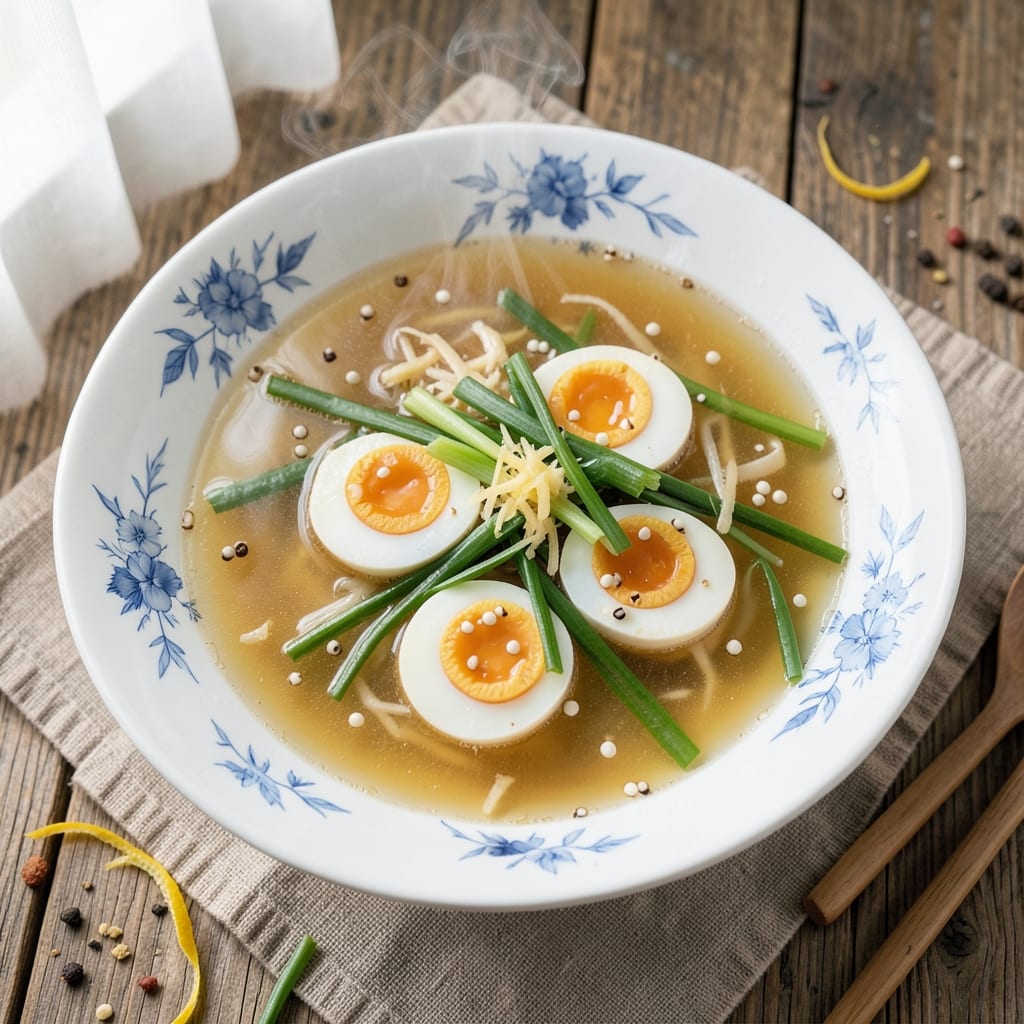
This Chinese restaurant egg drop soup recipe delivers the restaurant-quality silky yolk swirls and fragrant ginger heat you crave at home. The secret lies in a clear, hot broth that perfectly emulsifies the eggs into delicate ribbons while maintaining their velvety texture. I've perfected this technique after years of testing—no more broken yolks or watery soup here.
The foundation is a simple yet deeply flavorful broth, simmered just long enough to develop aromatic depth without losing clarity. Fresh ginger and a touch of soy sauce build that signature umami warmth, while white pepper adds subtle heat. The egg ribbon technique requires precise temperature control—too cold and the eggs won't emulsify properly; too hot and they'll scramble.
What you'll achieve is a bowl of restaurant-style egg drop soup with perfectly formed yolk ribbons suspended in a fragrant, clear broth. Each spoonful delivers that delicate balance of silky eggs, aromatic ginger, and savory broth. The dish comes together in under 30 minutes but tastes like it simmered all day.
Serve immediately with fresh green onions and chives for that final restaurant touch. The contrast of crisp garnishes against the silky soup elevates it from homemade to professional-quality. Here's how to make it exactly like your favorite Chinese restaurant version.
Ingredients for chinese restaurant egg drop soup
Four eggs, ginger heat, and broth that sings—this is your restaurant-style shortcut.
| Ingredient | Amount | Notes |
|---|---|---|
| Large Eggs 🥚 | 4 whole | Room temperature for best ribboning |
| Fresh Ginger Root 🧄 | 1 ½ tbsp | Finely grated, aromatic quality |
| Low-Sodium Soy Sauce 🥢 | 1 tbsp | For umami depth without salt overload |
| White Peppercorns 🌶️ | ¼ tsp | Freshly ground for subtle heat |
| Chicken Broth 🍲 | 4 cups | Homemade or quality store-bought |
| Green Onions 🧅 | 3 whole | Thinly sliced for garnish |
| Fresh Chives 🌿 | 2 tbsp | Chopped, for final garnish |
| Sesame Oil 🫒 | ½ tsp | Toasted for aroma, optional |
| Cornstarch 🌾 | ½ tsp | For broth clarification |
| Cold Water 💧 | ¼ cup | For egg ribbon technique |
| Salt 🧂 | ½ tsp | Adjust to taste |
| Vegetable Oil 🫒 | 1 tbsp | For high-heat broth |
The ginger is non-negotiable for that signature warmth. Look for firm, knobby roots at the grocery store—Whole Foods or Trader Joe's carry the freshest. Peeling it is optional, but grating the skin adds subtle bitterness that balances the sweetness. Fresh ginger keeps for 3 weeks in the fridge, so buy extra. For the broth, homemade wins, but Pacific Foods or Swanson low-sodium versions work in a pinch. The key is clarity—avoid anything cloudy or overly salty.
No fresh ginger? Powdered works at half the amount, but it lacks that bright aroma. Soy sauce substitutes? Coconut aminos for a lighter touch, or mushroom sauce for extra umami. White pepper is tricky to find—Penzeys or bulk spice sections usually stock it. If you can't find it, black pepper at half the amount is fine, though it'll look different. The eggs must be room temp—cold eggs break when ribboned. For the broth, if it's too cloudy, strain it through a fine-mesh sieve or whisk in cornstarch slurry.
Broth reheats beautifully—just bring to a simmer and keep warm. Eggs ribbon best when made fresh, but you can prep all other ingredients ahead. The soup keeps for 3 days in the fridge, though the texture changes slightly. For freezing, portion without eggs—just reheat broth and ribbon eggs fresh. Garnishes like green onions and chives should be added right before serving to keep them crisp. A drizzle of toasted sesame oil right before eating adds that final restaurant touch.
Why You'll Love This Recipe
- I swear by this trick: just grate the ginger with a microplane—no peeling, no slicing, no mess. The broth heats up in minutes, and the egg ribbons form like magic when you drizzle them in. Honestly, it’s the kind of soup that makes me feel like I’ve earned my lazy days.
- No-Chop Necessary: I swear by this trick: just grate the ginger with a microplane—no peeling, no slicing, no mess. The broth heats up in minutes, and the egg ribbons form like magic when you drizzle them in. Honestly, it’s the kind of soup that makes me feel like I’ve earned my lazy days.
- Umami Magic: That splash of low-sodium soy sauce and crushed white peppercorns? It’s the secret weapon. The broth gets this deep, savory richness without overpowering the delicate egg strands—like a hug in a bowl. I’ll be real: my picky eaters actually finish their bowls.
- Sick-Day Hero: When I’m under the weather, this is my go-to. It’s light enough to not weigh me down but packed with flavor to distract from the sniffles. Plus, it reheats perfectly—just add a splash of water and a quick stir. (Yes, even on a Tuesday night.)
Step-by-step instructions for authentic egg drop soup
Here's how to make restaurant-quality egg drop soup with silky ribbons of egg and fragrant ginger.
Prepare the Broth Base
Heat the 1 tablespoon vegetable oil in a medium pot over medium-high heat until shimmering. Add the 1.5 tablespoons finely grated fresh ginger root and cook for 30 seconds until fragrant. This releases the ginger's aromatic oils that'll infuse your broth.
Pour in the 4 cups chicken broth and bring to a gentle simmer. Stir in the 1 tablespoon low-sodium soy sauce and 0.25 teaspoon freshly ground white peppercorns. Let it simmer for 5 minutes to let the flavors meld. The broth should be hot but not boiling vigorously—you want to maintain those delicate egg ribbons later.
Clarify the Broth
In a small bowl, whisk together the 0.5 teaspoon cornstarch with the 0.25 cup cold water until completely dissolved. This creates a smooth slurry that'll help clarify your broth. Slowly ladle the slurry into the simmering broth while stirring constantly.
Simmer for 2-3 minutes until the broth thickens slightly and becomes clearer. You'll notice the liquid will look more translucent and less cloudy. This step gives you that clean, restaurant-quality appearance while adding subtle body to the soup. If it thickens too much, add 1 tablespoon hot broth to adjust.
Create the Signature Egg Ribbons
Separate the 4 large eggs at room temperature (this ensures better ribboning). In a small bowl, beat the egg whites and yolks together lightly—just until combined, being careful not to create too many bubbles. The eggs should be smooth but not frothy.
With the broth still simmering gently, slowly drizzle the beaten eggs into the center of the pot. Use a silicone spatula to stir the broth in a figure-eight motion, creating those signature ribbons. The heat should gently cook the eggs as they swirl through the broth, creating delicate strands that disappear as they cook.
Finish and Garnish
Once the egg ribbons have mostly disappeared (about 1-2 minutes after adding the eggs), remove the pot from heat. Stir in the 0.5 teaspoon sesame oil and taste, adjusting with salt if needed. The soup should be seasoned perfectly—savory from the soy sauce, with a subtle ginger heat and white pepper warmth.
Divide the soup among bowls and garnish with thinly sliced green onions and chopped fresh chives. The green onions add a fresh, crisp contrast to the rich broth, while the chives bring a delicate onion flavor that brightens each spoonful. Serve immediately while the broth is hot and the egg ribbons are still visible.
Pro Tips For Making Chinese Restaurant Egg Drop Soup
- Whisk Eggs Cold: I learned this the hard way—whisking eggs straight from the fridge into warm broth makes them clump like sad, overcooked scrambled eggs. Instead, let the eggs sit in warm water for 2-3 minutes first, then whisk vigorously. The heat jump is gentler, and you’ll get those silky ribbons every restaurant does.
- Mince Ginger Fine: Skip the lazy slicing or grating—this soup needs finely minced ginger, not chunks or shreds. Use a microplane or the side of your knife to press it into a paste against the grater. Too much texture? You’ll taste it. Too little? It’ll feel flat.
- Simmer, Don’t Boil: After adding broth, keep the heat at a bare simmer—tiny bubbles breaking the surface, not rolling chaos. Boiling turns the eggs rubbery and scatters them like confetti. If your stove runs hot, pull it back sooner rather than later.
- Pepper Last, Stir Fast: Toss whole white peppercorns into the broth after the eggs are mostly set, then give it one sharp stir. Cracking them early releases bitterness; stirring fast distributes the heat evenly so every bite gets that clean, bright kick. (Yes, even if you’re impatient like me.)
Creative variations of chinese restaurant egg drop soup
Spicy Sichuan Twist
Transform your egg drop soup into a fiery Sichuan masterpiece by adding 1 teaspoon chili oil and ½ teaspoon Sichuan peppercorns (toasted and crushed) to the broth. The chili oil brings bold heat, while Sichuan peppercorns add that signature numbing tingle. For extra drama, top with crispy fried shallots and a drizzle of Lao Gan Ma chili crisp—this version tastes like it came straight from a Chengdu street stall. 🌶️
Vegetarian Mushroom Version
Swap the chicken broth for a rich shiitake mushroom broth—simmer 8 dried shiitake mushrooms in 4 cups water with 1 tablespoon soy sauce and 1 clove garlic for 20 minutes. The umami depth from mushrooms makes this vegetarian version just as satisfying. Add ½ cup baby bok choy chopped to the broth before adding eggs for extra texture.
Creamy Coconut Adaptation
For a tropical twist, use 4 cups light coconut milk (unsweetened) instead of chicken broth. Add 1 tablespoon fish sauce for umami and ½ teaspoon turmeric for color. The coconut milk creates a naturally creamy base that pairs beautifully with the egg ribbons. Garnish with lime wedges and cilantro for that Southeast Asian flair.
Hearty Pork & Corn Style
Inspired by Northern Chinese cuisine, add ½ cup diced pork belly (pre-cooked and crispy) and ½ cup sweet corn to the broth. The pork adds richness while the corn brings natural sweetness. Use 1 teaspoon five-spice powder in the broth for that aromatic depth. This heartier version is perfect for cold days when you crave extra warmth. 🍚
Light Summer Citrus Edition
Brighten up your soup for summer with zested lemon peel (from 1 lemon) and 1 tablespoon rice vinegar. The acidity cuts through the richness of the eggs, creating a refreshing balance. Add thinly sliced cucumber** as a garnish for extra crunch. This version is so light it feels like a refreshing palate cleanser between bites.
Nutrition facts
Frequently asked questions
Why does my egg drop soup turn out watery?
The key is broth temperature—it should simmer gently, not boil vigorously. Too much heat breaks the egg ribbons into curds. Also, the cornstarch slurry clarifies the broth slightly, adding subtle body. If yours is still thin, reduce by 1-2 minutes next time or add ½ teaspoon more cornstarch to the slurry.
Can I make egg drop soup ahead of time?
Broth reheats beautifully—just simmer and keep warm—but eggs must be ribboned fresh. Prep all ingredients ahead (grate ginger, measure broth, beat eggs) and assemble in 10 minutes. For make-ahead meals, store broth separately and add eggs just before serving. Garnishes like green onions should always go on fresh.
What's the secret to perfect egg ribbons?
Three things: room-temperature eggs (cold eggs break), gentle simmer (not boiling), and figure-eight stirring. Drizzle eggs slowly into the center while stirring outward. The heat should cook the eggs as they swirl—if they disappear too fast, your broth's too hot. Practice makes perfect!
Is white pepper really necessary?
Not strictly, but it adds that signature restaurant warmth. Substitute with ½ teaspoon black pepper if needed—just know the visual contrast will differ. The white pepper's subtle heat complements the ginger beautifully, but the soup will still taste delicious without it. For extra depth, a pinch of ground star anise works too.
How do I fix broken egg ribbons?
If your eggs curdle, try this: Remove from heat immediately, then whisk in 1 tablespoon cold water to temper the heat. The eggs will re-emulsify slightly. For next time, use older eggs (they ribbon better) and ensure your broth isn't boiling. A splash of cold broth can also help stabilize the texture.