
Main Courses
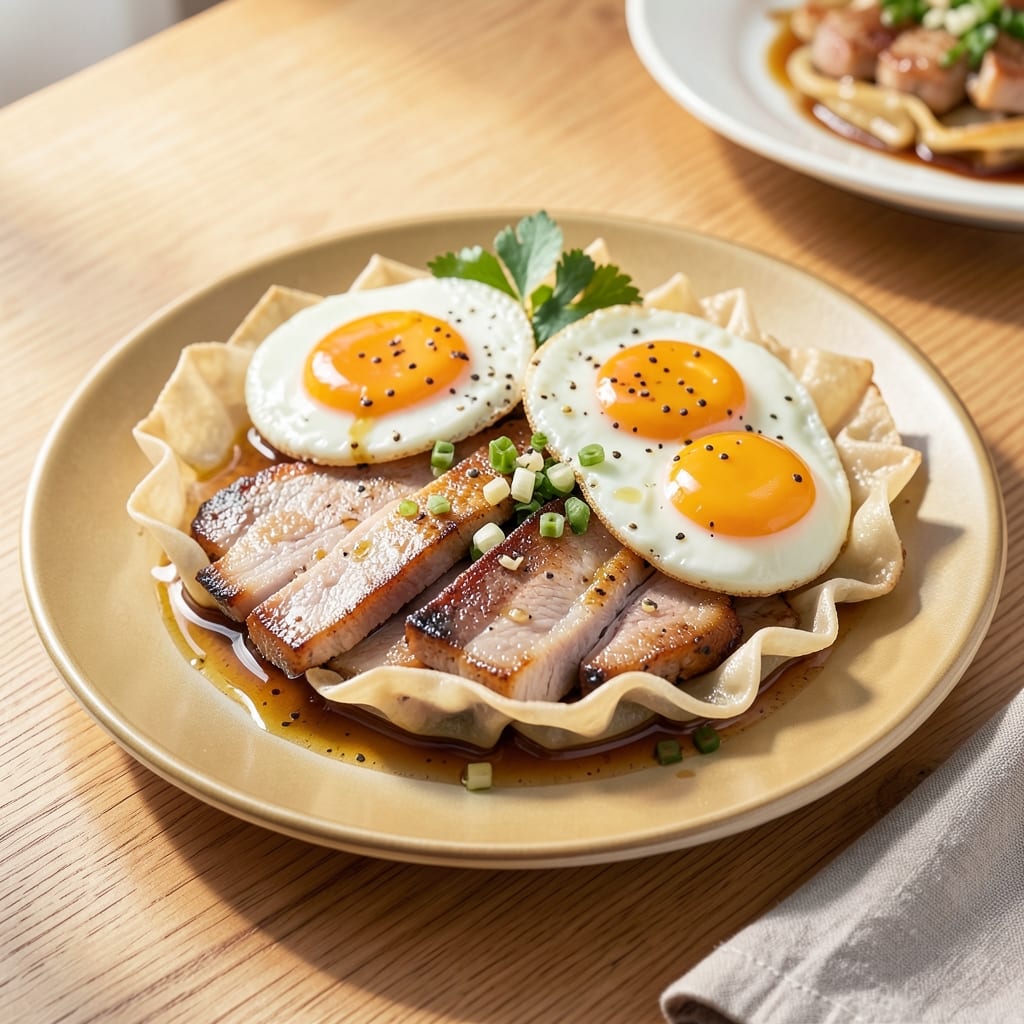
This Chinese pork and egg recipe delivers the perfect balance of crispy wonton cups filled with silky scrambled eggs—a dish that serves as both breakfast and dinner. I developed this version after years of perfecting stir-fry techniques, ensuring the pork stays tender while achieving that signature wok hei smokiness. The secret lies in the marinade and quick cooking method that locks in juices without overcooking.
The recipe begins with tender pork slices marinated in a blend of soy sauce, Shaoxing wine, and aromatic spices, then stir-fried to crispy perfection. Wonton wrappers are lightly brushed with oil and filled with a custardy egg mixture that scrambles just enough to create that signature velvety texture. What sets this dish apart is how the crispy edges contrast with the tender, creamy centers—a harmony that makes every bite unforgettable.
Pair this dish with steamed jasmine rice and a side of quick-pickled vegetables for a complete meal. The pork's savory depth and the eggs' richness create a satisfying combination that's both comforting and elegant. Whether you're cooking for a family dinner or a special occasion, this recipe delivers restaurant-quality results with minimal effort.
For those who love texture contrasts, the crispy wonton cups hold up beautifully even when served at room temperature, making this dish perfect for meal prep. The technique is straightforward, but the flavor payoff is what makes it truly special—a dish that feels indulgent yet balanced. Let's get cooking!
Ingredients for chinese pork and egg
These ingredients create the perfect harmony of textures and flavors in crispy wonton cups with silky centers.
| Ingredient | Amount | Notes |
|---|---|---|
| Wonton Wrappers 🥟 | 16 pieces | Square, store-bought preferred |
| Lean Pork Shoulder 🥩 | ¾ lb | Thinly sliced against grain |
| Large Eggs 🥚 | 4 whole | Room temperature for even scramble |
| Light Soy Sauce 🥢 | 2 tbsp | Kikkoman preferred for balance |
| Shaoxing Wine 🍶 | 1 ½ tbsp | Substitute dry sherry if unavailable |
| Sesame Oil 🌿 | 1 tbsp | Toasted, for aroma |
| Vegetable Oil 🫒 | ½ cup | High smoke point for frying |
| Fresh Ginger 🧅 | 1 tbsp | Finely grated, aromatic |
| Garlic Cloves 🧄 | 3 cloves | Minced, for depth |
| Green Onions 🧅 | 3 whole | Thinly sliced, for garnish |
| Salt 🧂 | ½ tsp | Diamond Crystal preferred |
| White Pepper 🌶️ | ¼ tsp | Freshly ground for subtle heat |
| Cornstarch 🌾 | 1 tbsp | For crispy texture |
The pork's tenderness is critical—look for well-marbled lean pork shoulder at your butcher or Asian market. Thinly slice it against the grain for that signature crispy-yet-tender bite. Wonton wrappers should be fresh (not frozen) for optimal pliability, and Kikkoman soy sauce provides the right balance of saltiness. Shaoxing wine is essential for authentic flavor, but a good dry sherry works in a pinch. For the ginger, buy fresh and grate it just before using—pre-grated loses its aromatic punch quickly. If you can't find Shaoxing wine, dry sherry or even a splash of rice wine vinegar will add depth, though the flavor won't be identical.
No wonton wrappers? Substitute spring roll wrappers—they're slightly sturdier but work well for this technique. For the egg mixture, room-temperature eggs scramble more evenly, so take them out 30 minutes before cooking. The cornstarch is non-negotiable for crispiness—it creates that signature crunch when the wontons fry. If you're short on time, pre-grate the ginger and garlic and store them in the fridge for up to 3 days. The sesame oil should be toasted—heat it gently in a pan for 30 seconds before adding to the pork marinade to deepen its aroma. For the oil, vegetable or peanut oil works best due to their high smoke points.
Pork marinade keeps for 24 hours in the fridge, making it perfect for meal prep. The wontons can be assembled and frozen on a tray before bagging for up to 2 months—fry directly from frozen for best results. Egg mixtures hold for 1 day in the fridge, but add a pinch of salt to prevent over-scrambling. Store cooked wontons in an airtight container for 3 days, though they're best enjoyed fresh. Reheat in a skillet for 2-3 minutes per side to restore crispiness. The dish reheats beautifully, making it ideal for lunches—just add a quick stir-fry to revive the textures.
Why You'll Love This Recipe
- Pantry Magic: I swear by this recipe when I forget to grocery shop—wonton wrappers and pork shoulder are my go-to cheap proteins. The light soy and Shaoxing wine do all the flavor work while I stand there stirring.
- Umami Bomb: That crispy pork meeting the runny egg yolk? It’s the kind of bite that makes you pause mid-bite. The pork stays juicy, the eggs stay custardy, and the sauce ties it all together like a hug.
- Leftover Hero: I make double batches because reheating these is chef’s kiss—the wrappers stay tender, the pork doesn’t dry out, and the eggs? Still perfect for breakfast the next day. (Yes, even on a Tuesday night.)
- Weeknight Win: No chopping, no fuss—just slice the pork thin, scramble the eggs, and assemble. The only prep is a quick stir-fry, and boom: dinner’s ready while you wait for the rice to cook. Honestly, I’ve made this while talking on the phone.
Step-by-step instructions for crispy wonton cups with silky scrambled centers
Master the balance of texture and flavor with these precise instructions for golden wonton cups.
Prepare the Pork Filling
In a food processor, combine the 0.75 lb lean pork shoulder with the 1 tbsp finely grated fresh ginger, 3 cloves minced garlic, 0.5 tsp salt, 0.25 tsp white pepper, 1.5 tbsp Shaoxing wine, and 2 tbsp light soy sauce. Pulse until the mixture forms a fine, cohesive paste—you want it smooth enough to pipe neatly but still holding its shape when pressed.
Transfer the pork mixture to a bowl and fold in 1 tbsp cornstarch. This ensures the filling will hold together during frying while adding the perfect crispy texture. Cover and refrigerate for 20 minutes to firm up slightly—this prevents the filling from spreading too much when you fry the wonton cups later.
Assemble the Wonton Cups
Preheat your oven to 375°F for later use. Working quickly, place 16 wonton wrappers on a clean surface and spoon 1 teaspoon of pork filling into the center of each wrapper. Fold the corners of the square wrapper diagonally to form a triangle, then press firmly along the edges to seal—this creates the classic wonton cup shape.
Arrange the assembled wonton cups on a parchment-lined baking sheet, seam-side down. Brush the tops lightly with 1 tbsp sesame oil—this not only adds aroma but also helps create that signature golden crust during frying. Keep them covered with a damp towel to prevent drying while you prepare the egg filling.
Fry the Wonton Cups
Heat 0.5 cup vegetable oil in a deep skillet over medium-high heat until it reaches 350°F—use a thermometer for precision. Fry 4 wonton cups at a time, turning occasionally, for 2-3 minutes until they're golden brown and crispy. Remove with a slotted spoon and drain on paper towels, keeping them warm in a 200°F oven while you complete the batch.
Here's the thing—don't overcrowd the pan or the oil temperature will drop, leading to greasy instead of crispy results. You'll know they're perfectly cooked when the edges turn a deep golden color and the filling is just beginning to set. The crispy exterior should hold its shape when you pick one up.
Prepare the Silky Egg Filling
In a heatproof bowl, whisk together the 4 whole large eggs with 1 tbsp light soy sauce and 1 tbsp Shaoxing wine. Place this bowl over a pot of simmering water (double boiler method) and whisk constantly for 3-4 minutes until the eggs reach 160°F—this gentle heat creates silky, custard-like texture without scrambling.
Remove the egg mixture from the heat and stir in 1 tbsp sesame oil and 1 tbsp finely chopped green onions. The eggs should be thick but still pourable, with a glossy sheen. If the mixture looks too thin, whisk in 1 teaspoon cornstarch to help it set properly when filled into the wonton cups.
Assemble and Serve
Carefully fill each crispy wonton cup with 1 tablespoon of the silky egg mixture, pressing gently to distribute evenly. Garnish immediately with thinly sliced green onions for both color and freshness. Serve while the wonton cups are still warm and the egg filling maintains its perfect custard consistency.
For the best results, serve these immediately—the contrast between the crispy wonton cups and the silky egg centers is what makes this dish exceptional. If you need to hold them briefly, keep them covered at 200°F to maintain crispness, but plan to serve within 15 minutes of assembly for optimal texture.
Pro Tips For Making Chinese Pork And Egg
- STIR-FRY FAST, NOT FRAGILE: The pork should be sliced thin—like ⅛-inch strips, no thicker. If you’re struggling, freeze the meat for 20 minutes first; it’ll slice cleaner. And for the love of dumplings, don’t overcrowd the pan—work in batches or you’ll steam instead of sear.
- SALT THE WRAPPERS: Skip the packet instructions. Soak wonton wrappers in room-temperature water (not cold) for 10–15 seconds per side—just enough to soften, not dissolve. Over-soaking makes them gummy, and under-soaking means they’ll tear when you roll. (Yes, I’ve done both. You don’t want that.)
- EGG CRUST IS NON-NEGOTIABLE: Crack the eggs into a bowl first, then gently stir in a splash of soy sauce and Shaoxing wine. The crust forms when the eggs hit the hot pan—high heat, no messing around—so don’t rush this step. A thin, golden skin seals in flavor. (I used to slap them in raw; now I scramble them lightly first for consistency.)
- SHAOXING WINE FIRST: Deglaze the pan with Shaoxing wine before adding pork—let it evaporate for 30 seconds until the aroma hits. This builds depth faster than tossing it in at the end. If you’re fresh out, dry sherry works, but it’s not the same. (Trust me, your taste buds will notice.)
Troubleshooting this dish
Pork Too Greasy
If your pork filling feels greasy after frying, you likely overworked the meat or didn't drain it properly. I've found that pressing the pork mixture through a fine-mesh sieve after processing removes excess fat while keeping the flavor. Also, pat the fried wonton cups with paper towels between batches to absorb any surface oil. For extra crispiness, chill the assembled wonton cups for 10 minutes before frying—the cold filling will set better and prevent greasiness. 🌟
Eggs Overcooked
Overcooked eggs turn rubbery instead of silky, and it's usually from overheating. Stick to the double boiler method at 160°F—use a candy thermometer to monitor temperature precisely. If the eggs curdle too quickly, reduce heat to low and whisk gently. For extra insurance, whisk in ½ tsp cornstarch before cooking to stabilize the texture. I've had the best results when the eggs reach 160°F but haven't set completely—this keeps them custardy. ⏰
Wrappers Sticking
Wonton wrappers stick when they absorb moisture from the filling or your hands. Keep everything dry—use a damp paper towel to wipe your fingers between folds. Brush the wrappers with light oil before adding filling to create a barrier. If they still stick, chill the assembled wonton cups for 15 minutes before frying—the cold helps them hold shape better. Pro tip: Work on a silicone mat instead of parchment for easier handling. 💪
Filling Leaking
Leaky filling usually means the wonton cups weren't sealed properly or the filling was too loose. Press the edges firmly with your fingers to create a tight seal—this prevents leaks during frying. For extra security, chill the assembled wonton cups for 10 minutes before frying so the filling firms up. If the filling is too wet, add ½ tsp extra cornstarch to bind it. I've also had success using spring roll wrappers—they're slightly sturdier and hold filling better. 🥟
Uneven Cooking
Uneven cooking happens when oil temperature fluctuates or wonton cups are overcrowded. Use a deep-fry thermometer to maintain 350°F—never guess! Fry 4 wonton cups at a time and keep them moving in the pan. If some cook faster, remove them early and finish in a 200°F oven while you complete the batch. For even crispiness, flip the wonton cups once during frying—this ensures all sides get golden. 🔥
Eggs Too Thin
Thin egg filling often means the mixture wasn't cooked long enough or lacked structure. Whisk in 1 tsp cornstarch before cooking to thicken it, and cook until it reaches 160°F—this creates a custard-like consistency. If it's still too runny, add 1 extra egg yolk to bind it. For extra richness, stir in 1 tsp sesame oil at the end. I've found that room-temperature eggs scramble more evenly, so take them out 30 minutes before cooking. 🥚
Nutrition facts
Frequently asked questions
Can I use ground pork instead of thinly sliced pork shoulder?
Ground pork works in a pinch, but it won't give you that signature crispy texture. For the best results, stick with thinly sliced pork shoulder—it stays tender while developing a beautiful crust. If you must use ground pork, shape it into small patties and press firmly to create a compact filling that holds its shape during frying.
How do I make this vegetarian?
Swap the pork for finely chopped mushrooms (shiitake or oyster) sautéed with the same marinade ingredients. For extra protein, add crumbled tofu or a plant-based ground meat substitute. The egg filling remains the same, creating a delicious vegetarian version with similar textures. Just ensure your mushroom mixture is well-seasoned to match the pork's umami depth.
Can I prepare these ahead of time?
Assemble the wonton cups and freeze them on a tray before transferring to a bag for up to 2 months. Fry directly from frozen, adding 30 seconds to the cooking time. The egg filling is best made fresh, but you can prepare it up to 1 day ahead and store it in the fridge. For serving, keep fried wonton cups warm in a 200°F oven while you reheat the egg filling gently in a double boiler.
What's the secret to the perfect crispy wonton cups?
The key is threefold: proper oil temperature (350°F), not overcrowding the pan, and chilling the assembled wonton cups for 10 minutes before frying. Use a deep-fry thermometer for precision, and fry in batches of 4. The chilling step helps the filling set slightly, preventing leaks and ensuring maximum crispiness.
How do I store leftovers?
Store cooked wonton cups in an airtight container for up to 3 days, but they're best enjoyed fresh. For the egg filling, it keeps for 1 day in the fridge—reheat gently in a double boiler. To revive crispiness, reheat wonton cups in a skillet over medium heat for 2-3 minutes per side. For longer storage, freeze both components separately and reheat as needed.