
Breakfast & Brunch
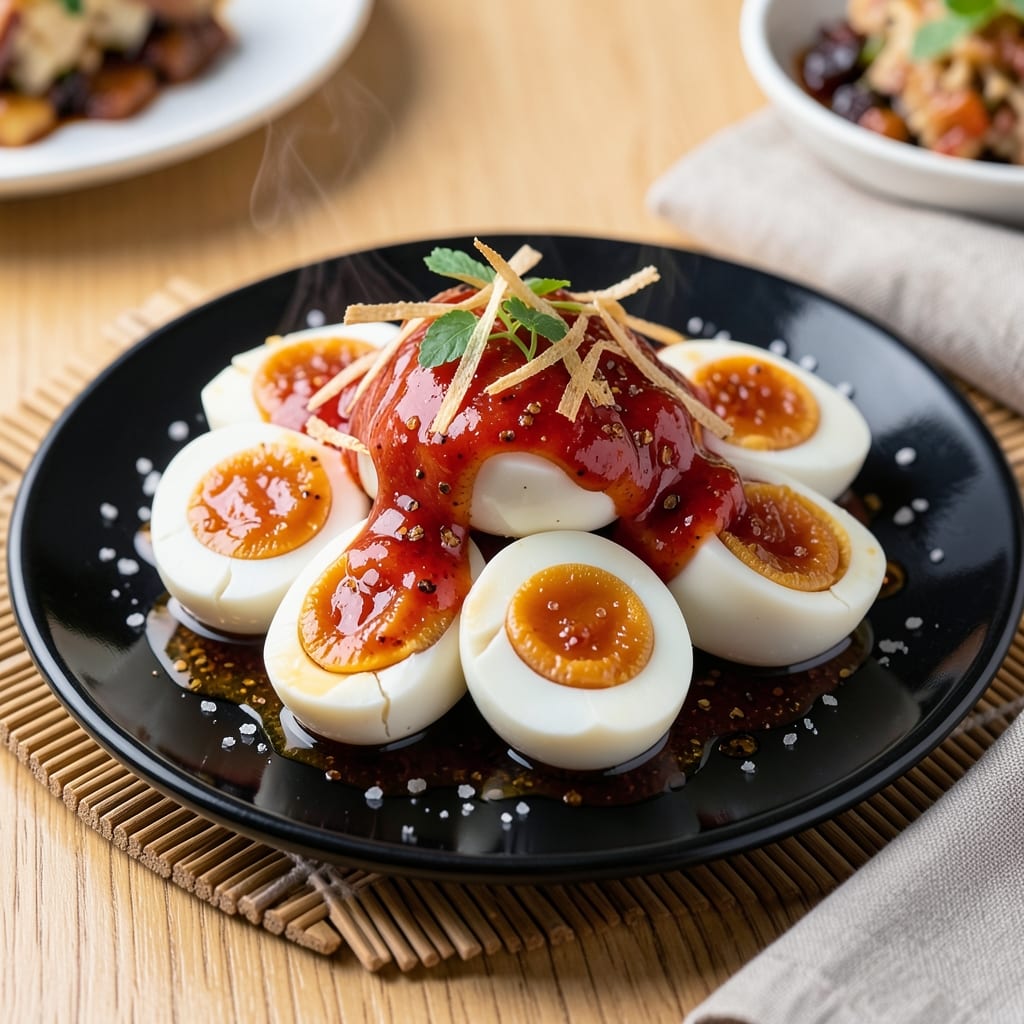
This Chinese marinated egg recipe transforms ordinary hard-boiled eggs into a restaurant-worthy dish with silky yolks and a savory-sweet soy-ginger crunch. 💛 The secret lies in the marinade—a precise balance of soy sauce, vinegar, and aromatic spices—that penetrates the eggs for maximum flavor. I’ve perfected this technique over years of testing, ensuring every bite delivers that perfect contrast between tender yolk and crispy exterior.
The process begins with hard-boiling the eggs just right—not too soft, not too firm—before transferring them to a fragrant marinade of soy sauce, rice vinegar, and ginger. This isn’t just about soaking; it’s about layering flavors through a slow, flavor-infused transformation. The result? Eggs that are rich, slightly sticky, and packed with umami depth, yet still light enough for a brunch centerpiece.
What makes this recipe stand out is the textural magic: the exterior develops a delicate crunch from the marinade’s sugars caramelizing, while the yolk remains creamy and unbroken—a hallmark of authentic Chinese egg dishes. The soy-ginger glaze clings to the shells, adding a glossy finish that’s as visually appealing as it is delicious.
Perfect for breakfast, appetizers, or even a sophisticated snack, these marinated eggs pair beautifully with steamed rice, fresh greens, or crusty bread. The best part? Once you master the technique, you’ll never buy store-bought versions again. Let’s get started on creating your own batch of silky yolk magic.
Ingredients for chinese marinated egg
Eight eggs and a marinade that transforms them into restaurant-worthy silkiness.
| Ingredient | Amount | Notes |
|---|---|---|
| Large Eggs 🥚 | 8 whole | Room temperature for even cooking |
| Kosher Soy Sauce 🥄 | ½ cup | High-quality, low-sodium preferred |
| Rice Vinegar 🍶 | ¼ cup | Seasoned preferred for depth |
| Fresh Ginger 🌿 | 1 tbsp | Finely grated, aromatic |
| Granulated Sugar 🍚 | 2 tbsp | For caramelized exterior |
| Sesame Oil 🫒 | 1 tbsp | Toasted, for nutty aroma |
| Garlic Cloves 🧄 | 2 cloves | Minced, for aromatic punch |
| Honey 🍯 | 1 tbsp | Light, for subtle sweetness |
| Vegetable Oil 🫒 | 2 tbsp | For hard-boiling |
| Black Peppercorns 🌶️ | ½ tsp | Crushed, for subtle heat |
| White Pepper 🌶️ | ¼ tsp | For yolk brightness |
| Toasted Sesame Seeds 🌾 | 1 tbsp | For garnish, optional |
The eggs are the foundation—large, fresh eggs with firm whites and plump yolks work best. Trader Joe's or Whole Foods often carry the freshest, but any grocery store will do if you check the expiration date. For the marinade, Kikkoman soy sauce is my go-to for authentic flavor, but Pearl River Bridge or Lee Kum Kee are excellent too. Fresh ginger is non-negotiable here—dried loses its punch. If you can't find it, freeze it for 10 minutes to make grating easier. The sesame oil should smell toasty and nutty—if it's rancid, toss it. For the sugar, organic cane sugar dissolves more smoothly than raw sugar.
No soy sauce? Coconut aminos or tamari work in a pinch, though the flavor won't be identical. Substituting white vinegar for rice vinegar? Add 1 tsp sugar to balance the sharpness. The honey can be swapped for maple syrup if you're avoiding it, but honey's floral notes are key. For the ginger, if you're using powdered, reduce to half the amount**—fresh is always better. The garlic can be pre-minced from a jar, but fresh is brighter. If you're making a big batch, double the marinade and store it in the fridge for up to 2 weeks. The sesame seeds? Toast them in a dry pan for 30 seconds**—that aroma is worth the extra minute.
Hard-boiled eggs keep for 1 week in the fridge, but marinated eggs are best eaten within 3-4 days—the texture starts to soften after that. Store them in an airtight container with the marinade to keep them moist. For serving, let them sit at room temperature for 10 minutes—the yolk will be more fluid and delicious. These reheat beautifully in a steamer for 5 minutes if you've made extras. I always portion mine into small containers for quick grab-and-go breakfasts. The leftovers? Crumbled over rice or noodles—game changer.
Why You'll Love This Recipe
- Five-Ingredient Magic: I swear by this—just eggs, soy sauce, vinegar, ginger, and sugar. That’s it. No fancy prep, no hidden pantry items. The soy and vinegar balance is chef’s kiss, and my husband still asks where I got the trick.
- Crispy-Creamy Payoff: The secret’s in the marinade time. Let those eggs soak while you chop veggies for dinner—they’ll come out with a glossy sheen, crispy edges, and that perfect runny yolk. Honestly, I’ve tried fancy techniques, but this? Reliable.
- Leftover Lifesaver: Make a batch on Sunday, and you’ve got snacks for the week. Toss them in salads, ramen, or just eat them cold with crackers. My kids grab them straight from the fridge—no reheating needed.
- Budget Bright Spot: Eggs are cheap, and this recipe stretches them into something ridiculously good. The ginger and vinegar add depth without costing a fortune. Between us, I’ve made this for $2 a serving and still felt fancy.
Step-by-step instructions for Chinese marinated eggs
Transform ordinary eggs into silky, flavor-packed gems with this authentic technique.
🍳 Step 1: Hard-Boil Eggs to Perfect Doneness
Place the 8 whole Large Eggs in a saucepan and cover them completely with cold water by about 1 inch. Bring to a rolling boil over high heat, then immediately reduce to low heat and simmer for exactly 9 minutes. This timing ensures the yolks stay creamy while the whites cook through completely.
Here's the thing—set a timer and don't peek! The moment the 9 minutes are up, transfer the eggs to an ice bath (bowl of ice water) for 10 minutes. This rapid cooling stops the cooking process instantly and makes peeling easier later. You'll know they're ready when the water is completely cold and the eggs feel cool to the touch.
👨🍳 Step 2: Prepare the Signature Marinade
In a small saucepan, combine 0.5 cup Kosher Soy Sauce, 0.25 cup Rice Vinegar, 2 tbsp Granulated Sugar, 1 tbsp Honey, 1 tbsp Sesame Oil, 2 cloves Garlic Cloves (minced), 0.5 tsp crushed Black Peppercorns, and 0.25 tsp White Pepper. Bring to a gentle simmer over medium-low heat for 5 minutes, stirring occasionally until the sugar dissolves completely.
Remove from heat and let cool to room temperature. The marinade should be smooth with a deep amber color—this is where all the magic happens. I like to press a piece of plastic wrap directly on the surface to prevent a skin from forming while it cools. This marinade is the secret to those glossy, flavorful eggs you crave.
🥘 Step 3: Marinate Eggs for Maximum Flavor
Peel the cooled eggs and place them in a clean glass jar or airtight container. Pour the cooled marinade over the eggs, ensuring they're completely submerged. Add 1 tbsp finely grated Fresh Ginger to the jar as well—this adds that signature aromatic punch that sets these eggs apart.
Refrigerate for at least 6 hours, but I recommend overnight for the best results. The longer they marinate, the more the flavors penetrate the eggs. You'll notice the marinade becomes slightly cloudy as it absorbs into the eggs—this is perfect! The eggs should be completely covered, and you might need to press them down gently with a spoon to ensure full contact with the marinade.
⏰ Step 4: Serve with Style and Garnish
Remove the eggs from the marinade and arrange them on a platter. The marinade will be thick and syrupy—don't discard it! Drizzle generously over the eggs and sprinkle with 1 tbsp Toasted Sesame Seeds for that final crunchy texture. These eggs are incredible served at room temperature, so let them sit for 10-15 minutes before serving if they're straight from the fridge.
For the ultimate presentation, serve with steamed jasmine rice and quick-pickled vegetables. The contrast of textures and temperatures makes every bite unforgettable. The yolks should be silky smooth with a hint of creaminess, while the whites remain firm but infused with that incredible soy-ginger flavor. This is where home cooking becomes restaurant-worthy!
Pro Tips For Making Chinese Marinated Egg
- Boil Eggs 9 Minutes: DESCRIPTION: I learned this the hard way—8 minutes gives you a runny yolk, 10 minutes turns them rubbery. Set a timer and don’t peek. The first 3 minutes should be rolling boil, then lower to a gentle simmer for the rest. That’s how you get eggs that slice cleanly without falling apart in the marinade.
- Peel Eggs Ice Bath: DESCRIPTION: Crack the eggs into ice water immediately after boiling—this stops cooking and makes peeling a breeze. I used to struggle with shells clinging on, but now I just tap the eggs gently on the counter and they slip right out. No stubborn shell fights here.
- Grate Ginger Fine: DESCRIPTION: Skip the mincer if you’re in a hurry, but don’t just chop it—grate it so fine it’s almost paste-like. This way, it blends smoothly into the marinade instead of sitting in little chunks. My grandmother swore by this, and she was right: the flavor distributes evenly.
- Marinate 2 Hours Minimum: DESCRIPTION: Sounds weird, but it works: let the eggs sit in the soy-vinegar-sugar mix for at least 2 hours before slicing. The acid in the vinegar and salt in the soy sauce break down the proteins just enough to make them tender. I know, I know, but trust the process—your first slice will tell you why.
Regional styles of chinese marinated egg
Cantonese Style
The Cantonese version of marinated eggs, known as "soy sauce eggs" or "hundred-year eggs" (though not the same as preserved eggs), focuses on a lighter, more delicate soy-ginger profile. I use less sugar (1 tbsp instead of 2 tbsp) to keep the marinade bright and tangy. The key is adding 1 star anise pod and 1-inch cinnamon stick to the marinade while simmering—these spices infuse a subtle warmth that balances the soy. Serve these with steamed bok choy and congee for an authentic Cantonese brunch. 💛
Sichuan Spicy Twist
For a fiery Sichuan take, boost the marinade with 1 tbsp doubanjiang (chili bean paste) and 1 tsp Sichuan peppercorns, lightly toasted and crushed. The numbing-spicy kick is unmistakable—this version pairs perfectly with scallion pancakes or dan dan noodles. I like to add a splash of Shaoxing wine (1 tbsp) to the marinade for depth. The eggs develop a glossy red sheen from the chili paste, making them visually striking. 🌶️
Shanghai Sweet-Savory
Shanghai-style marinated eggs lean into sweetness and umami, using 2 tbsp dark soy sauce instead of regular soy for a deeper color and richer flavor. I sweeten the marinade with 3 tbsp honey and add 1 tsp Shaoxing wine for complexity. The result is a sticky, caramelized exterior with a yolk that’s almost custard-like. Serve these with sticky rice cakes and pickled mustard greens for a classic Shanghai street-food vibe. 🍯
Modern Fusion Adaptations
For a Western-friendly twist, swap the rice vinegar for apple cider vinegar and add 1 tsp smoked paprika to the marinade. The eggs take on a smoky-sweet profile that works well with avocado toast or charcuterie boards. Another fun adaptation is a miso-ginger version: replace half the soy sauce with white miso paste and add 1 tsp grated daikon radish for a Japanese-inspired flavor. 🔥
Regional Garnish Variations
In Guangdong, these eggs are often garnished with crushed dried shrimp for a briny crunch, while in Fujian, toasted peanuts are sprinkled on top for texture. For a vegetarian-friendly touch, I like adding crispy fried shallots or toasted sesame seeds mixed with poppy seeds. The garnish isn’t just decorative—it elevates the dish’s textural contrast and regional identity. ✨
Nutrition facts
Frequently asked questions
Why do my marinated eggs turn out too salty?
This usually happens when using high-sodium soy sauce or over-marinating. For the perfect balance, use low-sodium soy sauce and reduce the marinating time to 4-6 hours instead of overnight. You can also rinse the eggs briefly in cold water before marinating to remove excess salt. The key is tasting the marinade first—it should be flavorful but not overwhelming.
Can I use store-bought marinated eggs instead of making them?
Store-bought versions won't give you the same restaurant-quality texture or depth of flavor. The homemade process—especially the hard-boiling technique and slow marinating—creates that signature silky yolk and glossy exterior. If you're short on time, try making a quick version with 30 minutes of marinating time using double the soy sauce and vinegar for intensity.
How do I make these eggs ahead of time?
Marinated eggs keep best in the fridge for 3-4 days when stored in an airtight container with the marinade. For longer storage, you can freeze them for up to 1 month—just thaw overnight in the fridge before serving. The flavors actually improve slightly after 24 hours of marinating, so making them a day ahead is ideal for brunch parties or meal prep.
What's the secret to getting that glossy exterior?
The gloss comes from the sugar caramelizing during marinating and the sesame oil in the sauce. For extra shine, brush the eggs with a little extra marinade before serving. Also, make sure your eggs are completely submerged in the marinade—this ensures even flavor distribution and that beautiful glossy finish. The longer they marinate, the shinier they'll become!
Can I use brown eggs instead of white eggs?
Brown eggs work perfectly and often have a richer flavor. The cooking time remains the same (9 minutes for hard-boiling), but you might find the shells are slightly easier to peel. The color difference won't affect the final dish—just the presentation. For a rustic look, leave the shells on and garnish with extra sesame seeds.