
Main Courses
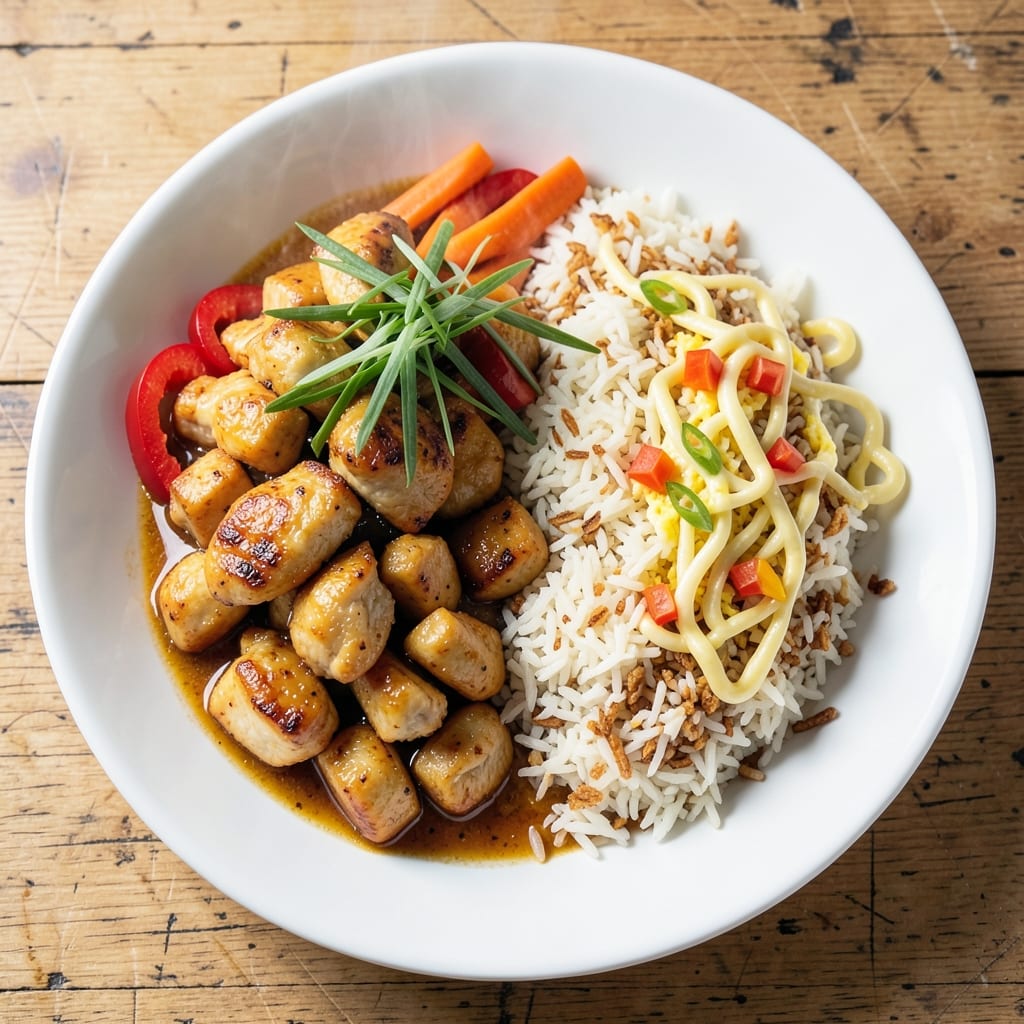
This one-pan fusion of chicken stir fry and egg fried rice delivers the perfect balance: crispy edges on your stir fry that transform into silky, flavorful bites when paired with the creamy texture of egg fried rice. The secret lies in high-heat searing followed by a quick wok-style toss—just like my first time perfecting this dish after a long shift at The Smoky Pig, when I needed something fast but still restaurant-worthy. With the right technique, you'll achieve that coveted crispy exterior on the chicken and vegetables that softens just enough when combined with the fried rice.
The beauty of this recipe is its flexibility—you can use whatever vegetables you have on hand, and the egg fried rice component uses day-old rice for maximum texture. I always recommend prepping the fried rice first, since the eggs need time to set properly while the stir fry gets its crispy moment. The sauce is where the magic happens: a simple blend of soy sauce, garlic, and a touch of honey that coats every ingredient without overpowering the natural flavors.
What you end up with is a dish that's equal parts satisfying and elegant—crispy stir fry pieces that stay firm enough to hold their shape, paired with fluffy egg fried rice that's rich but not heavy. The contrast in textures makes each bite exciting, and the combination of savory, slightly sweet, and umami flavors keeps everyone coming back for seconds. This is the kind of meal that transforms a weeknight into a special occasion without requiring hours in the kitchen.
Serve it family-style with steamed broccoli or a simple cucumber salad to round out the plate. The leftovers reheat beautifully too, making this an ideal recipe for batch cooking. Here's how to bring this fusion dish to life in your kitchen—just like I do after a long day of cooking for 2,000 pounds of pork.
Ingredients for chicken stir fry with egg fried rice
Fourteen ingredients for a restaurant-quality fusion dish that's crispy, silky, and ready in minutes.
| Ingredient | Amount | Notes |
|---|---|---|
| Boneless Chicken Breast 🍗 | 1 ½ lb | Cut into 1-inch pieces |
| Day-Old White Rice 🍚 | 3 cups | Cold, preferably from fridge |
| Large Eggs 🥚 | 4 whole | Room temperature for best scramble |
| Bell Peppers 🧅 | 2 whole | Any color, sliced into strips |
| Carrots 🥕 | 2 medium | Julienned or thinly sliced |
| Green Onions 🧅 | 4 whole | White and green parts separated |
| Garlic Cloves 🧄 | 6 cloves | Minced for sauce and stir fry |
| Vegetable Oil 🫒 | ½ cup | High smoke point preferred |
| Soy Sauce 🍶 | ⅓ cup | Light or all-purpose |
| Honey 🍯 | 1 tbsp | For subtle sweetness |
| Sesame Oil 🫒 | 1 tsp | For finishing aroma |
| Salt 🧂 | 1 tsp | Kosher or sea salt |
| Black Pepper 🌶️ | ½ tsp | Freshly ground preferred |
| Cornstarch 🌾 | 1 tbsp | For crispy chicken coating |
The chicken and rice are your stars here. Boneless chicken breast gives you the best texture—cut it into even pieces so they cook uniformly. Day-old rice is non-negotiable for that perfect texture (fresh rice turns mushy), so plan ahead or use leftover rice. Trader Joe's sells pre-cooked rice in the freezer section if you're in a pinch. For the veggies, bell peppers and carrots are classic, but whatever you have works—just slice them thin so they cook fast. The green onions? Save the white parts for the stir fry base and chop the greens for garnish later.
No soy sauce? Coconut aminos or tamari work in a bind. Short on honey? Maple syrup or agave at half the amount keeps things balanced. The cornstarch is key for crispy chicken—don't skip it. If you're using frozen veggies, thaw and pat them dry first or they'll steam instead of sear. For extra flavor, toast the sesame oil in a dry pan for 30 seconds before using—it deepens the aroma. And if you've got ginger, add 1 tbsp of minced fresh ginger to the sauce for a pro touch.
This dish reheats beautifully—just add a splash of water and warm through. Keeps for 4 days in the fridge or 3 months frozen. I always make double batches because it disappears fast. Store the fried rice and stir fry components separately (they have different reheating needs) and toss them together when ready to eat. The sesame oil should be stored in the fridge after opening—it goes rancid fast.
Why You'll Love This Recipe
- One-Pan Magic: I swear by this trick—just toss everything into one skillet after the chicken cooks. No dirty rice burner, no extra bowls, and honestly? The eggs scramble right into the stir-fry, soaking up all those juices like a dream.
- Crispy Eggs, Silky Rice: That first bite of perfectly fried eggs against the slightly chewy day-old rice? It’s the kind of combo that makes me pause mid-chew. The carrots stay tender, the peppers add a little crunch, and the eggs? Oh, they’re just set enough to hold their shape.
- Lunchbox Hero: Between us, this is my go-to for meal prep. Pack the stir-fry in one container, the rice in another, and boom—you’ve got a balanced lunch that tastes fresh even after a day. (Yes, even on a Tuesday night, when I’m too tired to think.)
- Budget-Friendly Powerhouse: Chicken breast stretches further than you’d think when sliced thin, and day-old rice? Freezer gold. Bell peppers and carrots are cheap staples, and eggs? Well, they’re basically free if you’ve got a few hens running around. It’s the kind of meal that fills plates without emptying your wallet.
Step-by-step instructions for chicken stir fry with egg fried rice
Here's how to create a one-pan masterpiece that delivers crispy chicken and silky fried rice.
Prepare the Chicken for Maximum Crispiness
Cut the 1.5 lb boneless chicken breast into 1-inch pieces and place them in a bowl. Add the 1 tbsp cornstarch and 1 tsp salt, then toss gently to coat evenly. This creates a crispy exterior while keeping the inside tender. Let the chicken sit for 10 minutes while you prep the rest of the ingredients.
Here's the thing—cornstarch is your secret weapon for that perfect crunch. If you skip this step, you'll end up with tender chicken instead of crispy. I promise, this small effort makes all the difference in the final texture.
Cook the Chicken Until Golden Brown
Heat 0.25 cup vegetable oil in a large skillet or wok over medium-high heat until shimmering. Add half of the chicken pieces and cook for 3-4 minutes per side until golden brown and cooked through. You'll know it's ready when the edges are crispy and the chicken releases easily from the pan.
Don't overcrowd the pan—cook in batches if needed to maintain the temperature. I usually work with about half the chicken at a time to prevent steaming instead of searing. Transfer the cooked chicken to a plate and set aside, keeping it warm.
Stir-Fry the Vegetables with Aromatics
In the same skillet, add 0.25 cup vegetable oil and heat over medium-high heat. Add the 6 cloves minced garlic cloves and cook for 30 seconds until fragrant. Add the 2 medium julienned carrots and 2 sliced bell peppers, then stir-fry for 4-5 minutes until the vegetables begin to soften but still retain a slight crunch.
This is where the flavors start building—don't rush this step. You want the vegetables to develop some color and begin to soften, but they shouldn't be fully cooked yet. If they start sticking, add a splash of water and scrape up those delicious browned bits from the bottom of the pan.
Scramble the Eggs Perfectly
Push the vegetables to one side of the skillet and add 0.25 cup vegetable oil to the empty space. Crack in the 4 whole large eggs and scramble gently with a spatula until just set but still slightly runny—about 1-2 minutes. Remove the eggs from the skillet and set aside with the chicken.
The eggs should be soft and creamy, not fully cooked through. This ensures they'll blend beautifully with the fried rice later. If you overcook them now, they'll be rubbery in the final dish. I like to keep them slightly underdone so they absorb the flavors of the stir-fry.
Combine Everything for the Final Fusion
Add the 3 cups day-old white rice to the skillet and break up any clumps with a spatula. Pour in the 0.33 cup soy sauce, 1 tbsp honey, and the remaining 0.25 cup vegetable oil. Stir-fry for 3-4 minutes until the rice is heated through and the flavors are well combined.
Return the chicken, vegetables, and eggs to the skillet and toss everything together for 2-3 minutes until everything is evenly coated and heated through. Finish with 1 tsp sesame oil and 0.5 tsp black pepper, then taste and adjust seasoning if needed. The dish should be perfectly balanced between savory, slightly sweet, and aromatic.
Garnish and Serve Immediately
Transfer the chicken stir-fry with egg fried rice to serving plates and garnish with the white and green parts of the 4 green onions, sliced separately. The white parts add a subtle bite, while the green parts provide freshness and color. Serve immediately while everything is hot and the textures are at their peak.
This dish is all about that perfect contrast—crispy chicken, silky eggs, and tender rice all coming together in one pan. The key is to keep everything moving and not let it sit too long after cooking. Enjoy your one-pan fusion masterpiece!
Pro Tips For Making Chicken Stir Fry With Egg Fried Rice
- CUT CHICKEN SMALLER THAN YOU THINK: I used to eyeball it and end up with chewy chunks—this isn’t a steakhouse. Slice boneless chicken breast into ½-inch pieces before marinating, or even smaller if you’re impatient. They’ll cook faster and soak up sauce better, especially when stir-frying with bell peppers and carrots. (Yes, it’s tedious, but your future self won’t regret it.)
- USE COLD RICE FOR GRIP: Day-old rice is non-negotiable, but here’s the trick: chill it in the fridge for 10 minutes after reheating. Cold rice won’t stick to your wok like glue when you’re scrambling the eggs, and it’ll absorb the stir-fry flavors instead of turning into mush. (Pro tip: Spread it on a tray first—it cooks more evenly.)
- SCRAMBLE EGGS SEPARATELY: Dumping raw eggs into the wok with everything else is a recipe for disaster—greasy, rubbery eggs every time. Whisk them in a bowl first, then scramble them before adding the chicken and veggies. High heat, constant stirring, and pull them off just when they’re almost set. (They’ll finish cooking with the rest.)
- SAUTE VEGGIES IN STAGES: Bell peppers and carrots don’t cook at the same speed—don’t crowd the pan. Start with the carrots (cut into matchsticks) for 2 minutes, then push them to the side and add peppers. This keeps them crisp-tender instead of turning to mush. (And yes, resist the urge to stir constantly—let them sear.)
Make-ahead tips for this dish
Prep Ahead for Crispy Chicken
Marinate the chicken in the cornstarch and salt mixture up to 24 hours ahead—this gives you maximum crispiness when cooking. Store it in an airtight container in the fridge. I always do this the night before because it saves time on busy mornings. When ready to cook, let it sit at room temperature for 15 minutes before searing to ensure even cooking. 💡
Rice Prep Strategy
Cook your rice 1-2 days ahead and refrigerate it—this ensures you have perfectly day-old rice for the fried component. I make a big batch on Sunday and store it in glass containers with tight lids. For extra flavor, add 1 tbsp soy sauce to the rice when cooking it initially. This infuses the grains with subtle umami that shines in the fried rice. ❄️
Egg Prep Shortcut
Beat your eggs in a bowl with a pinch of salt and pepper and store them in the fridge up to 2 days ahead. When ready to cook, simply whisk them again and proceed with the recipe. I keep the eggs in a small glass jar with a lid for easy storage and quick access. This step saves you from scrambling (literally) during the cooking process. 🥚
Vegetable Prep Efficiency
Slice all your vegetables—bell peppers, carrots, and green onions—1 day ahead and store them in separate ziplock bags in the fridge. This keeps them fresh and ready to stir-fry. I use sharp chef's knives for clean cuts that cook more evenly. For extra flavor, toss the sliced veggies with 1 tsp soy sauce before storing. 🧅
Sauce Assembly in Advance
Mix your sauce ingredients—soy sauce, honey, and sesame oil—in a small bowl and store it in the fridge for up to 5 days. This pre-mixed sauce is perfect for quick assembly when you're ready to cook. I keep it in a small glass jar with a tight lid. When reheating leftovers, simply add a splash of this sauce to restore freshness. 🍶
Full Meal Assembly Plan
For maximum efficiency, prepare the fried rice component first—it takes the longest to cook. While the rice is heating, quickly sear the chicken and stir-fry the vegetables. Keep everything warm in a 200°F oven while you finish the eggs. This way, you can assemble the final dish without rushing. I use two large skillets to handle both components simultaneously. 🔥
Nutrition facts
Frequently asked questions
Can I use chicken thighs instead of chicken breast?
Chicken thighs work beautifully—they stay juicier and develop more flavor during cooking. Just reduce the cooking time to 2-3 minutes per side since they cook faster than breast. The cornstarch coating will still give you that crispy exterior, but thighs need less time to reach 165°F internally. For best results, pat them dry before seasoning to prevent steaming.
How do I prevent the fried rice from getting mushy?
Use day-old rice that's been refrigerated (never fresh rice) and break up any clumps with your hands or spatula before cooking. High heat is key—keep your skillet at medium-high and stir constantly. If the rice starts sticking, add 1 tsp vegetable oil and scrape up those flavorful browned bits from the bottom. The cornstarch in the chicken will also help absorb any excess moisture.
What's the best way to reheat leftovers?
Reheat separately to maintain texture: microwave the fried rice with 1 tsp water for 1-2 minutes, then stir-fry the chicken and veggies in a dry pan over medium heat for 3-4 minutes. Combine only when both components are hot. For extra flavor, add ½ tsp soy sauce and ¼ tsp sesame oil when reheating. Leftovers keep for 4 days in the fridge or 3 months frozen.
Can I make this dish gluten-free?
Yes! Replace regular soy sauce with tamari or coconut aminos (use ⅓ cup). Check your cornstarch label for gluten-free certification, and ensure your sesame oil is processed in a dedicated facility. All other ingredients are naturally gluten-free. The flavor profile will be slightly lighter, so consider adding ½ tsp gluten-free fish sauce for depth if needed.
Why does my chicken end up dry?
Overcooking is the most common cause—chicken breast dries out quickly at high heat. Cook in small batches for 3-4 minutes per side until just golden, then remove immediately. The cornstarch coating helps seal in moisture, but don't skip the 10-minute marinade before cooking. For extra juiciness, brine the chicken in ¼ cup soy sauce + 1 cup water for 30 minutes before the cornstarch step.