
Breakfast & Brunch
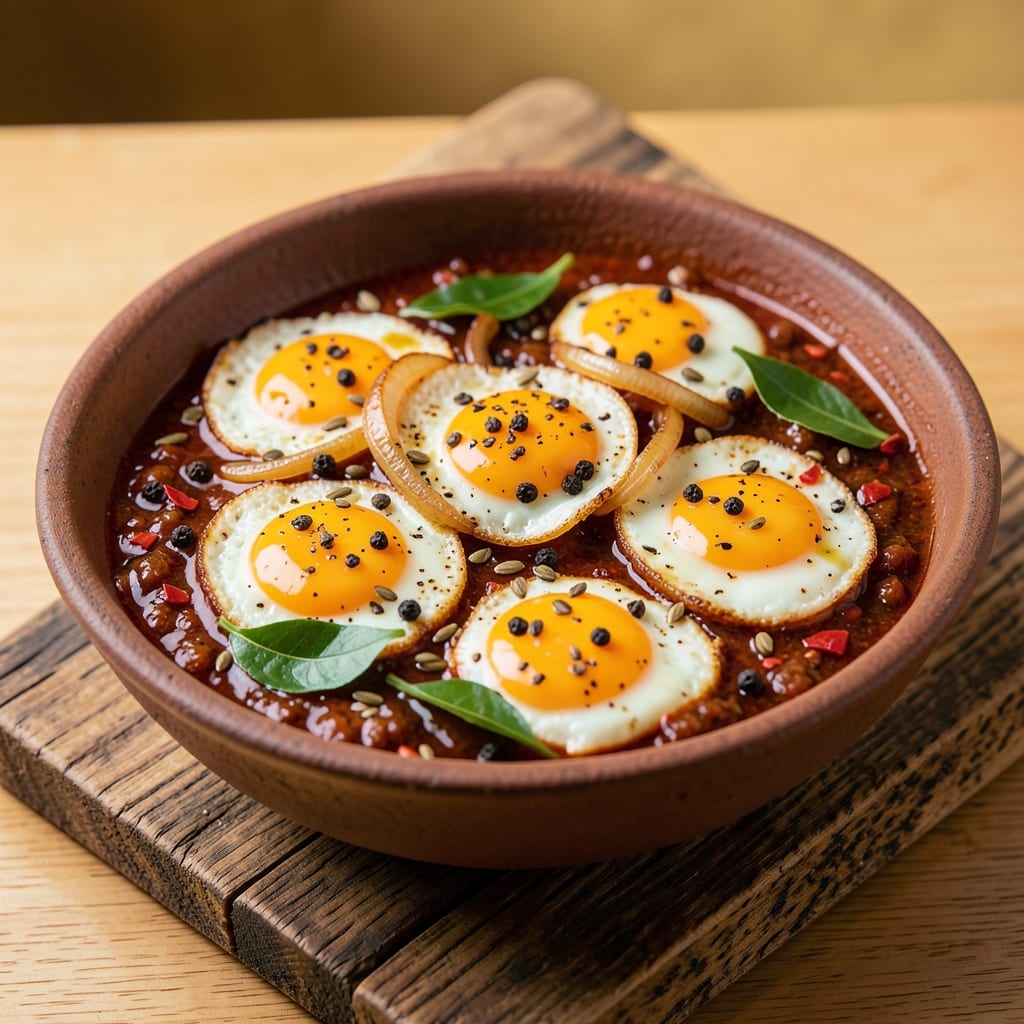
The Chettinad egg masala delivers a bold symphony of South Indian spices that transform simple eggs into a restaurant-worthy dish. 🌶️ This recipe captures the fiery essence of Chettinad cuisine—where black pepper, fennel seeds, and curry leaves create layers of aroma that dance on your palate. The secret lies in slow-cooking the eggs in a rich, spiced gravy until they absorb every flavorful note, resulting in tender, melt-in-your-mouth bites. What sets this dish apart is the traditional tempering technique, where whole spices sizzle in hot oil to release their full potential. Each step—from frying the eggs to simmering them in the aromatic masala—builds depth, ensuring every spoonful is packed with warmth and complexity. The dish balances heat, tang, and richness, making it both satisfying and deeply flavorful. By the end, you’ll have a dish that’s vibrant, aromatic, and perfectly balanced—ideal for breakfast or a light lunch. The eggs become the star, infused with the signature Chettinad spice blend, while the gravy ties everything together in a velvety embrace. This is South Indian comfort food at its finest.
The recipe relies on a few key techniques to achieve its signature flavor: proper tempering of spices, gentle simmering to avoid breaking the eggs, and a touch of tamarind for that signature tang. The result is a dish that’s far from ordinary—each bite delivers a harmonious blend of spice, texture, and aroma. Whether you’re serving it with steamed rice or appam, the flavors will leave a lasting impression.
Perfect for those who love bold, spicy flavors with depth, this Chettinad egg masala is a game-changer for weeknight dinners. The process is straightforward, but the results are anything but basic—each component plays a crucial role in creating a dish that’s both comforting and exciting. Let’s bring the flavors of South India to your kitchen.
Ingredients for chettinad egg masala
Bold spices and tender eggs create this restaurant-worthy South Indian masterpiece.
| Ingredient | Amount | Notes |
|---|---|---|
| Large Eggs 🥚 | 8 whole | Freshly laid preferred for best texture |
| Vegetable Oil 🫒 | ½ cup | Refined for high smoke point |
| Black Peppercorns 🌶️ | 1 tbsp | Whole, lightly crushed |
| Fennel Seeds 🌿 | 1 tbsp | Toasted for enhanced aroma |
| Curry Leaves 🌿 | ¼ cup | Fresh, dried if unavailable |
| Onions 🧅 | 1 whole | Finely chopped, yellow preferred |
| Garlic Cloves 🧄 | 6 cloves | Minced, not paste |
| Ginger 🌿 | 1 inch | Fresh, grated |
| Tomatoes 🍅 | 2 medium | Ripe, pureed or finely chopped |
| Tamarind Paste 🍯 | 1 tbsp | Adjust for tang preference |
| Red Chili Powder 🔥 | 1 tsp | Adjust for heat tolerance |
| Turmeric Powder 🌿 | ½ tsp | Freshly ground preferred |
| Cumin Seeds 🌶️ | ½ tsp | Toasted for depth |
| Salt 🧂 | 1 tsp | Adjust to taste |
| Coconut Milk 🥥 | ¼ cup | Full-fat for creaminess |
The spices are non-negotiable here. Whole spices like black peppercorns and fennel seeds need to be toasted until fragrant—don't skip this step, it's where the magic happens. Curry leaves are the soul of Chettinad cooking; grab them fresh at an Indian grocery or from the international aisle at Whole Foods. For tamarind paste, Trader Joe's has a great jarred version, but if you can find fresh tamarind pulp, it's worth the effort. The tomatoes should be ripe but firm—Heirloom varieties add better flavor, but regular grocery store tomatoes work fine if you're in a pinch.
No curry leaves? Dried thyme at half the amount adds a similar earthiness, though it won't be quite the same. Running short on tamarind? Lemon juice plus a pinch of sugar mimics the tang. For the eggs, farm-fresh or organic makes a noticeable difference in texture, but regular eggs still work beautifully. The coconut milk can be swapped for cashew cream if you're avoiding dairy, though the dish will be slightly lighter. And if you're sensitive to heat, reduce the red chili powder to half a teaspoon—you can always add more later.
This dish tastes even better the next day as the flavors meld together. Store in an airtight container in the fridge for up to 3 days, though I usually make just enough for two meals since it reheats perfectly. For freezing, portion into single-serving containers—it reheats beautifully with a splash of water. The spices keep their potency for 6-12 months in a cool, dark place if stored properly in airtight containers. And if you make extra gravy, freeze it separately for quick future meals.
Why You'll Love This Recipe
- Foolproof Technique: I swear by the tempering—those fennel seeds and peppercorns in hot oil? They release a fragrance that hits you before the first bite. No fancy skills needed, just patience for that aromatic base.
- Crackling Crispy Edge: The eggs get that golden, shatter-when-touched crust while staying runny inside. Honestly, it’s the kind of texture that makes you pause mid-bite—like a perfect street-food moment on your plate.
- Lunchbox Legend: Pack these into a thermos, and they’ll still taste fresh hours later. My kids used to swap theirs at school until I started making double batches—no sad, soggy lunches here.
- Pantry Powerhouse: Curry leaves and spices last forever, so this recipe costs next to nothing to repeat. Between us, I’ve made this for date nights, lazy Sundays, and even as a quick dinner when the takeout menu got boring.
Step-by-step instructions for Chettinad egg masala
Here's how to build this fiery South Indian masterpiece—layer by layer.
🔥 Step 1: Bloom the Spices in Vegetable Oil
Heat the 0.5 cup vegetable oil in a heavy-bottomed pan over medium-low heat. Add the 0.5 tsp toasted cumin seeds and 1 tbsp lightly crushed black peppercorns—you'll smell their nutty aroma immediately. Let them sizzle for 30 seconds until they begin to pop and darken slightly.
Next, add the 1 tbsp toasted fennel seeds and 0.25 cup curry leaves. The curry leaves will release their citrusy fragrance and start to crisp at the edges. Cook for another 1 minute until the spices are fragrant but not burnt. This spice bloom forms the aromatic base of your dish—don't rush it.
🍳 Step 2: Sauté the Aromatic Base
Add the 1 whole finely chopped onions and cook for 5-6 minutes over medium heat, stirring constantly. The onions should turn golden brown and caramelize slightly—this sweetness balances the heat. Then add the 6 cloves minced garlic and 1 inch grated ginger, cooking for 1 minute until fragrant.
Here's where the magic starts: Stir in the 2 medium pureed tomatoes, 1 tbsp tamarind paste, 1 tsp red chili powder, 0.5 tsp turmeric powder, and 1 tsp salt. Cook for 5-6 minutes until the oil separates from the masala and the mixture thickens. You're building the flavor foundation—let it develop properly.
🍳 Step 3: Prepare the Eggs for Cooking
While the masala simmers, beat the 8 whole large eggs lightly in a bowl—just enough to combine the yolks and whites without making them frothy. The fresher the eggs, the richer the final texture will be. Keep them at room temperature for best results.
When the masala reaches a thick, gravy-like consistency (about 5-7 minutes of cooking), reduce the heat to low. Here's the thing—you're about to create the perfect egg curry texture. Pour the beaten eggs into the masala in a thin, steady stream while stirring gently but continuously with a wooden spoon.
🥘 Step 4: Cook the Eggs to Perfection
Continue stirring gently for 3-4 minutes until the eggs begin to set but remain soft and creamy. You're aiming for eggs that are just cooked through—still slightly runny in the center for that authentic Chettinad texture. The curry leaves should be floating on top, adding their distinctive flavor.
Add the 0.25 cup coconut milk and stir well to incorporate. The coconut milk will mellow the heat slightly while adding a subtle creaminess. Taste and adjust the seasoning—you might need a bit more salt or chili powder to balance the flavors. Let the curry simmer for another 2 minutes to meld all the ingredients together.
⏰ Step 5: Rest and Serve with Confidence
Remove from heat and let the curry rest for 5 minutes. This resting period allows the flavors to fully develop and the eggs to set slightly more. The curry should have a rich, velvety texture with just the right amount of spice—enough to wake up your taste buds without overwhelming them.
Serve immediately with steamed basmati rice or crusty naan bread. The eggs should be tender yet slightly firm, perfectly coated in the aromatic masala. This dish tastes even better the next day as the flavors deepen—just reheat gently to maintain its creamy texture.
Pro Tips For Making Chettinad Egg Masala
- CRACK EGGS IN HOT WATER: I learned this the hard way—cracking eggs straight into the pan makes them splatter like a science experiment gone wrong. Instead, drop them into a bowl of warm water first, then gently slide them into the oil. The whites hold together better, and your stovetop stays cleaner (yes, even if you're impatient like me).
- TOAST FENNEL SEEDS LOW: Fennel seeds burn faster than you’d think, and once they’re blackened, they turn the whole dish bitter. Toast them in the same oil as the curry leaves, but keep the heat low and stir constantly—about 30 seconds max. Their aroma should wake up the kitchen, not fill it with smoke.
- SALT THE EGGS AFTER POACHING: Adding salt to the water while boiling eggs for this dish makes them rubbery. Instead, poach them in plain water, then finish with a pinch of salt after they’re in the masala. The seasoning will seep in evenly while the eggs absorb the spices, not before they turn tough.
- USE LESS OIL, MORE SPLATTER: Chettinad masala needs oil to carry the flavors, but too much dilutes the spices. Heat just enough to coat the pan’s bottom (about 2 tablespoons) and keep the heat medium-high. If the oil gets too hot before the eggs go in, lower the flame—you want a gentle sizzle, not a grease fire.
Wine and beer pairings for these flavors
Spicy Red Wine
For this bold, peppery dish, a dry Indian red wine like Grapes of Wrath Cabernet Sauvignon or Sula Shiraz cuts through the heat beautifully. The wine’s dark fruit notes and subtle spice complement the black pepper and fennel in your curry. Serve slightly chilled—around 55°F—to enhance the wine’s acidity and balance the dish’s richness. 🍷
Crisp White Wine
If you prefer white, opt for a dry, aromatic white such as Sula Chenin Blanc or Grover Zampa Viognier. These wines have enough acidity to stand up to the tamarind and coconut milk while their floral notes harmonize with the curry leaves. A 50°F serving temperature keeps the wine crisp and refreshing.
Malty Beer Pairings
A dark lager like Kingfisher Ultra or a hoppy IPA (such as Bangalore Brewing Co.’s IPA) works surprisingly well. The beer’s bitterness tempers the spice, while its maltiness rounds out the coconut and tomato flavors. Serve the beer at 45°F to highlight its crispness against the dish’s warmth.
Non-Alcoholic Options
For a non-alcoholic match, try ginger beer (like Fever-Tree Ginger Beer) or sparkling lime soda with a squeeze of fresh lemon. The effervescence cleanses the palate, while the citrus brightens the tamarind and coconut. Chill to 40°F for the best experience. 💫
Regional Pairing Tip
In Chettinad, this dish is traditionally paired with filter coffee or palm jaggery-based sweets to balance the heat. If you’re serving it to guests, offer a sweet masala chai alongside—its warmth and creaminess create a perfect contrast to the spicy eggs. 🌶️
Nutrition facts
Frequently asked questions
Can I make Chettinad egg masala with fewer eggs?
Yes, you can easily halve the recipe by using 4 eggs instead of 8. Simply reduce all other ingredients proportionally—especially the coconut milk, tamarind, and spices. The cooking time will also decrease to about 15-20 minutes total. This makes it perfect for a single serving or small appetizer.
What makes this different from regular egg curry?
The key differences are the Chettinad spice blend (black pepper, fennel, curry leaves) and the tamarind-coconut gravy. Unlike mild egg curries, this version uses whole spices toasted in oil for depth and a slow simmer to create a rich, velvety texture. The tamarind adds tangy complexity that regular egg curries often lack.
Can I use dried curry leaves instead of fresh?
Yes, but use half the amount (about 1 tsp dried instead of 0.25 cup fresh). Dried curry leaves are more concentrated. Crush them lightly before adding to release their aroma. For best results, toast them briefly in the oil with the other spices to revive their flavor. The dish will still taste great, though fresh leaves add a brighter citrus note.
How do I adjust the heat level?
Start with the full 1 tsp red chili powder, then adjust to taste. For milder heat, reduce to 0.5 tsp or swap for 0.5 tsp Kashmiri red chili powder (which has color but less heat). If you love spice, add 1-2 chopped green chilies during the tempering step. Always taste before serving—you can add more chili powder, but you can't remove it!
What's the best way to store leftovers?
Store in an airtight container in the fridge for up to 3 days. The flavors actually improve overnight as the spices meld. Reheat gently on low heat with a splash of water to prevent drying. For freezing, portion into single servings and freeze for up to 2 months. Thaw overnight in the fridge before reheating.