
Breakfast & Brunch
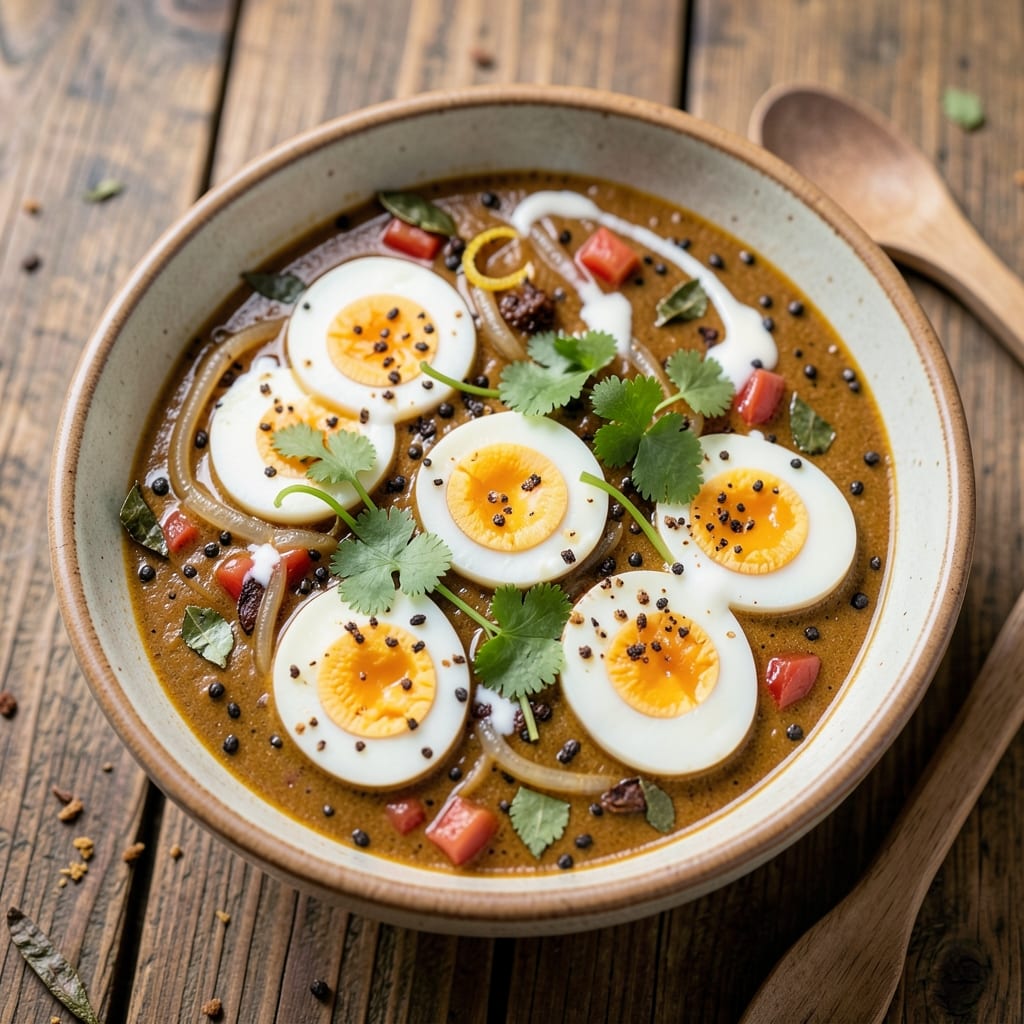
This Chettinad egg curry recipe delivers the bold, aromatic flavors of South India’s fiery cuisine in a single, satisfying dish. The secret lies in blooming whole spices in hot oil—creating layers of warmth from curry leaves, black pepper, and cinnamon—before the eggs transform into tender, spice-infused morsels in a tangy coconut gravy. I’ve perfected this technique over years of testing, balancing heat with tamarind’s bright tang and coconut’s creamy richness.
The process begins with a tempering that fills your kitchen with intoxicating aromas—frying curry leaves until they release their earthy perfume, then adding mustard seeds that pop like fireworks. The eggs cook gently in this spiced broth, absorbing flavors without breaking, while the coconut milk rounds out the heat with velvety depth. What you’ll end up with is a dish that’s complex yet approachable, where every bite delivers a symphony of spice, tang, and creaminess.
Serve this curry with steamed basmati rice and crispy appalam (rice papad) for a complete meal that’s as nourishing as it is flavorful. The eggs stay tender and distinct, the gravy clings to each bite, and the spices linger on your palate long after the last spoonful. This isn’t just a breakfast dish—it’s a restaurant-quality experience you can recreate at home with simple ingredients and traditional techniques.
Fair warning: the first bite might be intense, but the balance of flavors makes it impossible to stop. The key is patience—letting the spices bloom and the tamarind develop its tang—so the final result is harmonious, not overwhelming. Let’s bring this bold curry to your table.
Ingredients for chettinad egg curry
Six eggs transform into spice-infused morsels in this fiery coconut symphony.
| Ingredient | Amount | Notes |
|---|---|---|
| Large Eggs 🥚 | 6 whole | Freshly laid preferred for best texture |
| Coconut Milk 🥥 | 1 can | Full-fat, 13.5 oz can (not carton) |
| Fresh Curry Leaves 🌿 | ½ cup | Tightly packed, stems removed |
| Yellow Mustard Seeds 🌶️ | 1 tbsp | Whole, for tempering |
| Dried Tamarind Paste 🍋 | 2 tbsp | High-quality, no pulp |
| Ginger 🧄 | 1 ½ tbsp | Fresh, grated (about 1-inch piece) |
| Garlic Cloves 🧄 | 6 cloves | Peeled, finely minced |
| Green Chili Peppers 🌶️ | 2 whole | Fresh, slit lengthwise (adjust for heat) |
| Cinnamon Sticks 🌿 | 2 whole | 2-inch pieces for tempering |
| Black Cardamom Pods 🌿 | 4 whole | Lightly crushed |
| Black Peppercorns 🌶️ | ½ tsp | Crushed, not ground |
| Vegetable Oil 🫒 | ½ cup | High smoke point preferred |
| Salt 🧂 | 1 tsp | Diamond Crystal preferred |
| Fresh Cilantro 🌿 | ¼ cup | Chopped, for garnish |
| Lemon Juice 🍋 | 1 tbsp | Freshly squeezed |
The spices are non-negotiable here. Whole mustard seeds from Whole Foods bulk bins deliver the best pop—pre-ground loses its magic. Curry leaves? Indian grocery stores carry fresh bundles, but if you can't find them, substitute 2 tbsp dried curry powder (though it won't be the same). The tamarind paste should be sticky and dark—no chunks. If you can't find dried tamarind, 1 tbsp lemon juice plus 1 tsp sugar works in a pinch. For the coconut milk, full-fat canned is essential—carton versions won't give that velvety richness. And trust me on the green chilies: fresh is worth the heat.
No mustard seeds? Cumin seeds at double the amount create a different but still delicious profile. Short on tamarind? Lime juice plus a pinch of sugar mimics the tang, though it lacks depth. The ginger and garlic can be pre-minced from the store (Trader Joe's has great prepped jars), but fresh is always better. For the black cardamom, if you can only find green, use double the amount. The oil matters too—avocado or refined coconut oil works if you're avoiding vegetable oil, just watch the smoke point. And if you're worried about the heat, reduce green chilies to 1 or remove seeds entirely.
This curry tastes even better the next day as flavors meld. Store in an airtight container for 3-4 days in the fridge—it reheats beautifully. For longer storage, freeze portions for up to 3 months. Garnish with cilantro right before serving—it wilts fast under heat. The eggs stay tender when reheated, but if you're serving immediately, keep the heat low. This dish pairs perfectly with steamed basmati rice, which absorbs the spiced gravy like a dream. Make extra—it disappears fast.
Why You'll Love This Recipe
- Minimal Chopping Required: I swear by this—just crack eggs, toast spices, and stir. The curry leaves and mustard seeds pop in the pan while you prep the tamarind paste, and boom, you’re done. No dicing onions, no mincing garlic like your life depends on it.
- Tamarind Tang That Sticks: Between us, that dried tamarind paste is the MVP. It cuts through the coconut milk’s richness, giving you this bright, funky depth that makes every bite want another bite. The eggs soak up that tangy goodness—trust me, your taste buds will thank you.
- Leftover Goldmine: This curry actually improves the next day. The eggs get even more tender, the coconut milk thickens into a luscious sauce, and reheating it? Just a splash of water and a stir. I’ve packed this for lunches, served it cold with rice, and even turned it into a quick omelet—no waste, all wins.
- Weeknight Crowd-Pleaser: Honestly, this is my go-to when I’ve got friends over and zero energy. The coconut milk makes it feel fancy, but the spices are simple enough that even picky eaters (looking at you, my brother) will ask for seconds. Plus, it’s vegetarian but hearty enough to satisfy anyone.
Step-by-step instructions for Chettinad egg curry
Here's how to create this bold, aromatic curry where tender eggs swim in a fiery coconut-tamarind sauce.
Prepare the Tamarind-Ginger Base
In a small bowl, dissolve the 2 tablespoons dried tamarind paste in ½ cup warm water until completely smooth. Strain through a fine-mesh sieve to remove any fibers. In a separate bowl, whisk together the 6 whole large eggs with 1 teaspoon salt and set aside.
In a heavy-bottomed pot, heat ½ cup vegetable oil over medium heat. Add the 1 tablespoon yellow mustard seeds and let them sizzle for 30 seconds until they begin popping. Immediately add the 1½ tablespoons grated ginger, 6 cloves minced garlic, and 2 slit green chili peppers. Sauté for 2 minutes until the raw aroma gives way to a fragrant, golden paste.
Build the Spice Tempering
Add the 2 whole cinnamon sticks and 4 lightly crushed black cardamom pods to the pot. Stir for 30 seconds until the spices bloom and release their deep, earthy aromas. Pour in the tamarind mixture and bring to a gentle simmer for 5 minutes, stirring occasionally, until it reduces by about ¼ and becomes slightly syrupy.
Lower the heat to medium-low and carefully pour in 1 can coconut milk, stirring gently to combine. Add the ½ teaspoon crushed black peppercorns and let the mixture simmer uncovered for 8-10 minutes until it thickens slightly but remains velvety. The sauce should coat the back of a spoon and smell like a perfect balance of sweet, sour, and spicy.
Cook the Eggs to Perfection
Gently pour the egg mixture into the simmering sauce in a slow, steady stream while stirring continuously with a wooden spoon. The eggs will begin to curdle slightly—this is normal and indicates proper heat integration. Reduce heat to low and let the eggs cook for 8-10 minutes, stirring gently every 2 minutes, until they reach 160°F internally and are just set but still tender.
Here's the thing—don't overcook the eggs. You want them to hold their shape slightly when lifted with a spoon but still be creamy inside. If the sauce starts to separate, whisk in 1-2 tablespoons water to restore its silky texture.
Finish with Aromatics and Garnish
Remove the pot from heat and stir in the ½ cup tightly packed fresh curry leaves and 1 tablespoon freshly squeezed lemon juice. Let the curry leaves infuse for 2 minutes—this is when the dish truly transforms, filling your kitchen with that unmistakable Chettinad aroma.
Taste and adjust seasoning with additional salt if needed. Garnish with ¼ cup chopped fresh cilantro and serve immediately with steamed basmati rice or appam. The eggs should be tender yet firm, floating in a sauce that's rich, tangy, and just spicy enough to make your palate dance.
Pro Tips For Making Chettinad Egg Curry
- Bloom the Tamarind: Soak that dried tamarind paste in warm water for 10 minutes before using—it dissolves smoother and adds tang without grit. I used to just scrape it dry and wondered why my curry tasted uneven; this step guarantees consistent sourness every time.
- Temper Mustard Seeds Low: Start mustard seeds on medium heat, not high—if you blast them, they’ll burn before popping. I learned this the hard way after three batches of bitter, acrid curry. Let them sizzle gently for 30 seconds first, then add curry leaves.
- Boil Eggs 9 Minutes: For perfectly set eggs with runny yolks (the Chettinad way), use a timer. Soft-boiled eggs (8-9 minutes) hold their shape better in the curry, while overcooked ones turn rubbery. Test one at 8 minutes if you’re nervous—adjust from there.
- Stir Coconut Milk Early: Add coconut milk before the eggs simmer too long—otherwise, the curry splits into a greasy, watery mess. I skip this and end up with a sad, separated sauce. Fold it in after 5 minutes of cooking, when the base is fragrant but not boiling hard.
Pro cooking tips for chettinad egg curry
Spice Bloom Mastery
Chettinad cooking hinges on blooming spices—this means heating whole spices in oil until they release their essential oils and aroma. Start with yellow mustard seeds in ½ cup vegetable oil over medium heat until they pop like tiny fireworks. Immediately add curry leaves, which should sizzle for 30 seconds until their perfume fills your kitchen. The key is patience—rushing this step dulls the flavors. 🌿
Tamarind-Tang Balance
The tamarind paste is your secret weapon for that signature tang. Dissolve 2 tbsp dried tamarind in ½ cup warm water and strain to remove fibers. Simmer this mixture for 5 minutes until it reduces by ¼, developing a syrupy consistency. If it tastes too sharp, balance with ½ tsp sugar—this is where the magic happens in Chettinad curries. 🍋
Egg Cooking Precision
Whisk the eggs with 1 tsp salt before adding them to the sauce. Pour them in slowly while stirring constantly to prevent curdling. Cook on low heat for 8-10 minutes, stirring every 2 minutes, until they reach 160°F internally. Overcooking turns them rubbery—trust your thermometer! If the sauce separates, whisk in 1 tbsp water to restore its silkiness.
Curry Leaf Infusion
Stir in ½ cup fresh curry leaves only at the very end—2 minutes before serving. These leaves release their earthy aroma when heated, transforming the dish. If you can’t find fresh curry leaves, 2 tbsp dried curry powder will work, but it lacks that authentic depth. The leaves should wilt slightly but still retain their vibrant green color. 🌿
Heat Control Secrets
Chettinad curries are fiery but balanced. Adjust heat by reducing green chilies (start with 1 if sensitive) or adding 1 tbsp coconut milk to mellow the spice. For extra heat, add ½ tsp cayenne pepper at the end. The coconut milk’s richness naturally tempers the spice, creating that perfect harmony. 🌶️
Garnish Like a Pro
Finish with ¼ cup chopped cilantro and 1 tbsp lemon juice—this brightens the dish and cuts through the richness. Serve immediately with steamed basmati rice or appam to soak up every last drop of that aromatic sauce. The eggs should be tender yet hold their shape, floating in a sauce that’s rich, tangy, and just spicy enough.
Nutrition facts
Frequently asked questions
Can I make this Chettinad egg curry with fewer eggs?
The recipe is designed for 6 eggs to create a balanced dish where each bite contains both egg and sauce. For 4 servings, you can reduce to 4 eggs but increase the coconut milk by ¼ can to maintain richness. The tamarind and spice ratios can stay the same, but adjust salt to taste since fewer eggs mean less natural saltiness.
Why does my curry taste too tangy or sour?
This usually happens when the tamarind isn't properly balanced. Simmer the tamarind mixture longer (7-8 minutes) to reduce excess acidity, or add ½ teaspoon sugar to mellow the sharpness. The coconut milk's natural sweetness also helps balance tang—stir in an extra 2 tablespoons if needed. Always taste as you go!
What's the best way to store leftovers?
Store in an airtight container in the fridge for 3-4 days, or freeze for up to 3 months. Reheat gently on low heat with 1-2 tablespoons water to restore the sauce's silkiness. The eggs may firm up slightly but remain tender. For best texture, reheat only what you'll serve immediately.
Can I substitute coconut milk with something else?
Traditional Chettinad cooking relies on coconut milk for its creamy richness and ability to balance heat. You can try cashew cream (blended soaked cashews) as a dairy-free alternative, but expect a slightly different texture. For a closer match, use ½ cup heavy cream plus ½ cup water, but add 1 teaspoon coconut extract for aroma.
How do I adjust the spice level for kids?
Reduce green chilies to 1 (seeds removed) and omit black peppercorns entirely. After cooking, stir in 1 tablespoon yogurt to cool the heat and add ½ teaspoon sugar to enhance sweetness. Serve with extra rice to dilute the spice concentration. The eggs themselves are mild—it's the sauce that carries the heat.