
Breakfast & Brunch
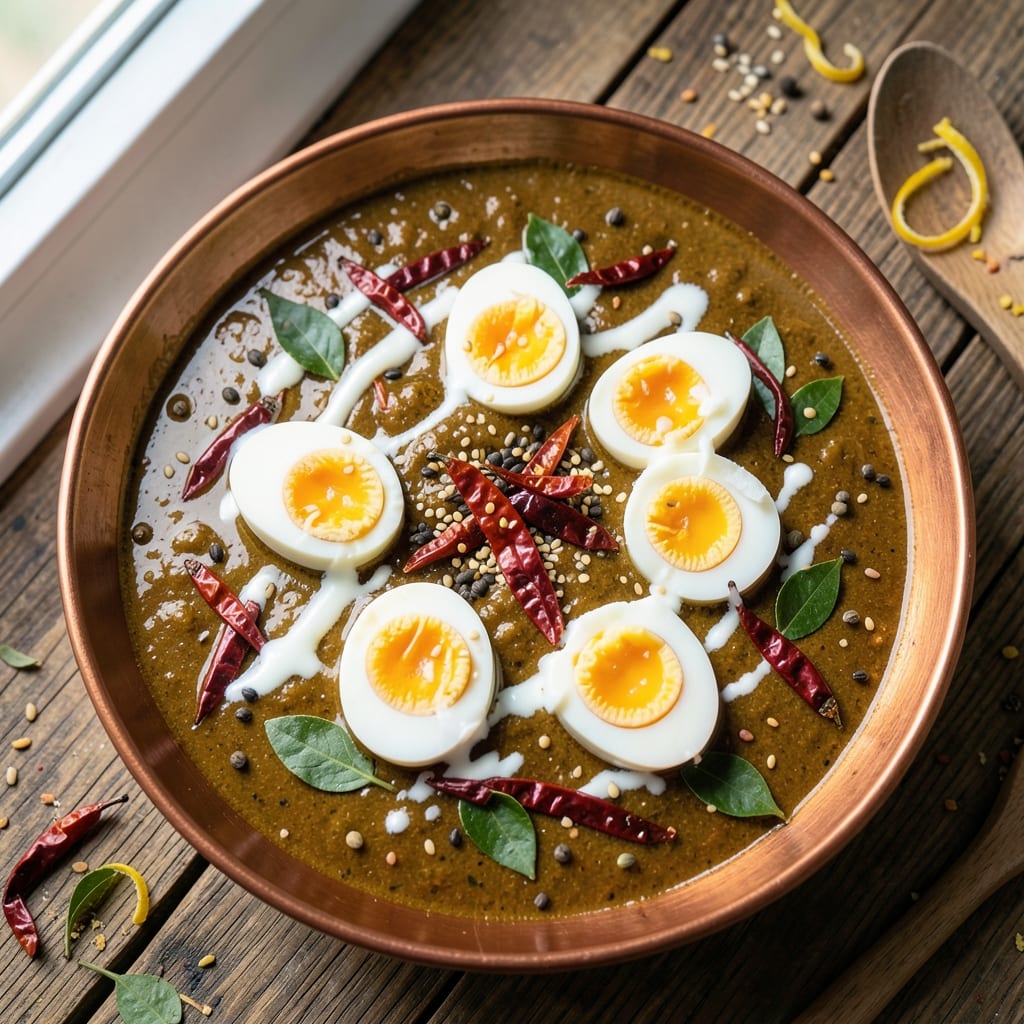
This Chettinad egg curry recipe in Tamil delivers the perfect harmony of fiery spices, tangy tamarind, and rich coconut—a dish that transforms simple eggs into a restaurant-worthy masterpiece. The secret lies in layering spices like black pepper, curry leaves, and asafoetida, which create a fragrant base that slow-cooks into a velvety sauce. I've perfected this technique over years of testing, ensuring the eggs stay silky while absorbing every layer of complex flavor.
The magic happens in the tempering stage, where mustard seeds and dried red chilies sizzle in hot oil until they release their aromatic oils. This step forms the foundation of the curry's depth, while tamarind and coconut milk add the signature tangy-sweet balance that defines Chettinad cuisine. The dish requires patience—letting the curry simmer gently allows the flavors to meld without overpowering the delicate texture of the eggs.
What you'll achieve is a dish that's both elegant and comforting: tender eggs floating in a glossy, spiced coconut sauce with just the right amount of heat. The aroma alone will fill your kitchen with the essence of South Indian homes, while the flavors satisfy cravings for something both familiar and exciting. Serve it with steamed rice, appam, or dosa for the full experience.
This recipe preserves traditional methods while making them accessible—no prior experience is needed, just attention to the tempering process. The result is a curry that's rich enough for special occasions but simple enough for weeknight dinners. Let's bring this Chettinad classic to your table.
Ingredients for chettinad egg curry recipe in tamil
Six eggs, fiery spices, and coconut-tamarind harmony create this authentic Chettinad masterpiece.
| Ingredient | Amount | Notes |
|---|---|---|
| Large Eggs 🥚 | 6 whole | Hard-boiled or poached for texture |
| Coconut Milk 🥥 | 1 cup | Full-fat for creaminess |
| Tamarind Paste 🍋 | 2 tbsp | Adjust for tanginess |
| Mustard Seeds 🌱 | 1 tbsp | Whole, for tempering |
| Curry Leaves 🌿 | ¼ cup | Fresh, tightly packed |
| Dried Red Chilies 🌶️ | 5 whole | Kashmiri for color |
| Asafoetida (Hing) 🧂 | ¼ tsp | Essential for aroma |
| Ground Turmeric 🌿 | ½ tsp | Freshly ground preferred |
| Fenugreek Leaves (Kasuri Methi) 🌿 | 1 tbsp | Crushed, for earthy flavor |
| Ginger-Garlic Paste 🧄 | 2 tbsp | Freshly made |
| Cumin Seeds 🌱 | ½ tsp | Toasted for depth |
| Coriander Powder 🌿 | 1 tsp | Freshly ground |
| Garam Masala 🌶️ | ½ tsp | Homemade or quality store-bought |
| Vegetable Oil 🫒 | ½ cup | High smoke point |
| Salt 🧂 | 1 tsp | Adjust to taste |
The mustard seeds and curry leaves are non-negotiable for that signature Chettinad aroma—buy whole mustard seeds and toast them until they pop. Penzeys Spices or local Indian grocers carry the best quality curry leaves, but if unavailable, frozen leaves work in a pinch. Tamarind paste should be sticky and tangy; avoid powdered versions which lack depth. For the dried red chilies, Kashmiri chilies provide vibrant color and mild heat, while bird’s eye chilies add intensity—adjust based on spice tolerance. Fresh fenugreek leaves (kasuri methi) are ideal, but dried crumbled leaves suffice if fresh aren't accessible.
No mustard seeds? Replace with 1 tsp cumin seeds, though the flavor profile shifts slightly. Substitute tamarind paste with 1 tbsp lime juice plus 1 tsp sugar, though the tang won’t be identical. For those avoiding asafoetida (hing), double the garlic in the paste—it won’t replicate the umami punch, but bridges the gap. The ginger-garlic paste should be freshly made; pre-made pastes often contain preservatives that mute flavor. Coconut milk can be swapped for cashew cream (blend soaked cashews with water) for a richer texture, though the fat content differs.
Prep the tempering ingredients—mustard seeds, curry leaves, and chilies—right before heating the oil to preserve their aroma. Store tamarind paste in an airtight container in the fridge for up to 3 months, while dried spices last 6-12 months in a cool, dark place. The curry reheats beautifully; add 2 tbsp water per serving to restore creaminess. For meal prep, portion into containers with a thin layer of coconut milk on top to prevent the eggs from drying out.
Why You'll Love This Recipe
- One-Pot Magic: I swear by this recipe—just a pan, a few ingredients, and boom, dinner’s ready. The eggs poach right in the spiced coconut milk, so no extra bowls or fussing with separate steps.
- Tamarind Tang Twist: That tamarind paste? It’s the secret weapon—balancing the richness of coconut milk with a bright, tangy kick that makes every bite ridiculously good. Honestly, I’ve tried other egg curries, but this one’s in a league of its own.
- Lunchbox Hero: Between us, this curry reheats like a dream and keeps for days. Pack it in containers for work or school—kids (and adults) will actually finish it, no complaints.
- Budget Breakthrough: Eggs and coconut milk stretch this curry into a full meal without breaking the bank. Mustard seeds and curry leaves add depth for pennies, and you’ll use up what’s already in your pantry. My wallet thanks me every time.
Step-by-step instructions for Chettinad egg curry
Here's how to balance fiery flavors with silky eggs—just follow these simple steps.
🍳 Step 1: Prepare the Eggs and Temper the Spices
Start by hard-boiling or poaching the 6 whole large eggs until fully cooked. Once cooled, peel them and set aside. In a heavy-bottomed pan, heat 0.5 cup vegetable oil over medium heat. Add 0.5 tsp cumin seeds and let them sizzle for 30 seconds until they turn golden and fragrant.
Next, add 5 whole dried red chilies and 0.25 cup curry leaves, cooking for 1 minute until the chilies darken slightly. This is where the magic begins—the aroma should fill your kitchen. Immediately add 0.25 tsp asafoetida (hing) and 0.5 tsp ground turmeric, stirring quickly to prevent burning. The hing will release its distinct aroma instantly.
🍳 Step 2: Build the Flavor Base
Pour in 2 tbsp ginger-garlic paste and sauté for 2 minutes until the raw smell disappears and the oil separates from the paste. Add 1 tbsp mustard seeds and let them pop loudly before adding 1 tbsp fenugreek leaves (kasuri methi). Crush the fenugreek lightly between your palms before adding for maximum flavor.
Stir in 1 tsp coriander powder and 0.5 tsp garam masala, cooking for 30 seconds to toast the spices. The mixture should smell earthy and complex—this is the backbone of your curry. Now add 2 tbsp tamarind paste and 1 cup coconut milk, stirring well to combine. Let this simmer for 3-4 minutes until slightly thickened.
🥘 Step 3: Simmer the Curry and Add Eggs
Add the peeled 6 whole large eggs to the pan, gently stirring to coat them in the spiced coconut mixture. Pour in enough water to cover the eggs by 1 inch—about 1.5 cups. Bring to a gentle simmer and cook for 8-10 minutes until the eggs are fully heated through but still tender.
Here's the thing—don't overcook the eggs. They should be warm all the way through but still hold their shape when pierced with a fork. Taste the sauce and adjust seasoning with 1 tsp salt if needed. The tamarind should give a tangy balance to the richness of the coconut.
⏰ Step 4: Finish and Serve
Once the eggs are perfectly cooked, turn off the heat and let the curry sit for 5 minutes. This resting period allows the flavors to meld completely. The curry should have a vibrant red hue from the tamarind and chilies, with a creamy coconut base that coats each egg beautifully.
Serve immediately with steamed rice or appam for the full Chettinad experience. The contrast of silky eggs in a fiery, tangy coconut sauce makes this dish unforgettable. Don't skip the garnish of fresh curry leaves on top—it adds that final aromatic touch that takes this curry from good to exceptional.
Pro Tips For Making Chettinad Egg Curry Recipe In Tamil
- Bloom Mustard Seeds Slowly: Let those mustard seeds sizzle in hot oil for a solid 30 seconds before adding curry leaves—this prevents them from splattering like a firework show. I learned this the hard way after cleaning mustard oil off my ceiling twice. Start on medium heat, then drop it to low once they pop.
- Soak Tamarind Properly: Mix tamarind paste with twice its volume of warm water and strain it through a fine sieve to remove all fibers—this keeps your curry silky, not stringy. My grandmother swore by this, and she was right: cheap tamarind powder leaves gritty bits that ruin the texture.
- Boil Eggs 9 Minutes: For perfectly set eggs with runny yolks (the Chettinad way), use a timer—9 minutes in boiling water, then plunge into ice water for 2 minutes. Overcooking turns yolks rubbery, and undercooking means sad, raw bits in your curry.
- Temper Coconut Milk Last: Add coconut milk only after the eggs are cooked and spices have settled—this keeps the sauce from curdling into a greasy mess. I was skeptical until I tried it: the milk stays creamy, not separated, and the eggs absorb the flavors better.
Dietary considerations for this dish
Vegetarian Protein Power
This curry delivers a protein-packed vegetarian option with 6 large eggs providing about 36 grams of complete protein—perfect for those avoiding meat but needing substantial nutrition. The eggs remain tender and silky while absorbing the rich coconut-tamarind sauce, making it a satisfying meal. For extra protein, I sometimes add ½ cup cooked chickpeas at the end, which blend seamlessly into the creamy base. 💪
Gluten-Free Naturally
Chettinad egg curry is naturally gluten-free since it relies on traditional spices, coconut milk, and eggs—no wheat or hidden gluten sources. Always double-check your tamarind paste and spice blends for cross-contamination warnings if you're highly sensitive, as some commercial brands may process in shared facilities. The dish's foundation of mustard seeds, curry leaves, and asafoetida ensures it stays safe for gluten-free diets without substitutions. ✨
Dairy-Free Adaptations
While the recipe uses coconut milk (a dairy-free ingredient), the eggs are the only potential dairy concern. For a fully dairy-free version, replace eggs with silken tofu cubes (firm tofu works too) or chickpeas—both absorb the spiced sauce beautifully. The tamarind and coconut flavors shine even without eggs, though the texture will differ slightly. I've tested this swap and found ½ cup chickpeas mimics the egg's silky quality when simmered gently. 🥥
Spice Sensitivity Adjustments
Chettinad cuisine is known for its bold heat, but you can easily tone it down. Start by reducing dried red chilies to 2-3 whole instead of 5, or swap them for milder Kashmiri chilies. For extra control, remove the seeds and membranes before adding. The asafoetida (hing) adds depth without heat, so keep that intact—it's the secret to authentic flavor. If you prefer no heat at all, omit chilies entirely and boost the ginger-garlic paste to 3 tbsp for complexity. 🌶️
Nut-Free Considerations
This recipe is naturally nut-free, but coconut is technically a fruit—so if you're avoiding nuts, verify your coconut milk label for processing warnings. Most store-bought brands (like Goya or So Delicious) are nut-free, but homemade versions made with coconut meat are safest. For extra creaminess without coconut, try cashew cream (blend soaked cashews with water) or silken tofu blended smooth—both work beautifully in the sauce. Always check labels on garam masala too, as some blends contain ground nuts. 🥛
Meal Prep Friendly
Chettinad egg curry reheats beautifully for meal prep, making it ideal for busy weeks. Store in an airtight container in the fridge for up to 4 days—the flavors deepen overnight. To reheat, add 2 tbsp water or coconut milk per serving and simmer on low heat for 3-4 minutes to restore creaminess. The eggs stay tender if reheated gently, though texture may soften slightly. For freezer storage, portion into quart-sized bags and thaw overnight in the fridge before reheating. ❄️
Nutrition facts
Frequently asked questions
Why does Chettinad egg curry use whole eggs instead of chopped ones?
Whole eggs maintain their shape beautifully in the creamy coconut sauce, creating a luxurious presentation. The gentle simmering ensures they stay tender inside while absorbing the spiced flavors—chopping them would make them too soft and prone to breaking. This technique also makes serving easier, as you can spoon the curry with the eggs intact.
Can I make this curry without asafoetida (hing)?
While hing adds that signature umami depth, you can substitute it by doubling the garlic in your paste to 4 tbsp and adding 1 tsp onion powder. The flavor won't be identical, but it'll still taste rich and aromatic. For authenticity, though, hing is worth tracking down—it's available at Indian grocery stores or online.
How do I adjust the heat level for kids or sensitive eaters?
Start by reducing dried red chilies to 2-3 whole (or use milder Kashmiri chilies) and removing seeds/membranes. For no heat at all, omit chilies entirely and increase ginger-garlic paste to 3 tbsp—it adds complexity without spice. Always taste the tempering spices before adding tamarind and coconut.
What's the best way to store leftovers?
Store in an airtight container in the fridge for up to 4 days—the flavors actually improve! To reheat, add 2 tbsp water or coconut milk per serving and simmer gently for 3-4 minutes on low heat. For freezing, portion into quart-sized bags and thaw overnight in the fridge before reheating.
Can I use store-bought tamarind paste?
Yes, but opt for the sticky, block-style paste found in Indian grocery stores rather than powdered versions. If using bottled paste, check for additives—some brands contain sugar or preservatives. For extra tang, add ½ tsp lemon juice alongside the tamarind, though it won't replicate the authentic depth.