
Breakfast & Brunch
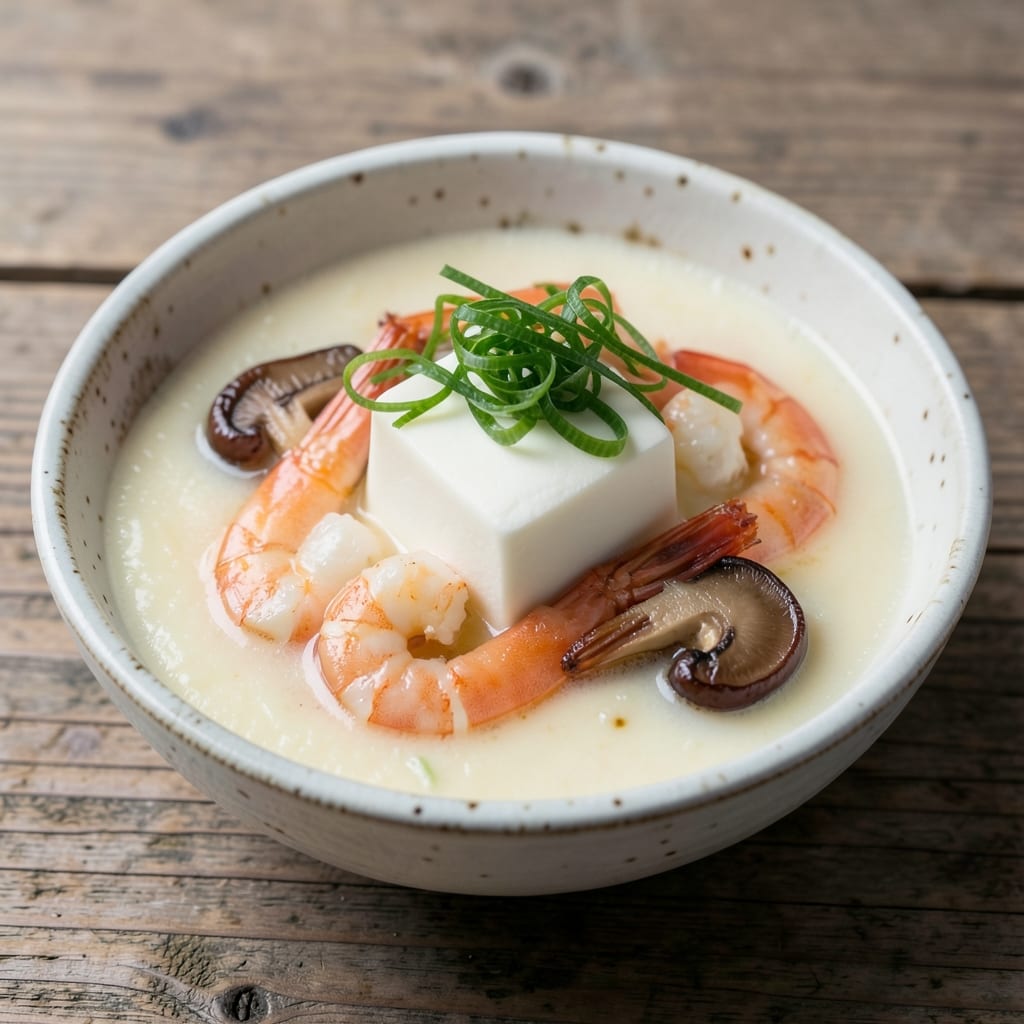
Mastering chawanmushi begins with the water-to-egg ratio—this precise balance transforms simple ingredients into a silky, jiggly custard that's both delicate and satisfying. The secret lies in using 1 part water to 2 parts eggs by weight, creating a texture that's firm enough to hold fillings but still trembles slightly when served. This ratio ensures the custard sets perfectly during steaming while maintaining that signature melt-in-your-mouth quality.
The foundation of chawanmushi starts with a flavorful dashi broth, which infuses the eggs with umami depth. Combined with a touch of mirin and soy sauce, this liquid base elevates the custard beyond ordinary egg dishes. The fillings—whether shrimp, mushrooms, or tofu—are gently poached in the broth before being nestled into the egg mixture, ensuring they stay tender and absorb the rich flavors.
What sets chawanmushi apart is its two-stage steaming process, where the custard is first steamed gently to set partially, then finished with a quick blast of steam to achieve that signature wobble. This technique guarantees a custard that's neither too firm nor too runny, with a surface that's smooth and inviting. The result is a dish that's elegant enough for special occasions yet simple enough for everyday enjoyment.
The payoff comes when you slice into the custard—each bite reveals the perfect balance of silky egg and tender fillings, all bathed in the savory-sweet broth. Whether served as a light breakfast or a sophisticated appetizer, this recipe delivers restaurant-quality results with just a few key techniques. Let's get started on creating your own silky chawanmushi.
Ingredients for chawanmushi recipe water to egg ratio
Precision meets tradition in this chawanmushi recipe—where the water-to-egg ratio creates silky perfection.
| Ingredient | Amount | Notes |
|---|---|---|
| Large Eggs 🥚 | 8 whole | Room temperature for even blending |
| Water 💧 | 4 oz | Room temperature, filtered preferred |
| Dashi Broth 🍜 | 1 ½ cups | Homemade or quality store-bought |
| Mirin 🍶 | 1 tbsp | Sweet rice wine, unsulfured preferred |
| Soy Sauce 🧂 | 1 tbsp | Usukuchi preferred for lighter color |
| Shrimp 🦐 | 6 oz | Peeled, deveined, poached in broth |
| Shiitake Mushrooms 🍄 | 4 whole | Fresh, stems removed, poached |
| Silken Tofu 🧀 | 4 oz | Cubed, poached in broth |
| Kuzu Powder 🌾 | ½ tsp | Arrowroot powder substitute works |
| Sesame Oil 🫒 | ½ tsp | Toasted, for finishing |
| Green Onions 🧅 | 2 whole | Thinly sliced, for garnish |
| Salt 🧂 | ¼ tsp | Diamond Crystal preferred |
The eggs and water ratio is non-negotiable for texture. Use a kitchen scale to measure 8 ounces of eggs and 4 ounces of water by weight—this 2:1 ratio ensures the signature wobble. Room temperature ingredients blend more smoothly, eliminating lumps. For dashi, homemade using kombu and bonito flakes delivers superior umami, but Hondashi brand from Asian markets works well. The mirin should be unsulfured—sulfured versions can interfere with the delicate flavor balance. Soy sauce choice matters too: Usukuchi (light soy) keeps the custard pale and elegant.
No shrimp? Scallops or squid work beautifully—just adjust poaching time. Substituting mushrooms? Enoki or oyster mushrooms hold their shape better than cremini. For tofu, extra-firm can replace silken but requires longer poaching. The kuzu powder is crucial for thickening—if unavailable, arrowroot powder at the same ratio works, though texture may differ slightly. Sesame oil should be toasted for maximum aroma; microwave it 10 seconds to bloom the flavor before using. Green onions can be swapped for chives or scallions, but they add a subtle sweetness that complements the dish perfectly.
Store poached fillings in the dashi broth for up to 2 days in the fridge. The egg mixture can be prepped ahead and refrigerated for 1 day before steaming. For best results, steam immediately after assembly. Leftover chawanmushi reheats beautifully—cover with a damp paper towel and steam for 3-4 minutes to restore that silky texture. The custard freezes surprisingly well for up to 1 month—thaw overnight in the fridge before reheating.
Why You'll Love This Recipe
- Four-Ingredient Magic: I swear, the ratio of eggs to water here is chef’s secret—just 4 parts egg to 1 part water, plus dashi and a splash of mirin. No measuring cups, no stress, and the custard turns out silky every time. Honestly, it’s the kind of recipe where you’ll forget you’re even cooking.
- Umami Bomb: That dashi and soy sauce combo? Next-level. The broth soaks into the eggs like a flavor sponge, while the mirin adds this subtle sweetness that balances everything. My husband still asks, “What’s in this?” even though I’ve made it a dozen times—proof it’s ridiculous good.
- Weeknight or WOW: Steam it for a lazy Tuesday dinner or serve it at a dinner party—no one will guess how little effort it took. The custard holds up surprisingly well, too, so I’ll often make a double batch. (Yes, even on a Tuesday night.)
- Budget-Friendly Luxury: Eggs, water, dashi—this is the kind of dish that feels fancy without breaking the bank. And leftovers? They reheat beautifully in the microwave, so you’re not stuck eating it all in one sitting. My wallet and my taste buds thank me.
Step-by-step instructions for chawanmushi with perfect silky texture
Mastering the water-to-egg ratio transforms this delicate dish from ordinary to extraordinary.
Prepare the Poached Ingredients
Begin by poaching the shrimp, shiitake mushrooms, and silken tofu in a separate pot. Combine 1.5 cups dashi broth with 1 tablespoon mirin and 1 tablespoon soy sauce in a saucepan and bring to a gentle simmer over medium-low heat. Add the 6 ounces shrimp, 4 whole shiitake mushrooms (stems removed), and 4 ounces cubed silken tofu, then cook for 3-4 minutes until the shrimp turns opaque and the mushrooms soften.
Remove the ingredients with a slotted spoon and drain well on paper towels. This step ensures the filling stays intact during steaming and prevents a watery texture. The poached ingredients should be warm but not hot—just enough to meld flavors without cooking further in the chawanmushi.
Whisk the Egg Mixture to Ribbon Stage
In a heatproof bowl, whisk together the 8 whole large eggs (room temperature) with 4 ounces water until fully combined. Gradually add 0.25 teaspoon salt and whisk until dissolved. The key here is achieving a uniform, slightly thickened consistency—this ratio creates the signature silky texture.
Whisk vigorously for 3-4 minutes until the mixture reaches ribbon stage: when you lift the whisk, the streaks should hold briefly before blending back in. This step is non-negotiable—under-whisking leads to dense, rubbery chawanmushi, while over-whisking risks breaking the eggs. The mixture should coat the back of a spoon but remain pourable.
Assemble and Steam for Even Cooking
Distribute the poached shrimp, mushrooms, and tofu evenly among 4 ramekins or heatproof bowls. Pour the egg mixture over the filling, filling each vessel ¾ full—this prevents overflow during steaming. Sprinkle each with a pinch of kuzu powder, which acts as a natural thickener and stabilizer.
Place the ramekins in a steamer basket over 1 inch of simmering water (not boiling—steam should rise gently). Cover with a lid and steam for 12-15 minutes until the edges set but the center remains slightly jiggly. The perfect doneness is when the surface is firm to touch but the center yields slightly when pressed—this ensures a creamy interior without breaking the delicate structure.
Finish with Sesame Oil and Garnish
Remove the chawanmushi from the steamer and let rest for 2 minutes before serving. Drizzle each portion with 0.5 teaspoon toasted sesame oil and garnish with thinly sliced 2 whole green onions. The sesame oil adds depth of flavor, while the green onions provide a fresh contrast to the rich, savory filling.
Serve immediately while still warm. The texture should be silky yet firm, with the filling perfectly set but still tender. Each bite should deliver a harmonious blend of umami from the dashi, sweetness from the mirin, and a delicate balance of salt from the soy sauce. The water-to-egg ratio is the secret—too much water and it becomes watery; too little and it risks being dense. This precise balance is what transforms chawanmushi from a simple egg custard to a refined Japanese classic.
Pro Tips For Making Chawanmushi Recipe Water To Egg Ratio
- Weigh Your Eggs: Crack 6 large eggs into a bowl and weigh them—you’ll need roughly 300g total for the classic ratio (3 parts water/dashi to 1 part eggs). My first batches were always too runny because I eyeballed it; the eggs vary more than you’d think.
- Steam at 170°F (77°C): Use a thermometer. Too hot and it curdles; too cool and it stays wet. A gentle simmer with the lid slightly ajar keeps the heat steady—no need to babysit it. I learned this after watching mine turn to scrambled eggs twice.
- Chill the Dashi First: Cold dashi broth (not hot) blends smoother with eggs and prevents lumps. Mix it into the beaten eggs last, then stir gently—no whisking needed, just a spatula to keep it silky. Skipping this step gives you that dreaded grainy texture.
- Add Soy Sauce Late: Stir in the soy sauce and mirin only after the eggs are fully mixed with the broth. If you add them early, the acidity can start breaking the eggs down before steaming. I was skeptical until I tried it—now it’s non-negotiable for bright, clean flavor.
Essential equipment for this recipe
Precision Steamer Setup
Your steamer is the unsung hero of chawanmushi—never use boiling water as direct contact turns the custard rubbery. I recommend a stainless steel steamer basket with a tight-fitting lid (like the OXO Good Grips) to trap steam efficiently. Place a wire rack inside the pot to elevate ramekins 1 inch above simmering water—this ensures even heat distribution. For extra insurance, I add 2-3 ice cubes to the water before steaming; the cold shock helps set the custard edges faster while keeping the center silky. 🌡️
Ramekin Selection Matters
Use heatproof ceramic or glass ramekins (like Le Creuset Mini Round Casseroles)—they conduct heat evenly and prevent hot spots. Avoid metal, which can react with the acidic dashi broth. Size is critical: 4-ounce capacity per serving ensures proper portion control without overflow. I line my ramekins with parchment paper circles (cut to fit) for easy removal and cleanup. Pro tip: Chill ramekins in the fridge for 10 minutes before steaming to help the custard set faster at the edges. ❄️
Kitchen Scale for Ratio
The 2:1 egg-to-water ratio by weight is non-negotiable for texture. A digital kitchen scale (I use the OXO Good Grips) is essential—8 ounces eggs to 4 ounces water guarantees the signature wobble. For volume measurements, 1 cup beaten eggs ≈ 8 ounces, but density varies by egg size. Weigh your eggs in their shells for accuracy. If you must use volume, whisk eggs and water separately to prevent over-dilution. 🥚
Whisking Essentials
A balloon whisk (like the Zyliss 360°) is ideal for reaching ribbon stage efficiently. For extra control, I use a hand mixer on low speed (like the KitchenAid KSM150PSER) to blend the egg mixture—just 30 seconds prevents over-aeration. The bowl should be heatproof (I use CorningWare) to handle direct steaming later. A thermometer (like the Thermoworks Thermapen) confirms the egg mixture stays below 160°F during whisking—above that, and proteins start to cook prematurely. 💡
Kuzu Powder Substitutes
If kuzu powder (kanten) is unavailable, arrowroot powder works in a pinch—but texture differs slightly. For a 1:1 substitute, mix 0.5 teaspoon arrowroot with 1 teaspoon cold water to form a slurry before sprinkling. Cornstarch is another option, but it yields a gummier result. For a smoother finish, I blend 1 teaspoon instant pudding mix (like Jell-O) with 1 tablespoon water as a last-resort thickener. Always dust lightly—overdoing it makes the custard dense. 🌾
Sesame Oil Toaster
Toasted sesame oil elevates chawanmushi from good to restaurant-quality. For homemade toasting, microwave 0.5 teaspoon oil in a small microwave-safe bowl for 10-15 seconds until fragrant (not smoking). Alternatively, heat oil in a small saucepan over low heat for 1 minute—the aroma develops as it warms. Store-bought toasted sesame oil (like Kikkoman) works, but homemade has deeper flavor. Drizzle just before serving to preserve freshness. 🫒
Nutrition facts
Frequently asked questions about chawanmushi
Why is the 2:1 egg-to-water ratio so important?
This ratio creates the signature silky yet firm texture chawanmushi is known for. Too much water makes it watery, while too little risks a dense, rubbery result. The 4 ounces water to 8 ounces eggs balance ensures the custard sets properly during steaming while maintaining that delicate wobble. Weighing ingredients guarantees consistency—volume measurements can't account for egg size variations.
Can I substitute dashi broth with chicken or vegetable broth?
While possible, dashi's umami depth is irreplaceable for authentic flavor. For chicken broth, add 1 teaspoon soy sauce and ½ teaspoon fish sauce per cup to mimic umami. Vegetable broth works best with 1 teaspoon mushroom powder and ½ teaspoon seaweed flakes. The custard will still set properly, but the flavor profile will be milder. For best results, use Hondashi brand from Asian markets.
What if my chawanmushi turns out too firm or rubbery?
Rubbery texture usually means over-whisking or insufficient water. For next time, whisk just until ribbon stage (3-4 minutes) and use the exact 2:1 ratio. If it's already made, try reheating with 1 teaspoon warm water per ramekin covered for 2 minutes in the steamer—this adds moisture without breaking the structure. For overly firm results, the egg mixture may have been too thick; next time, add ½ teaspoon extra water.
How do I adjust this recipe for vegetarian chawanmushi?
Replace shrimp with poached king oyster mushrooms or scallops, and tofu with extra-firm tofu cubes. Use vegetable dashi (made with kombu and shiitake) instead of traditional dashi, and add ½ teaspoon mushroom powder to the egg mixture for depth. The water-to-egg ratio remains the same—8 ounces eggs to 4 ounces water. For extra umami, stir 1 teaspoon nutritional yeast into the egg mixture before steaming.
Can I make chawanmushi ahead of time?
Yes! Assemble the custard in ramekins and refrigerate for up to 1 day before steaming. For best texture, steam immediately after removing from fridge (no need to thaw). Leftover chawanmushi reheats well—cover with a damp paper towel and steam for 3-4 minutes to restore silky texture. Store filled ramekins in the fridge for 2 days or freeze for 1 month (thaw overnight in the fridge before reheating).