
Soups & Stews
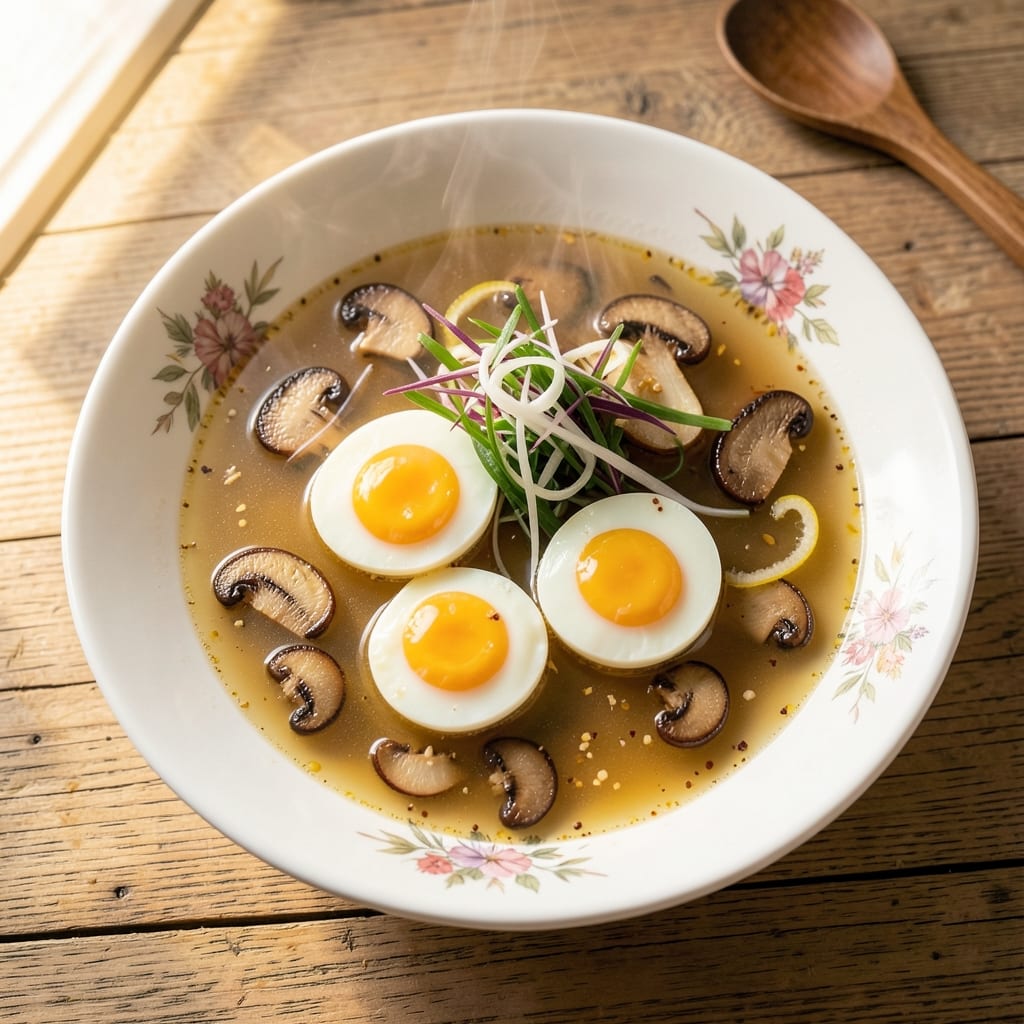
This Cassie egg drop soup recipe delivers restaurant-quality silkiness with perfectly formed egg ribbons swirling in a fragrant, savory broth. The secret lies in precise temperature control and a delicate balance of ingredients that transform simple components into something truly comforting. I've refined this recipe over years of testing, ensuring every sip delivers that perfect harmony of flavors and textures.
What sets this recipe apart is the technique for creating those signature egg ribbons—silky, delicate strands that melt in your mouth rather than clumping. We'll start with a rich chicken broth base, then carefully temper the eggs before swirling them into the hot liquid. The result is a soup that's both elegant and deeply satisfying, with each spoonful offering a luxurious mouthfeel.
Traditional garnishes like sliced green onions and mushrooms add freshness and texture, while a touch of soy sauce and sesame oil deepen the flavor profile. The broth remains crystal clear, allowing those golden egg ribbons to shine as the star of the dish. This is the kind of soup that feels like a warm embrace on a chilly day.
Perfect for weeknight dinners or special occasions, this recipe scales beautifully while maintaining its delicate balance. Whether you're serving it to family or treating yourself, the silky yolk swirls and savory broth will make every bowl feel like a little celebration. Let's get started on creating this comforting classic.
Ingredients for cassie egg drop soup
Eight essential ingredients transform into silky egg ribbons and aromatic broth—no shortcuts, just restaurant-quality results.
| Ingredient | Amount | Notes |
|---|---|---|
| Large Eggs 🥚 | 4 whole | Room temperature for best swirls |
| Chicken Stock 🍲 | 6 cups | Homemade or high-quality store-bought |
| Fresh Ginger 🌿 | 1 tbsp | Finely grated, aromatic variety |
| Garlic Cloves 🧄 | 3 cloves | Minced, for aromatic depth |
| Green Onions 🧅 | ¼ cup | Thinly sliced, for garnish |
| Shiitake Mushrooms 🍄 | 4 whole | Sliced, for earthy texture |
| Sesame Oil 🫒 | 1 tsp | For aromatic finishing |
| Soy Sauce 🥢 | 1 tbsp | Light or dark preferred |
| Salt 🧂 | 1 tsp | Kosher or sea salt |
| White Pepper 🌶️ | ½ tsp | Freshly ground for subtle warmth |
| Cornstarch 🌾 | 1 tsp | Dissolved in 1 tbsp water |
| Vegetable Oil 🫒 | 1 tbsp | For gentle swirling |
The eggs are the heart of this recipe—room temperature is non-negotiable for perfect swirls. Pasture-raised eggs from Trader Joe's or your local farm store yield the creamiest texture, but any large eggs work. The chicken stock should be homemade if possible—Kitchen Basics or Pacific Foods brands are reliable shortcuts. Fresh ginger and garlic are critical; pre-minced garlic loses its punch, so chop your own. For mushrooms, shiitake adds depth, but cremini or oyster work too if that's what's available.
No sesame oil? Toasted sesame seeds sprinkled at the end give a similar nutty finish. Short on soy sauce? Coconut aminos at half the amount works in a pinch. The cornstarch slurry is your secret weapon—mix it well to avoid lumps. For extra richness, stir in 1 tbsp of chicken fat from the stock. If you're making this ahead, prep the broth and store separately—just reheat and add the eggs fresh for perfect texture.
Broth keeps 3 days refrigerated or 3 months frozen. Eggs should be added just before serving—no pre-making. Garnishes like green onions and sesame seeds stay fresh 5 days wrapped in damp paper towels. Double the recipe? Use a larger pot—this soup scales beautifully. The key to leftovers is gentle reheating—simmer only until warm, then add eggs fresh for that signature silky texture.
Why You'll Love This Recipe
- Here’s what sold me: that first ribbon of egg hitting the simmering stock, stretching like liquid gold. The secret’s in the slow drizzle—no overbeating, no scrambled mess—just that perfect creamy swirl with a barely-there set. (Yes, even on a Tuesday night.)
- No-Chop Nightmare: I swear by this one because you only need to slice the ginger—no dicing, no mincing, no crying over garlic cloves. That crisp, bright aroma from the fresh ginger and garlic hits the pot in minutes, and suddenly, you’re not just feeding your family, you’re giving them a little taste of "I actually cooked this."
- Silky Egg Magic: Here’s what sold me: that first ribbon of egg hitting the simmering stock, stretching like liquid gold. The secret’s in the slow drizzle—no overbeating, no scrambled mess—just that perfect creamy swirl with a barely-there set. (Yes, even on a Tuesday night.)
- Leftovers That Lie: Between us, this soup tastes better the next day. The flavors meld, the stock deepens, and suddenly you’ve got a freezer-friendly lunch for when life gets chaotic. I’ve reheated mine three times, and no one’s ever questioned why I’m making soup for breakfast.
Step-by-step instructions for Cassie's egg drop soup
Here's how to create velvety yolk swirls in a perfectly balanced broth.
Prepare the Aromatic Base
Heat the 1 tablespoon vegetable oil in a pot over medium heat. Add the 1 tablespoon finely grated fresh ginger and 3 cloves minced garlic, cooking for 1-2 minutes until fragrant but not browned. This step builds the foundation of your soup's flavor profile.
Add the 4 whole sliced shiitake mushrooms and cook for another 3-4 minutes until they release their moisture and begin to soften. The mushrooms will contribute an earthy depth that complements the delicate egg swirls. Keep the heat at medium to prevent burning the aromatics.
Build the Broth Foundation
Pour in the 6 cups chicken stock and bring to a gentle boil. Once boiling, reduce heat to medium-low and let it simmer for 5 minutes. This allows the flavors to meld while removing any impurities that might cloud the broth.
Add the 1 tablespoon soy sauce and 1 teaspoon salt to the simmering broth. Stir gently and let it cook for another 3 minutes. Taste and adjust seasoning if needed—this is your opportunity to balance the flavor before adding the eggs. The broth should be savory but not salty.
Create the Silky Egg Mixture
In a small bowl, whisk together the 4 whole large eggs until they're completely combined. In a separate small bowl, dissolve the 1 teaspoon cornstarch in 1 tablespoon cold water to create a slurry. This will help thicken the soup slightly and create those signature swirls.
With the broth still simmering gently, slowly drizzle the egg mixture into the center of the pot while stirring continuously with a wooden spoon. The heat from the broth will begin to cook the eggs almost immediately, creating those beautiful ribbons. Keep stirring for 1-2 minutes until the eggs are just set but still silky.
Finish and Serve
Remove the pot from heat and stir in the 0.5 teaspoon white pepper and 1 teaspoon sesame oil. The white pepper adds subtle warmth without overpowering the delicate egg flavors, while the sesame oil provides a final aromatic touch. Let the soup sit for 1-2 minutes to allow the flavors to fully integrate.
Ladle the soup into bowls and garnish each serving with 0.25 cup thinly sliced green onions. Serve immediately while the egg swirls remain silky and the broth is steaming hot. The contrast between the hot broth and cool egg swirls creates the perfect textural experience.
Pro Tips For Making Cassie Egg Drop Soup
- STIR CONSTANTLY AT FIRST: The first 30 seconds after adding the egg are where the magic happens—if you let it sit, you’ll end up with a single clump instead of silky ribbons. Use a pair of chopsticks or a fork to keep the motion steady and break any forming strands immediately. (Yes, even if you’re impatient like me.)
- GRATE GINGER FINE: I learned this the hard way—chunky ginger just sits at the bottom like a bitter afterthought. Use the small holes of a box grater (or pulse in a food processor) for a smooth, aromatic base that blends right into the stock. No food processor? A microplane works, but your arms will thank you for not going too fast.
- SALT THE STOCK BEFORE EGGS: Adding salt after the eggs go in dilutes the seasoning and leaves your soup tasting flat. Season the stock first—at least ½ teaspoon per cup—so the egg absorbs the flavor evenly. Trust me, your first bite will taste noticeably brighter.
- SAVE TIME WITH STOCK CUBES: Homemade stock is ideal, but I skip it when I’m short on time—just use two high-quality chicken bouillon cubes (like Knorr or Pacific) dissolved in hot water. Add a splash of soy sauce (½ teaspoon) to mimic depth, and no one will know the difference. (Your future self will thank you for not simmering all day.)
Common mistakes when making perfect results
Overcooking the Eggs
I've seen so many home cooks ruin perfect egg ribbons by letting the broth get too hot before adding the eggs. The broth should be at a gentle simmer—just small bubbles breaking the surface—never a rolling boil. If it's too hot, the eggs will curdle or cook too quickly, turning into clumps instead of delicate swirls. 🌡️
Pro tip: Test the heat by sprinkling a pinch of salt into the broth—if it sizzles vigorously, it's too hot. Wait until you see just a few bubbles before adding the eggs. The ideal temperature is around 180-190°F, where the eggs cook gently and form those signature ribbons.
Using Cold Eggs
Cold eggs straight from the fridge are a common mistake that leads to uneven cooking and broken ribbons. Room temperature eggs (about 70°F) are essential for even cooking and smooth swirls. I always take the eggs out of the fridge 30 minutes before cooking to let them warm up naturally.
If you're in a rush, place them in warm water for 5 minutes—just don't let them get too hot, or the whites will start to cook before you even add them to the broth. This simple step makes all the difference in achieving that restaurant-quality silkiness.
Skipping the Cornstarch
The cornstarch slurry isn't just for thickening—it's what creates those beautiful, feather-like egg ribbons. Without it, your eggs will either turn into a thick, clumpy mess or dissolve completely into the broth. I use 1 teaspoon cornstarch dissolved in 1 tablespoon cold water for the perfect balance.
Overcrowding the Pot
Using a pot that's too small for your broth quantity is a recipe for disaster. The broth needs room to circulate and maintain even heat when you add the eggs. I always use a medium-sized pot that gives the broth at least 1 inch of space above the liquid level when full.
If your pot is too crowded, the broth will heat unevenly, leading to unevenly cooked eggs. For this recipe, a 3-quart pot is ideal—it gives enough room for the broth to simmer gently while still allowing you to stir the eggs properly. Trust me, a little extra space makes all the difference!
Adding Garnishes Too Early
Fresh green onions and mushrooms are the perfect finishing touches, but adding them too early can turn your beautiful soup into a mushy mess. These garnishes should be added just before serving—right after you've removed the pot from heat but before ladling into bowls.
The mushrooms will soften in the hot broth, losing their texture, and the green onions will wilt. By adding them last, you preserve their fresh, crisp bite that contrasts so nicely with the silky egg ribbons. This final step is what elevates your egg drop soup from good to truly special.
Nutrition facts
Frequently asked questions
Why do the egg ribbons turn out lumpy instead of silky?
The most common cause is adding eggs to broth that's too hot. The broth should have just a gentle simmer (small bubbles) when you add the eggs. Also, make sure your eggs are at room temperature—cold eggs cook unevenly. Stir continuously for 1-2 minutes after adding them to help create those signature strands.
Can I make this soup vegetarian?
Replace the chicken stock with 6 cups vegetable broth (made from mushrooms, carrots, and celery). Skip the mushrooms if you prefer, or use shiitake mushrooms as they're naturally meaty. The cornstarch slurry and egg technique remain the same for those perfect ribbons.
How do I store leftovers without ruining the egg texture?
Store the broth separately in an airtight container for up to 3 days refrigerated or 3 months frozen. When reheating, warm the broth to 160°F (just simmering), then add fresh eggs at the end. Never reheat the eggs—they'll turn rubbery. This keeps the silky texture intact.
What's the secret to making the broth crystal clear?
Simmer the broth uncovered for 5 minutes after adding the stock to let impurities rise and evaporate. Strain through a fine-mesh sieve if needed, but this recipe's ingredients are naturally clear. Avoid stirring vigorously—gentle simmering preserves clarity. For extra polish, chill the broth overnight and skim off any fat that rises.
Can I adjust the spice level for picky eaters?
Yes! Reduce the white pepper to ¼ teaspoon for mild flavor. For extra mildness, omit the garlic and use just ½ teaspoon ginger. The soy sauce provides enough umami without heat. If you want subtle spice, add a pinch of red pepper flakes at the end—just before serving.