
Breakfast & Brunch
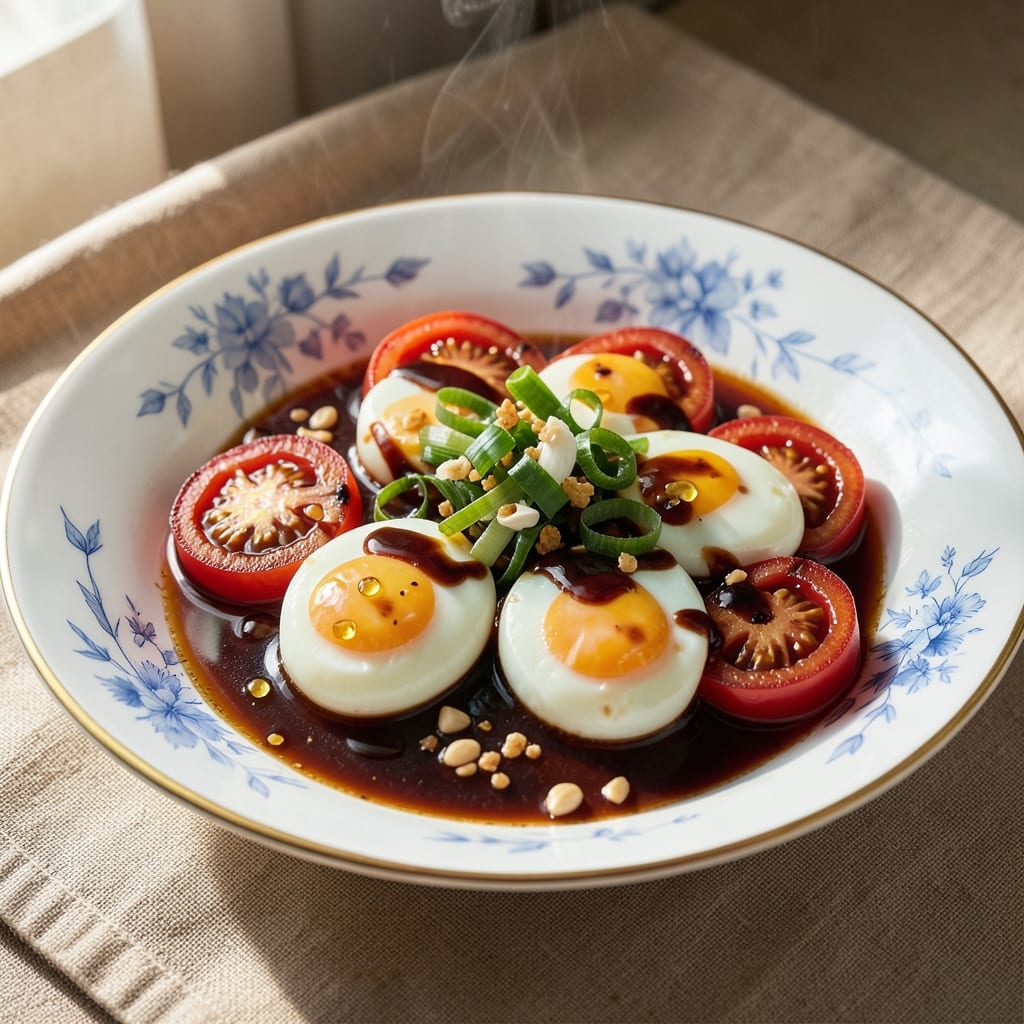
This Cantonese tomato egg recipe transforms simple ingredients into a dish that captures the essence of home-style Cantonese cooking. The secret lies in balancing sweet, savory, and slightly tangy flavors while achieving that signature silky yolk and tender tomato filling. I've perfected this technique through years of practice, ensuring the dish delivers restaurant-quality results at home.
The recipe starts with a quick stir-fry of tomatoes and aromatics, creating a vibrant base that's sweetened just enough to complement the rich, creamy egg mixture. The key is high heat and quick cooking—what we call "wok hei"—which gives the dish its distinctive smoky aroma and slightly charred edges. This method preserves the natural flavors while adding depth that's hard to replicate with slow cooking.
What you'll end up with is a dish that's both comforting and elegant: tender tomatoes with glossy, perfectly set eggs in their centers, all coated in a light, savory sauce. The texture contrast between the creamy yolk and slightly crisp edges makes every bite satisfying. It's the kind of dish that pairs beautifully with steamed rice or noodles, making it perfect for breakfast or a light lunch.
While this recipe stays true to traditional Cantonese techniques, it's designed to be approachable for home cooks. With just a few pantry staples and basic cooking skills, you can recreate this classic dish in your own kitchen. The process is straightforward, but the results are anything but ordinary—this is home cooking at its finest.
Ingredients for cantonese tomato egg
Simple ingredients that deliver restaurant-quality Cantonese flavors with minimal effort.
| Ingredient | Amount | Notes |
|---|---|---|
| Large Eggs 🥚 | 8 whole | Fresh, room temperature preferred |
| Medium Tomatoes 🍅 | 4 whole | Ripe, firm, vine-ripened preferred |
| Green Onions 🧅 | 4 whole | White and green parts separated |
| Garlic Cloves 🧄 | 3 cloves | Minced for aromatic base |
| Soy Sauce 🍶 | 2 tbsp | Light or all-purpose variety |
| Oyster Sauce 🍶 | 1 tbsp | For umami depth |
| Sesame Oil 🫒 | 1 tbsp | Toasted, for aromatic finish |
| White Sugar 🍚 | 1 tbsp | Balances acidity |
| Cornstarch 🌾 | 1 tsp | For thickening sauce |
| Vegetable Oil 🫒 | ½ cup | High smoke point preferred |
| Dried Shiitake Mushrooms 🍄 | 2 whole | Rehydrated, sliced thin |
| Fresh Cilantro 🌿 | ¼ cup | Chopped, for garnish |
| Salt 🧂 | ½ tsp | Kosher or sea salt |
| Black Pepper 🌶️ | ¼ tsp | Freshly ground |
The tomatoes are the foundation—vine-ripened ones have the best balance of sweetness and acidity. Whole Foods or local farmers markets often carry the best quality, but any firm, ripe tomato will work. For the eggs, room temperature is key—they'll cook more evenly and create that signature silky yolk. The dried shiitake mushrooms add depth without overpowering; Asian grocery stores usually carry them in bulk. If you can't find them, fresh shiitake mushrooms work too, but they'll release more moisture during cooking. The green onions should be fresh, not wilted—Trader Joe's often has great bundles for this purpose.
No soy sauce? Coconut aminos work in a pinch, though the flavor will be slightly different. Short on oyster sauce? Mushroom sauce or even a splash of fish sauce (if not vegetarian) can add umami. The sesame oil is non-negotiable for that authentic aroma—toasted variety is best, but regular will do if you toast it yourself in a dry pan for 30 seconds. For the sugar, brown sugar can add subtle caramel notes, but white keeps it classic. The cornstarch is crucial for that glossy sauce—arrowroot powder works too at the same ratio. If you're using pre-minced garlic, toast it first to deepen the flavor.
Store prepped tomatoes and aromatics in airtight containers for up to 3 days in the fridge. The egg mixture should be made fresh—it doesn't store well. Leftover cooked dish keeps for 2 days in the fridge, though it's best enjoyed immediately. For freezing, portion the sauce separately and freeze flat—it reheats beautifully. The dish reheats best in a steamer basket over simmering water to maintain that wok-hei texture. Garnish with fresh cilantro just before serving—it wilts quickly under heat.
Why You'll Love This Recipe
- Five-Ingredient Magic: I swear by this recipe when I’m staring at a fridge full of random stuff. Tomatoes, eggs, a splash of soy sauce—no fancy shopping needed. The green onions add that bright pop, and the garlic? Oh, it’s the secret weapon that makes this taste like a restaurant dish.
- Crispy-Creamy Perfection: That first bite of the egg—still runny inside, edges just crispy—paired with the slightly charred tomatoes? It’s the kind of balance that makes me pause mid-bite. The soy sauce ties it all together, salty-sweet with a depth that’s hard to resist.
- Lunchbox Hero: Between us, this is my go-to for packed lunches. Cold or at room temp, it still holds up—just add a piece of buttered toast, and you’ve got a meal that feels special. My kids actually eat their veggies when they’re hidden in here (shhh, don’t tell them).
- Leftovers That Don’t Suck: Most egg dishes get rubbery the next day, but not this one. Reheat gently, and it’s still tender with a little extra richness. I make a big batch on Sundays, and by Wednesday, I’m still grateful for the simple, satisfying bites. Budget-friendly? Absolutely. Reliable? Even more so.
Step-by-step instructions for Cantonese tomato egg dish
Master this classic Cantonese dish with tender eggs and vibrant tomato filling.
Prepare the Tomato Filling Base
Heat the 0.5 cup vegetable oil in a wok over medium heat until shimmering. Add the 3 cloves minced garlic cloves and stir for 30 seconds until fragrant—this prevents burning while building flavor. Add the 4 whole medium tomatoes, cut into ½-inch dice, and cook for 5-6 minutes until they begin to soften and release their juices.
Add the 2 tbsp soy sauce, 1 tbsp oyster sauce, 1 tbsp white sugar, 0.5 tsp salt, and 0.25 tsp black pepper. Stir well and cook for another 3-4 minutes until the tomatoes break down slightly but still retain some texture. The filling should be thick enough to coat the back of a spoon but not dry.
Thicken and Enhance the Filling
In a small bowl, whisk together 1 tbsp sesame oil and 1 tsp cornstarch. Slowly pour this mixture into the wok while stirring continuously. Cook for 1-2 minutes until the filling thickens noticeably and becomes glossy. Remove from heat and stir in the 2 whole dried shiitake mushrooms, which should have been pre-soaked in warm water for 20 minutes and then sliced thin.
Here's the thing—this thickening step is critical. The cornstarch-sesame oil combo not only thickens the sauce but also adds that signature aromatic finish. If the filling looks too thick, add 1-2 tablespoons of water to loosen it slightly. Keep the wok off the heat while you prepare the eggs.
Poach the Eggs to Silky Perfection
Bring a separate pot of water to a gentle simmer—you want small bubbles breaking the surface, not a rolling boil. Crack each of the 8 whole large eggs into a small bowl, one at a time. Using a slotted spoon, gently lower each egg into the simmering water. Poach for 3-4 minutes until the whites are set but the yolks remain runny and vibrant.
Don't overcook the eggs—they should be just firm enough to hold their shape when lifted. I like to use a spoon to gently swirl the water around each egg as it cooks, which helps create that smooth, rounded shape. Once poached, transfer the eggs to a plate lined with paper towels to drain briefly.
Assemble the Dish
Return the tomato filling to low heat and stir in the white parts of 2 whole green onions, sliced into ¼-inch pieces. Keep the green parts for garnish. Divide the filling evenly among 4 serving plates, creating a bed for the eggs. Place 2 poached eggs on top of each serving of filling.
Drizzle each plate with a small amount of the reserved poaching water (about 1 teaspoon per plate) to keep the eggs moist. Garnish with the green parts of the 2 whole green onions, sliced thin, and the 0.25 cup chopped fresh cilantro. The contrast of bright herbs against the rich tomato filling makes this dish visually stunning.
Serve Immediately
This dish is best served right away while the eggs are warm and the filling is still vibrant. The silky yolks should glisten slightly, and each bite should deliver a perfect balance of creamy egg, tangy tomato, and savory umami from the sauces. Serve with steamed jasmine rice to soak up every last bit of that delicious filling.
Real talk: The timing here matters. If you let the eggs sit too long, they'll overcook and lose their silky texture. The filling can be made ahead and reheated gently, but the eggs should always be poached fresh. This is where the magic happens—simple ingredients coming together in perfect harmony.
Pro Tips For Making Cantonese Tomato Egg
- Crack Eggs Into Cold Oil: That sizzle isn’t just for show—cracking eggs directly into cold oil (or barely warm oil) keeps the whites intact and prevents them from scattering like confetti. I used to rush this and end up with a greasy mess; now I wait until the oil is just shimmering before adding the eggs.
- Slice Tomatoes Thinly: Skip the chopping knife—use a sharp serrated blade or mandoline for paper-thin slices. Thick chunks turn mushy when they hit the pan, but thin slices caramelize fast and soak up the soy sauce like a sponge. (Yes, even if it looks like you’re making sashimi.)
- Low Heat for Garlic: Garlic burns faster than you can blink in this dish, and bitter garlic ruins everything. Cook it on the lowest heat setting until just fragrant—about 30 seconds—then remove it from the pan. The residual heat will finish the job without turning it into charcoal.
- Soy Sauce Last: Add that final splash of soy sauce after the eggs are mostly set but still slightly runny. Stirring it in too early makes the tomatoes release too much water, turning your pan into a sad, watery soup. (Trust me, I’ve been there.)
Make-ahead tips for leftovers
Tomato Filling Prep
Make the tomato filling one day ahead to let flavors meld beautifully. After cooking the tomatoes with aromatics, let it cool completely, then store in an airtight container in the fridge. The acidity in tomatoes softens overnight, creating a deeper, more complex flavor profile. When reheating, warm gently over low heat with 1 tablespoon water to restore moisture. 🌱
Egg Prep Timing
Poach eggs just before serving—they don't reheat well. However, you can prep the poaching water in advance: Bring a pot of water to a simmer, cover, and keep it warm on the stove. When ready to cook, add a splash of white vinegar (1 tsp) to help whites set faster. This saves 5 minutes of active cooking time during assembly. ⏱️
Component Assembly
Divide the tomato filling into 4 portions in small ramekins or containers. Store in the fridge for up to 2 days. When ready to serve, reheat filling in the microwave for 45 seconds, then assemble with freshly poached eggs. The key is keeping components separate—this maintains texture and prevents soggy eggs. 🍳
Freezer Strategy
For long-term storage, freeze the tomato filling without eggs in a flat freezer bag. Thaw overnight in the fridge, then reheat gently. The filling keeps for 3 months this way. To reheat, microwave for 1 minute, then finish on the stovetop with 1 tsp water to restore gloss. Never freeze poached eggs—they become rubbery. ❄️
Reheating Perfection
If reheating the full dish, use a steamer basket over simmering water for 3-4 minutes. This preserves the wok-hei aroma and keeps eggs creamy. For microwave reheating, cover with a damp paper towel and heat in 20-second bursts, stirring between each. The filling should be hot but not boiling—just enough to warm through. 🔥
Garnish Refresh
Store fresh cilantro and green onions separately in airtight containers with a paper towel to absorb moisture. Refrigerate for up to 5 days. Add garnishes just before serving—they wilt quickly when exposed to heat. For extra flavor, toast 1 tsp sesame seeds in a dry pan for 30 seconds and sprinkle on top. 🌿
Nutrition facts
Frequently asked questions
Can I substitute fresh tomatoes with canned tomatoes for this recipe?
Fresh tomatoes work best for that authentic texture and flavor, but you can use canned tomatoes in a pinch. Drain them well and pat dry completely to remove excess moisture. Add ½ teaspoon sugar extra to balance the acidity, and cook for 2-3 minutes longer to develop the flavors. The dish will still be delicious, though slightly softer.
How do I achieve that perfect silky yolk texture?
Silky yolks come from precise poaching! Use a gentle simmer (small bubbles), not a rolling boil, and cook eggs for exactly 3-4 minutes. The water should be well-seasoned with 1 teaspoon salt and 1 teaspoon white vinegar per quart. Swirl the water occasionally to create even cooking. Transfer eggs to an ice bath for 30 seconds after poaching to stop cooking instantly.
What's the best way to reheat leftovers without ruining the eggs?
Reheat only the tomato filling separately using a steamer basket over simmering water for 3-4 minutes. Keep eggs refrigerated and poach fresh ones when ready to serve. If you must reheat the whole dish, use the microwave on low power for 15 seconds, then finish with 10 seconds more to avoid overcooking. Cover with a damp paper towel to retain moisture.
Can I make this vegetarian?
Replace the oyster sauce with 1 tablespoon vegetarian oyster sauce or 1 tablespoon soy sauce + ½ teaspoon mushroom powder for umami. For extra depth, add 1 teaspoon miso paste when cooking the tomatoes. The dish will still be rich and flavorful without animal products.
Why does my tomato filling look too watery?
Watery filling usually means the tomatoes weren't cooked long enough or the cornstarch wasn't mixed properly. Cook the tomatoes for 1-2 minutes longer until they break down more, then stir in the cornstarch-sesame oil mixture thoroughly. For extra thickness, simmer for 30 seconds more after adding the cornstarch. If it's still too thin, mix ½ teaspoon cornstarch with 1 teaspoon water and stir in.