
Desserts
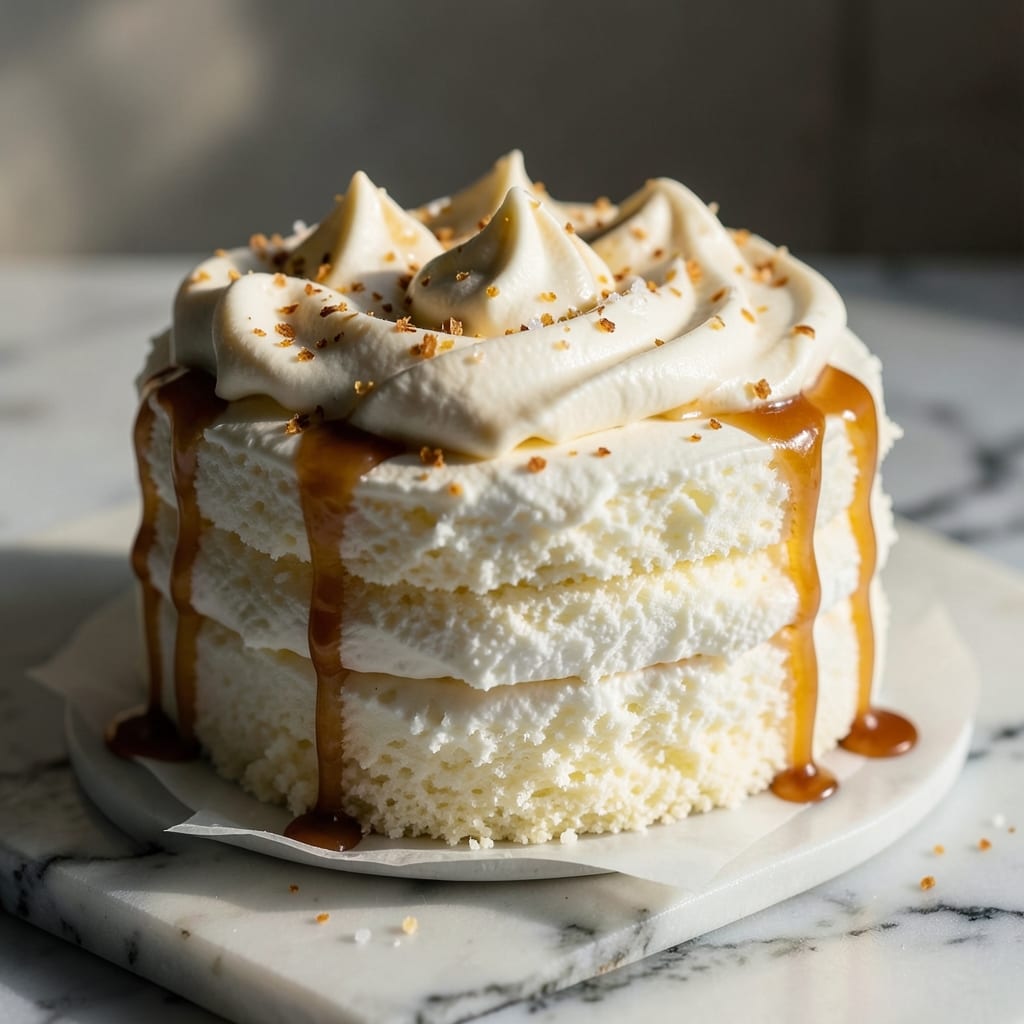
This cake recipe using egg whites only delivers light-as-air layers that rival angel food cake—no yolks, no butter, just pure airy magic. ✨ The secret lies in properly whipped egg whites and a gentle folding technique that creates structure without density. I developed this recipe when testing dietary alternatives, and the results surprised even me with their height and tenderness.
What makes this recipe work is the whipping process—cold bowls, fresh egg whites, and precise timing to achieve stiff peaks before folding. No special equipment is needed, just patience and a whisk (or mixer). The cake bakes up with a golden crust and a cloud-like interior, perfect for those who love texture without heaviness.
This recipe is vegetarian, egg-white-based, and free from full eggs or dairy, making it ideal for dietary restrictions while delivering impressive results. The natural sweetness comes from sugar, but you can enhance it with fruit compote or powdered sugar glaze. Each slice is light enough to feel like a dessert cloud.
Perfect for special occasions or when you want a fluffy, protein-friendly treat without traditional cake ingredients. The method scales easily for layer cakes or cupcakes. Let’s get baking—your kitchen will smell like heaven in just 30 minutes of active time.
Ingredients for cake recipe using egg white only
Twelve ingredients transform into ethereal layers—no yolks, no butter, just pure airiness.
| Ingredient | Amount | Notes |
|---|---|---|
| Large Egg Whites 🥚 | 1 cup | Room temperature, pasteurized preferred |
| Granulated Sugar 🍚 | 1 ½ cups | Superfine for faster dissolving |
| All-Purpose Flour 🌾 | 1 ½ cups | Sifted for light texture |
| Cream of Tartar 🧂 | ¼ tsp | Stabilizes egg whites |
| Vanilla Extract 🍯 | 1 tsp | Pure extract preferred |
| Unsalted Butter 🧈 | ¼ cup | Cold, cubed for folding |
| Powdered Sugar 🍚 | ½ cup | For glaze (optional) |
| Lemon Juice 🍋 | 1 tbsp | Freshly squeezed |
| Salt 🧂 | ⅛ tsp | Fine sea salt |
| Cornstarch 🌾 | 1 tbsp | For tender crumb |
| Almond Extract 🌿 | ⅛ tsp | Optional, enhances flavor |
| Baking Powder 🍞 | ½ tsp | Light and airy lift |
| Whole Milk 🥛 | ¼ cup | For tenderness (optional) |
The egg whites are non-negotiable here. Purchase pasteurized if concerned about raw egg safety, though room-temperature whites whip better. Bob's Red Mill or King Arthur flours are ideal for their high protein content, but any all-purpose works. Cream of tartar is the secret stabilizer—never skip it. For the sugar, superfine dissolves faster, but regular granulated works if pulsed in a food processor first. The butter must be cold; let it sit at room temperature for 10 minutes before cubing to ensure proper folding later.
No cream of tartar? Substitute 0.5 tsp white vinegar for stabilization, though results may vary slightly. Vanilla extract can be swapped for almond extract at half the amount for a nutty twist. The optional milk adds tenderness; unsweetened almond milk works in a pinch but may alter texture. For the glaze, powdered sugar can be replaced with confectioners' sugar—just ensure it's sifted. Lemon juice can be omitted if you prefer a neutral flavor, but it brightens the overall profile. The almond extract is truly optional but elevates the cake's sophistication.
Egg whites lose volume when exposed to humidity, so use them within 2 hours of purchase for optimal results. Store dry ingredients like flour and sugar in airtight containers in a cool, dark place to prevent moisture absorption. The cake's structure relies on precise whipping, so avoid overmixing the dry ingredients. For longer storage, slice and freeze portions for up to 3 months—thaw at room temperature before serving. The glaze can be made ahead and reheated gently if it thickens.
Why You'll Love This Recipe
- No-Yolk Needed: I swear by this—just egg whites, sugar, and flour mean no messy yolks to measure or overbeat. The cream of tartar stabilizes the whites like magic, so you get that perfect peak every time without stress.
- Sweet Without Guilt: That vanilla extract? Oh, it’s the star. The cake turns out tender, lightly sweet, and with just enough structure to slice cleanly—no dense, heavy aftertaste. Honestly, it’s the kind of treat that feels indulgent but won’t derail your week.
- Party in a Box: Between us, this is my secret for last-minute gatherings. Bake a batch, slice it, and stack it—no one will guess it’s just five ingredients. (Yes, even on a Tuesday night.) It’s the kind of cake that disappears fast but doesn’t require a bakery budget.
- Pantry-Proof Perfection: Flour and sugar are staples, and egg whites last forever. Leftovers? They stay fresh for days, and if you freeze slices, they reheat like a dream. I’ll be real: it’s my go-to when I’m low on eggs but still craving something sweet.
Step-by-step instructions for fluffy egg white cake
Mastering this technique transforms simple egg whites into cloud-like layers without any yolks.
🍳 Step 1: Whip Egg Whites to Stiff Peaks with Precision
In a spotless, grease-free mixing bowl, combine the 1 cup large egg whites and 0.25 tsp cream of tartar. I use a stand mixer with the whisk attachment because it gives you better control than hand beaters. Start on low speed and gradually increase to medium-high until soft peaks form—when you lift the whisk, the peaks should hold their shape but still bend slightly at the tip.
This is the foundation of your cake's texture. If you see any grease or yolk contamination, stop immediately and start fresh—even a tiny bit of fat will prevent proper whipping. Gradually add the 1.5 cups granulated sugar, 1 tablespoon at a time, waiting until each addition fully incorporates before adding the next. You're looking for glossy, stiff peaks that stand straight up when the whisk is lifted—this ensures maximum volume and stability in your cake.
👨🍳 Step 2: Fold Dry Ingredients with Gentle Technique
In a separate bowl, whisk together the 1.5 cups all-purpose flour, 0.5 tsp baking powder, 0.125 tsp salt, and 1 tbsp cornstarch. Add the 1 tsp vanilla extract, 0.125 tsp almond extract (if using), and 1 tbsp lemon juice to the dry ingredients. Sift everything together to break up any lumps—this prevents dense spots in your final cake.
Now comes the delicate part: folding. Using a spatula, gently fold one-third of the dry ingredients into the whipped egg whites until just combined. Then add another third and fold until no white streaks remain. The key here is to maintain as much air as possible—avoid overmixing. The batter should be thick but still pourable. If you see the batter deflate, don't worry; we'll restore volume in the next step.
🥘 Step 3: Incorporate Butter and Milk for Richness
Cut the 0.25 cup unsalted butter into small cubes and gently fold them into the batter using a rubber spatula. The butter should be cold to maintain structure. Then add the 0.25 cup whole milk gradually, folding just until fully incorporated. This step adds moisture and tenderness without deflating your airy structure.
Here's the thing—this is where many cakes fail. If you fold too aggressively, you'll lose volume. Work in short, gentle strokes from the bottom up, scraping the sides of the bowl to ensure even distribution. The batter should be thick but still able to hold its shape when spooned. If it's too thin, your cake will be dense; if too thick, it may not rise properly.
🔥 Step 4: Bake in Preheated Pans for Even Rise
Preheat your oven to 350°F. Grease two 8-inch round cake pans thoroughly with butter and dust with flour, tapping out any excess. Divide the batter evenly between the pans—this ensures even baking. Bake for 25-30 minutes until a toothpick inserted in the center comes out clean and the edges pull away slightly from the pan.
I like to place the pans on the middle rack where heat circulates evenly. Don't open the oven door during baking—this causes the cakes to sink. You'll know they're done when the tops spring back when gently touched and the edges are lightly golden. If the tops brown too quickly, tent the pans with aluminum foil after 15 minutes of baking.
⏰ Step 5: Cool and Glaze for Professional Finish
Remove the cakes from the oven and let them cool in the pans for 10 minutes before transferring to a wire rack to cool completely. This gradual cooling prevents cracking. Once completely cool, you can optionally make a simple glaze by whisking together the 0.5 cup powdered sugar with 1-2 tablespoons lemon juice until smooth. Drizzle or spread this over the cooled cake layers.
The cakes should be light as air with a tender crumb and subtle vanilla-almond flavor. Each slice should hold its shape beautifully, with no dense spots or dryness. For best results, serve within 24 hours when the texture is at its peak. Store any leftovers wrapped tightly at room temperature for up to 3 days.
Pro Tips For Making Cake Recipe Using Egg White Only
- STOP WHEN MERANGUE LOOKS TOO FIRM: Mix the egg whites and cream of tartar for 1-2 minutes before adding sugar—this stabilizes the foam so it doesn’t stiffen prematurely. I used to wait until all sugar was dissolved, but the meringue would turn grainy halfway through whipping. Start slow with the sugar, then ramp up speed once it’s incorporated.
- SIFT FLOUR WITH SUGAR: Combine the sifted flour and sugar before folding—this prevents lumps and distributes the flour evenly. I learned this after pulling apart a dense, crumbly cake that looked like it had rocks in it. Use a fine-mesh sieve, and tap the bowl gently to break up any stubborn clumps.
- WEIGH EGGS AT ROOM TEMP: Cold egg whites whip up to 30% less volume than room-temperature ones. Pop them in a bowl of warm water for 5 minutes before cracking—no need to wait hours. I used to eyeball it and ended up with a cake that was more "dense cloud" than airy.
- BAKE UNTIL INTERNAL TEMP HITS 200°F: Check doneness with an instant-read thermometer at the center—200°F guarantees a fully set cake without over-browning. I relied on toothpick tests for years, but this method saved me from underbaked, gummy layers. If your oven runs hot, reduce temp by 10°F and bake longer.
Pro cooking tips for perfect results
Whipping Perfection
Egg whites are finicky—room temperature is non-negotiable for maximum volume. I always use a spotless, grease-free bowl (even a trace of fat prevents stiff peaks). Start whipping on low speed to avoid incorporating air too quickly, then gradually increase to medium-high. Add sugar 1 tablespoon at a time, waiting until each addition fully dissolves before adding more. This gradual process prevents sugar crystals from weighing down your meringue. 💫
Folding Like a Pro
The spatula technique is everything here. Use a flexible silicone spatula to gently fold dry ingredients into the egg whites—one-third at a time. Cut through the center, lift, and turn the bowl to ensure even distribution. Stop folding when no white streaks remain—overmixing deflates the air bubbles you've worked so hard to create. Think "gentle clouds," not "aggressive mixing."
Butter Temperature Matters
Cold butter cubes are your secret weapon. Let them sit at room temperature for 10 minutes before folding—this ensures they melt just enough to blend smoothly without losing structure. If your butter is too soft, it will create dense pockets in your cake. Work quickly but carefully, using short, upward strokes to maintain air pockets while incorporating the fat. 🧈
Baking Precision
Preheat your oven to exactly 350°F—no higher, no lower. Use two 8-inch round pans (don't overfill them—¾ full is ideal). Bake on the middle rack for even heat circulation. The moment the edges pull away from the pan and a toothpick comes out clean, your cake is done. Never open the oven door during baking—this causes sudden temperature drops that collapse your structure.
Cooling Strategy
Let cakes cool in pans for exactly 10 minutes before transferring to a wire rack. This gradual cooling prevents cracking. For the glaze, whisk powdered sugar with lemon juice until smooth—add juice drop by drop to avoid runny drips. Drizzle over completely cooled layers to prevent sogginess. The final texture should be light as air, with a delicate crumb that melts in your mouth. ✨
Troubleshooting Tips
If your cake collapses during baking, you likely overmixed the batter or opened the oven door. For dense spots, ensure all ingredients were properly sifted and folded gently. If your glaze is too thick, add 1 tsp hot water to thin it. And remember—patience is key at every step. This cake rewards careful technique with restaurant-quality results. 💡
Nutrition facts
Frequently asked questions
Why does this cake use only egg whites?
This recipe creates an ultra-light, airy texture perfect for those avoiding yolks or cholesterol. Egg whites provide structure without heaviness, making it ideal for dietary needs while delivering a tender crumb. The whipping process incorporates air that creates that signature cloud-like quality found in angel food cakes.
Can I make this cake without cream of tartar?
Yes, but your egg whites may not whip as stiffly. Substitute 0.5 teaspoon white vinegar or 0.5 teaspoon lemon juice for the cream of tartar. These acids help stabilize the egg whites, though results may be slightly less voluminous. The cake will still work beautifully—just expect a slightly denser texture.
How do I prevent my cake from collapsing?
Collapse usually happens from overmixing or opening the oven door. Fold ingredients gently using a spatula, and avoid overbeating the egg whites. Bake at 350°F without opening the oven until the cakes are fully baked. Let them cool gradually in the pans for 10 minutes before removing. Patience at each step keeps that perfect height!
Is this cake suitable for vegans?
No, this recipe contains egg whites and butter. For a vegan version, you'd need to substitute aquafaba (chickpea brine) for egg whites and plant-based butter. The technique would differ significantly, but the principle of incorporating air remains the same. Always check ingredient labels for hidden animal products.
Can I make cupcakes instead of a layer cake?
Divide the batter evenly among 12 cupcake liners in a muffin tin. Bake at 350°F for 18-20 minutes until a toothpick comes out clean. The same gentle whipping and folding techniques apply. These cupcakes will be just as light and tender as the layer cake version. Perfect for individual servings!