
Breakfast & Brunch
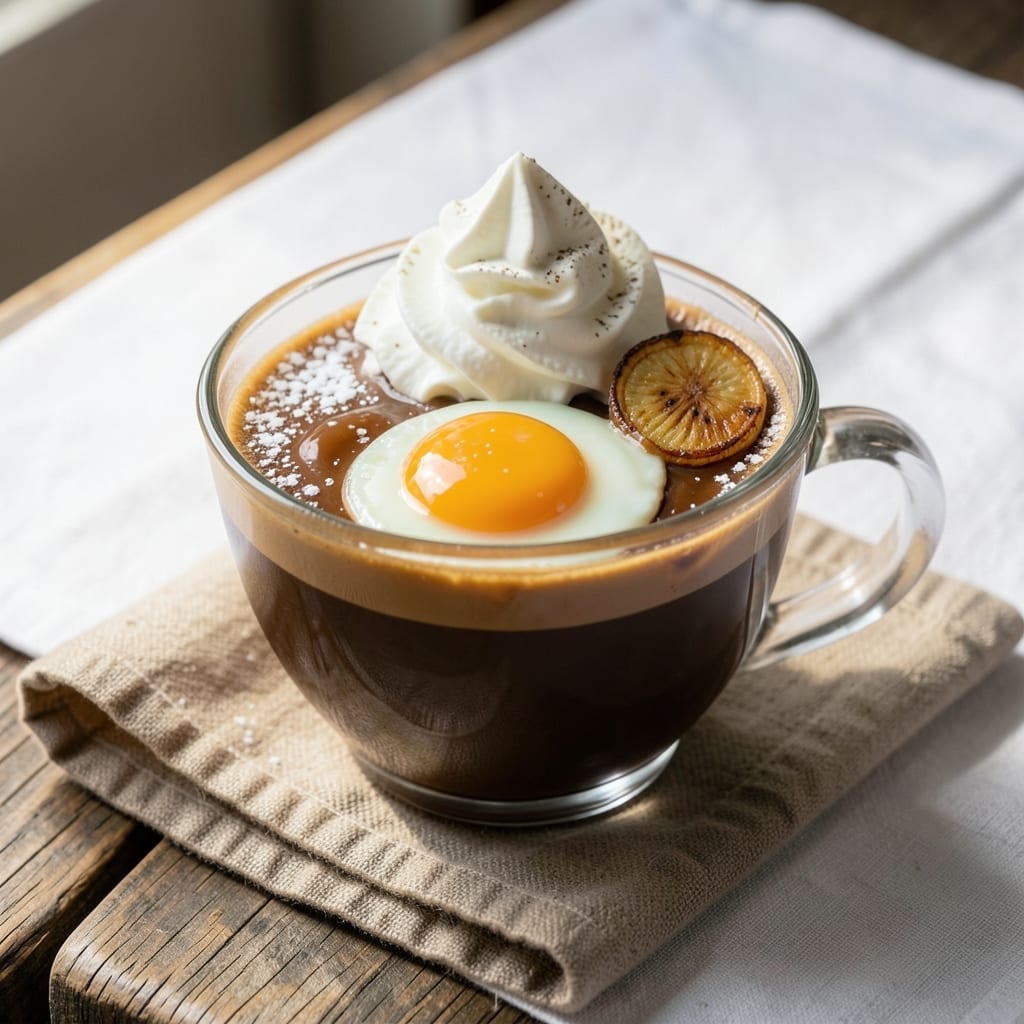
This Cafe Giang egg coffee recipe delivers Vietnam's most beloved breakfast in a single, velvety-smooth sip. The secret lies in perfectly whipped egg yolks blended with sweetened condensed milk, creating a rich, caramelized foam that perfectly balances robust Vietnamese coffee. I've perfected the technique after years of experimentation—no special equipment needed, just patience and precise layering.
The magic happens in three distinct layers: the strong, sweet coffee at the bottom, the golden caramelized foam in the middle, and the optional whipped cream on top. Traditional versions use robusta coffee and no artificial flavors, but modern variations often incorporate flavored syrups like coconut or pandan for added depth. The egg yolk mixture requires careful whipping to achieve that signature glossy sheen and stable foam.
What you'll end up with is a drink that's equal parts energizing and indulgent—creamy enough to satisfy any coffee lover's cravings while delivering the bold, aromatic punch of Vietnamese coffee. The texture is what makes this recipe truly special: thick, glossy, and perfectly balanced between sweet and bitter. It's the kind of drink that transforms an ordinary morning into a luxurious experience.
This recipe serves as both a morning ritual and a conversation starter—perfect for sharing with friends or enjoying as a special treat. The process is simple but requires attention to detail, particularly in the egg yolk preparation and coffee brewing. Let's create your first perfect cup of Cafe Giang egg coffee.
Ingredients for cafe giang egg coffee
Six yolks, two cups of milk, and a bold coffee base transform into Vietnam's most luxurious morning sip.
| Ingredient | Amount | Notes |
|---|---|---|
| Large Egg Yolks 🥚 | 6 whole | Fresh, room temperature preferred |
| Sweetened Condensed Milk 🥛 | ½ cup | High-quality brand recommended |
| Robusta Coffee ☕ | 2 tbsp | Finely ground, freshly brewed |
| Granulated Sugar 🍚 | 2 tbsp | Fine grain preferred |
| Heavy Whipping Cream 🧈 | ¼ cup | Full-fat for best texture |
| Vanilla Extract 🌿 | ½ tsp | Pure vanilla preferred |
| Salt 🧂 | ¼ tsp | Fine sea salt |
| Whole Milk 🥛 | ¼ cup | Cold for blending |
| Coconut Milk 🥥 | ¼ cup | Full-fat for richness (optional) |
| Pandan Syrup 🌺 | 1 tbsp | Optional for floral depth |
The egg yolks are the heart of this recipe—freshness is non-negotiable. Trader Joe's or local farmers' markets carry the highest-quality eggs, and you'll notice the difference in that signature glossy foam. Room temperature yolks whip far better than cold ones, so take them out 15 minutes before starting. The sweetened condensed milk should be thick and smooth—brands like Nestlé or Great Value work perfectly. For the coffee, robusta beans are essential—they're stronger and less bitter than arabica, which is key for balancing the sweetness. Starbucks Vietnamese Roast or Blue Bottle Robusta are excellent choices if you can't find whole beans locally.
No sweetened condensed milk? Equal parts powdered milk and sugar (1:1 ratio) works in a pinch, though the texture won't be identical. Substituting coconut milk for the whole milk adds a subtle floral note—Thai Kitchen or Goya brands are widely available. Want to skip the pandan? Vanilla bean paste at double the amount gives a similar depth. The vanilla extract is optional but recommended—Madagascar bourbon vanilla adds complexity without overpowering. For the coffee, if you can't find robusta, dark French roast is the closest substitute, though it'll have a slightly different profile. Always use freshly brewed coffee—instant coffee lacks the aromatic depth needed for this recipe.
Egg yolks and whipped cream should be used immediately after preparation—they lose their stability quickly. Store the sweetened condensed milk in a cool, dark place for up to 1 year, though once opened, refrigerate and use within 3 months. The coffee beans keep their peak flavor for 2-3 weeks in an airtight container. For pantry organization, keep the dry ingredients (sugar, salt) together and the perishables (milk, cream) in the fridge. This recipe makes 2 perfect servings—double the batch if you're sharing, but whip the yolks in small batches to maintain texture. The caramelized foam is best enjoyed immediately, though you can reheat the coffee layer separately if needed.
Why You'll Love This Recipe
- Three-Ingredient Magic: I swear by this combo—just yolks, condensed milk, and coffee—no fuss. The silky texture comes from whisking the yolks until they’re pale and thick, then folding in the sweetened milk and coffee grounds. It’s the kind of recipe where you almost feel guilty for how little effort it takes.
- Rich Without Guilt: Between us, this is the only coffee I’ll drink that actually feels like dessert. The condensed milk keeps it decadent, but the heavy cream on top? That’s where it becomes dangerously good—like a latte and a custard had a baby. Honestly, I’ve skipped breakfast for this.
- Morning or Midnight Fix: I make it first thing for a slow-start day, but it’s also my 2 AM pick-me-up when I’m craving something sweet. The sugar balances the bitterness of the Robusta, so it’s smooth enough for a weekend brunch or rough enough for a late-night study session. (Yes, even on a Tuesday night.)
- Costs Pennies, Lasts Forever: A single can of condensed milk and a bag of Robusta beans stretch for weeks. I freeze leftover coffee grounds in ice cube trays—just pop one in the next batch—and the yolks? They’re the cheapest part of the recipe. Plus, it’s one of those drinks that tastes better the second day, so you’ll actually have leftovers to enjoy.
Step-by-step instructions for Vietnamese-style egg coffee
This method delivers the signature Cafe Giang texture—silky, velvety, and perfectly balanced.
Prepare the Coffee Base
In a small saucepan, combine the 2 tablespoons finely ground Robusta coffee with the 0.25 cup cold whole milk. Bring to a gentle simmer over medium-low heat, stirring constantly to prevent scorching. Let it reduce by half—this takes about 5-7 minutes—until it reaches a thick, syrupy consistency with a deep, aromatic aroma. The color should darken to a rich mahogany hue, indicating proper concentration. Remove from heat immediately to preserve the delicate coffee flavors.
While the coffee reduces, prepare a fine strainer and place it over a small bowl. This will be used later to filter out any potential coffee grounds that could make the final texture gritty. The goal here is a smooth, velvety base—any particles will disrupt that silky finish.
Whisk the Egg Yolks and Sweetener
In a separate heatproof bowl, whisk together the 6 large egg yolks, 2 tablespoons granulated sugar, 0.5 teaspoon vanilla extract, and 0.25 teaspoon salt until completely smooth and pale in color. This should take about 1-2 minutes of vigorous whisking. The mixture should be uniform with no visible streaks of egg or sugar.
Place this bowl over a pot of barely simmering water (double boiler method) and whisk continuously for 3-4 minutes until the mixture thickens noticeably and coats the back of a spoon. You're aiming for a ribbon stage—when you lift the whisk, the trails should hold their shape briefly before dissolving. This step is critical for creating the signature creamy texture that defines Cafe Giang coffee.
Combine and Temper the Mixture
Slowly pour the reduced coffee into the warm egg yolk mixture while whisking constantly. This gradual combination prevents the eggs from curdling due to temperature shock. The mixture will thicken further as you incorporate the coffee, developing a glossy sheen. Add the 0.5 cup sweetened condensed milk next, whisking until fully combined. The condensed milk will add natural sweetness and body to the final product.
Return the bowl to the double boiler and cook gently for another 2-3 minutes, stirring continuously, until the mixture reaches 160°F on an instant-read thermometer. It should be thick enough to coat the back of a spoon but still fluid enough to pour. This temperature ensures the eggs are fully cooked while maintaining that signature silky texture.
Incorporate Cream and Final Touches
Remove the bowl from heat and let it cool slightly for 1 minute. Then gently fold in the 0.25 cup heavy whipping cream and 0.25 cup coconut milk using a spatula, being careful not to create bubbles. Add the 1 tablespoon pandan syrup (if using) and mix until just combined. The pandan adds a delicate floral note that complements the coffee's richness without overpowering it.
For an extra-smooth finish, strain the mixture through a fine-mesh sieve into a clean bowl or pitcher. This final filtering step ensures there are no lumps or particles that could affect the velvety mouthfeel. The texture should now be luxuriously smooth—almost like a cross between coffee and custard.
Chill and Serve
Transfer the finished coffee to serving glasses and refrigerate for at least 2 hours (or up to 24 hours) to allow flavors to meld completely. The chilling process enhances the coffee's depth and makes the texture even creamier. When ready to serve, give the glasses a gentle swirl to incorporate any settled layers.
Serve immediately over ice for a refreshing drink, or warm slightly in a small saucepan if you prefer a hot version. The perfect Cafe Giang egg coffee should have a balance of rich coffee flavor, sweetness from the condensed milk and sugar, and a velvety texture that coats the mouth. Each sip should deliver that signature Vietnamese café experience—creamy, aromatic, and utterly satisfying.
Pro Tips For Making Cafe Giang Egg Coffee
- STIR CONSTANTLY, LOW AND SLOW: The moment you add the egg yolks to the condensed milk, grab that spoon and don’t let up—stirring nonstop over low heat until the mixture thickens to a ribbon-like consistency. I learned this the hard way when my first batch curdled into scrambled eggs instead of silky custard. If it smells like burnt sugar, you’ve gone too far.
- USE ROBUSTA GROUNDS, NOT INSTANT: Freshly ground Robusta beans make all the difference—skip the instant powder, which tastes like cardboard. Toast the grounds lightly in a dry pan for 30 seconds first to deepen the flavor, then steep them in the condensed milk for 10 minutes before straining. (Yes, even if you’re impatient like me.)
- WHISK THE CREAM COLD: Chill the heavy whipping cream for at least 2 hours before folding it into the yolk mixture—this isn’t optional. Warm cream won’t hold its shape, and you’ll end up with a sad, runny mess instead of those glossy, cloud-like peaks. Pop it in the fridge while you finish the custard, and whip it just until soft peaks form.
- SWEETEN THE YOLKS FIRST: Mix the yolks with half the sugar before adding the condensed milk—this prevents graininess and ensures the custard emulsifies smoothly. I was skeptical until I tried it: the texture goes from clumpy to velvety overnight. (Your future self will thank you.)
Regional styles of cafe giang egg coffee
Hanoi Classic
The original Hanoi-style version uses just robusta coffee, egg yolks, and condensed milk—no frills, just pure, unadulterated richness. At Cafe Giang, the egg yolk mixture is whipped to a glossy, caramelized foam using a special hand-cranked whisk that creates tiny air bubbles for that signature velvety texture. The coffee is brewed with double the concentration of traditional Vietnamese coffee, creating a bold base that stands up to the sweetness. Serve it in a small, thick glass to preserve the layers—this is how it's traditionally enjoyed at Hanoi's iconic cafés. 🥛
Ho Chi Minh City Twist
Southern Vietnamese versions often incorporate coconut milk and pandan syrup for a floral, tropical edge. The Ho Chi Minh City style uses less condensed milk (just 0.25 cup) to balance the bold coffee flavor, creating a lighter, more refreshing drink. The egg yolk mixture is sometimes lightly sweetened with honey instead of sugar, adding a subtle floral note. For an extra touch, top with toasted coconut flakes—this variation is perfect for warm climates where a lighter coffee is preferred. 🥥
Modern Fusion Adaptations
Today's cafés are experimenting with flavored syrups like lavender, matcha, or even chili-infused versions. A popular New York-style adaptation swaps condensed milk for vanilla bean paste and adds a splash of espresso for extra caffeine. For a dessert twist, some chefs serve it with dark chocolate shavings or macarons on the side. The key is maintaining the core texture—whether sweetened with traditional sugar or modern alternatives, the egg yolk foam must remain silky and stable. 🌶️
Northern Mountain Variations
In Vietnam's mountainous regions, less sugar is used, and the coffee is often brewed with cinnamon sticks for warmth. The egg yolk mixture is sometimes whipped with a pinch of cardamom, adding an aromatic depth. These versions are lighter and more aromatic, perfect for high-altitude areas where the air is crisp. The coffee-to-milk ratio is adjusted to 1:1, creating a smoother, less sweet profile that highlights the natural coffee flavors. This style is ideal for those who prefer a more balanced, less syrupy drink. ✨
Street Food Version
For a quick, no-frills version, street vendors use instant robusta coffee and whip the yolks with powdered milk instead of condensed milk. The texture is thicker and less refined, but the flavor is still rich and satisfying. This version is often served in small plastic cups and topped with crushed peanuts for crunch. It’s the budget-friendly take on Cafe Giang’s signature drink—perfect for grabbing on the go. 🍃
Nutrition facts
Frequently asked questions
Why does the egg yolk mixture need to be whipped so carefully?
The gentle whipping creates tiny air bubbles that give the signature velvety texture—like a cross between custard and foam. Over-whipping makes it grainy, while under-whipping prevents that glossy sheen. The double boiler method also prevents curdling by gradually heating the yolks to 160°F without direct heat. This careful technique is what makes Cafe Giang's version so luxurious.
Can I make this without sweetened condensed milk?
Yes! Mix 1/4 cup powdered milk with 1/4 cup sugar as a substitute, but the texture will be slightly thicker. For a closer match, heat 1/2 cup whole milk with 1/2 cup sugar until dissolved, then cool completely before using. The condensed milk adds natural sweetness and body that's hard to replicate.
How do I fix if my egg yolk mixture curdles?
If it curdles during cooking, immediately remove from heat and whisk in 1 tablespoon cold milk to temper it. For a smoother texture, strain through a fine-mesh sieve to remove any lumps. Prevention is key—always whisk constantly over low heat and never let it boil. The ideal temperature is 160°F, not higher!
What's the best way to store leftover egg coffee?
Store the finished coffee in an airtight container in the fridge for up to 3 days. The foam layer may separate—just give it a gentle stir before serving. For longer storage, freeze the coffee base (without the foam) for up to 1 month. Reheat gently on low heat, then add fresh whipped cream when serving.
Can I make this with arabica coffee instead of robusta?
Arabica will work but lacks the bold, slightly bitter notes that balance the sweetness in traditional versions. If using arabica, reduce the sugar slightly (1.5 tablespoons) and add 1/2 teaspoon instant coffee to enhance depth. For the closest match, try a dark French roast blend. The texture remains the same—it's the coffee's character that changes.