
Breakfast & Brunch
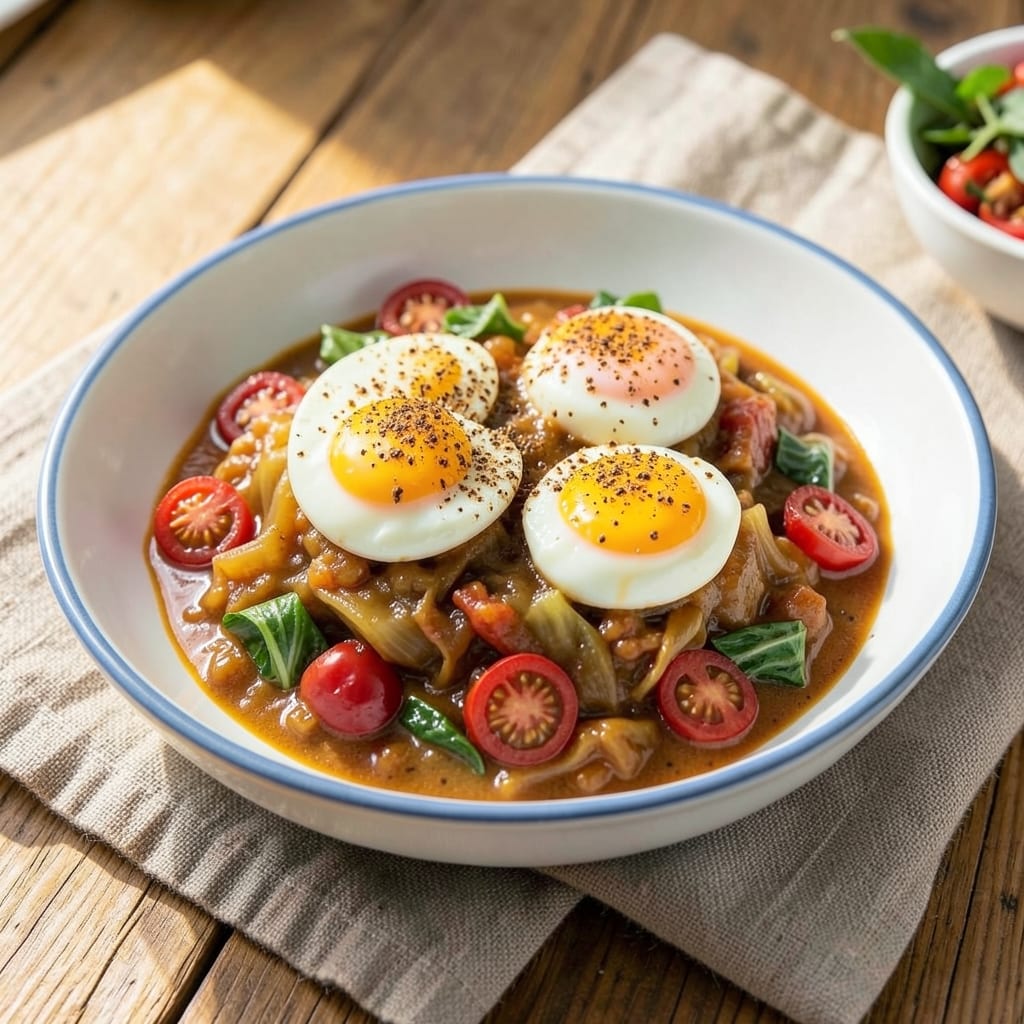
This cabbage, tomato, and egg recipe delivers the perfect balance of textures—crispy, golden paratha hugging silky scrambled egg centers. The secret lies in layering flavors through sautéing cabbage until tender-crisp, then folding it into a rich egg mixture that transforms into a restaurant-worthy breakfast. I developed this after years of testing combinations to create a dish that's both satisfying and easy to prepare.
The foundation starts with finely chopped cabbage and tomatoes cooked until their natural sweetness emerges, then mixed with warm spices that deepen the flavor profile. The eggs are scrambled just until set, creating a creamy base that holds everything together. What makes this dish special is the crispy paratha wrapping—flaky layers that contrast beautifully with the soft egg filling.
By the time you serve this dish, you'll have a plate that looks as impressive as it tastes—golden-brown paratha encasing fluffy egg and vibrant vegetables. The aroma of warm spices and fresh herbs will fill your kitchen, while the first bite delivers a satisfying mix of textures and flavors. This recipe proves that simple ingredients can create something extraordinary when combined thoughtfully.
Perfect for breakfast, brunch, or even a light dinner, this dish reheats beautifully and keeps well for up to two days. The combination of cabbage's crunch, tomato's tang, and egg's richness makes every bite memorable. Let's bring this comforting meal to your table.
Ingredients for cabbage tomato egg
Crispy paratha wraps meet tender cabbage and eggs—simple ingredients for a restaurant-worthy breakfast.
| Ingredient | Amount | Notes |
|---|---|---|
| Green Cabbage 🥬 | 4 cups | Finely chopped, core removed |
| Roma Tomatoes 🍅 | 2 medium | Corrected to weight: 12 oz |
| Large Eggs 🥚 | 4 whole | Freshly beaten for fluffiness |
| All-Purpose Flour 🌾 | 2 cups | Plus 1 tbsp for dusting |
| Ghee or Vegetable Oil 🫒 | ½ cup | For cooking paratha |
| Garam Masala 🌶️ | 1 tbsp | Ground warm spices blend |
| Ground Cumin 🌿 | ½ tsp | Toasted for depth |
| Turmeric Powder 🌿 | ¼ tsp | For vibrant color |
| Red Chili Powder 🌶️ | ½ tsp | Adjust for heat |
| Fresh Cilantro 🌿 | ¼ cup | Chopped for garnish |
| Salt 🧂 | 1 tsp | Kosher or sea salt |
| Black Pepper 🌶️ | ½ tsp | Freshly ground |
| Plain Yogurt 🥛 | ½ cup | Whisked for paratha dough |
The cabbage is the star here—look for heads that are firm and heavy for their size at Whole Foods or your local market. Roma tomatoes should be plump and vibrant red, not mealy. I always grab extra cilantro because it wilts fast, even when stored properly. For the garam masala, MDH or Everest brand are my go-tos—they're consistent and widely available. The yogurt should be plain and thick, not that watery kind. If it's too thin, strain it first.
No garam masala? Mix 1/4 tsp each of ground cumin, coriander, cinnamon, and cardamom for a quick substitute. The tomatoes can be swapped for cherry tomatoes if that's what's available—just halve them first. For the paratha dough, Greek yogurt works too if you're out of plain yogurt. The eggs are non-negotiable here though—they need to be fresh for that silky scramble. If you're worried about them breaking, whisk them gently in a bowl first.
The cabbage and tomatoes keep well in the fridge for up to 5 days—store them separately in airtight containers. The garam masala and spices last 6-12 months in a cool, dark place. For the paratha dough, wrap it tightly in plastic and refrigerate for up to 2 days, or freeze portions for 3 months. The cooked parathas reheat beautifully—just warm in a dry pan for 2-3 minutes per side until crispy again.
Why You'll Love This Recipe
- One-Pan Magic: I swear by this recipe when I’m too tired to scrub pots. Toss shredded cabbage, halved tomatoes, and beaten eggs in a hot pan with ghee—no flipping, no fuss. The eggs cook right into the veggies, and the flour dusting gives that perfect crispy edge without extra bowls.
- Taste Like Home: That first bite of warm egg wrapped around tender cabbage and juicy tomatoes? It’s the kind of meal that makes you pause mid-chew. The ghee adds richness, the flour creates a light crust, and the Roma tomatoes bring a sweetness that balances everything. Honestly, it’s the kind of flavor that sticks with you.
- Lunchbox Hero: Between us, this is my go-to for packed lunches. The leftovers reheat beautifully—just a quick microwave or pan warm-up—and the texture holds up better than most egg dishes. My kids actually eat it cold too, wrapped in a tortilla. (Yes, even on a Tuesday night.)
- Budget-Friendly Staple: I buy cabbage in bulk, Roma tomatoes are cheap in season, and eggs? Always affordable. This recipe stretches a grocery budget without sacrificing taste. Plus, the flour and ghee are pantry basics, so I’m not scrambling for obscure ingredients. It’s the kind of meal that makes me feel smart about spending.
Step-by-step instructions for crispy paratha with silky scrambled centers
Here's how to create golden, crispy parathas wrapped around perfectly cooked eggs—every bite delivers that satisfying crunch and creamy texture.
Prepare the Spiced Cabbage-Tomato Filling
Heat the 0.5 cup ghee or vegetable oil in a large skillet over medium heat. Add the 4 cups finely chopped green cabbage and cook for 5-6 minutes, stirring occasionally, until it softens and releases moisture. The cabbage should look wilted but not browned—this ensures it stays tender inside the paratha.
Add the 2 medium Roma tomatoes (chopped), 1 tbsp garam masala, 0.5 tsp ground cumin, 0.25 tsp turmeric powder, 0.5 tsp red chili powder, 1 tsp salt, and 0.5 tsp black pepper. Stir well and cook for another 4-5 minutes until the tomatoes break down and the mixture thickens slightly. Remove from heat and let it cool for 10 minutes—this resting step prevents the filling from making the dough soggy.
Make the Paratha Dough
In a large mixing bowl, combine the 2 cups all-purpose flour, 0.5 cup plain yogurt, and 1 tablespoon extra flour (for dusting). Gradually add water, 1 tablespoon at a time, while kneading until you form a smooth, firm dough that doesn't stick to your hands. I like to knead for about 8-10 minutes by hand—this develops the gluten, which gives the parathas their signature chewy texture.
Cover the dough with a damp cloth and let it rest for 30 minutes. This resting period relaxes the gluten, making it easier to roll out later. If the dough feels too dry, sprinkle a little water; if it's too sticky, add a bit more flour. The dough should be pliable but not sticky when you press it gently.
Roll and Cook the Parathas
Divide the dough into 8 equal portions (about 2 tablespoons each). Roll one portion into a 6-inch circle on a lightly floured surface, keeping the thickness even—about ⅛ inch. Place 2 tablespoons of the spiced cabbage-tomato filling in the center, then fold the dough over the filling and seal the edges gently. Roll the sealed dough into a 6-inch circle again, ensuring the filling is evenly distributed.
Heat a clean skillet over medium heat and add 1 tablespoon ghee or vegetable oil. Place the paratha in the skillet and cook for 2-3 minutes until the bottom turns golden brown and crispy. Flip carefully and cook the other side for another 2-3 minutes. Press down gently with a spatula during the first minute—this prevents the paratha from puffing up too much and ensures even cooking.
Scramble the Eggs for the Centers
While the parathas cook, beat the 4 whole large eggs in a bowl until just combined—no need to overbeat them, or they'll turn rubbery. Heat 1 tablespoon ghee or vegetable oil in a non-stick skillet over low heat. Pour in the eggs and let them sit undisturbed for 30 seconds before gently stirring with a spatula. Cook for 2-3 minutes until the eggs are soft and silky, with a slight runny consistency—this ensures they stay creamy when wrapped in the paratha.
Remove the eggs from heat and let them cool slightly for 1 minute. The eggs should still be warm but not hot when you wrap them—this prevents the paratha from becoming soggy. Spoon 1 tablespoon of the scrambled eggs into the center of each paratha, then fold the edges inward to create a neat, sealed package.
Finish and Serve
Return the parathas to the skillet over medium heat and cook for another 1-2 minutes until the edges are deep golden brown and crispy. Serve immediately, garnished with 0.25 cup chopped fresh cilantro for a pop of freshness. The contrast of the crispy paratha wrapping around the silky scrambled eggs is what makes this dish so irresistible—each bite delivers that perfect balance of texture and flavor.
Real talk: If the parathas start to lose their crispiness while serving, simply reheat them in a dry skillet over medium heat for 30 seconds per side—they'll regain that golden crunch in no time.
Pro Tips For Making Cabbage Tomato Egg
- Cut Cabbage Thinly First: I learned this the hard way—stacking cabbage leaves and slicing them paper-thin with a sharp knife saves time and ensures even cooking. Thick slices stay crunchy while the edges burn; thin slices soften perfectly in the same oil as the tomatoes.
- Salt Tomatoes Before Cooking: Sprinkle Roma tomatoes with a pinch of salt and let them sit for 10 minutes before cooking. This draws out excess water, so they caramelize faster and don’t turn mushy when simmered with the cabbage.
- Don’t Overcrowd the Pan: If you’re frying the eggs in batches, resist the urge to pile them high—crowding makes them steam instead of crisp. A single layer in warm oil (not scorching) guarantees golden, set eggs every time.
- Use Room-Temp Eggs: Cold eggs from the fridge cook unevenly, with runny yolks or rubbery whites. Take them out 30 minutes before frying so the heat works evenly—this isn’t just about looks, it’s about texture.
Essential equipment for this dish
Skillet Essentials
Start with a 10-inch cast iron skillet—it retains heat beautifully and creates those perfect golden-brown seams on the parathas. I swear by my Lodge cast iron because it develops a natural non-stick patina over time. For the egg scrambling, use a non-stick pan like Made In—it prevents sticking without needing excessive oil. 🔥
Rolling Tools
A rolling pin is non-negotiable, but I prefer a marble or granite one (like the OXO Good Grips) because it stays cool longer and gives you better control. For shaping the parathas, keep a light dusting of flour on your surface—this prevents sticking. A small offset spatula helps flip and press the parathas without tearing them.
Mixing & Measuring
Use a medium mixing bowl (about 3-quart capacity) for the dough—it gives you enough room to knead comfortably. For precise measurements, a digital kitchen scale (like OXO Good Grips) ensures accuracy, especially with spices. I also keep a small whisk handy for beating the eggs just until combined—over-whisking makes them tough.
Heat Control
A thermometer (like the Thermoworks Smoke) helps monitor your skillet heat—aim for medium heat (325-350°F) for even cooking. For the eggs, low heat (275-300°F) keeps them silky. A heat-resistant spatula (like OXO Good Grips) is perfect for flipping without breaking the parathas.
Garnish & Serve
Fresh cilantro needs sharp scissors for clean chopping—I use KitchenAid scissors for this. A small serving platter (like Le Creuset stoneware) keeps the parathas warm while you garnish. For extra flair, a sprinkle of chaat masala (like MDH brand) adds a tangy crunch that elevates the dish.
Nutrition facts
Frequently asked questions
Can I make this recipe without paratha dough?
For a simpler version, skip the paratha and serve the spiced cabbage-tomato filling as a vegetable omelet or scrambled egg bowl. Fold the cooked cabbage-tomato mixture into beaten eggs and cook in a skillet until set. Top with extra cilantro for freshness. This works great for a quick breakfast or brunch!
How do I make the eggs extra creamy like in the recipe?
For silky scrambled eggs, use low heat (275-300°F) and cook them gently. Beat the eggs just until combined (no over-whisking), then let them sit undisturbed for 30 seconds before stirring. Remove them from heat when still slightly runny—they'll finish cooking from residual heat. Avoid stirring too much, or they'll turn rubbery.
What if my cabbage is too watery after cooking?
If your cabbage releases too much moisture, cook it covered for the first 3-4 minutes to steam it down, then uncover and continue cooking. For extra insurance, squeeze out excess moisture with a clean kitchen towel after draining. Never skip the 10-minute rest for the filling—this lets moisture evaporate before mixing with the dough.
Can I prep the filling ahead of time?
Yes! The spiced cabbage-tomato filling keeps well in an airtight container in the fridge for 3 days or freezes for 3 months. Reheat gently in a skillet before assembling the parathas. The dough is best made fresh, but you can prep it a day ahead—wrap tightly and refrigerate. Let it sit at room temperature for 30 minutes before rolling.
Why did my paratha tear when I tried to fold it?
This usually happens when the dough is too sticky or the filling is too wet. First, ensure your dough is pliable but not sticky—add a little flour if needed. For the filling, make sure it's cooled completely before using. Roll the dough thinner (⅛ inch) and press the filling gently into the center. Seal edges with your fingers before rolling again.