
Breakfast & Brunch
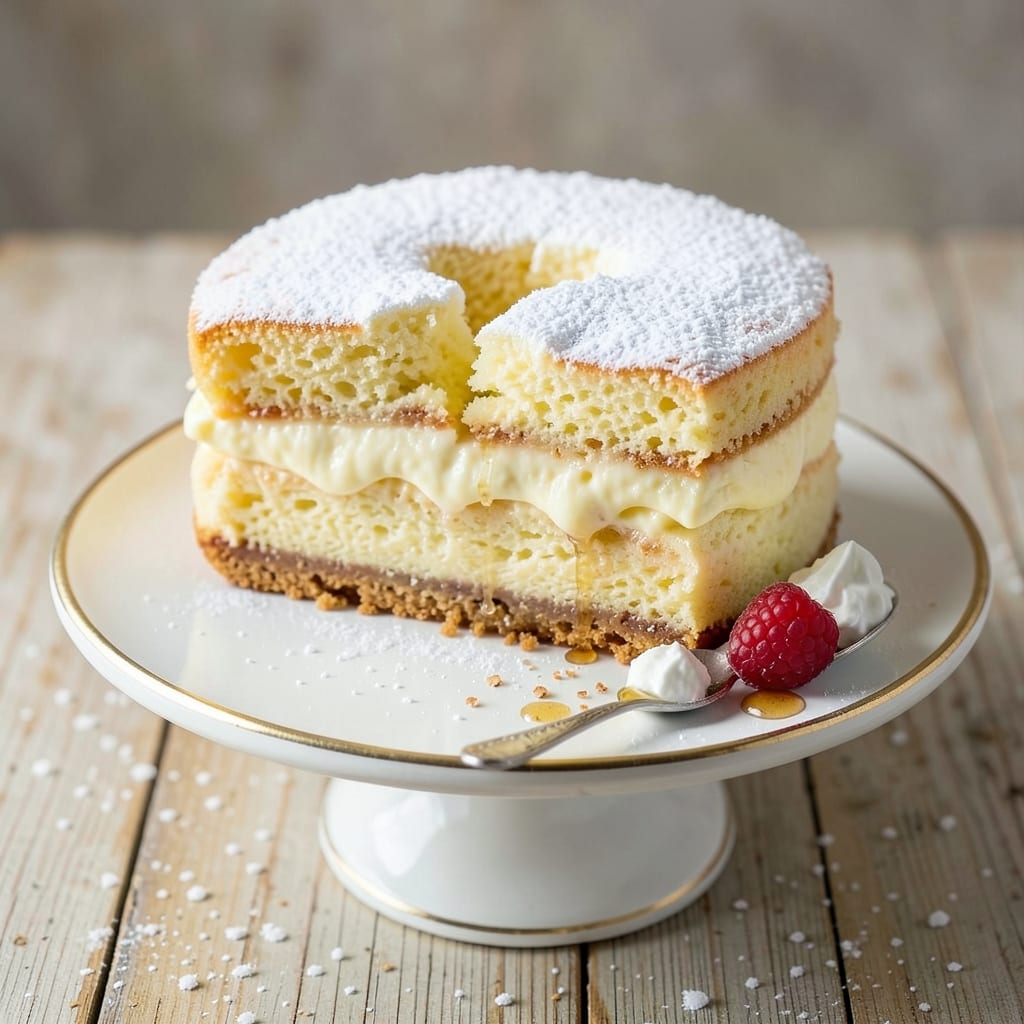
This breakfast egg cake recipe transforms simple ingredients into a showstopping dish with golden yolk rivers and fluffy layers—perfect for brunch or a decadent morning treat. 💛 The secret lies in a precise baking technique that creates tender, custard-like layers while keeping the yolks rich and runny. I developed this recipe after years of perfecting the balance between lightness and richness, ensuring every bite delivers both texture and flavor. What makes this egg cake special is its versatility—serve it as a breakfast centerpiece, brunch dessert, or even a light dinner option. The recipe moves quickly, with minimal prep and hands-off baking time, making it ideal for busy mornings. You'll need just a few basic ingredients and a standard oven, yet the results feel like a bakery creation. The final product features soft, cloud-like layers that hold together beautifully while still allowing those signature golden yolk rivers to flow when sliced. Top with powdered sugar, fresh berries, or a drizzle of honey to elevate it further. This dish proves that breakfast can be both elegant and effortless. Perfect for feeding a crowd or treating yourself to something special, this egg cake delivers restaurant-quality results with minimal effort. Let's get started!
Ingredients for breakfast egg cake
Twelve eggs and a handful of pantry staples create this showstopping breakfast masterpiece.
| Ingredient | Amount | Notes |
|---|---|---|
| Large Eggs 🥚 | 12 whole | Room temperature for even baking |
| All-Purpose Flour 🌾 | 1 ½ cups | Sifted for light texture |
| Granulated Sugar 🍚 | ¾ cup | White or light brown |
| Unsalted Butter 🧈 | ¾ cup | Cold, cubed for even melting |
| Powdered Sugar 🍚 | ½ cup | For dusting and garnish |
| Vanilla Extract 🌿 | 1 tbsp | Pure extract preferred |
| Baking Powder 🧂 | 1 ½ tsp | Aluminum-free for lightness |
| Salt 🧂 | ½ tsp | Fine sea salt |
| Milk 🥛 | ½ cup | Whole milk for richness |
| Lemon Zest 🍋 | 1 tbsp | Freshly grated for brightness |
| Fresh Berries 🍓 | 1 cup | Optional for garnish |
| Honey 🍯 | 1 tbsp | Optional drizzle |
The eggs are the foundation here—use large, room-temperature eggs for even baking and maximum fluffiness. Costco or Trader Joe's often have the best prices for bulk eggs, but any grocery store will do. Look for eggs with a vibrant, bright yolk color—this indicates freshness and better flavor. The butter should be cold and cubed when you measure it; this prevents premature melting and ensures even distribution. For the flour, King Arthur or Gold Medal brands are reliable choices, and sifting it removes lumps for a lighter texture. If you're short on time, a fine-mesh strainer works just as well.
No vanilla extract? Vanilla bean paste works too, or even a pinch of ground vanilla bean. Short on berries? Fresh or frozen strawberries work beautifully for garnish, and you can even use a drizzle of maple syrup instead of honey if you prefer. The milk can be swapped for heavy cream for extra richness, but whole milk gives the perfect balance of moisture without overpowering. If you're making this ahead, whisk the eggs and dry ingredients separately and store them in the fridge for up to 24 hours—just combine and bake when ready. The lemon zest can be omitted if you dislike citrus, but it adds a subtle brightness that complements the sweetness perfectly.
This cake keeps beautifully—cover with plastic wrap and store at room temperature for up to 2 days, or refrigerate for 3-4 days. The texture is best served fresh, but the flavors actually improve overnight as the layers soften. For serving, dust with powdered sugar right before slicing to keep it looking fresh. If you're making this for a crowd, double the recipe—it bakes in the same pan size, just with an extra layer. The leftovers reheat wonderfully in the microwave for 10-15 seconds, making them perfect for quick breakfasts.
Why You'll Love This Recipe
- No-Fuss Mixing: I swear by this recipe—just whisk eggs, fold in flour, and bake. No sifting, no measuring cups cluttering the counter, just a bowl and a spatula. The butter gets folded right in, so you don’t even need a mixer.
- Sweet & Savory Magic: That buttery, slightly crispy top with the tender crumb inside? It’s like a cross between a cake and a custard. The sugar caramelizes just enough to give it a subtle sweetness, but the eggs keep it rich and satisfying.
- Breakfast for Any Day: Pack it for lunch, slice it for brunch, or serve it cold with coffee. Honestly, I’ve eaten it straight from the fridge at midnight—no judgment. The powdered sugar dusting makes it feel special, even when it’s just me in my pajamas.
- Budget Breakfast Win: Five ingredients, minimal waste. The eggs and butter stretch further than you’d think, and the flour keeps it cheap. Plus, leftovers reheat beautifully—just pop a slice in the toaster for a quick bite. My wallet and my mornings thank me.
Step-by-step instructions for breakfast egg cake
Here's the method for creating a perfectly fluffy egg cake with golden yolk rivers—fast and foolproof.
👨🍳 Step 1: Prep Ingredients and Preheat Oven
First, let the 12 whole large eggs and 0.5 cup milk sit at room temperature for 15 minutes—this ensures even baking. Preheat your oven to 350°F and grease a 9-inch round cake pan with 0.25 cup unsalted butter, then line the bottom with parchment paper. I like to use a springform pan for easy release, but a standard round pan works too.
In a medium bowl, whisk together the 1.5 cups all-purpose flour, 1.5 tsp baking powder, and 0.5 tsp salt. Sift this mixture directly into the greased pan to eliminate lumps. Tap the pan gently on the counter to settle the flour evenly—this prevents dense pockets in your cake.
🍳 Step 2: Whisk Eggs and Wet Ingredients
In a large mixing bowl, combine the 12 whole large eggs and 0.75 cup granulated sugar. Whisk vigorously for 3-4 minutes until the mixture becomes pale yellow and nearly triples in volume. This step is critical—it incorporates air that creates those signature fluffy layers. You'll see ribbons form when you lift the whisk.
Add the 0.5 cup milk, 1 tbsp vanilla extract, and 1 tbsp lemon zest to the egg mixture. Whisk gently for 30 seconds until fully combined. The lemon zest adds a bright citrus note that balances the richness of the eggs, while the vanilla enhances the overall flavor profile. Don't skip this—it makes a difference.
🥘 Step 3: Combine Wet and Dry Ingredients
Pour the egg mixture over the sifted dry ingredients in the pan. Use a spatula to gently fold everything together just until no flour streaks remain—overmixing develops gluten and makes the cake dense. The batter should be smooth and slightly glossy with a thick, custard-like consistency.
Dot the top with the remaining 0.5 cup unsalted butter, cut into small cubes. This creates pockets of flavor as the butter melts during baking. Bake for 35-40 minutes until the top is golden brown and a toothpick inserted in the center comes out clean. Here's the thing—don't open the oven during baking. The sudden temperature drop can cause the cake to sink.
⏰ Step 4: Cool and Serve with Garnishes
Remove the cake from the oven and let it cool in the pan for 10 minutes. Then transfer it to a wire rack to cool completely. While it cools, dust the top with 0.5 cup powdered sugar for a sweet contrast to the rich egg flavor. I like to arrange 1 cup fresh berries around the base of the cake for both visual appeal and a fresh fruit element.
For an extra touch, drizzle the 1 tbsp honey over the top just before serving. The honey adds a subtle sweetness that complements the eggy richness. Serve slices warm or at room temperature—each bite should reveal those beautiful golden yolk rivers and a tender, fluffy crumb. This cake is best enjoyed within 24 hours for maximum freshness.
Pro Tips For Making Breakfast Egg Cake
- Whisk Eggs Until Ribbon Stage: Don’t just give them a quick stir—whisk those eggs until the mixture holds a slow ribbon when the whisk is lifted. I learned this the hard way after a batch turned out flat and dense; the extra effort makes the cake light and airy, not gummy.
- Melt Butter Slowly: Warm the butter over low heat until it’s just melted, then let it cool to room temperature before mixing. Hot butter can scramble the eggs, and room-temp butter blends smoother—no lumps, no stress.
- Skip Overmixing the Batter: Fold in the flour just until combined—overmixing develops gluten, and this cake isn’t about chewiness. Think "gentle swirls," not "whip it like pancake batter." Your future self will thank you for the tender crumb.
- Dust Cake Pan with Powdered Sugar: Instead of flour, lightly dust the pan with powdered sugar before pouring the batter. It prevents sticking without adding a floury taste, and the cake releases cleanly—no scraping required. (Yes, even if you’re impatient like me.)
Common mistakes when making perfect results
Overmixing the Batter
The most common mistake is overmixing the wet and dry ingredients, which develops gluten in the flour and creates a dense, chewy cake instead of the light, fluffy texture you want. I see this happen when people use electric mixers on high speed—stick to a spatula or wooden spoon and mix just until combined. Stop as soon as you see no dry flour streaks remaining. The batter should look smooth and slightly glossy, like thick custard. 💫
Skipping Room-Temp Eggs
Cold eggs from the fridge can cause uneven baking and lead to a cake that's underdone in the center or overcooked on the edges. Always let your 12 large eggs sit at room temperature for at least 15 minutes before using. I place them in a warm water bath for 5 minutes if I'm in a hurry. Room-temperature eggs also whip up more volume, which is key for those signature fluffy layers.
Opening the Oven Too Soon
Resist the urge to check on your cake during the 35-40 minute baking time—every time you open the oven door, you create a temperature drop that can cause the cake to sink. The butter on top needs time to melt evenly and create those beautiful pockets of flavor. If you're worried, use an oven thermometer to confirm your oven is actually at 350°F—many ovens run hot or cold, which affects baking times.
Using the Wrong Pan
A non-greased or improperly sized pan can lead to a cake that sticks or bakes unevenly. Always use a 9-inch round cake pan (or springform pan) that's been generously greased with 0.25 cup butter and lined with parchment paper. I've seen people use muffin tins or loaf pans by mistake—this completely changes the texture and structure of the cake. The right pan ensures even heat distribution for perfect golden yolk rivers.
Incorrect Butter Temperature
The butter you dot on top should be cold and cubed, not melted. If you use melted butter, it will sink into the batter instead of creating those flavorful pockets. Cut your butter into ½-inch cubes and place them directly on the batter just before baking. This creates steam during baking, which helps the cake rise beautifully. I keep my butter in the freezer for 10 minutes before cubing it to ensure it stays firm.
Overbaking or Underbaking
An overbaked cake will be dry and crumbly, while an underbaked one will be gooey in the center. The perfect doneness is when a toothpick inserted in the center comes out clean with just a few moist crumbs. Bake until the top is golden brown and the edges are set, then pull it out immediately. If your oven runs hot, check for doneness at 32 minutes. The cake continues cooking slightly after removal, so don't let it sit in the oven too long. 🔥
Nutrition facts
Frequently asked questions about breakfast egg cake
Can I make this egg cake without a springform pan? A standard 9-inch round cake pan works perfectly. Just
How do I get the perfect golden yolk rivers?
The secret lies in precise baking and cooling. Bake at 350°F for 35-40 minutes until golden brown, then let the cake cool completely in the pan for 10 minutes before transferring. The slow cooling helps the yolks set just enough to create those beautiful rivers when sliced. Don't cut into it too soon!
Can I substitute butter with oil?
Not for this recipe—the butter serves two purposes: it creates flavor pockets when melted and adds richness to the texture. For the 0.75 cup butter in the batter, you could use melted coconut oil in a pinch, but the flavor won't be the same. The butter cubes on top must stay cold for proper texture.
Is this recipe gluten-free?
As written, it contains all-purpose flour, but you can easily adapt it! Replace the 1.5 cups flour with a 1:1 gluten-free baking flour blend (like Bob's Red Mill) and add 0.5 tsp xanthan gum to maintain structure. Keep all other ingredients the same for best results. The texture will be slightly denser but still delicious.
Can I make this ahead for brunch?
Yes! This cake actually improves overnight. Bake it the day before, then store it covered at room temperature. Reheat slices in the microwave for 10-15 seconds to restore freshness. The flavors meld beautifully, making it perfect for make-ahead brunch prep. Just dust with powdered sugar right before serving.