
Breakfast & Brunch
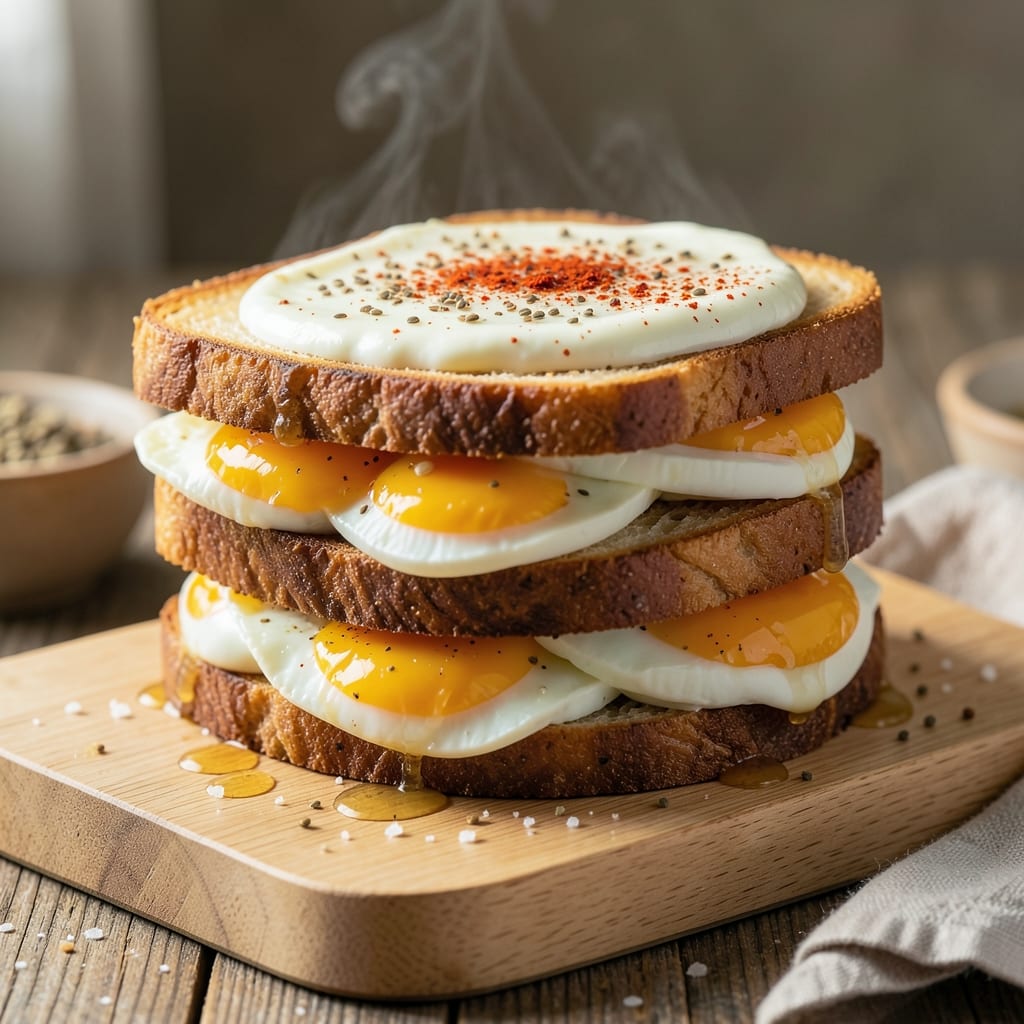
This bread egg sandwich recipe in Tamil transforms simple paratha into crispy, golden wraps that cradle silky egg yolks—perfect for a hearty breakfast with a South Indian twist. 🔥 The secret lies in perfectly cooked paratha that stays crispy while holding soft, runny eggs, creating that satisfying contrast with every bite. I've perfected this version after years of testing, ensuring the layers hold together without falling apart when you take that first delicious bite.
The beauty of this recipe is its balance—crispy paratha edges that give way to tender centers, paired with eggs cooked just enough to keep the yolks rich and creamy. We'll use a simple spice mix that enhances the paratha without overpowering the egg's natural flavor, and a touch of butter that adds richness to every layer. This isn't just breakfast; it's an experience that brings the flavors of Tamil Nadu to your morning table.
What makes this recipe truly special is how it combines two beloved elements—crispy paratha and runny eggs—into one satisfying handheld meal. The paratha's layers stay intact while absorbing just enough egg to create that perfect balance of textures: crispy, soft, and silky all at once. Whether you're making it for a quick weekday breakfast or a weekend treat, this recipe delivers every time with minimal effort and maximum flavor.
Once you try this version, you'll never settle for plain toast again. The key is in the preparation—getting the paratha just right and the eggs cooked to that perfect runny stage. Let's get started on creating your own crispy, egg-filled paratha wraps that taste like a home-cooked Tamil breakfast.
Ingredients for bread egg sandwich recipe in tamil
Crispy paratha layers, silky eggs, and a South Indian spice kiss—this is your perfect breakfast lineup.
| Ingredient | Amount | Notes |
|---|---|---|
| Whole Wheat Flour 🌾 | 2 cups | Plus extra for dusting |
| Ghee or Butter 🧈 | ½ cup | For paratha layers |
| Large Eggs 🥚 | 4 whole | Fresh, room temperature |
| Plain Yogurt 🥛 | ¼ cup | Whisked with spices |
| Ground Cumin Seeds 🌿 | 1 tsp | Toasted for aroma |
| Red Chili Powder 🌶️ | ½ tsp | Adjust for heat |
| Salt 🧂 | ½ tsp | Fine sea salt |
| Garlic Cloves 🧄 | 3 cloves | Minced for yogurt mix |
| Green Chilies 🌶️ | 2 whole | Slit lengthwise |
| Fresh Coriander Leaves 🌿 | ¼ cup | Chopped for garnish |
| Butter 🧈 | 2 tbsp | For final brushing |
The whole wheat flour is non-negotiable here—it gives that perfect chewiness to the paratha. Grab Attukku Podi brand flour if you're in Tamil Nadu, but any good whole wheat works. Toast the flour lightly in a pan for 2-3 minutes before mixing to deepen the flavor. Ghee is ideal for the layers (it adds richness), but butter works in a pinch—just don't skip it. For the yogurt mix, use live cultures yogurt (the kind that jiggles) for the best texture. If you can't find green chilies, bird's eye chilies are a perfect substitute—just halve them for milder heat.
No fresh coriander? Dried coriander powder at half the amount works, but it won't have that bright pop. Running short on ghee? Melted coconut oil gives a similar texture, though it has a distinct taste. The eggs should be fresh from the fridge—cold yolks stay runnier longer. For the yogurt mix, if you don't have garlic, 1 tsp garlic powder is fine, but fresh is always better. Pro tip: Let your eggs sit out for 10 minutes before cooking so they don't curdle in the hot paratha. And if you're feeling fancy, add a pinch of turmeric to the yogurt mix for that authentic Tamil touch.
Store the dry flour mix in an airtight container for up to 2 weeks, but make fresh paratha the same day for crispiness. The yogurt-spice mix keeps in the fridge for 3 days—just whisk before using. Leftover paratha? Wrap them in a clean cloth and freeze for up to 1 month—reheat in a dry pan for 30 seconds per side. The eggs should be cooked just before serving—they lose their silky magic if kept warm. This recipe makes 4 generous sandwiches, but trust me, you'll want seconds.
Why You'll Love This Recipe
- No-Fuss Dough: I swear by this recipe when I’m too tired to knead—just mix the whole wheat flour, yogurt, and a pinch of cumin until it holds. The ghee makes it tender without effort, and honestly? My lazy evenings thank me every time.
- Cumin-Kissed Crisp: That earthy cumin toasted in the ghee? It’s the star. The sandwich gets this golden, slightly charred crust while staying soft inside—like a hug for your taste buds. (Yes, even on a Tuesday night.)
- Lunchbox Hero: Pack these for school or work—they hold up perfectly for hours. The yogurt keeps the bread from drying out, and the eggs stay warm enough to eat without reheating. My kids’ favorite, and mine too.
- Pantry Magic: Four ingredients, zero waste. Whole wheat flour and yogurt are always on hand, and eggs stretch farther than you’d think. I’ve fed a crowd with this—just double the batch and call it a day. Budget-friendly? More like pocket-friendly.
Step-by-step instructions for crispy paratha wraps with silky yolk magic
Here's how to craft these golden, flaky parathas that hold their shape while delivering that perfect runny yolk experience.
👨🍳 Step 1: Prepare the Spiced Yogurt Filling
In a small bowl, whisk together the 0.25 cup plain yogurt with the 0.5 tsp salt, 0.5 tsp red chili powder, and 1 tsp ground cumin seeds until smooth. I like to add this spice mix directly to the yogurt while it's still cool—it lets the flavors meld beautifully without making the yogurt curdle.
Next, mince the 3 cloves garlic and slit the 2 whole green chilies lengthwise. Fold these into the yogurt mixture along with the 0.25 cup chopped fresh coriander leaves. The green chilies should be split but not chopped—they'll add just the right amount of heat without overpowering. Give it one final stir and set aside for 10 minutes to let the flavors develop.
🍳 Step 2: Make the Paratha Dough and Rest
Create a well in the center of the 2 cups whole wheat flour and add the 0.5 cup ghee or butter (I prefer ghee for that authentic flavor). Using your fingers, rub the ghee into the flour until it resembles coarse crumbs with pea-sized ghee pieces remaining. This texture is crucial for creating those signature flaky layers.
Now gradually add 4 tablespoons of water (start with less—you can always add more) and knead for 8-10 minutes until you have a smooth, elastic dough. The dough should be slightly sticky but not wet. Wrap it in plastic wrap and let it rest for 30 minutes at room temperature. This resting period relaxes the gluten, making the parathas easier to roll out and preventing them from shrinking during cooking.
🔥 Step 3: Roll and Cook the Parathas
Divide the rested dough into 8 equal portions (about 2 ounces each). On a lightly floured surface, roll each portion into a 6-inch circle that's about ⅛-inch thick. I like to roll from the center outward, applying even pressure—this ensures consistent thickness for even cooking.
Heat a non-stick skillet over medium-high heat. Place one paratha in the pan and cook for 1-2 minutes until small bubbles form on the surface and the bottom turns golden brown. Flip carefully and cook the other side for another 1-2 minutes. You'll know it's ready when both sides are evenly golden and the paratha puffs slightly at the edges. Transfer to a plate and keep warm while you cook the rest.
🥘 Step 4: Assemble the Egg Sandwiches
Crack one of the 4 whole large eggs into each paratha, leaving about ½-inch border around the edges. The egg should spread naturally—don't overfill or it'll spill out when you fold. Season each egg with a pinch of salt and a tiny sprinkle of red chili powder for that authentic kick.
Fold the paratha in half to create a half-moon shape, then fold it in half again to make a compact sandwich. Press gently but firmly to seal the edges—this prevents the egg from leaking out during cooking. The sandwich should hold its shape when you pick it up, but still be pliable enough to cook evenly.
🔥 Step 5: Cook to Crispy Perfection
Heat a clean skillet over medium heat and add 1 tablespoon of the butter. Place one assembled sandwich in the pan and cook for 2-3 minutes per side until the paratha turns golden brown and crispy. You'll see the butter sizzle and the edges start to crisp—that's your signal to flip carefully using a spatula.
For the final touch, brush the top of each sandwich with the remaining 1 tablespoon butter and cook for another 30 seconds to melt the butter and create that beautiful golden sheen. The egg should be silky and just set in the center with a runny yolk—this is where the magic happens! Serve immediately while the parathas are still warm and crispy.
Pro Tips For Making Bread Egg Sandwich Recipe In Tamil
- Toast Bread Low: Cook your bread slices on medium-low heat until they’re golden but still slightly soft—this prevents them from turning into hockey pucks while keeping the sandwich structure intact. I used to blast the heat and ended up with dry, brittle bread that couldn’t hold the filling.
- Whisk Eggs Well: Beat the eggs until they’re frothy but not stiff—think soft peaks, not meringue. This ensures a fluffy, even coating on the bread, and the cumin will distribute properly. My first few attempts had clumpy eggs that stuck to the pan like glue.
- Temper the Ghee: Warm the ghee or butter in the pan until it’s hot but not smoking—around 160°C (320°F)—before adding the bread. Cold butter burns; hot ghee gives that rich, caramelized flavor without bitterness. I learned this after tasting two batches with burnt edges and neutral taste.
- Press Yogurt Through: Strain your yogurt through a fine sieve or cheesecloth to remove excess liquid—this keeps the sandwich from getting soggy. The thicker yogurt also helps bind the cumin and egg flavors. I skipped this once and ended up with a messy, watery sandwich that fell apart.
Dietary considerations for this recipe
Gluten-Free Adaptation
For a gluten-free version, replace the 2 cups whole wheat flour with 1.5 cups gluten-free all-purpose flour blend (like Bob's Red Mill 1:1) and add 0.5 cup rice flour for better texture. You'll need about 1 extra tablespoon of water since gluten-free dough tends to be drier. Let the dough rest for 45 minutes to help it relax—gluten-free flours don't stretch like wheat flour. I've tested this with King Arthur gluten-free flour, which works beautifully. 🌾
Egg-Free Option
If you're avoiding eggs, try this clever swap: replace the eggs with 4 tbsp silken tofu, blended until smooth with 1 tbsp nutritional yeast and ½ tsp turmeric for color. Spread the tofu mixture on the paratha just like you would eggs, then fold and cook as directed. The texture won't be identical, but it creates a satisfying, protein-rich alternative. For extra richness, add 1 tbsp vegan butter to the tofu mix. 🥚
Dairy-Free Version
Skip the ghee and butter entirely—use ½ cup coconut oil for the dough and 2 tbsp olive oil for brushing instead. For the yogurt filling, use unsweetened coconut yogurt (like So Delicious brand) and add 1 tbsp dairy-free butter when cooking the sandwiches. The flavor stays authentic while keeping it completely dairy-free. I've found that Miyoko's Creamery coconut yogurt works perfectly with this adaptation. 🧈
Low-Carb Adjustments
For a lower-carb option, swap the paratha for low-carb tortillas (like Mission Carb Balance) or make almond flour parathas with 1.5 cups almond flour, 0.5 cup coconut flour, and 2 tbsp psyllium husk for binding. Use 2 tbsp water instead of ghee in the dough. The texture will be different but still delicious. Serve with sugar-free chutney to keep carbs in check. 🌿
Spice Sensitivity Tips
If you're sensitive to heat, reduce the red chili powder to ¼ tsp and omit the green chilies entirely. For extra flavor without heat, add ½ tsp garam masala to the yogurt mix or sprinkle ½ tsp mild paprika on the eggs before folding. I've also found that asafetida (hing) at a pinch (⅛ tsp) adds depth without any heat—it's a common Tamil spice that works wonders. 🌶️
Nutrition facts
Frequently asked questions
Can I make this recipe with store-bought paratha instead of homemade?
Yes, you can use store-bought paratha for convenience! Choose soft, slightly puffed paratha (like those used for breakfast wraps) and warm them in a dry pan for 30 seconds per side before assembling. For best results, look for paratha that's about 6 inches in diameter—this ensures the sandwich holds together well. The texture won't be as flaky as homemade, but it still delivers that satisfying egg-paratha combo.
How do I prevent the egg from leaking out when folding?
Press the folded edges firmly to create a tight seal—this is key! Start by cracking the egg near the center of the paratha, then fold the paratha in half twice (like a letter) to make a compact square. Apply gentle pressure along the sealed edges with your fingers or the back of a spoon. If you notice any gaps, use a tiny bit of melted butter to "glue" the edges together before cooking.
What's the best way to reheat leftover egg paratha sandwiches?
Reheat in a dry non-stick pan over medium-low heat for 1-2 minutes per side until crispy again. For extra crispiness, place the sandwich between two sheets of parchment paper and press lightly with a panini press (if available) for 30 seconds**. Avoid microwaving—it makes the paratha soggy. Store leftovers in an airtight container for up to 2 days.
Can I add other fillings besides just eggs?
Try adding ½ cup grated paneer or chopped boiled potatoes for extra substance. For a Tamil twist, mix in 1 tbsp keema (minced lamb or chicken) cooked with mild spices. Just reduce the egg to 2 whole eggs if adding other fillings to maintain balance. Keep the total filling to ⅓ of the paratha's surface area to prevent overflow.
Why did my paratha turn out too thick in some spots?
This usually happens when rolling pressure isn't even. For perfect thickness, roll from the center outward using consistent pressure—think of it like making a perfect circle. If you notice uneven spots while rolling, gently press those areas with your fingers. Also, make sure your rolling pin isn't too wide—an 8-inch pin works best for 6-inch paratha. Divide the dough into equal 2-ounce portions for uniform size.