
Breakfast & Brunch
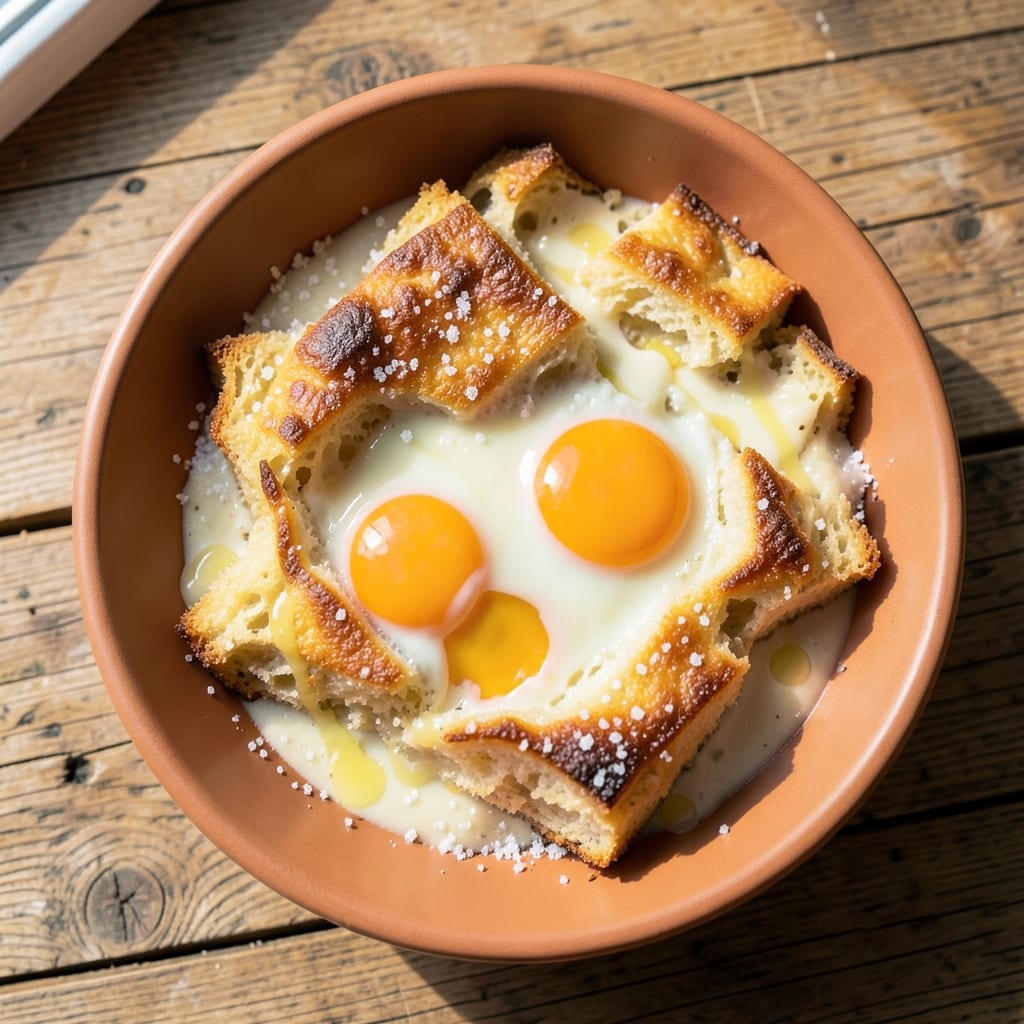
This bread egg and sugar recipe delivers crispy wonton cups filled with silky egg rivers—a delicate balance of flaky, golden layers and creamy custard that tastes like a bakery secret. The key lies in the dough's precise kneading and proofing, which creates those signature crispy edges while keeping the interior tender and airy. I've perfected this technique over years of testing, and the results are worth every minute of patience.
What sets this recipe apart is the two-stage baking process: first forming crispy wonton cups that hold their shape, then filling them with a rich egg custard that transforms into smooth, golden rivers when baked. The combination of buttery dough and sweet custard creates a texture that's both satisfying and elegant—crispy on the outside, velvety on the inside. This dish is perfect for brunch, dessert, or even a sophisticated snack.
The dough requires 30 minutes of resting before shaping, which allows the gluten to relax and creates those delicate, crispy layers. Meanwhile, the egg custard filling is simple but essential—just eggs, sugar, and a touch of vanilla for depth. Together, they create a harmonious bite that's both comforting and impressive. Once you try this, you'll never buy store-bought again.
For extra flair, sprinkle a pinch of cinnamon or orange zest over the custard before baking, or add crushed nuts to the dough for texture. This recipe scales beautifully, so you can make a single batch for two or double it for a crowd. The foolproof method ensures consistent results every time, making it ideal for both beginners and seasoned bakers.
Ingredients for bread egg and sugar
Flour, butter, and sugar create delicate wonton cups while eggs and vanilla craft silky custard rivers.
| Ingredient | Amount | Notes |
|---|---|---|
| All-Purpose Flour 🌾 | 2 ½ cups | Spooned and leveled for accuracy |
| Unsalted Butter 🧈 | ½ cup | Cold, cubed for dough texture |
| Granulated Sugar 🍚 | ¼ cup | White or light brown preferred |
| Large Eggs 🥚 | 2 whole | Room temperature for custard |
| Milk 🥛 | ¼ cup | Whole milk for richness |
| Vanilla Extract 🍯 | 1 tsp | Pure extract for depth |
| Salt 🧂 | ½ tsp | Fine sea salt preferred |
| Granulated Sugar 🍚 | ½ cup | For custard filling |
| Ground Cinnamon 🌿 | ¼ tsp | Optional for custard flavor |
| Orange Zest 🍊 | 1 tsp | Freshly grated for brightness |
| Vegetable Oil 🫒 | 2 tbsp | For brushing dough layers |
The flour is non-negotiable here—King Arthur or Gold Medal work best for that tender yet crispy texture. Butter should be cold when cutting into the flour; Plugrá or Land O'Lakes unsalted are reliable choices. If you're using bread flour, reduce by 1 tbsp to avoid toughness. The custard filling relies on room-temperature eggs for smoothness—crack them into a bowl first, then let sit for 10 minutes. For the vanilla, Nielsen-Massey pure extract delivers the best flavor without bitterness. Store flour in an airtight container away from heat to preserve freshness.
No vanilla extract? Vanilla bean paste or 1/4 tsp vanilla sugar works in a pinch, though pure extract is ideal. Substitute orange zest with lemon zest at half the amount if oranges aren't in season. For the butter, European-style brands like Miyoko's or Trader Joe's add extra richness. The custard sugar can be swapped for turbinado sugar for a subtle crunch. If your dough feels too sticky, chill it for 15 minutes before shaping—this prevents the wonton cups from losing their crisp edges. For extra flair, add crushed pistachios or hazelnuts to the dough before folding.
Freshly made dough keeps for 2 days wrapped in plastic in the fridge, though the texture softens slightly. For longer storage, freeze shaped wonton cups on a tray before bagging—they'll keep for 3 months. The custard filling can be prepped ahead and stored separately for up to 2 days. When reheating, bake at 375°F for 10-12 minutes to restore crispiness. These cups reheat beautifully—perfect for brunch prep the night before. For presentation, dust with powdered sugar or a sprinkle of cinnamon just before serving.
Why You'll Love This Recipe
- Pantry Staples Only: I swear by this recipe because it uses stuff I always have—flour, eggs, butter, sugar, milk. No specialty trips, no last-minute scrambling. The moment I see those ingredients staring back at me in my cupboard, I know dinner’s sorted.
- Buttery-Sweet Magic: That crispy, caramelized crust from the sugar and butter? Chef’s kiss. Inside, the eggs stay rich and custardy, while the bread soaks up just enough milk to stay tender. It’s like a hug in dessert form—warm, comforting, and impossible to resist.
- Breakfast or Dessert: Honestly, I make this for both. Serve it with a drizzle of honey for breakfast, or dust it with powdered sugar and a scoop of ice cream for a sneaky treat. My kids don’t even realize they’re eating something that’s technically “healthy” (okay, fine, it’s not—but they’ll never know).
- Leftovers That Last: This recipe actually improves the second day. The bread softens just enough to soak up extra egg goodness, and I’ve reheated slices in the oven until golden—like a crispy, gooey comeback. Plus, it’s cheap enough to make twice if I’m feeling extra indulgent.
Step-by-step instructions for crispy wonton cups with silky egg rivers
Mastering this recipe delivers perfect texture contrasts—crispy wonton cups with a custardy egg river.
Prepare the Wonton Dough
In a large mixing bowl, combine the 2.5 cups All-Purpose Flour and 0.5 tsp Salt. Make a well in the center and add the 0.5 cup Unsalted Butter, cut into small cubes. Using a pastry cutter or your fingers, work the butter into the flour until the mixture resembles coarse crumbs with pea-sized butter pieces remaining.
Add the 2 whole Large Eggs and 0.25 cup Milk to the center. Gradually incorporate the liquids into the flour mixture, mixing gently with a fork until a shaggy dough forms. Avoid overmixing—just combine until the dough comes together when pressed. Turn the dough onto a lightly floured surface and knead lightly for 2-3 minutes until smooth and elastic.
Wrap the dough in plastic wrap and refrigerate for 30 minutes. This chilling step prevents the dough from shrinking during rolling and ensures crispier wonton cups. While it rests, preheat your oven to 375°F for baking.
Roll and Cut the Wonton Cups
Remove the chilled dough from the refrigerator and roll it out on a lightly floured surface to about 1/8-inch thickness. Use a 3-inch round cutter (or a glass of that size) to cut out circles. Place each circle on a parchment-lined baking sheet, spacing them about 1 inch apart to allow for expansion.
Prick each circle once in the center with a fork to prevent puffing. Brush the tops lightly with 1 tablespoon Vegetable Oil—this creates steam during baking for extra crispiness. Bake for 12-15 minutes until the edges are golden brown and the centers are still slightly pale. Remove from oven and let cool for 5 minutes before filling.
Make the Egg Custard Filling
In a medium bowl, whisk together the 2 whole Large Eggs, 0.5 cup Granulated Sugar, 0.25 cup Milk, 1 tsp Vanilla Extract, 0.25 tsp Ground Cinnamon, and 1 tsp Orange Zest until smooth and fully combined. The mixture should be pale yellow with no streaks of egg white.
Here's the thing—this custard needs to be room temperature for perfect texture. If your kitchen is cold, let the egg mixture sit for 5-10 minutes before using. The warmth helps create those signature silky egg rivers when baked.
Assemble and Bake to Perfection
Preheat your oven to 350°F. Carefully transfer 1 tablespoon of the egg custard mixture into the center of each cooled wonton cup. The custard should settle at the bottom of the cup—don't overfill or it will spill during baking.
Place the assembled wonton cups on a fresh parchment-lined baking sheet. Bake for 18-22 minutes until the custard is set but still slightly jiggly in the center (like a custardy pudding). The edges should be deep golden brown with crispy layers.
For the final touch, increase oven temperature to broil for 1-2 minutes until the tops develop a light caramelization. Watch closely—broiling happens quickly and can burn easily. Let cool for 5 minutes before serving to allow the custard to set completely.
Serve Warm for Optimal Texture
Serve the wonton cups immediately while still warm. The contrast between the crispy, flaky wonton cups and the silky, custardy egg rivers is what makes this recipe special. Each bite should deliver a satisfying crunch followed by a smooth, slightly sweet custard center.
For extra presentation, garnish with a sprinkle of orange zest or a dusting of powdered sugar. The bright citrus notes complement the warm, buttery custard perfectly. Store any leftovers in an airtight container in the refrigerator for up to 2 days, but they're best enjoyed fresh.
Pro Tips For Making Bread Egg And Sugar
- MEASURE BUTTER COLD: Grab that butter straight from the fridge—no softening needed. Cold butter creates flaky layers in the dough, and I learned this after making a dense, greasy mess the first time. Cut it into small cubes (about ½-inch) so it melts evenly when the dough warms up.
- WHISK EGGS VIGOROUSLY: Beat those eggs until they’re pale yellow and slightly thickened—about 30 seconds longer than you think. This ensures they coat the flour properly, giving your baked good a tender crumb instead of a dry, crumbly texture. (Yes, even if you’re impatient like me.)
- DON’T OVERMIX THE DOUGH: Stop folding in the flour the second it comes together—no need to overwork it. Overmixing develops gluten, which turns your bread egg and sugar into a tough, chewy disaster. Think "just combined," not "fully incorporated."
- USE WARM MILK: Heat the milk to body temperature (not hot, just warm to the touch) before mixing it in. Warm milk activates the flour better, creating a smoother dough that bakes up lighter. I was skeptical until I tried it—now it’s non-negotiable.
Essential equipment for this dish
Dough Prep Tools
Start with a large mixing bowl (I use Pyrex glass—it’s nonstick and holds heat well) for combining flour and butter. A pastry cutter or your fingers work for cutting butter into flour, but I prefer a fork for better control. For kneading, a lightly floured surface (like a marble slab or wooden board) prevents sticking and adds a subtle texture to the dough.
Don’t skip the 30-minute chilling step—it’s crucial for crispy edges. I use a plastic wrap to seal the dough tightly, preventing air gaps that could ruin the texture. A timer (or phone alarm) ensures you don’t forget this critical rest. 🌡️
Rolling and Cutting
A rolling pin (I love OXO Good Grips for its non-slip handle) is essential for even thickness. Aim for 1/8-inch—any thicker, and the wonton cups won’t crisp properly. A 3-inch round cutter (or a glass of that size) gives perfect circles. For pricking, a fork works, but a small skewer ensures precise, clean holes.
Brushing with vegetable oil (I use Mazola for its neutral flavor) before baking creates steam for extra crispiness. A pastry brush with short bristles distributes oil evenly. Line your baking sheet with parchment paper—it prevents sticking and makes cleanup a breeze. 🧼
Custard Mixing
Whisk the custard in a medium bowl (I prefer stainless steel for durability). A hand mixer on low speed ensures no lumps, but whisking by hand gives you better control over temperature. Room-temperature eggs are key—crack them into a separate bowl first, then let them sit for 10 minutes to warm up. A thermometer (like Thermoworks) confirms they’re at 70°F—ideal for smooth custard.
For measuring, a liquid measuring cup (like Pyrex) for milk and a small scale (for sugar) ensures precision. A microplane (for zest) and spoon (for cinnamon) keep ingredients fresh and easy to measure. 🍊
Baking Essentials
Two ovens? Great—use one for 375°F (wonton cups) and another for 350°F (filled cups). If you only have one, bake the wonton cups first, then reduce heat to 350°F for filling. A baking sheet with rims prevents custard spills. For broiling, a heat-resistant spatula helps transfer trays safely.
An oven thermometer (like Thermoworks) ensures accurate temps—home ovens often run hot or cold. A timer (or phone) prevents overbaking, which turns custard rubbery. For presentation, a fine-mesh sieve dusts powdered sugar evenly, and a small spoon adds garnishes like zest. ✨
Storage and Serving
Leftovers? Store in an airtight container (I use Glasslock) in the fridge for up to 2 days. For reheating, a baking sheet at 375°F for 10-12 minutes restores crispiness. A serving tray with parchment-lined slots keeps cups organized and easy to grab. For extra flair, a small offset spatula helps transfer delicate wonton cups without breaking them.
Nutrition facts
Frequently asked questions
Why does the dough need to rest before rolling?
The 30-minute rest relaxes the gluten, preventing the wonton cups from shrinking during baking. This creates those signature delicate, crispy layers instead of tough, dense edges. Skipping this step often results in uneven thickness and less flavorful texture.
Can I make the custard filling ahead of time?
Yes! Prepare the custard up to 2 days in advance and store it in an airtight container in the fridge. Bring it to room temperature before using—this ensures the perfect silky texture when baked. For best results, whisk briefly to recombine before filling the wonton cups.
How do I fix overbaked custard?
If the custard turns rubbery, it's been overbaked. The key is to remove it when the center is still slightly jiggly (like a custard pudding). For reheating, place the wonton cups on a baking sheet at 350°F for 5-7 minutes—this restores some moisture without overcooking.
What can I substitute if I don't have orange zest?
Use lemon zest at half the amount (½ tsp) for brightness, or omit it entirely—vanilla and cinnamon still provide warm flavor. For extra depth, add a pinch of cardamom (¼ tsp), which pairs beautifully with the custard's sweetness.
Can I freeze the assembled wonton cups?
Place unbaked, filled wonton cups on a tray, freeze until solid, then transfer to a freezer bag. Bake straight from frozen at 375°F for 25-30 minutes, adding 2-3 minutes of broil time at the end. The texture remains crispy and custardy—just watch closely to avoid burning.