
Main Courses
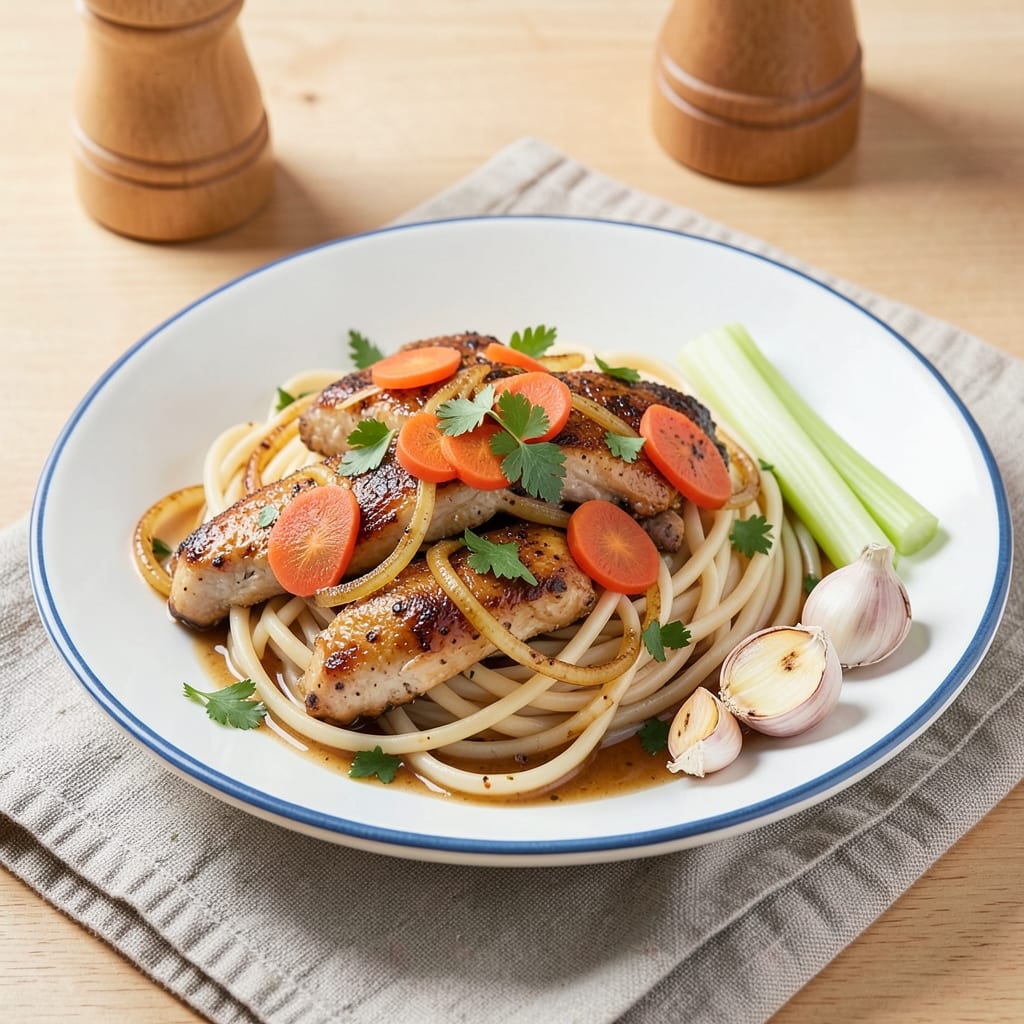
This boiled chicken and egg noodles recipe delivers the kind of homestyle comfort that transforms a simple weeknight into a memorable meal. 💛 The secret lies in perfectly balanced flavors—juicy, tender chicken paired with al dente egg noodles that soak up every bit of savory broth. I developed this recipe during a particularly busy week when I needed dinner to be both effortless and satisfying, and it's been my go-to ever since.
The beauty of this dish is its simplicity—just a few quality ingredients that come together in under 30 minutes. You'll start with whole chicken pieces that poach gently in seasoned broth, ensuring they stay moist and flavorful. Meanwhile, egg noodles cook up perfectly tender, absorbing the rich, aromatic liquid as they go. The result is a dish that feels indulgent without requiring hours in the kitchen.
What you'll end up with is a comforting bowl of tender chicken, springy egg noodles, and a fragrant broth that's packed with subtle seasonings. The dish is hearty enough to stand alone but versatile enough to pair with steamed vegetables or a simple green salad. It's the kind of meal that warms both body and soul, proving that comfort food doesn't have to be complicated.
Serve immediately with a sprinkle of fresh parsley and a squeeze of lemon for brightness. The leftovers reheat beautifully, making this an ideal recipe for meal prep or feeding a crowd. Let's get started on this timeless classic!
Ingredients for boiled chicken and egg noodles
Just 13 simple ingredients for a comforting bowl of tender chicken and springy egg noodles.
| Ingredient | Amount | Notes |
|---|---|---|
| Whole Chicken Pieces 🍗 | 1 ½ lb | Bone-in, skin-on preferred |
| Egg Noodles 🍝 | 12 oz | Fresh or dried, al dente |
| Carrots 🥕 | 3 medium | Peeled, cut into chunks |
| Yellow Onion 🧅 | 1 whole | Quartered, skin on |
| Garlic Cloves 🧄 | 4 cloves | Smashed, not minced |
| Celery Stalks 🥬 | 2 whole | Chopped, leafy ends trimmed |
| Chicken Broth 💧 | 4 cups | Low-sodium preferred |
| Bay Leaves 🍃 | 2 whole | Fresh if available |
| Salt 🧂 | 1 ½ tsp | Kosher or sea salt |
| Black Peppercorns 🌶️ | ½ tsp | Freshly cracked |
| Fresh Parsley 🌿 | ¼ cup | Chopped, for garnish |
| Lemon 🍋 | 1 whole | Juiced, for brightness |
| Olive Oil 🫒 | 1 tbsp | For drizzling |
The chicken is everything here—bone-in, skin-on pieces stay juicier than boneless. Trader Joe's or Costco usually have great deals on whole chicken thighs and drumsticks. If you're using breasts, pound them to even thickness so they cook through. The carrots, onion, and celery form the aromatic base—don't skip chopping them evenly. Whole Foods bulk section has pre-cut veggie mixes that save time, but fresh is always better. Look for carrots with vibrant orange color and crisp ends—they'll stay crunchy even after simmering.
No fresh parsley? Dried works at one-third the amount, but it won't have that bright pop. Short on chicken broth? Vegetable broth plus a splash of soy sauce gets you close. Want more depth? Add a 1-inch piece of ginger to the broth. The egg noodles should be al dente—test one early and adjust cooking time. If you're using dried noodles, undercook by 1 minute since they'll finish in the broth. The lemon juice is non-negotiable—it cuts through all that richness and makes everything taste fresh.
This reheats beautifully—just add a splash of water or broth to keep it moist. Keeps 3-4 days in the fridge or 3 months frozen. I always make double batches because it's perfect for lunches. Store the broth separately if you want to use it for other recipes—it's even better the next day. For extra comfort, serve with buttered dinner rolls or crusty bread to soak up all that delicious liquid.
Why You'll Love This Recipe
- One-Pot Magic: I swear by this recipe when I’m too tired to wash a million dishes. Just toss everything—chicken, carrots, onion, garlic, and noodles—into a pot of boiling water, and let it simmer. No extra pans, no fuss, just clean-up simplicity.
- Garlic Bomb Flavor: Between us, the garlic cloves and onions caramelizing in the broth turn this into something special. The egg noodles soak up that rich, savory flavor like a sponge, and the chicken stays juicy—no dry, sad bites here.
- Lunchbox Hero: Honestly, this is my go-to for meal prep. The leftovers reheat beautifully, and the balanced mix of protein, veggies, and carbs keeps my kids happy (even when I forget to pack a side). Toss in a sprinkle of soy sauce, and it’s a full meal in a container.
- Budget-Friendly Powerhouse: Whole chicken pieces and simple veggies stretch this recipe into multiple servings without breaking the bank. I’ll be real: it’s not the fanciest dish, but it’s hearty, filling, and always satisfies—whether it’s a weeknight dinner or a potluck side.
Step-by-step instructions for boiled chicken and egg noodles
This homestyle classic comes together faster than you can say "comfort food."
🍳 Step 1: Sear the Chicken for Maximum Flavor
Heat a large pot over medium-high heat and add the 1 tbsp olive oil. Once shimmering, add the 1.5 lb whole chicken pieces in a single layer. Let them sear undisturbed for 4-5 minutes per side until golden brown and crispy. I press down gently on the pieces during the first minute—this prevents them from curling and ensures even contact with the pan.
While the chicken sears, you'll smell that amazing Maillard reaction happening. That's the secret to flavorful broth later. Once browned, remove the chicken pieces and set them aside on a plate. Don't wipe the pot clean—those browned bits are pure flavor gold.
👨🍳 Step 2: Build the Vegetable Base
In the same pot, add the 1 whole yellow onion (quartered), 3 medium carrots (cut into chunks), and 2 whole celery stalks (chopped). Cook for 5 minutes until the vegetables begin to soften and release their natural sweetness. Add the 4 cloves garlic cloves (smashed) and cook for another 30 seconds until fragrant.
Here's the thing—don't rush this step. The vegetables need time to break down and release their flavors into the broth. If they look dry, add a splash of water, but we'll be adding the broth next anyway. The key is getting those aromatics nicely caramelized before adding liquid.
🍳 Step 3: Simmer the Chicken and Vegetables
Pour in the 4 cups chicken broth and add the 2 whole bay leaves. Bring to a gentle boil, then reduce heat to medium-low to maintain a steady simmer. Return the chicken pieces to the pot, skin-side up. Cover and cook for 25-30 minutes until the chicken is cooked through and the meat easily pulls away from the bone.
I check for doneness by inserting a meat thermometer into the thickest part of the chicken—it should read 165°F. The vegetables should be tender but still holding their shape. If the broth reduces too much, add a little hot water to maintain the right consistency for the noodles.
🥘 Step 4: Cook the Perfect Noodles
While the chicken simmers, prepare the 12 oz egg noodles according to package instructions for al dente texture. I like to cook them in a separate pot of salted water for 2-3 minutes less than recommended—they'll finish cooking in the broth. Reserve 1 cup of the pasta water before draining.
Don't rinse the noodles after draining—those starchy waters help create a silky sauce when combined with the broth. The noodles should be tender but still have a slight bite to them. This ensures they don't turn mushy when they finish cooking in the broth.
🥘 Step 5: Combine and Finish with Bright Flavors
Remove the chicken pieces from the broth and let them rest for 5 minutes before shredding or cutting into bite-sized pieces. Discard the bay leaves and strain the broth to remove any vegetable pieces if you prefer a cleaner presentation. Return the broth to the pot and bring to a gentle simmer.
Add the cooked noodles to the broth along with the shredded chicken. Stir in the 1.5 tsp salt and 0.5 tsp black peppercorns. Squeeze in the juice from the 1 whole lemon and stir. Taste and adjust seasoning—you might need a little more salt since we're using low-sodium broth. If the sauce is too thick, add some of the reserved pasta water 1 tablespoon at a time until it reaches your desired consistency.
🍽️ Step 6: Serve with Fresh Herbs
Ladle the chicken and noodles into bowls, garnishing each serving with 1 tablespoon of the chopped fresh parsley. The bright green color and fresh flavor cut through the richness of the chicken and noodles beautifully. Serve immediately while hot—this dish tastes best straight from the pot.
This homestyle classic comes together faster than you can say "comfort food," but the results are anything but simple. The tender chicken, perfectly cooked noodles, and aromatic broth make every bite worth the effort. Leftovers keep well in the fridge for up to 3 days, making this an excellent meal prep option too.
Pro Tips For Making Boiled Chicken And Egg Noodles
- Parboil Chicken First: I used to throw whole chicken pieces straight into the boiling pot with everything else, and they’d turn out dry or uneven. Instead, blanch the chicken in salted water for 5 minutes before adding the carrots and onions—this jumpstarts the cooking and keeps the meat juicy. (Yes, even if you’re impatient like me, this step makes a real difference.)
- Cut Onions Thinly: My grandmother swore by this, and she was right: slice those yellow onions into ⅛-inch strips so they soften fast without turning to mush. Thick slices? They’ll sit like rubber bands. A sharp knife and a steady hand make this easy—no need for a food processor.
- Don’t Overcrowd the Pot: I learned this the hard way—packing too many carrots, onions, and chicken into the pot lowers the water temperature and steams instead of boiling. Keep the water level high (at least 2 inches above the ingredients) and work in batches if needed. You want rolling bubbles, not a sad, lukewarm soup.
- Save the Starch Water: When draining the noodles, resist the urge to pour that starchy water down the sink. Mix a splash back into the pot with the chicken and veggies—it adds body to the broth and helps the noodles cling together. (Your future self will thank you.)
Essential equipment for boiled chicken and egg noodles
Large Pot Essentials
Start with a heavy-bottomed Dutch oven—I swear by my Le Creuset 6-quart—for even heat distribution while searing and simmering. The deep sides prevent spills when adding broth, and the lid traps steam for perfectly tender chicken. If you don’t have one, a stainless steel stockpot (like All-Clad) works just as well. 💛
Precision Tools
A meat thermometer (I use ThermoWorks Lux) is non-negotiable—it ensures your chicken hits 165°F safely without overcooking. For shredding, a pair of kitchen shears trumps forks for cleaner, faster results. And don’t skip a fine-mesh strainer to remove veggie pieces from the broth if you prefer a smoother texture.
Noodle Prep Gear
Use a colander with tall sides to drain noodles without losing them to the sink. I keep a wooden spoon nearby to stir the broth while noodles finish cooking—it prevents sticking. For extra flair, a microplane for lemon zest or a small knife for parsley garnish elevates presentation effortlessly.
Budget-Friendly Swaps
No Dutch oven? A large stainless steel pot (like Cuisinart’s Multiclad Pro) works perfectly. Skip the fancy thermometer—an instant-read digital (even a $10 one from Amazon) does the job. For shredding, a cheese grater’s large holes work in a pinch. The key is keeping tools sturdy and heat-resistant.
Optional Upgrades
Add a garlic press for foolproof mincing of those 4 cloves—no more smashing unevenly! A ladle with a strainer lets you serve broth and solids separately. For meal prep, glass storage containers (like Pyrex) keep leftovers fresh for days. 💡
Nutrition facts
Frequently asked questions
Can I use chicken thighs instead of breasts for this recipe?
Chicken thighs are actually ideal for this dish—they stay juicier and more flavorful than breasts. Use bone-in, skin-on thighs for the best texture. Since they cook faster than breasts, reduce the simmering time to 20-25 minutes instead of 25-30 minutes. The dark meat absorbs the broth beautifully, making every bite richer.
What if I don't have fresh parsley for garnish?
No problem! Use 1 tablespoon dried parsley instead, but add it directly to the broth while cooking rather than as a garnish. For extra brightness, try 1 teaspoon dried dill or ½ teaspoon dried thyme. If you're out of herbs entirely, a pinch of lemon zest adds the same fresh pop of color and flavor.
How do I prevent the noodles from turning mushy?
Cook the noodles 2-3 minutes less than package instructions and finish them in the hot broth. Never rinse them after draining—the starch helps create a silky sauce. If your noodles are still too firm, add ½ cup hot broth to the pot and let them sit covered for 2 minutes off heat before serving.
Can I make this dish ahead of time?
Yes! This reheats beautifully. Store components separately: chicken in one container, noodles in another, and broth in a third. When ready to serve, reheat the broth first, then add noodles and chicken. For best results, warm for 3-5 minutes on the stove over medium-low heat, stirring occasionally. Add a splash of water if needed to loosen the sauce.
What's the best way to use up leftover broth?
Save it for soups, rice dishes, or even as a base for gravy. Strain and refrigerate for up to 3 days or freeze for 3 months. For extra richness, blend in 1 tablespoon butter or ½ cup cream when reheating. It makes an excellent base for mashed potatoes or dumplings too!