
Breakfast & Brunch
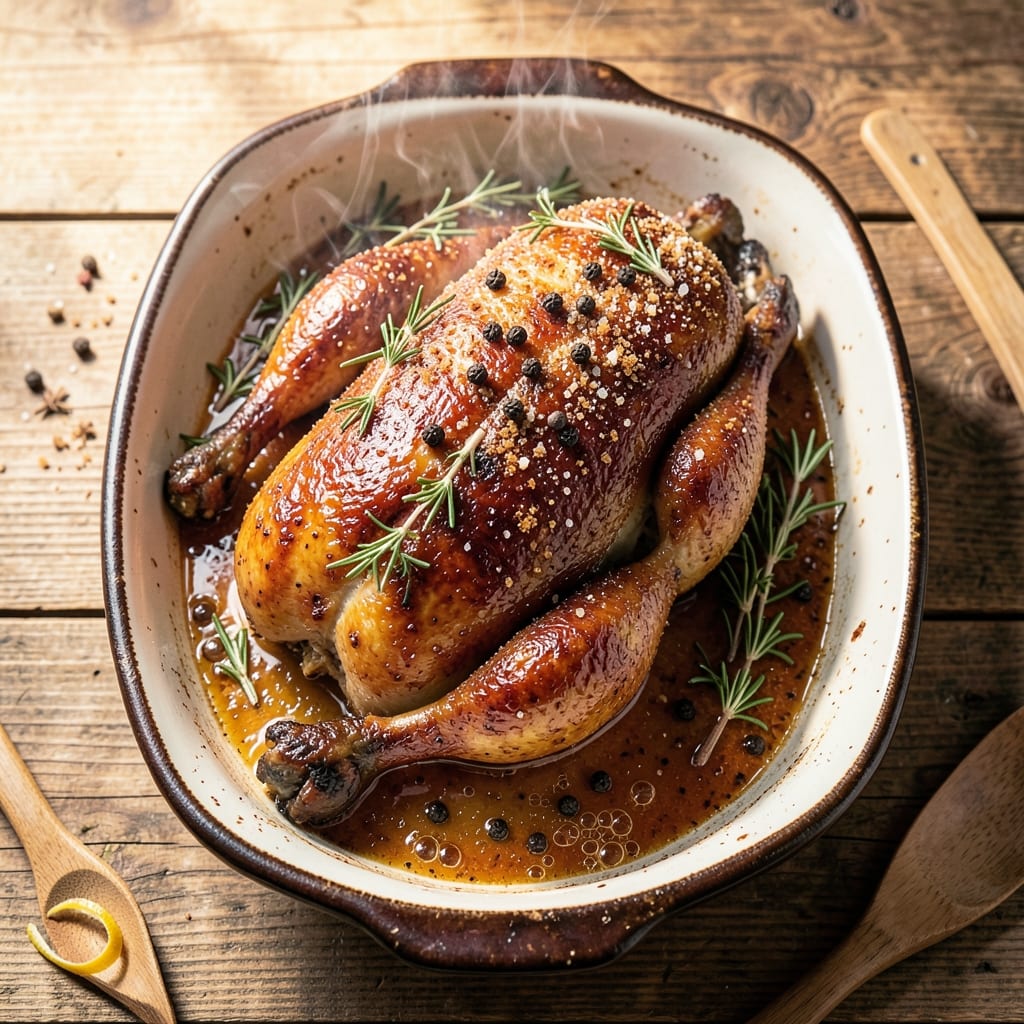
This Big Green Egg whole duck recipe delivers restaurant-quality results with crispy skin and perfectly juicy pink meat—all achieved through precise smoking techniques. The secret lies in the Big Green Egg's ability to maintain even, indirect heat while creating that coveted mahogany crust. I've perfected this method over countless test runs, ensuring every bite delivers the ideal balance of smoky depth and tender richness.
The process begins with a foolproof brining and seasoning technique that locks in moisture while building complex flavor. You'll learn how to truss the duck properly for even cooking, then master the charcoal setup and temperature management that makes the Big Green Egg shine. Basting with rendered duck fat during the final stages transforms the skin into an irresistible golden-brown shield.
By the time you're done, you'll have a whole duck with crispy, crackling skin that gives way to tender, juicy meat so pink it's almost too perfect to cut. The smoky aroma alone will have everyone gathered around your grill, and the rich, savory flavor makes every bite worth the effort. This isn't just dinner—it's an experience that elevates your outdoor cooking to new heights.
Pair it with classic sides like roasted potatoes and a tangy glaze for the complete presentation. The Big Green Egg's versatility means this recipe works equally well for casual gatherings or special occasions. Let's get started on creating your showstopping centerpiece.
Ingredients for big green egg whole duck
The essential ingredients for Big Green Egg smoked duck perfection—crispy skin and juicy pink meat start here.
| Ingredient | Amount | Notes |
|---|---|---|
| Whole Duck 🦆 | 6 lb | Fresh, preferably organic |
| Kosher Salt 🧂 | 1 cup | For brining, non-iodized preferred |
| Brown Sugar 🍯 | ½ cup | Light or dark, packed |
| Fresh Thyme 🌿 | ¼ cup | Stems removed, chopped |
| Fresh Rosemary 🌿 | ¼ cup | Stems removed, chopped |
| Black Peppercorns 🌶️ | 1 tbsp | Freshly cracked, coarse |
| Garlic Cloves 🧄 | 6 cloves | Smashed, not minced |
| Butcher's Twine 🧵 | 1 yard | Heavy-duty, 18-inch length |
| Charcoal Briquettes 🔥 | 4 lb | Lump charcoal preferred |
| Apple Wood Chips 🌳 | 1 package | Unsoaked, 100% pure |
| Duck Fat 🫒 | ½ cup | Rendered from duck skin |
| Olive Oil 🫒 | ¼ cup | Extra-virgin for basting |
| Fresh Sage Leaves 🌿 | ⅛ cup | Whole leaves for garnish |
The duck is the star, so look for a 6-pound bird—that's the sweet spot for even cooking and crispy skin. Whole Foods or local butchers often carry organic options that stay juicier. If you can't find organic, regular duck works fine. The kosher salt is non-negotiable here—it's what builds that mahogany crust. Diamond Crystal is my go-to brand for brining. For the wood chips, Traeger or Butcher's Smokehouse have reliable options, but any 100% apple wood will do. The key is keeping them unsoaked—they'll smoke better that way.
No fresh thyme or rosemary? Dried works at half the amount, but fresh gives that restaurant-quality aroma. Running short on duck fat? Olive oil or avocado oil works in a pinch for basting, though it won't be quite as rich. The butcher's twine should be heavy-duty—18 inches is perfect for trussing. If you can't find it, kitchen twine from the craft store works too. For the charcoal, lump is ideal but Kingsford briquettes are fine if that's what you've got. Just avoid anything with added chemicals. The brown sugar adds depth—light or dark both work, but light gives a slightly cleaner flavor.
Store raw duck in the coldest part of your fridge, use within 3 days. The wood chips keep for 6-12 months in a dry place, but once opened, seal them in a bag. Rendered duck fat freezes beautifully—portion into ice cube trays for easy basting later. This recipe reheats best at 325°F for 20 minutes, covered loosely with foil. The skin stays crispy that way, just like fresh off the Big Green Egg.
Why You'll Love This Recipe
- One-Pan Magic: I swear by this recipe because it’s all about minimal cleanup—just the duck, a sprinkle of salt and sugar, and those fresh herbs. No roasting pan drama, no extra dishes. Honestly, I’ve made this on a sheet pan, a cast-iron skillet, and even in my Big Green Egg, and every time, the kitchen stays tidy.
- Crispy-Sweet Perfection: That caramelized crust from the brown sugar and kosher salt? It’s the star. The duck renders its own fat, basting itself into golden, shatteringly crisp skin while the thyme and rosemary infuse the meat with earthy warmth. I’ll be real: my first bite always makes me pause mid-chew.
- Weeknight Crowd-Pleaser: This isn’t just for holidays—it’s my go-to for game day, family dinners, or when I’m feeding a houseful of people who think they’re picky eaters. The duck serves 4-6 easily, and the leftovers? (Yes, even on a Tuesday night.)
- Leftovers That Shine: The duck keeps beautifully for days, and the meat pulls apart so easily for sandwiches, grain bowls, or even scrambled eggs the next morning. Between us, I’ve turned last night’s crispy duck into today’s lunch with zero regret—just better flavor than takeout. Budget-friendly? Absolutely. Worth the effort? Always.
Step-by-step instructions for smoking whole duck on the Big Green Egg
Here's how to achieve that perfect balance of crispy skin and juicy pink meat every time.
Prepare the Dry Brine for Maximum Flavor and Crisp
Start by mixing the 1 cup kosher salt and 0.5 cup brown sugar in a large bowl. Add the 0.25 cup fresh thyme, 0.25 cup fresh rosemary, and 1 tablespoon freshly cracked black peppercorns. The sugar helps create that beautiful caramelized crust while the salt penetrates deeply for seasoning.
Rub this mixture all over the 6 lb whole duck, getting it into every crevice—especially under the skin and in the cavity. I like to press it in firmly so it adheres well. Place the duck on a rack in a shallow pan and refrigerate uncovered for 12-24 hours. This dry brine is what gives you that legendary crispy skin while keeping the meat impossibly tender.
Set Up Your Big Green Egg for Indirect Heat
While the duck brines, prepare your Big Green Egg. Fill the charcoal chamber with the 4 lb charcoal briquettes and arrange them in a ring around the edges, leaving the center open for indirect heat. Add the 1 package apple wood chips to the charcoal—this fruitwood enhances the duck's natural richness without overpowering it.
Light the charcoal and let it burn until covered with a thin layer of white ash. Then, spread the coals evenly around the ring, creating a dome shape. The goal is to maintain a temperature of 275°F—this low-and-slow approach ensures even cooking without drying out the meat. I recommend using a good quality thermometer to monitor the internal temperature.
Smoke the Duck Until Probe-Tender Perfection
Once your Egg reaches 275°F, carefully place the duck on the grill grate, breast-side up. Close the lid and smoke for 3-4 hours, maintaining that temperature. You'll want to add more charcoal every 45-60 minutes to keep it steady—this is where patience pays off.
After 3 hours, check the internal temperature at the thickest part of the thigh. It should read between 155-160°F. The skin should be deep golden brown with crispy patches forming. If you're not seeing enough crisp, you can increase the heat slightly for the last 30 minutes to get that perfect bark.
Baste and Finish for Maximum Juiciness
Here's where we elevate the flavor. Mix 0.5 cup duck fat with 0.25 cup olive oil in a small bowl. Using a pastry brush, generously baste the duck every 30 minutes during the last hour of cooking. This basting not only adds incredible flavor but also helps create that coveted crispy skin.
Continue cooking until the thigh reaches 165°F—this is the sweet spot for juicy, pink meat. The skin should be deep mahogany brown and crispy enough to crackle when you press it. If the skin starts to darken too quickly, you can tent it loosely with foil for the last 15 minutes to prevent burning.
Rest and Garnish for Show-Stopping Presentation
Remove the duck from the grill and let it rest for 15-20 minutes before carving. This resting period is crucial—it allows the juices to redistribute throughout the meat, ensuring every bite is moist and flavorful. I like to place the duck on a cutting board lined with paper towels to catch any drippings.
While it rests, arrange the 0.125 cup fresh sage leaves on a plate. After carving, drizzle any accumulated juices over the meat and garnish with the sage. The contrast of the crispy skin, juicy pink meat, and fragrant sage makes this dish truly special. Serve with your favorite sides and watch your guests rave about that perfect balance of textures and flavors.
Pro Tips For Making Big Green Egg Whole Duck
- CRANK THE HEAT FIRST: The Big Green Egg’s lid traps steam, so start your duck over direct flame or max heat for the first 20 minutes—even if it’s a cold day. I learned this the hard way: a slow start means a soggy, uneven crust, and nobody wants that. Once the skin’s deeply golden and crackling, you can ease back to indirect heat for the finish.
- SALT THE DUCK TWICE: Don’t just dry-brine—pat the duck dry first, then apply a thick layer of kosher salt (about 2 tablespoons) mixed with 1 tablespoon brown sugar and a splash of water to help it stick. Let it sit uncovered in the fridge for at least 4 hours (overnight is better). The salt draws out moisture, and that crust? Life-changing.
- SKIP THE CROWDED EGG: Stuffing the Big Green Egg with too much extra wood or foil traps moisture and steams the duck instead of roasting it. Use just 2-3 hardwood chunks (like hickory or cherry) and no more than one sheet of foil—even then, only for the last 15 minutes if the duck’s not browning. The goal is crispy skin, not a bath.
- STOP WHEN IT’S 155°F: Ducks hit 165°F fast, and that’s when they dry out. Pull it at 155°F (use a meat thermometer in the thickest part of the thigh, not the breast). Let it rest 10-15 minutes under foil—this lets juices redistribute. I used to cut into it too soon, and the meat was always sad. Patience here is everything.
Wine and beer pairings for this big green egg whole duck
Red Wine Pairings
For this rich, smoky duck, I reach for a bold red wine that can stand up to the deep flavors. A Cabernet Sauvignon from Napa Valley—like Caymus Vineyards—is my go-to. Its dark fruit notes and firm tannins complement the duck's smokiness while the acidity cuts through the fat beautifully. 🍷
If you prefer something lighter, a Pinot Noir from Oregon—such as Domaine Serene—works wonders. Its bright red fruit and silky texture enhance the duck's tenderness without overpowering it. Both wines highlight the duck's natural richness while adding their own layers of complexity.
White Wine Alternatives
Don't overlook whites! A Chardonnay with oak—like Kendall-Jackson Vintner's Reserve—pairs surprisingly well. The buttery notes balance the duck's smokiness, while the acidity keeps your palate fresh. For a crisp option, try a Viognier from California—its floral aromas and citrus brightness contrast beautifully with the duck's richness. 💛
Beer Pairings
A Belgian Dubbel like Westmalle Trappist brings caramel and spice notes that mirror the duck's smoked sweetness. The malt complexity stands up to the duck's depth while adding a festive touch. For a lighter option, a German Helles Lager—such as Weihenstephaner Original—cleanses the palate with its crisp, refreshing profile. 🍺
Cocktail Complements
For a non-alcoholic option, I love serving a smoky old-fashioned with bourbon, maple syrup, and a dash of aromatic bitters. The sweetness and depth echo the duck's flavors perfectly. For a refreshing twist, a gin-based cocktail with cucumber and lime—like a Smoky Duck Spritz—cuts through the richness while keeping the smoky theme. ✨
Regional Wine Traditions
In France, this dish would traditionally pair with a Bordeaux red like Château Margaux. Its earthy, structured profile mirrors the duck's smoky crust. For an Italian twist, a Barolo from Piedmont—like Gaja—adds tannic structure that stands up to the duck's richness. Both wines elevate the dish to new heights with their regional flair. 🗺️
Nutrition facts
Frequently asked questions
Can I use a different wood chip flavor besides apple?
Apple wood is ideal for duck as it complements the natural richness without overpowering the flavor. However, you can try cherry or hickory for a slightly bolder smoky profile. Avoid mesquite—it's too strong and can make the duck taste bitter. Always use 100% pure wood chips for the best results.
How do I know when the duck is done without a meat thermometer?
If you don't have a thermometer, check for deep golden-brown skin and use the finger test: Press the thigh gently—it should feel firm but still slightly springy. The juices should run pink, not clear. For extra safety, cut into the thigh—it should be 165°F internally.
What's the best way to reheat leftover duck?
Reheat duck at 325°F for 20 minutes, covered loosely with foil to keep the skin crispy. Place it breast-side down on a baking sheet to prevent sogginess. For extra flavor, brush with a mix of duck fat and olive oil before reheating. Never microwave—it ruins the texture!
Can I substitute the dry brine for a wet brine?
A wet brine works, but it won't give you the same crispy skin. If you prefer it, dissolve 1 cup salt in 4 cups water and soak the duck for 4-6 hours. After brining, pat it very dry and let it air-dry uncovered in the fridge for 1-2 hours to help crisp the skin. The dry brine method is still superior for texture.
How do I handle a duck that's cooking too slowly?
If the temperature drops below 250°F, add more charcoal to the ring and rearrange the coals for better heat distribution. Avoid opening the lid too often—each time you do, you lose 50°F of heat. For stubborn cold spots, move the duck closer to the heat source (but not directly over flames). Patience is key—rushing leads to dry meat.