
Breakfast & Brunch
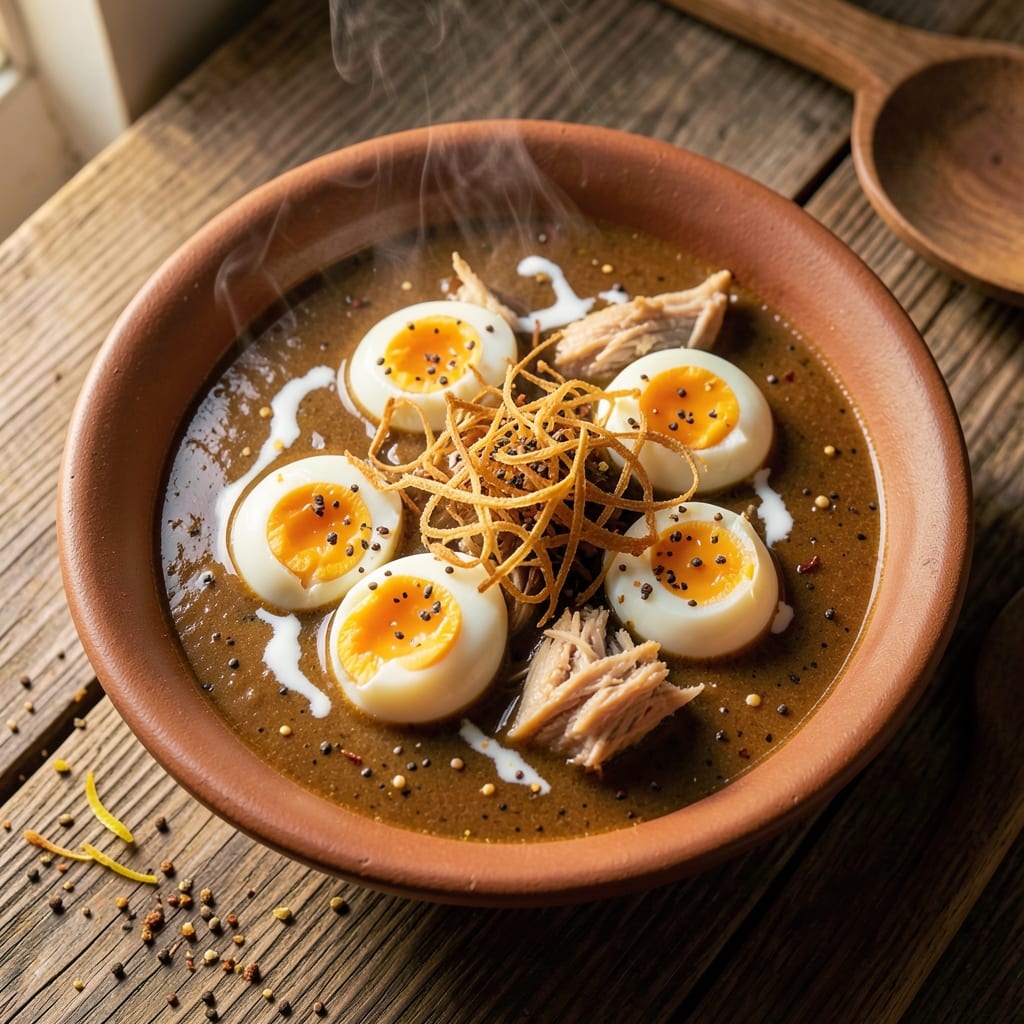
This Bengali-style egg curry recipe brings the aromatic richness of West Bengal straight to your kitchen, where turmeric-infused eggs simmer in a fragrant coconut gravy. The secret lies in tempering mustard oil with poppy seeds and cumin, creating a flavor profile that’s both earthy and deeply comforting. I’ve perfected this dish over years of experimenting with traditional techniques—slow simmering unlocks layers of flavor that store-bought curry powders can’t replicate.
The recipe begins with whole eggs gently simmered in a turmeric-milk base until tender, then enveloped in a velvety coconut gravy spiced with coriander and garam masala. The mustard oil, heated just until it smokes, carries the warmth of Bengali cooking, while the poppy seeds add a subtle crunch. What makes this dish special is how the spices meld together over time, creating a balance of heat, tang, and creaminess that’s impossible to resist.
By the time you serve this curry, you’ll have a dish that’s rich yet light, spicy yet balanced—perfect for breakfast or a comforting weeknight dinner. The eggs remain intact, their yolks vibrant and unbroken, while the gravy clings to them like a silky embrace. Pair it with steamed basmati rice or warm roti to complete the meal, and you’ll taste the soul of Bengali home cooking in every bite.
This recipe is designed to be approachable yet authentic, with step-by-step instructions that guide you through tempering, simmering, and garnishing. The key is patience—letting the flavors develop slowly is what transforms this into something truly special. Ready to bring a taste of Bengal to your table? Let’s get started.
Ingredients for bengali style egg curry
Eight whole eggs, aromatic spices, and coconut milk create this rich Bengali curry.
| Ingredient | Amount | Notes |
|---|---|---|
| Large Eggs 🥚 | 8 whole | Freshly laid preferred |
| Mustard Oil 🫒 | ½ cup | Lightly toasted until smoking |
| Poppy Seeds 🌾 | 1 tbsp | Toasted for nutty aroma |
| Ground Cumin Seeds 🌿 | 1 tsp | Toasted for deeper flavor |
| Turmeric Powder 🌶️ | 1 tsp | Freshly ground preferred |
| Whole Milk 🥛 | 1 cup | Full-fat for creaminess |
| Coconut Milk 🥥 | 13 ½ oz | Full-fat can for richness |
| Garam Masala 🌶️ | 1 tsp | Homemade or quality brand |
| Ground Coriander 🌿 | ½ tsp | Freshly ground preferred |
| Red Chili Powder 🌶️ | ½ tsp | Adjust for heat preference |
| Fresh Cilantro 🌿 | ¼ cup | Chopped for garnish |
| Salt 🧂 | ¾ tsp | Adjust to taste |
| Basmati Rice 🍚 | 1 ½ cups | Uncooked, for serving |
| Ghee 🧈 | 1 tbsp | For tempering optional |
Mustard oil is the soul of this curry—look for it in Indian grocery stores or online. If you can't find it, vegetable oil works in a pinch, but the flavor won't be quite the same. Poppy seeds should be toasted until golden—Trader Joe's sells them pre-toasted, which saves time. For garam masala, MDH or Everest brands are reliable, but homemade blends have more depth. The coconut milk needs to be full-fat for that creamy texture—canned brands like Thai Kitchen work well.
No mustard oil? Sesame oil or peanut oil can stand in, but reduce the amount by half. Fresh cilantro wilted? Dried cilantro powder at one-third the amount keeps the flavor. Short on poppy seeds? Fennel seeds or cardamom add complexity. The red chili powder can be swapped for cayenne—just start with half the amount. For a milder touch, skip the ghee entirely if you're avoiding dairy, but the flavor will be slightly lighter.
Store the spice mix separately for up to 3 months in an airtight container. The cooked curry reheats beautifully—add a splash of water or milk to prevent drying out. Coconut milk separates when refrigerated? Stir vigorously before reheating. The eggs stay tender for 2 days in the fridge, but the flavor improves overnight as the spices meld. Freeze portions without the eggs for up to 3 months—just thaw and reheat gently.
Why You'll Love This Recipe
- No Chopping Needed: I swear by this recipe on lazy Sundays—just crack eggs, toast spices, and let the mustard oil do the work. The poppy seeds and cumin handle all the texture magic while I sip tea.
- Mustard Oil Magic: That first hit of mustard oil? Chef’s kiss. It’s bold, it’s nutty, and it turns simple eggs into something rich and satisfying—no fancy technique required. Honestly, it’s the secret weapon in this dish.
- Leftover Goldmine: This curry tastes better the next day. I make a big batch, store it in jars, and reheat portions for quick lunches—no soggy eggs here, just flavor that deepens overnight.
- Budget-Friendly Feast: Eggs, spices, and oil? This feeds four for under $5. Between us, it’s my go-to when grocery money’s tight but I refuse to skimp on flavor. (Yes, even on a Tuesday night.)
Step-by-step instructions for Bengali style egg curry
Here's how to create this fragrant, turmeric-kissed curry that balances rich coconut with subtle spices.
Prepare the Spiced Eggs
In a heavy-bottomed pan, heat the 0.5 cup mustard oil over medium-low heat until it begins to smoke gently—this releases its signature aroma. Add the 1 tbsp toasted poppy seeds and 1 tsp toasted ground cumin seeds, stirring constantly for 30 seconds until they turn golden and fragrant.
Lower the heat to low and add the 8 whole large eggs, gently stirring them in the oil. Cook for 4-5 minutes until the whites are set but yolks remain runny. Remove the eggs and set aside—their golden yolks will melt beautifully into the curry later. Keep the spiced oil in the pan for the next step.
Build the Turmeric-Coconut Base
To the same pan, add 1 tsp turmeric powder, 0.5 tsp ground coriander, and 0.5 tsp red chili powder. Stir for 10 seconds until the spices bloom and fill your kitchen with their earthy aroma. Pour in the 1 cup whole milk and 13.5 oz coconut milk, stirring continuously to combine.
Bring the mixture to a gentle simmer over medium heat, then reduce to low and let it cook uncovered for 8-10 minutes until slightly thickened. You'll notice the coconut milk separates slightly—this is normal and adds texture to the curry. Taste and adjust the 0.75 tsp salt if needed.
Temper and Finish the Curry
Return the eggs to the pan and gently fold them into the coconut mixture. Add the 1 tsp garam masala and stir for 2 minutes until the spices dissolve and the curry comes together. The eggs should be fully coated in the rich, golden sauce.
For that signature Bengali touch, carefully drizzle in the 1 tbsp ghee while stirring continuously. The ghee will create a glossy sheen and enhance the nutty flavors. Remove from heat and let the curry sit for 3 minutes—this resting time allows the flavors to meld completely.
Garnish and Serve
Transfer the curry to a serving bowl and garnish with the 0.25 cup chopped fresh cilantro. The bright green color contrasts beautifully with the golden curry, adding both visual appeal and freshness. Serve immediately with 1.5 cups cooked basmati rice—the soft grains soak up the rich sauce perfectly.
This curry tastes even better the next day as the flavors deepen. Store leftovers in an airtight container in the refrigerator for up to 3 days, or freeze for 1 month. The coconut milk may separate when refrigerated—just stir gently before reheating.
Pro Tips For Making Bengali Style Egg Curry
- CRACK EGGS IN HOT WATER: I learned this the hard way—cracking eggs straight into the pan makes them scramble before they even hit the oil. Instead, drop them into a bowl of warm water first, then gently slide them into the oil. The whites stay intact longer, soaking up that mustard oil flavor properly.
- TOAST POPPY SEEDS LOW: Skip the high-heat blitzing—poppy seeds burn faster than you think. Toast them in mustard oil on low-medium heat for 2-3 minutes, stirring constantly, until they’re golden and fragrant. Overdo it, and they’ll turn bitter, ruining the whole dish.
- USE TURMERIC LATE: Add turmeric only after the eggs are cooked but before the final simmer. I used to toss it in early, and the curry would turn a dull yellow instead of that bright, appetizing hue. A pinch at the end keeps the color vibrant and the flavor sharp.
- SIMMER NOT BOIL: Once the eggs are tender, switch to a gentle simmer instead of letting it boil. Boiling makes the eggs rubbery, and the curry turns watery. Keep it at a low bubble, and the eggs stay creamy while the spices meld together—exactly how I remember my grandmother’s version.
Creative variations of bengali style egg curry
Mustard Oil Variations
Mustard oil is the heart of this curry, but if you can't find it, don't skip it entirely. For a milder alternative, use sesame oil or peanut oil, but reduce the amount by half—¼ cup instead of ½ cup. The flavor won't be identical, but it'll still carry the nutty depth. If you're avoiding oil altogether, coconut oil works in a pinch, though it lacks the signature smokiness. 🌿
Spice Level Adjustments
Bengali egg curry balances warmth and creaminess, but you can tweak the heat to your taste. For a milder version, reduce the red chili powder to ¼ tsp or swap it for ½ tsp mild paprika. If you love heat, add ½ tsp cayenne pepper or a pinch of freshly chopped green chilies at the end. I often adjust based on who’s eating—my kids prefer the milder route, while my husband adds extra chili for a kick. 🌶️
Dairy-Free Adaptations
Skip the ghee and whole milk for a dairy-free version without sacrificing richness. Replace the milk with 1 cup unsweetened almond milk or coconut milk (use an extra ½ cup to maintain creaminess). For the ghee, add 1 tbsp neutral oil or avocado oil when tempering the spices. The curry will still be luscious—just slightly lighter. Trust me, it’s still delicious! 🥥
Protein Swaps
While eggs are traditional, you can experiment with other proteins. For a vegetarian twist, swap the eggs for 1 cup chickpeas (cooked and lightly mashed) or 1 block firm tofu (cubed and pan-fried). For a meat version, add ½ lb shredded chicken (cooked separately) or ½ lb shrimp (folded in at the end). The coconut gravy will cling beautifully to any protein you choose. 🍳
Regional Twists
In Kolkata, this curry often includes mustard seeds instead of poppy seeds for a sharper bite. For a Kerala-inspired version, add ½ tsp fennel seeds to the tempering for an anise-like aroma. In Assam, some chefs use black mustard seeds instead of white. Each region puts its own spin on the dish—play with these variations to find your favorite! 🗺️
Nutrition facts
Frequently asked questions
Why does Bengali egg curry use whole eggs instead of scrambled or boiled?
The whole eggs in this recipe stay intact yet tender, absorbing the rich coconut gravy perfectly. The yolks melt slightly during simmering, creating a luxurious texture that scrambled eggs can't match. This technique also preserves the eggs' natural shape for a more elegant presentation.
Can I make this curry without mustard oil?
Yes! Use sesame oil or peanut oil instead, but reduce to ¼ cup (half the amount). For a neutral option, coconut oil works but lacks the signature smoky depth. The flavor will still be delicious, just slightly different.
How do I prevent the coconut milk from separating in the curry?
Stir continuously while heating and avoid boiling. For extra stability, whisk in 1 tsp cornstarch with a splash of water before adding the coconut milk. Also, let the curry rest 5 minutes after cooking—this helps the natural oils redistribute.
What's the best way to reheat leftovers?
Gently reheat on low heat with 1-2 tbsp water or milk to prevent drying. For microwave reheating, cover with a damp paper towel and heat in 30-second intervals. The coconut milk may separate slightly—just stir vigorously before serving.
Can I make this curry spicier?
Add ½ tsp cayenne pepper or 1 tbsp finely chopped green chilies when tempering the spices. For extra heat, sprinkle ½ tsp red chili flakes over the finished curry. Remember, the spices develop more heat when simmered.